Artwork
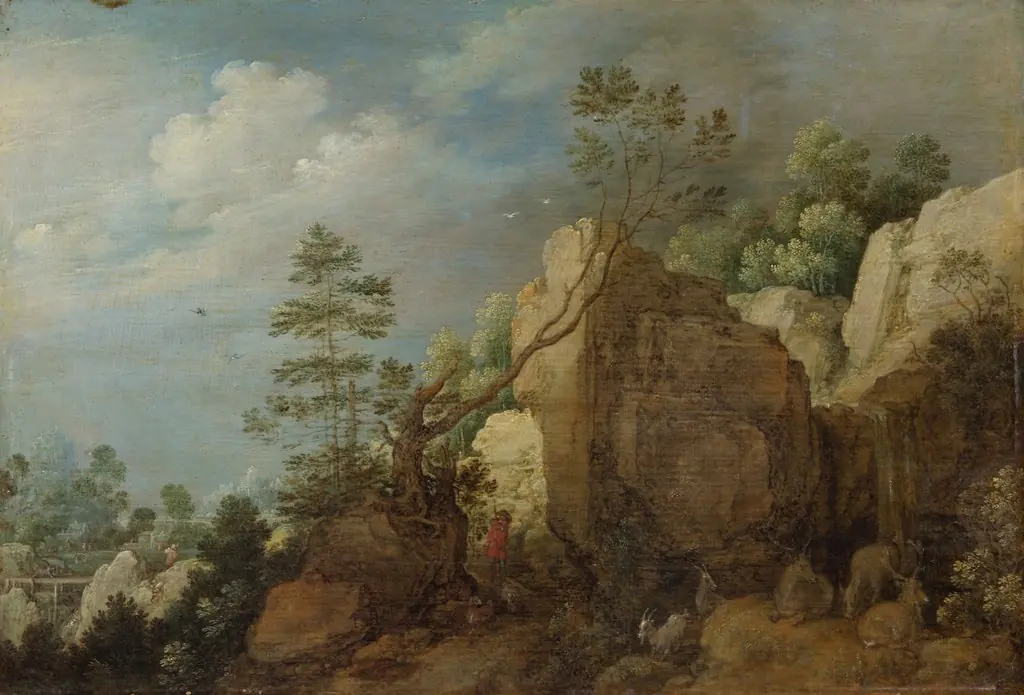
Rocky Landscape
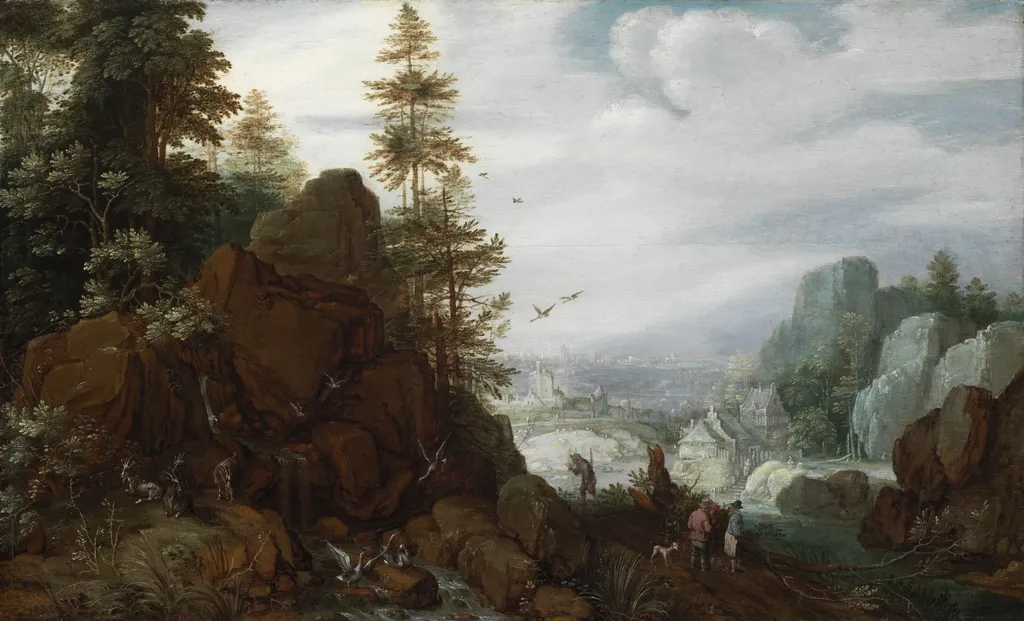
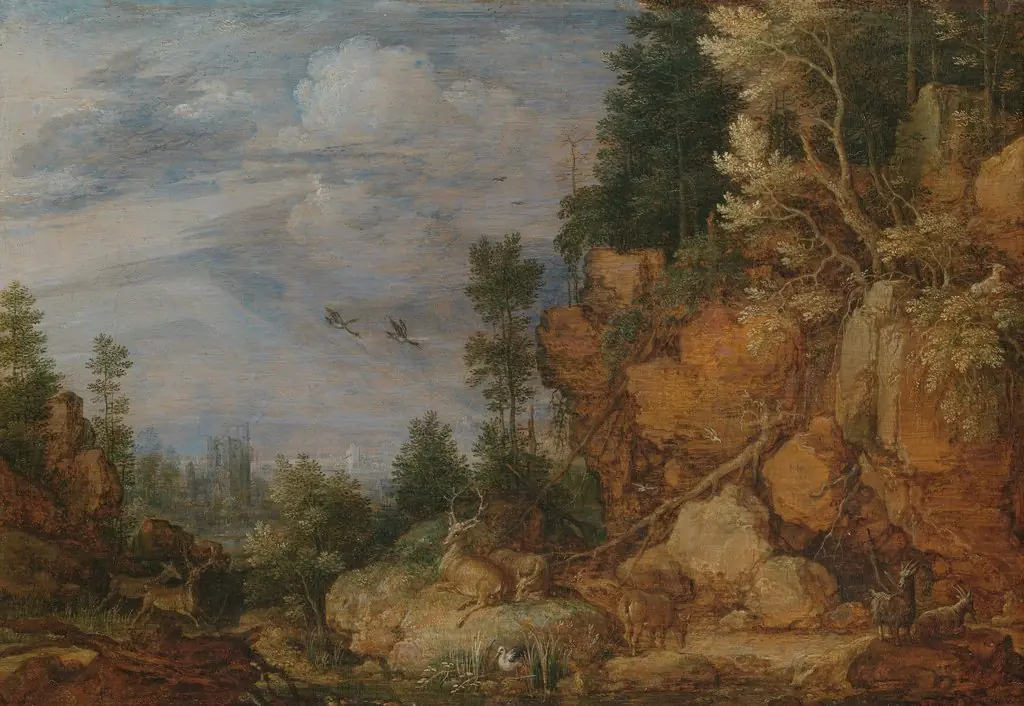
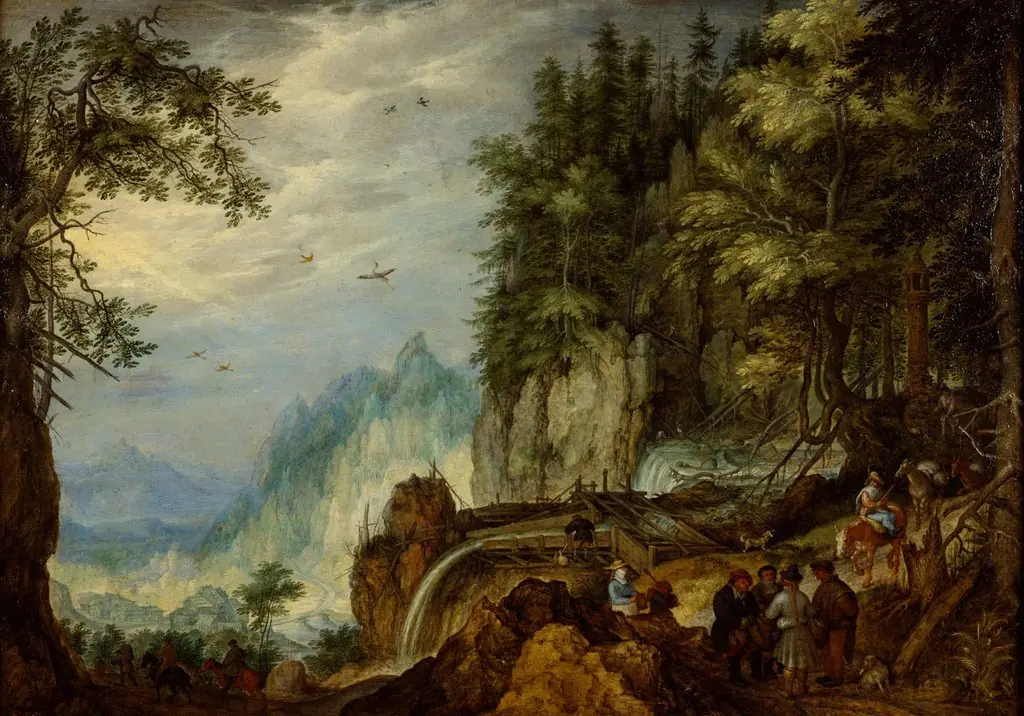
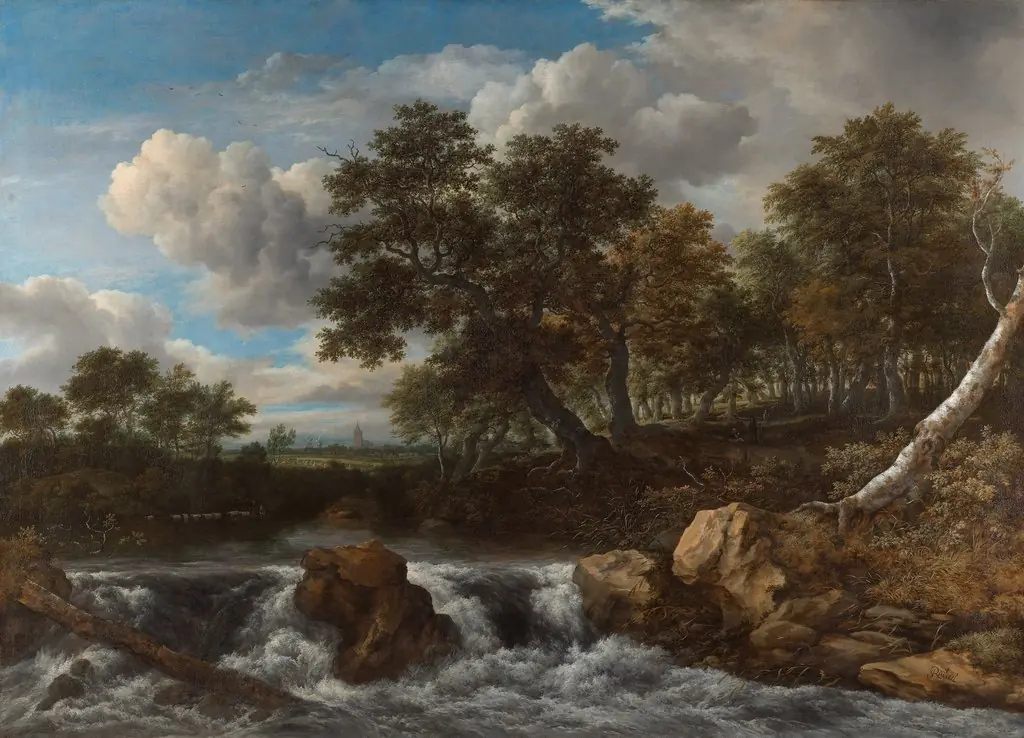
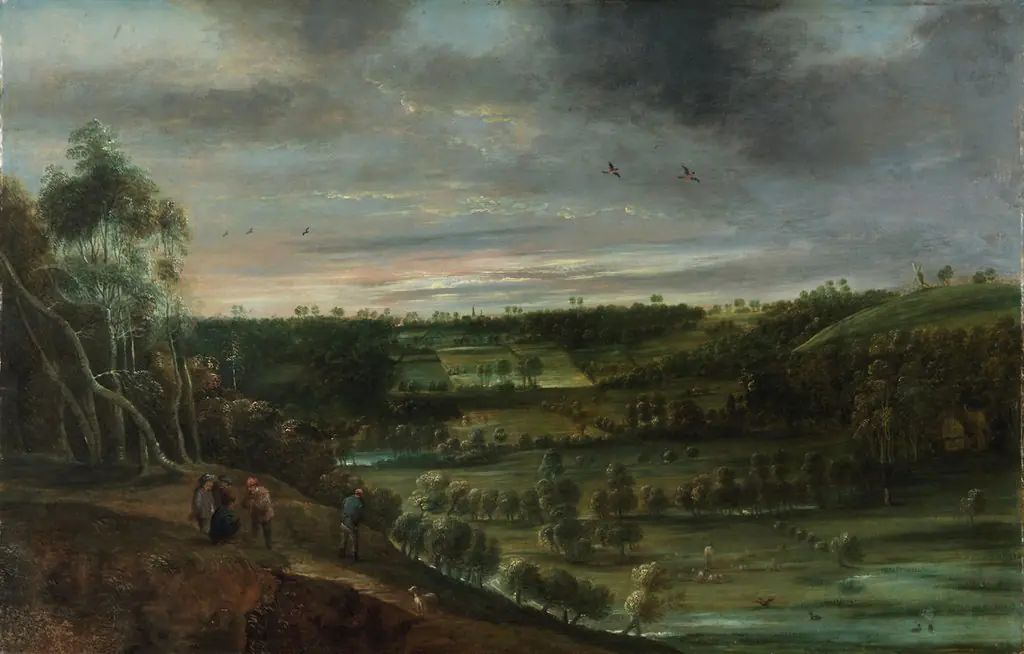
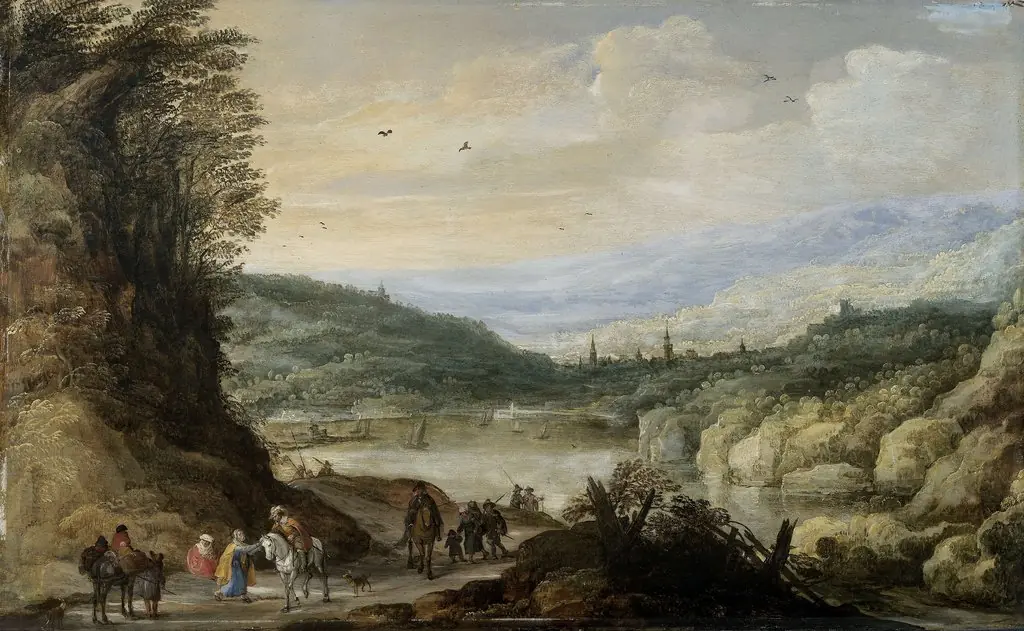
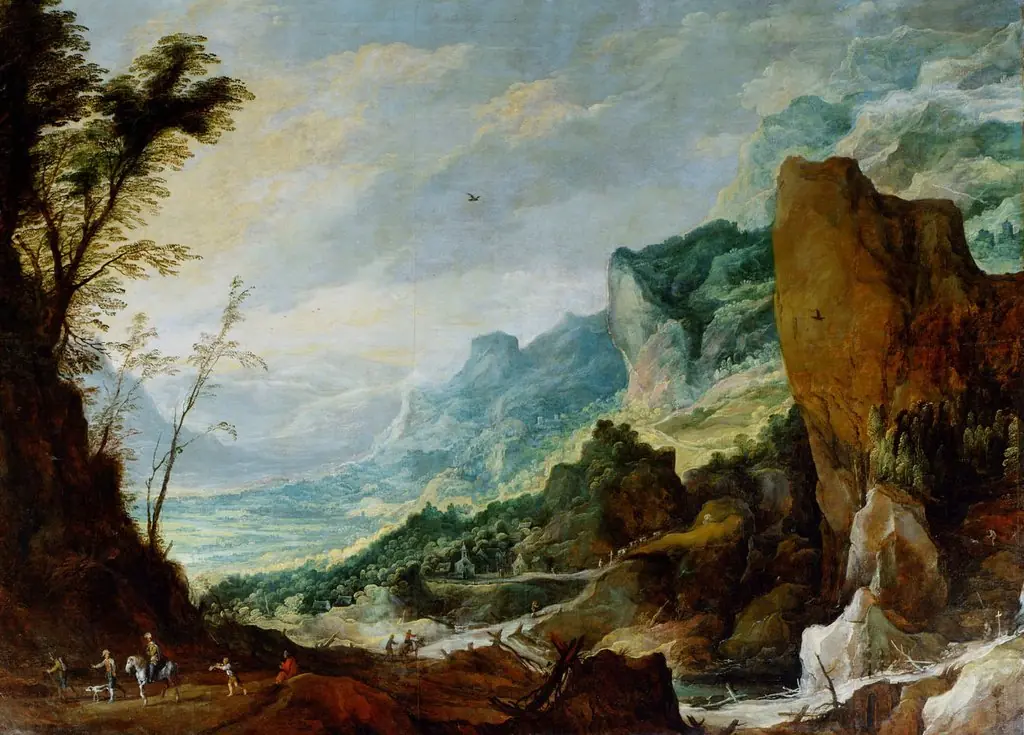
Rocky Landscape is an unspecified painting by the Dutch Golden Age artist Gillis d'Hondecoeter. It dates from 1621 and is held in the collection of the Detroit Institute of Arts.
About this work
Overview
The composition balances rugged terrain with subtle human presence, grounding the scene in everyday observation rather than myth or grandeur.
Painted in 1621 by Gillis d'Hondecoeter, this landscape reflects the early Dutch Golden Age’s growing interest in naturalistic scenery. Unlike the idealized vistas of earlier traditions, the work presents an unembellished view of the Dutch countryside, emphasizing texture and atmospheric conditions. The composition balances rugged terrain with subtle human presence, grounding the scene in everyday observation rather than myth or grandeur.
Subject & Meaning
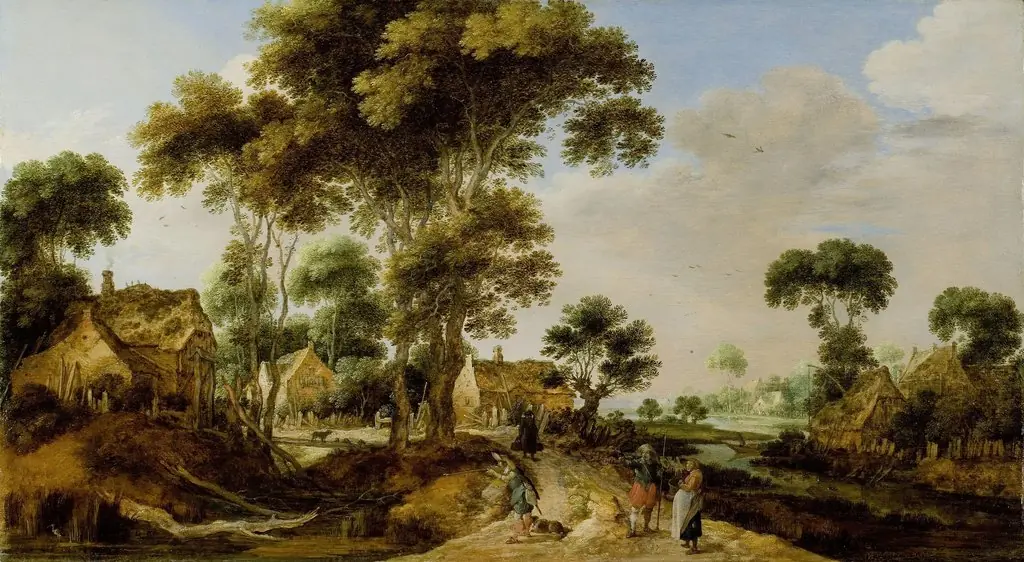
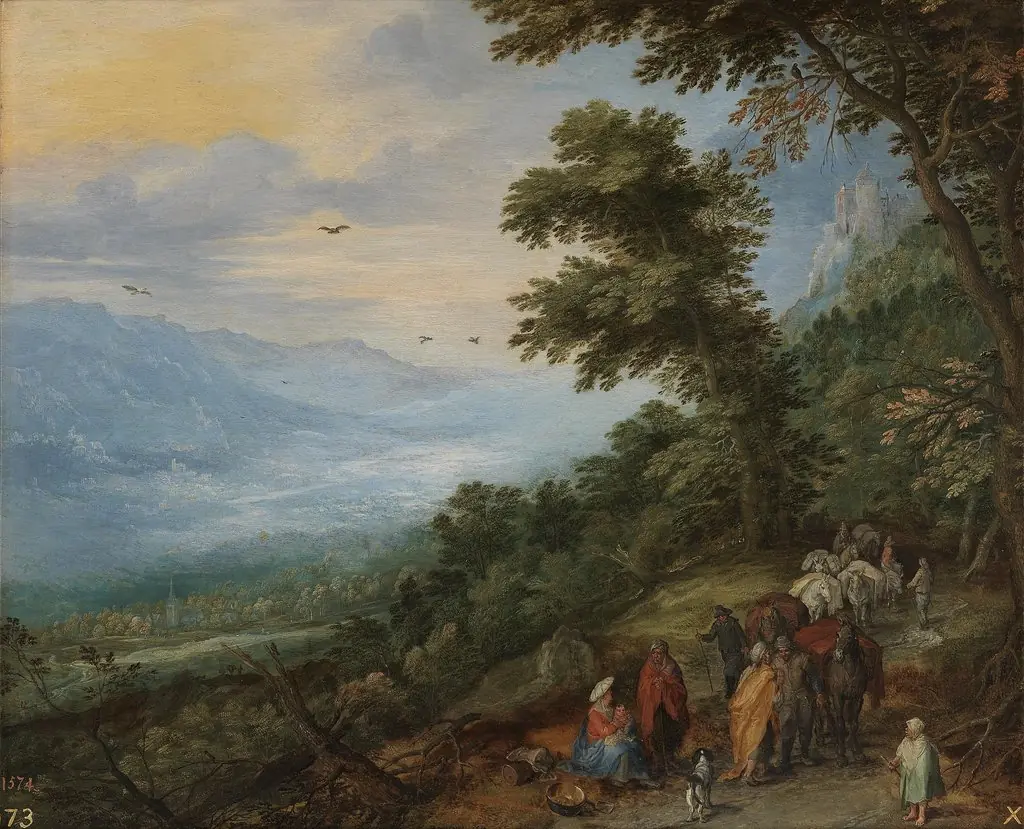
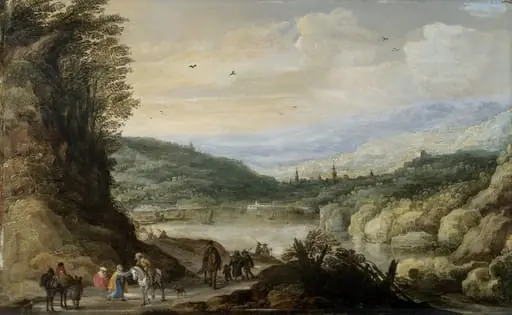
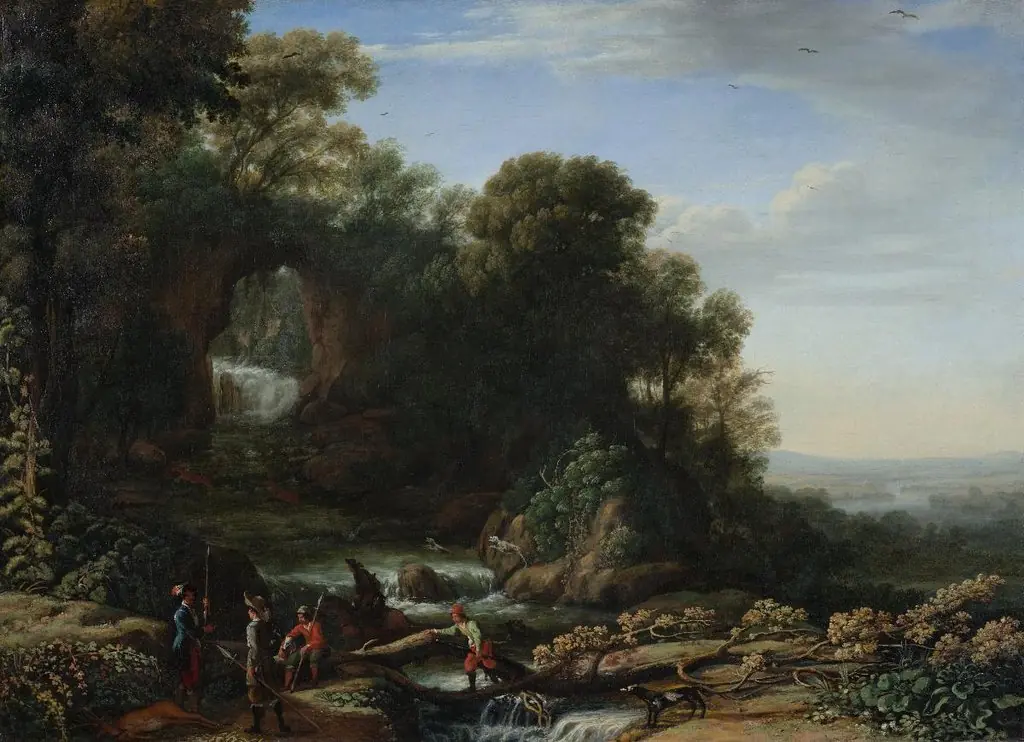
The painting depicts a quiet, uneventful stretch of rural land: a winding stream, scattered trees, and distant buildings. Figures—two men near a dog, another walking—appear incidental, not central. Their presence suggests human interaction with the land without narrative drama. The muted sky and earth tones reinforce a mood of stillness, reflecting a cultural shift toward valuing ordinary nature over heroic or religious themes.
Technique & Style
D'Hondecoeter employs fine brushwork to render rock surfaces, foliage, and atmospheric haze with careful precision. The palette is restrained—olive greens, ochres, and slate blues—enhancing the painting’s quiet realism. Depth is suggested through layered recession, with foreground details sharply defined and distant structures softened by haze. The style bridges Flemish attention to detail with the emerging Dutch preference for unadorned observation.
History & Provenance
Created during the artist’s formative years, the painting predates his better-known bird studies. It entered the Detroit Institute of Arts’ collection as part of a broader acquisition of Dutch landscapes from the 17th century. While little documentation exists about its early ownership, its survival and preservation reflect its status as a representative example of regional landscape painting from the period.
Context
In early 17th-century Holland, landscape painting emerged as an independent genre, fueled by rising urban wealth and a secular worldview. Artists like d'Hondecoeter turned away from religious allegory to depict local terrain with fidelity. This work aligns with a broader movement that valued the ordinary—fields, rivers, and skies—as worthy subjects, mirroring the nation’s identity as a republic grounded in commerce and nature.
Legacy
Though Gillis d'Hondecoeter is less renowned than his descendants—Melchior and Gijsbert, who specialized in avian subjects—this landscape reveals his foundational role in shaping Dutch naturalism. His attention to environmental detail influenced later generations who expanded landscape and animal painting. His work, though modest in scale, contributed to the enduring Dutch tradition of observing the world with quiet precision.
Own this work as a print
Artist & collection
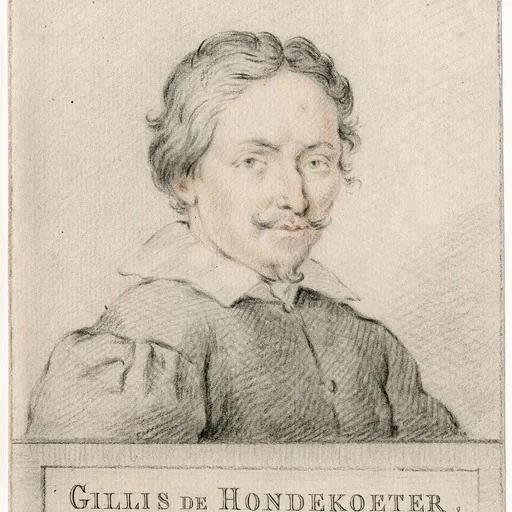
Artist
Gillis Claesz. de Hondecoeter or d'Hondecoeter (c. 1575–1580 – buried 17 October 1638) was a Dutch painter, working in a Flemish style, painting landscapes, trees, fowl and birds. Later on d'Hondecoeter painted in a…