Artwork
The Crucifixion of Christ
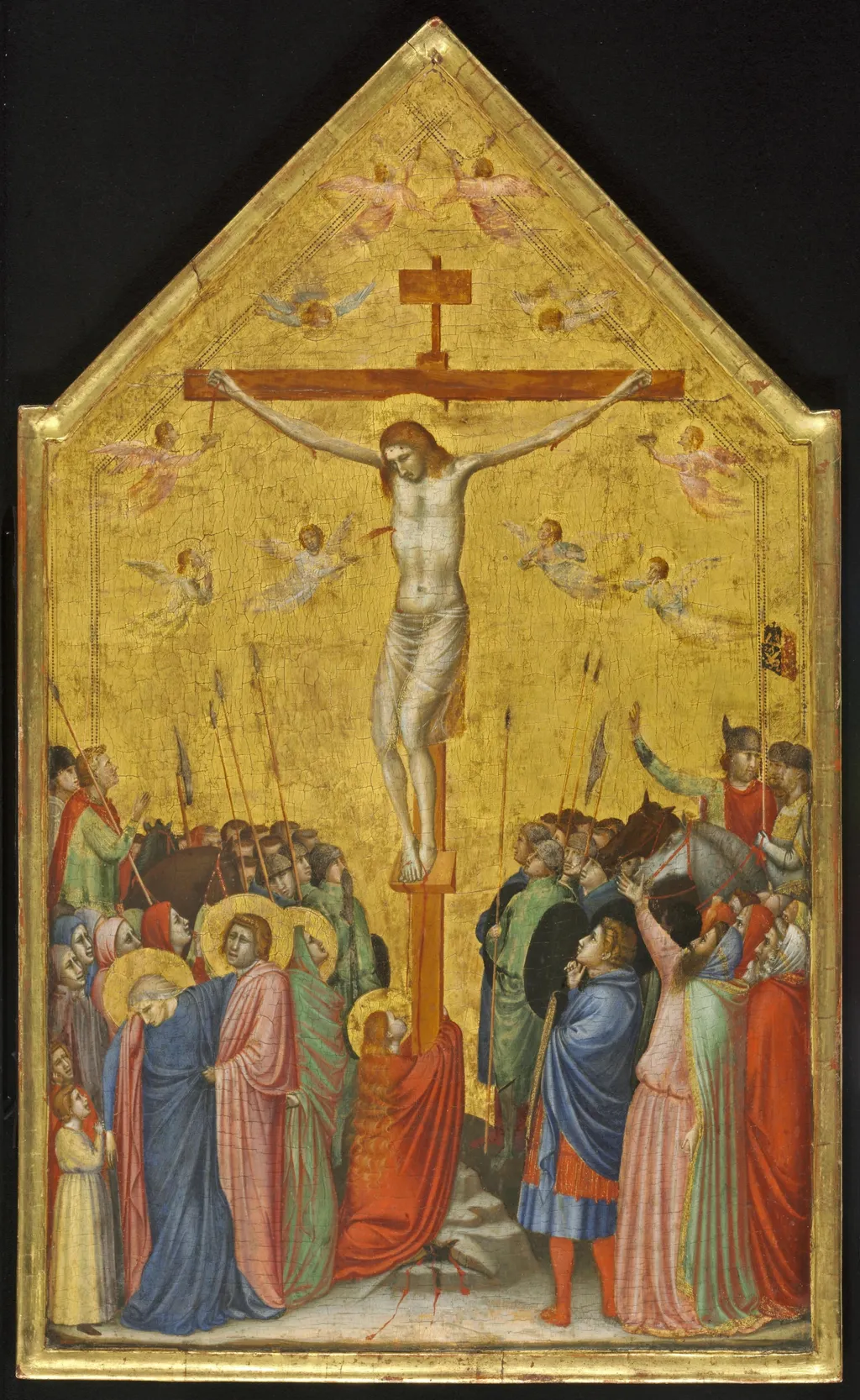
The Crucifixion of Christ is a tempera painting by the Byzantine icon painting artist Giotto. It is held in the collection of the Gemäldegalerie Berlin.
About this work
Overview
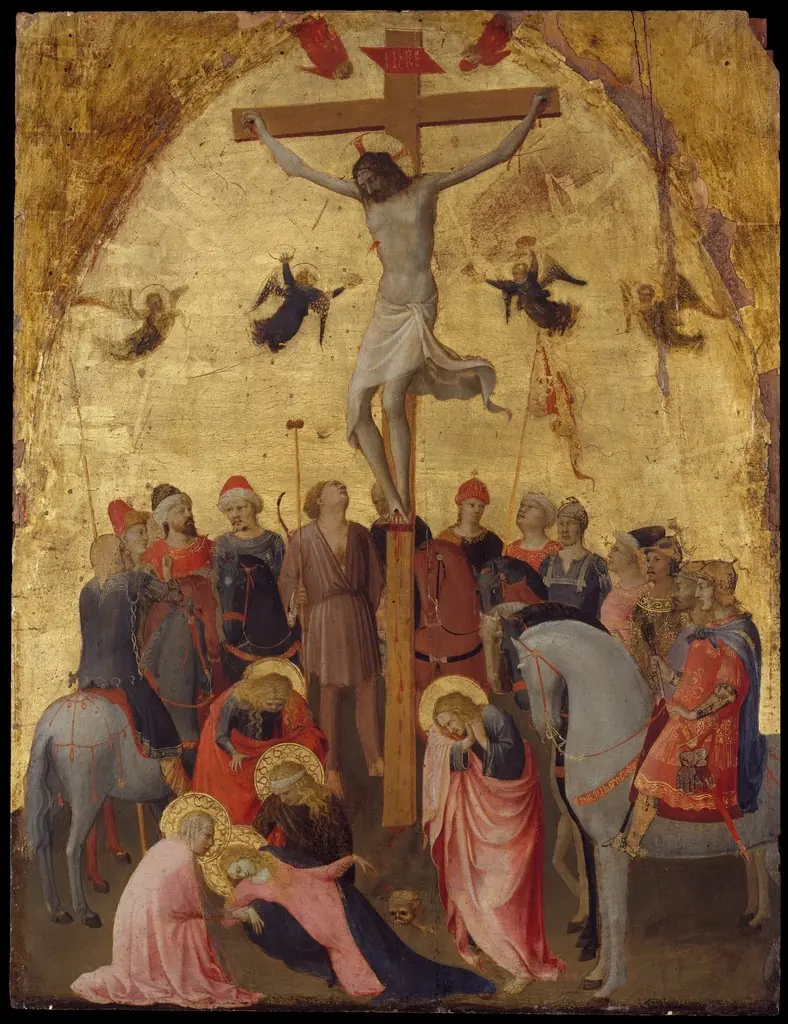
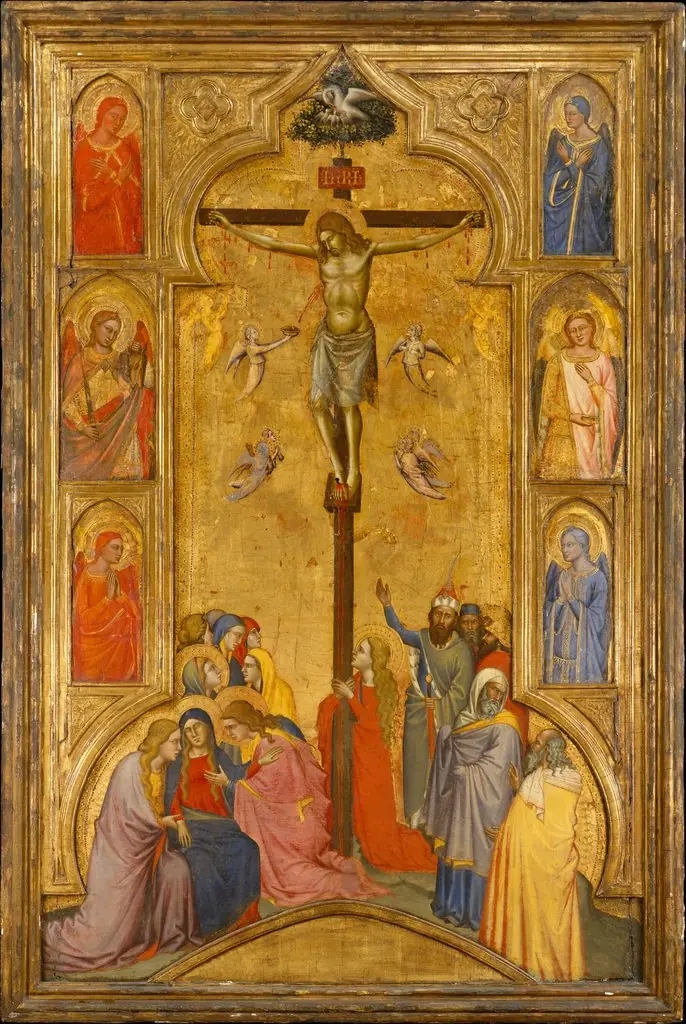
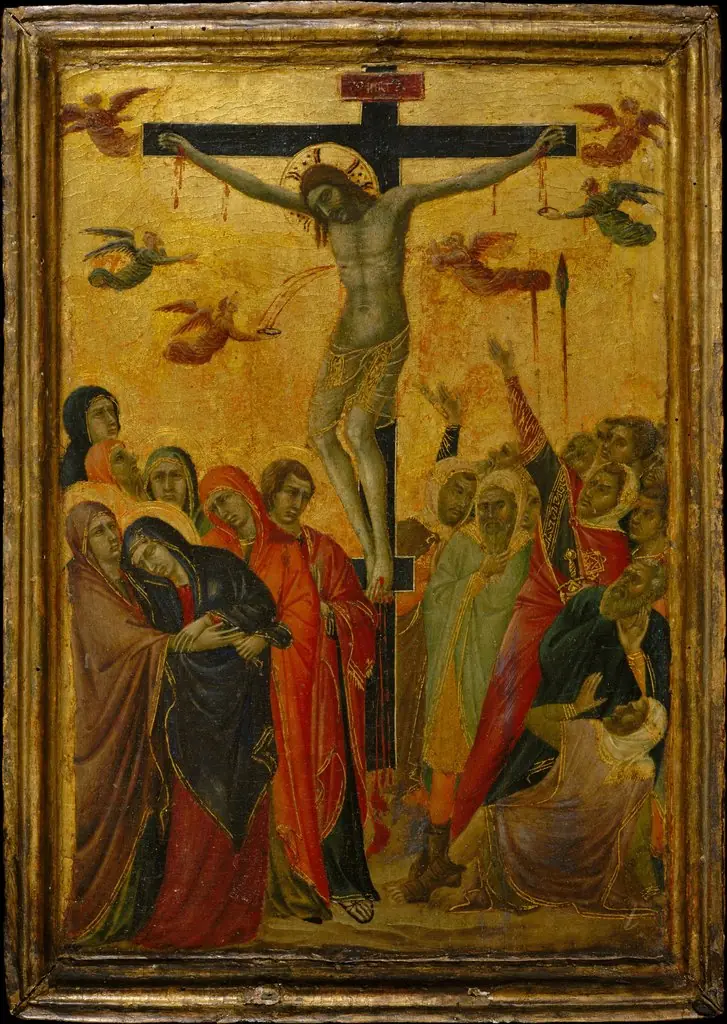
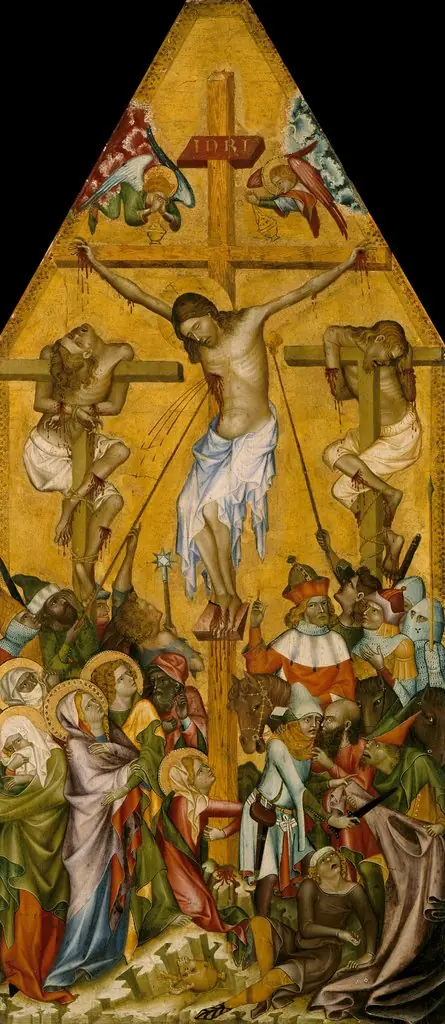
Created around 1320, this tempera and gold panel depicts the crucifixion of Christ. The composition centers on the cross‑bearing figure, surrounded by a densely populated crowd rendered in vivid garments. Angelic forms hover above against a luminous gold field, suggesting an interior church space. The work is presently housed in Berlin’s Gemäldegalerie.
Subject & Meaning
The central narrative presents the moment of Christ’s execution, with the crucified figure flanked by onlookers whose varied postures convey a range of reactions—from mourning to indifference. The inclusion of celestial beings above the scene underscores the theological significance of the event, linking earthly suffering with divine presence.
Technique & Style
Executed in tempera on wood, the artist employed a flat, saturated palette that emphasizes decorative surface over naturalistic modeling. Lines are sharply delineated, giving each figure a distinct silhouette despite the crowded composition. Gold leaf forms the background, enhancing the sense of a sacred, timeless setting.
History & Provenance
The painting is traditionally linked to Giotto di Bondone, though attribution remains scholarly. After its medieval origin, the panel entered various collections before being acquired by the Gemäldegalerie in Berlin, where it has been on public display since the early 20th century.
Context
Produced during a period of transition from Byzantine conventions toward greater naturalism, the work reflects early Italian efforts to humanize religious scenes. Its vivid coloration and orderly arrangement echo contemporary devotional panels intended for private contemplation within ecclesiastical environments.
Artist & collection