Artwork
Saint John the Baptist in the Wilderness
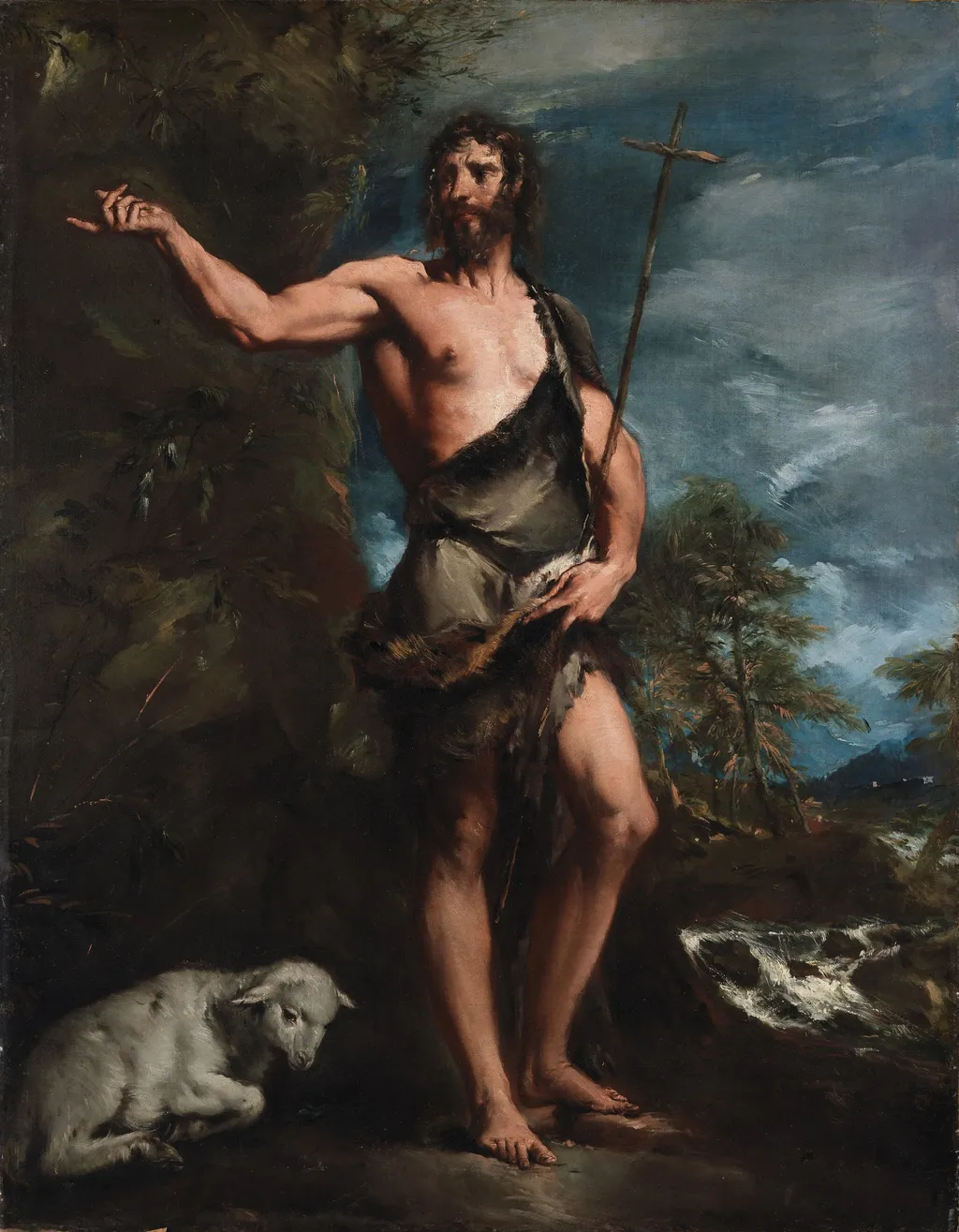
Saint John the Baptist in the Wilderness is an oil painting by the Rococo painting artist Giovanni Antonio Guardi. It dates from 1738 and is held in the collection of the National Gallery of Ireland.
About this work
Overview
Giovanni Antonio Guardi’s oil on canvas, Saint John the Baptist in the Wilderness, dates from 1738 and is part of the collection of the National Gallery of Ireland. The work presents the biblical figure of John the Baptist amid a stark, forested landscape, employing a dramatic contrast of light and shadow to isolate the saint from his surroundings.
Subject & Meaning
The composition centers on a bearded, shirtless John, his right arm uplifted as if proclaiming a divine message. He clutches a staff crowned with a cross, while a small white lamb lies at his feet, symbolising innocence and the sacrificial role John foretells for Christ.
Technique & Style
Guardia utilizes chiaroscuro, allowing a sharp beam of light to illuminate the saint’s face and torso against a tenebrous backdrop of trees, cliffs, and a turbulent sky. This treatment heightens the figure’s three‑dimensionality and underscores his spiritual significance within the wilderness setting.
History & Provenance
Completed in the mid‑18th century, the painting entered the National Gallery of Ireland’s holdings, where it remains on display. Its provenance prior to acquisition is not extensively documented, but it reflects Guardi’s activity in the Venetian artistic milieu of the period.
Context
The work belongs to a broader tradition of Baroque religious imagery that emphasizes dramatic lighting and emotional intensity. Guardi, known primarily for his vedute, applied these theatrical effects here to convey the ascetic solitude of John the Baptist in the desert.
Own this work as a print
Artist & collection
Artist
Giovanni Antonio Guardi, also known as Gianantonio Guardi, was an Italian painter and nobleman. Guardi was one of the founders of the Venetian Academy in 1756.