Artwork
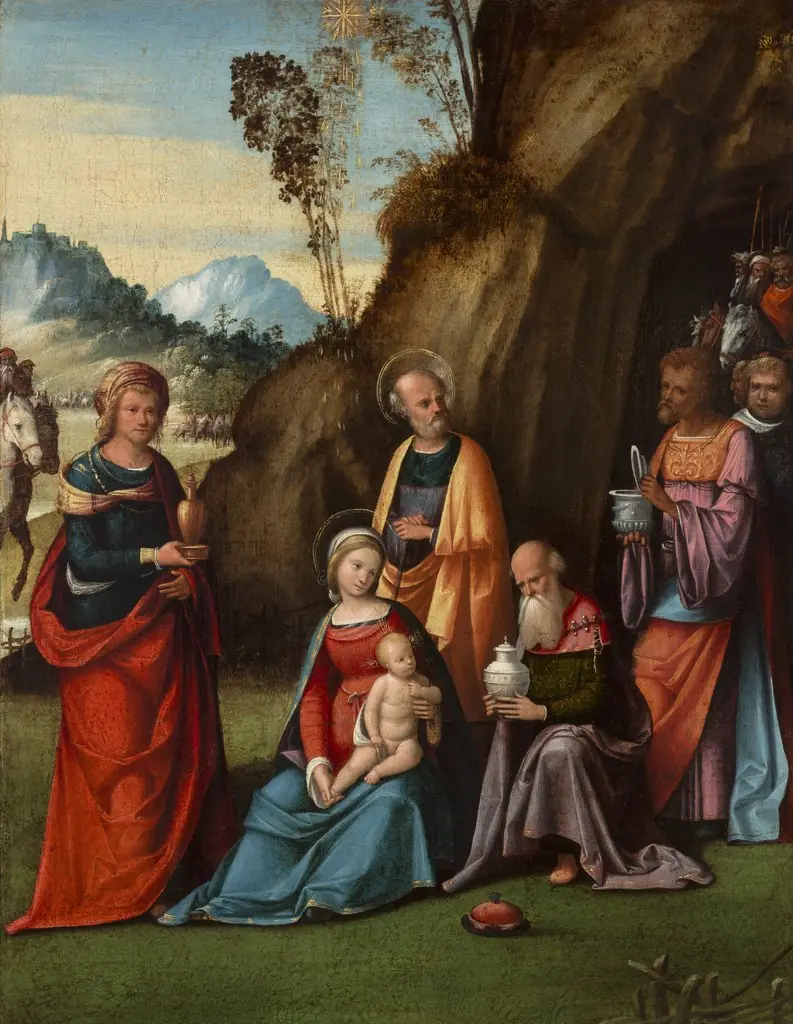
The Virgin and Child with Saint Andrew and Saint Peter
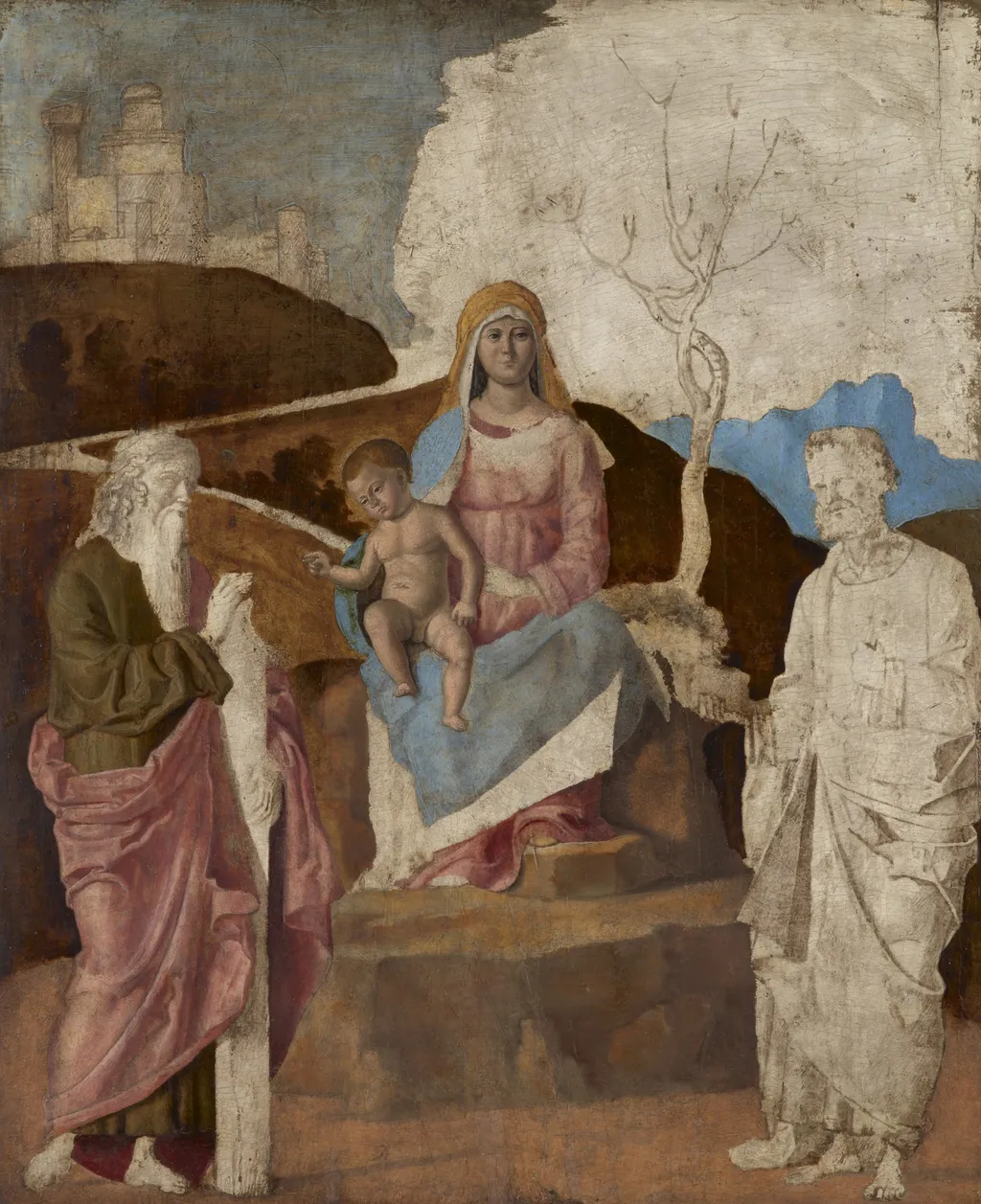
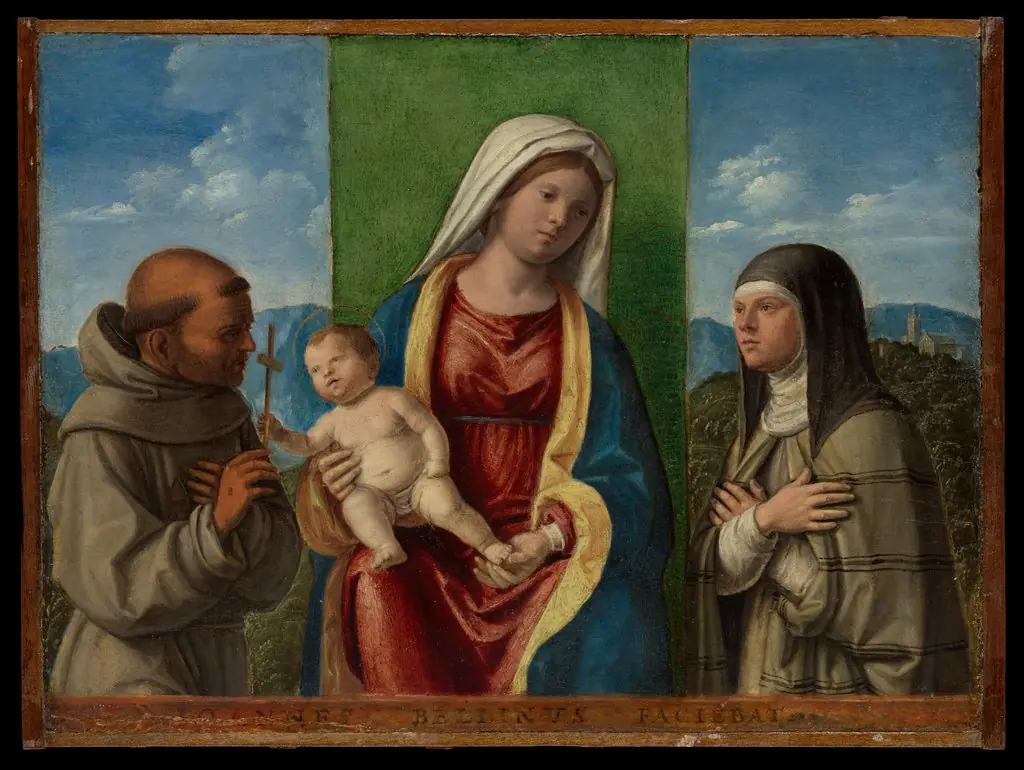
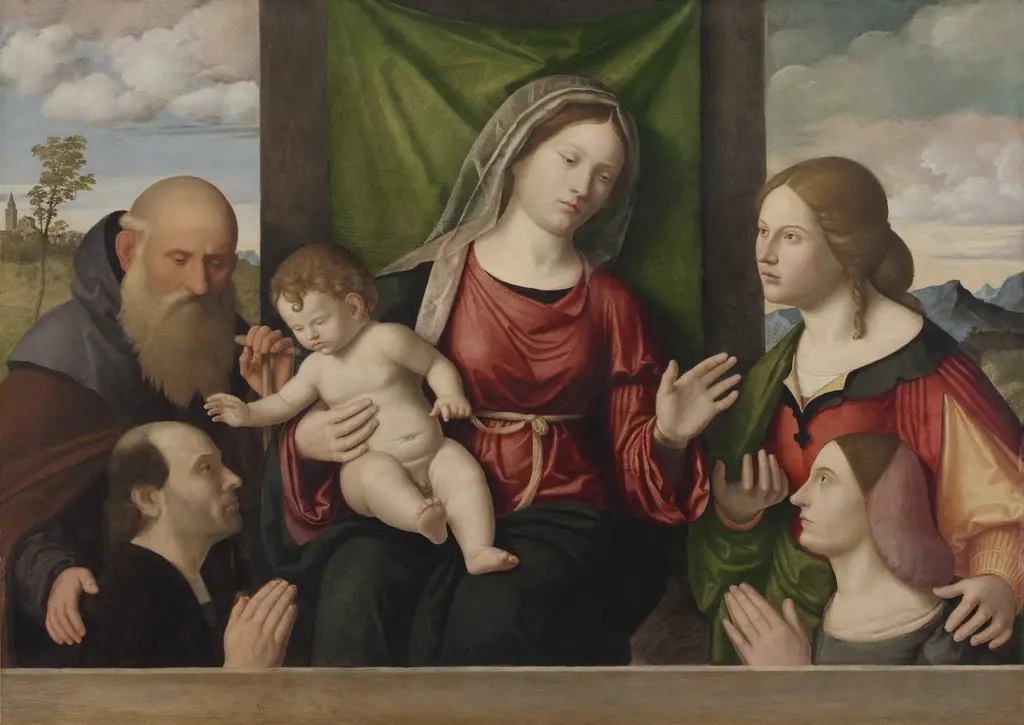
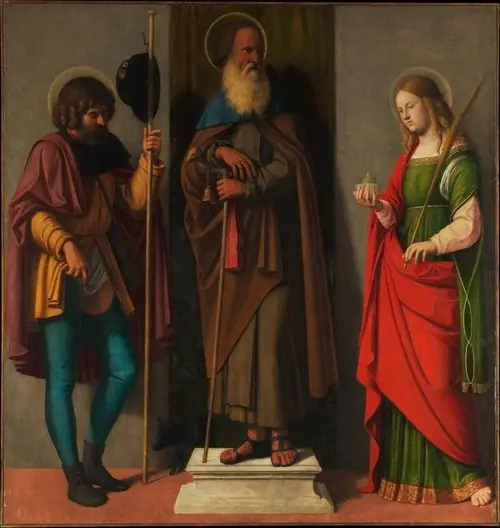
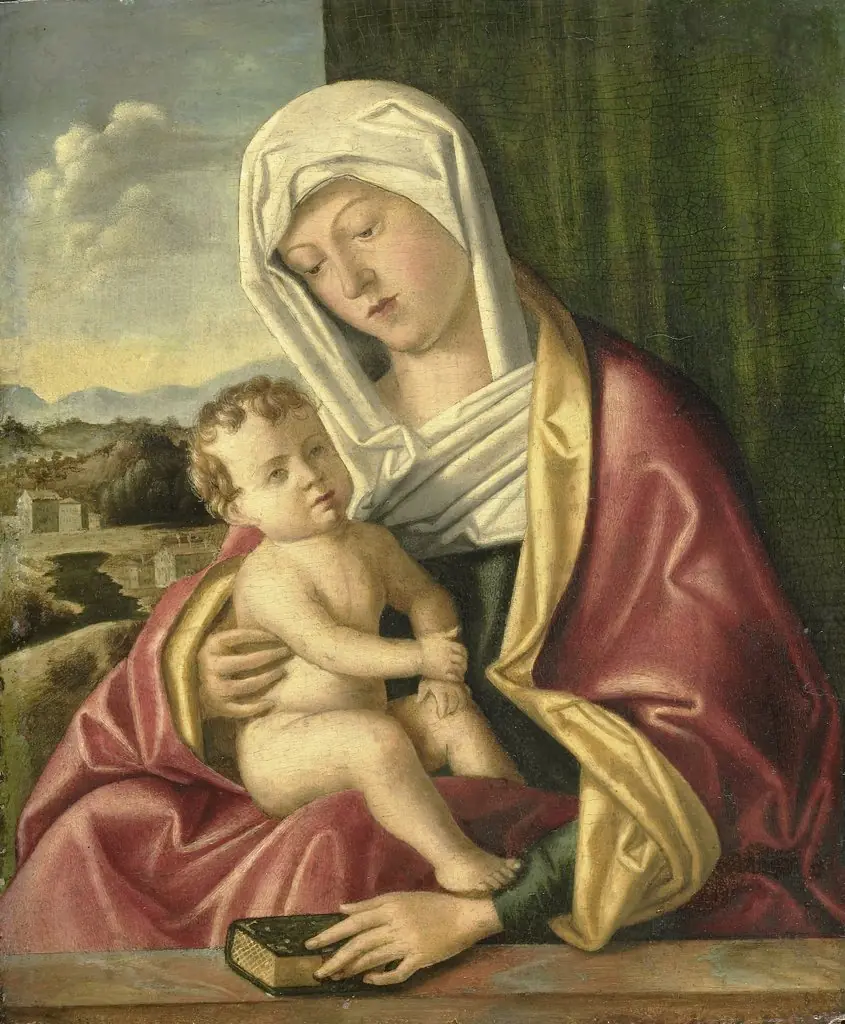
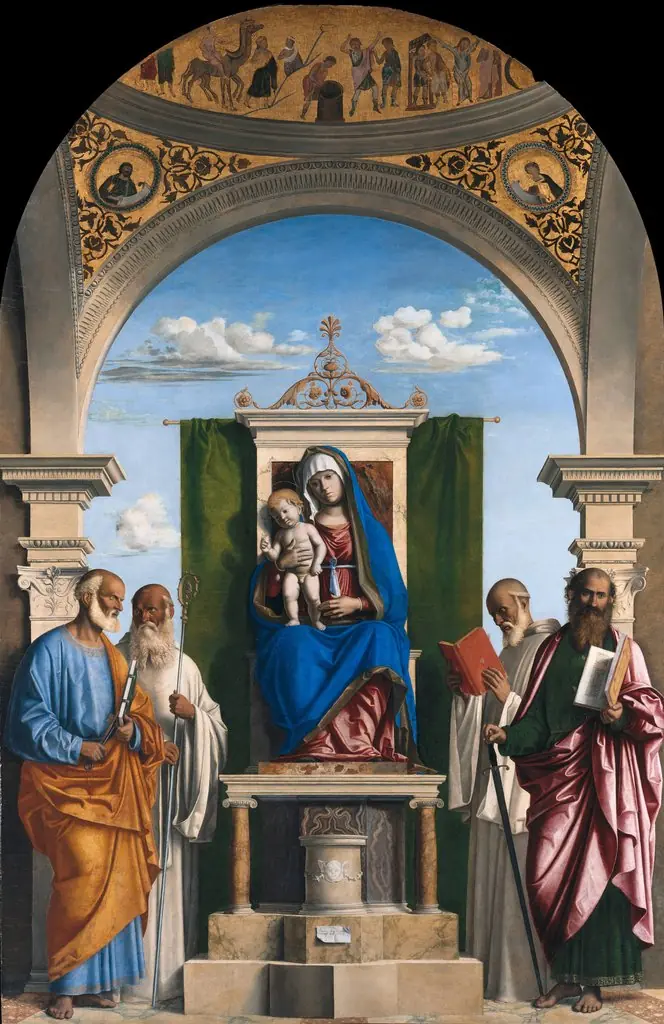
The Virgin and Child with Saint Andrew and Saint Peter is an oil painting by the High Renaissance artist Giovanni Battista Cima da Conegliano. It dates from 1510 and is held in the collection of the National Galleries Scotland. The work depicts the Virgin and Child accompanied by Saint Andrew and Saint Peter.
About this work
It is believed to have been created in the late 15th or early 16th century, specifically around 1510.
The Virgin and Child with Saint Andrew and Saint Peter is a painting. It was created in the studio of Giovanni Battista Cima da Conegliano.
The painting is unfinished and made with oil paint. It is believed to have been created in the late 15th or early 16th century, specifically around 1510.
The painting is now held at the Scottish National Gallery. Check out the museum: Scottish National Gallery.
Overview
The work depicts the Virgin and Child accompanied by Saint Andrew and Saint Peter. Executed in oil on panel, the composition remains incomplete, revealing the hand of an artist working within the workshop of Giovanni Battista Cima da Conegliano. Scholars date the piece to the turn of the 16th century, around 1510, and it now belongs to the National Galleries of Scotland in Edinburgh.
Subject & Meaning
The central figure of the Virgin holding the infant Christ is flanked by two apostolic saints, Andrew and Peter, whose attributes identify them and underscore their roles as early disciples. The grouping reflects a devotional intent, offering a visual intercession for viewers by presenting the holy family alongside venerable church fathers.
Technique & Style
Rendered in oil, the painting exhibits the luminous color palette and delicate modeling characteristic of the Venetian tradition that Cima’s studio embraced. Brushwork remains visible in underpainted areas, indicating the work was halted before final glazing and detailing could be applied, which allows insight into the artist’s preparatory process.
History & Provenance
Created by an unidentified hand in Cima’s workshop, the canvas entered the Scottish national collection in the 20th century, where it is displayed at the Scottish National Gallery. Its provenance prior to acquisition is not fully documented, but the painting’s attribution to the studio situates it within the broader network of Venetian art export to northern Europe during the Renaissance.
Artist & collection
Artist
Giovanni Battista Cima da Conegliano
Giovanni Battista Cima, also called Cima da Conegliano (c. 1459 – c. 1517), was an Italian Renaissance painter, who mostly worked in Venice. He can be considered part of the Venetian school, though he was also…