Artwork
Latinus Offering his Daughter Lavinia to Aeneas in Matrimony
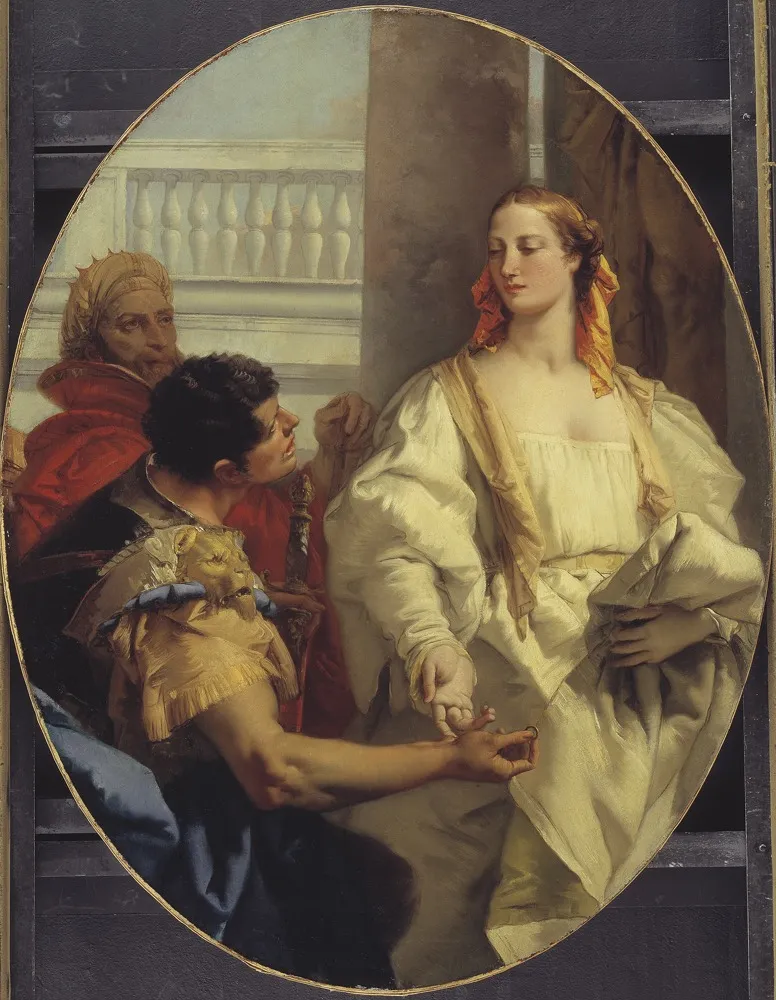
Latinus Offering his Daughter Lavinia to Aeneas in Matrimony is an oil painting by the Rococo painting artist Giovanni Battista Tiepolo. It dates from 1753 and is held in the collection of the Statens Museum for Kunst.
About this work
Overview
This work, now housed at the Statens Museum for Kunst, exemplifies the Rococo movement through its depiction of a pivotal moment from Roman mythology.
Giovanni Battista Tiepolo completed the oil painting Latinus Offering his Daughter Lavinia to Aeneas in Matrimony in 1753. This work, now housed at the Statens Museum for Kunst, exemplifies the Rococo movement through its depiction of a pivotal moment from Roman mythology. The composition centers on the proposed union between the Trojan hero Aeneas and Princess Lavinia, presented by her father, King Latinus. The scene captures a quiet, yet significant, exchange between the three central figures.
Subject & Meaning
The painting illustrates a scene from Virgil's Aeneid, where King Latinus of Latium offers his daughter, Lavinia, in marriage to Aeneas, the Trojan prince. This alliance was crucial for the foundation of Rome. Tiepolo portrays Lavinia with a composed demeanor, seated and holding a document, while Aeneas, depicted with a feathered headdress, reaches out with an eager gesture. Latinus, leaning on a cane, observes the interaction, underscoring the gravity of this dynastic decision.
Technique & Style
Executed in oil paint, the artwork showcases characteristics of the Rococo style, particularly in its use of soft illumination and delicate rendering of figures. The setting is a dimly lit interior, framed by stone columns, with shadows deepening the background. Tiepolo employs subtle lighting to highlight the figures, emphasizing their expressions and gestures. This approach creates an intimate atmosphere, focusing the viewer's attention on the psychological nuances of the moment rather than grand spectacle.
Artist & collection

Artist
Giovanni Battista Tiepolo, also known as Giambattista Tiepolo, was an Italian painter and printmaker from the Republic of Venice who painted in the Rococo style, considered an important member of the 18th-century Venetian school.