Artwork
The Brazen Serpent
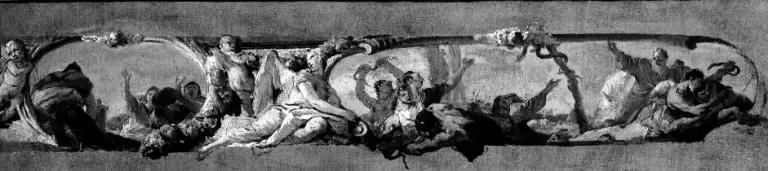
The Brazen Serpent is an unspecified painting by the Rococo painting artist Giovanni Battista Tiepolo. It dates from 1740 and is held in the collection of the Statens Museum for Kunst.
About this work
Overview
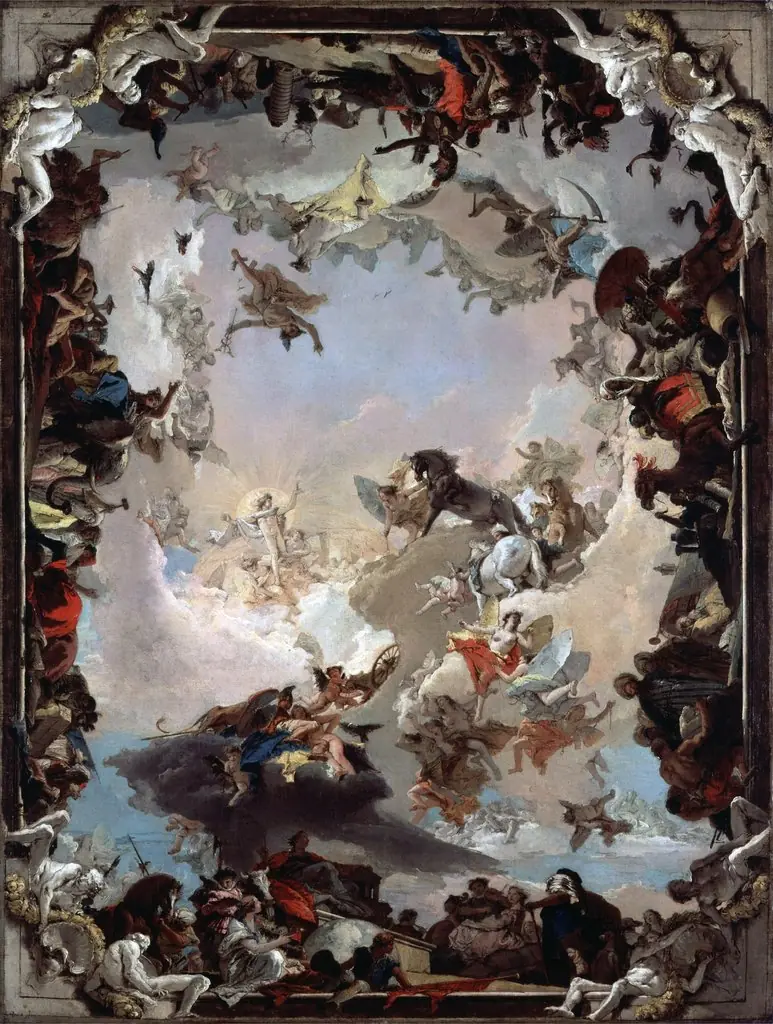
Giovanni Battista Tiepolo’s 1740 canvas, titled *The Brazen Serpent*, presents a complex, theatrical tableau drawn from the biblical episode in which Moses raises a bronze serpent to cure the afflicted Israelites. The composition is dominated by a luminous oval at its centre, surrounded by a tumult of figures caught in various states of ascent and descent, set against a densely detailed architectural backdrop.
Subject & Meaning
The work visualises the moment described in Numbers 21, when the bronze serpent—referred to in later tradition as the Nehushtan—becomes a symbol of divine salvation. Moses is shown directing the afflicted crowd toward the glowing metal form, while the surrounding figures embody both hope and desperation, illustrating the tension between punishment and redemption inherent in the narrative.
Technique & Style
Executed in the fluid, decorative manner characteristic of the Rococo, Tiepano employs a palette of deep shadows punctuated by bright highlights that draw the eye to the central oval. The brushwork conveys motion through swirling drapery and airborne bodies, while the intricate architectural elements and ethereal clouds create a sense of theatrical space typical of his late Baroque sensibility.
History & Provenance
Completed in 1740, the painting entered the collection of Denmark’s Statens Museum for Kunst, where it remains on display. Its acquisition reflects the museum’s 19th‑century effort to assemble representative works of European religious art, and it stands as one of the few Tiepolo pieces preserved in a Scandinavian public institution.
Artist & collection

Artist
Giovanni Battista Tiepolo, also known as Giambattista Tiepolo, was an Italian painter and printmaker from the Republic of Venice who painted in the Rococo style, considered an important member of the 18th-century Venetian school.