Artwork
Madonna with Child
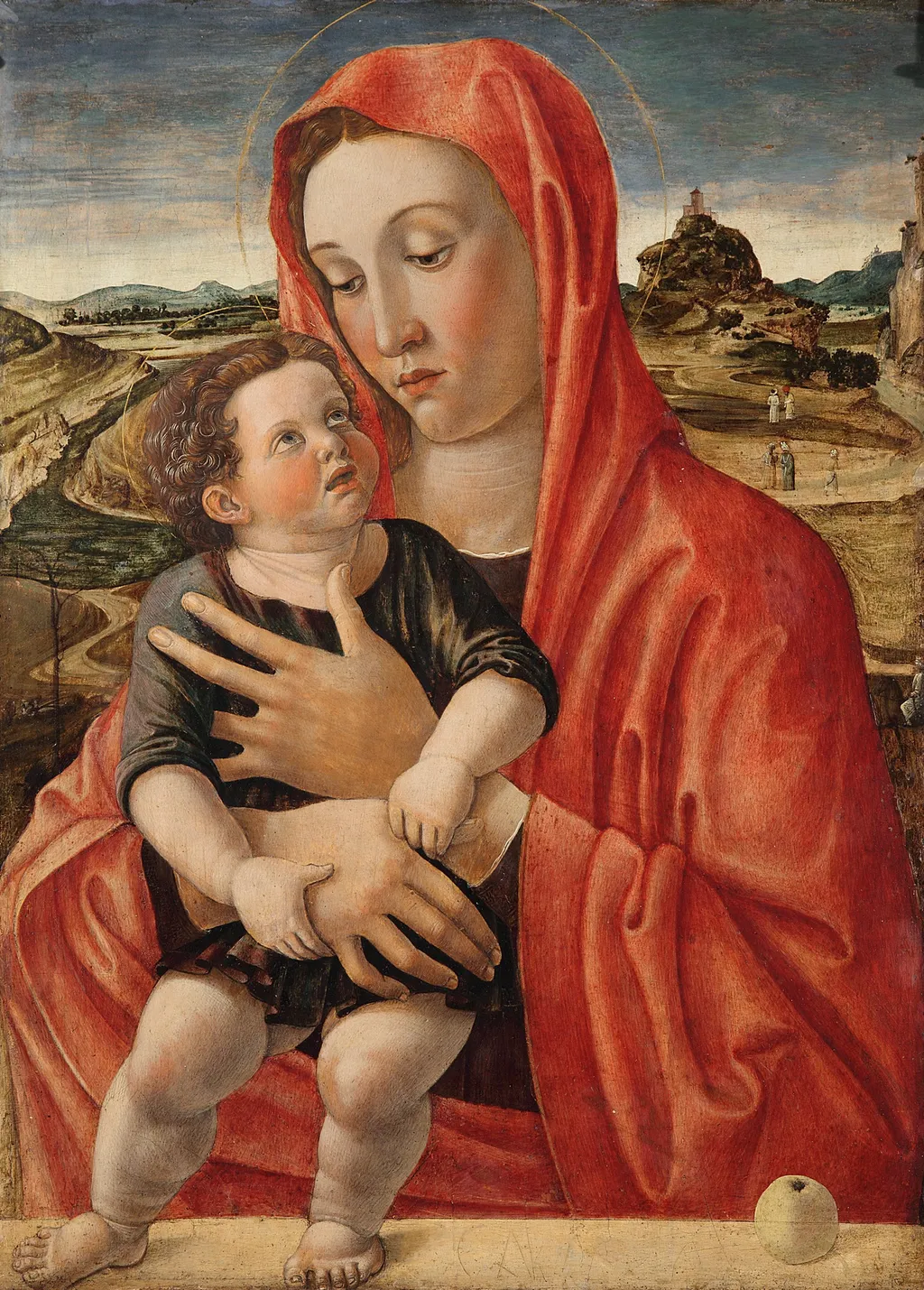
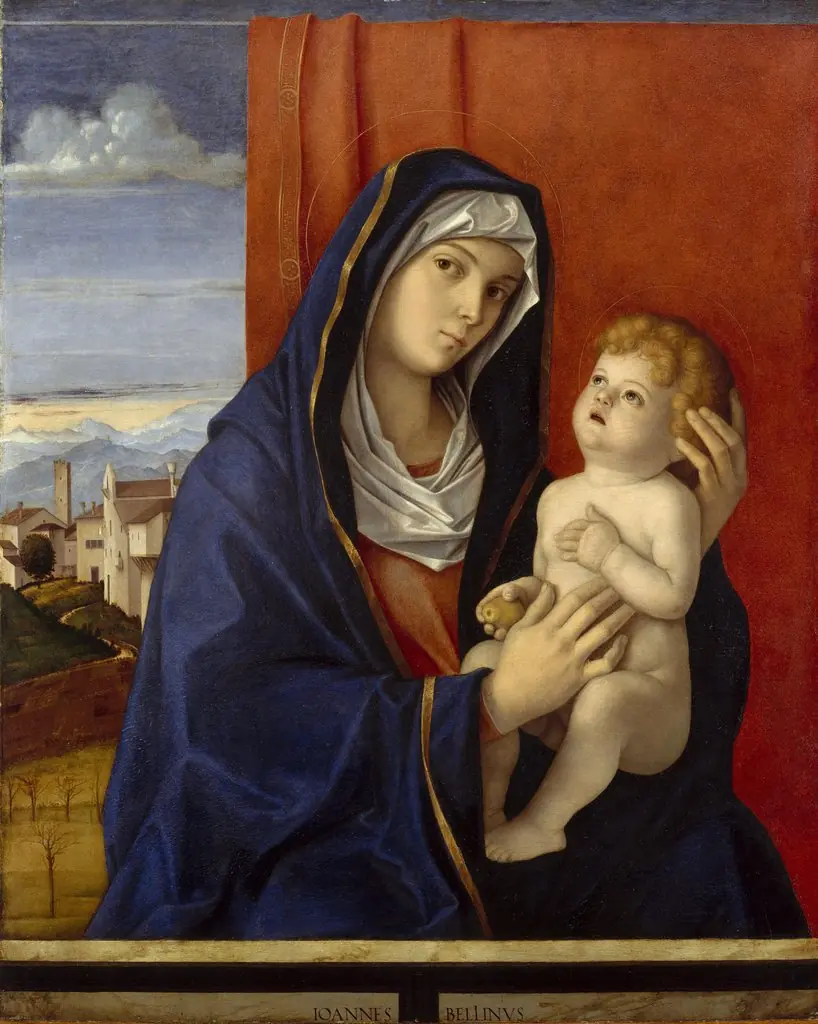
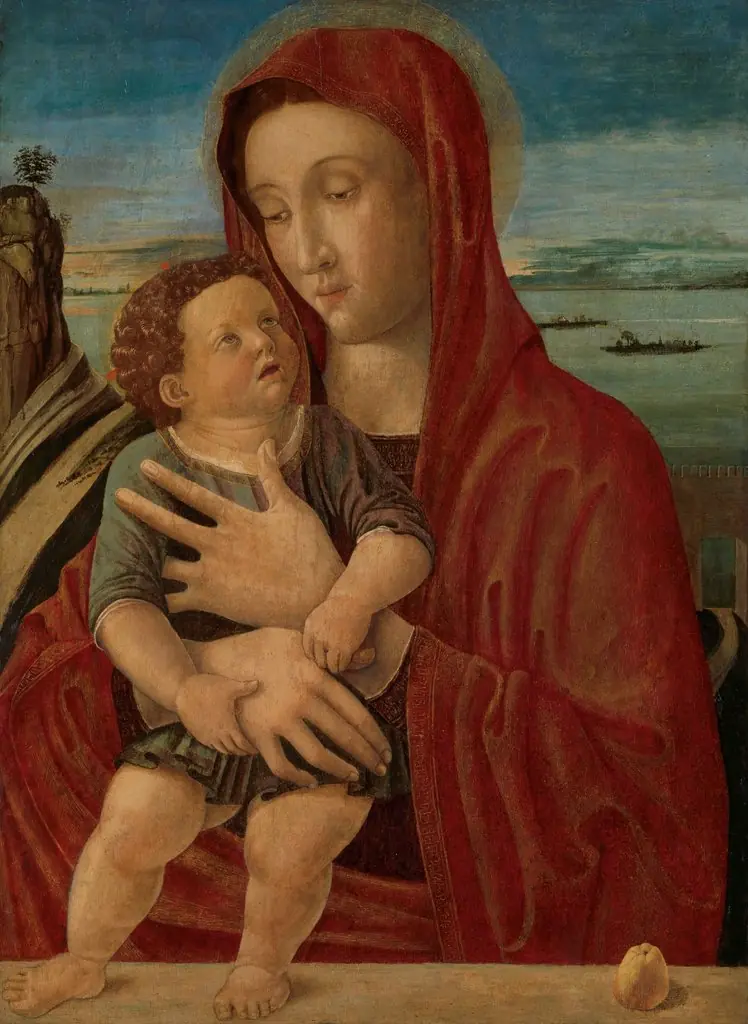
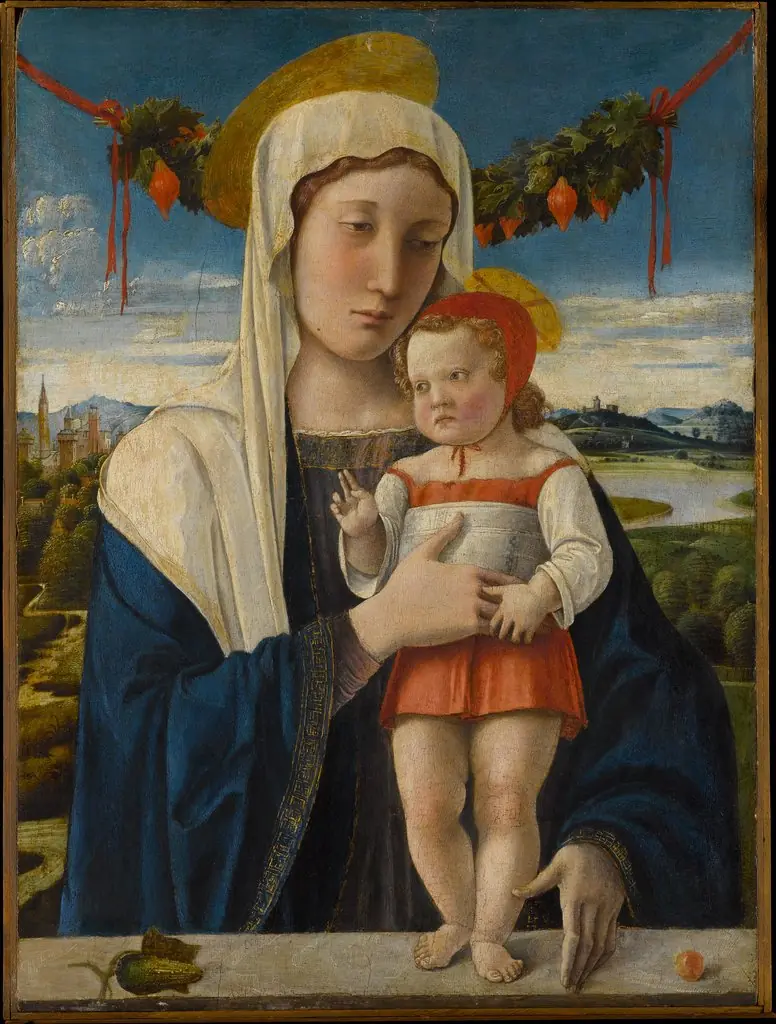
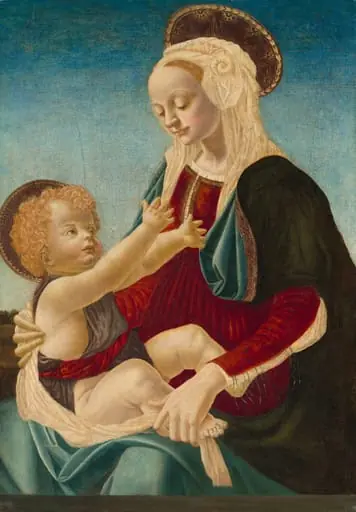
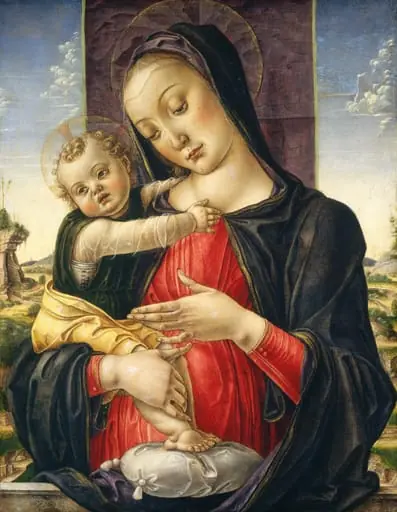
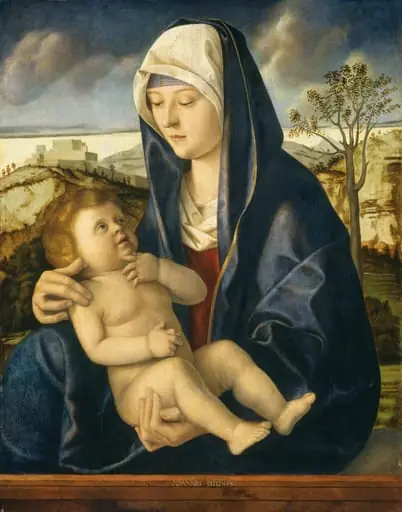
Madonna with Child is a tempera painting by the Early Renaissance artist Giovanni Bellini. It dates from 1460 and is held in the collection of the Gemäldegalerie Berlin.
About this work
Overview
Created circa 1460, this tempera panel by Giovanni Bellini presents the Virgin Mary cradling the infant Christ. The composition centers on the figures, set against a muted landscape that includes a rocky hill, a modest tower, and distant travelers. The Virgin’s red mantle dominates the scene, while the child’s curious gaze and gentle hand on her shoulder convey intimacy.
Subject & Meaning
The work portrays the theological motif of the Madonna and Child, with the infant holding an apple—a symbol traditionally linked to the fall of man and the promise of redemption. Mary’s serene expression underscores her role as intercessor, while the child's inquisitive look invites contemplation of innocence and divine purpose.
Technique & Style
Executed in egg tempera, the painting displays Bellini’s early mastery of fine, layered brushwork that yields luminous skin tones and delicate details. The restrained palette and careful modeling reflect the transitional aesthetics of the early Renaissance, merging Byzantine influences with emerging naturalism in the rendering of fabric and landscape.
History & Provenance
The panel belongs to the oeuvre of the Bellini workshop, a family central to Venetian artistic development. After remaining in private collections for centuries, it entered the holdings of the Gemäldegalerie in Berlin, where it is currently displayed as part of the museum’s early Renaissance holdings.
Context
Bellini’s Madonna with Child emerges at a time when Venetian painters were beginning to explore spatial depth and emotional expression. The work anticipates later developments in the city’s art scene, influencing contemporaries and successors who would further refine coloristic richness and compositional balance.
Own this work as a print
Artist & collection
Artist
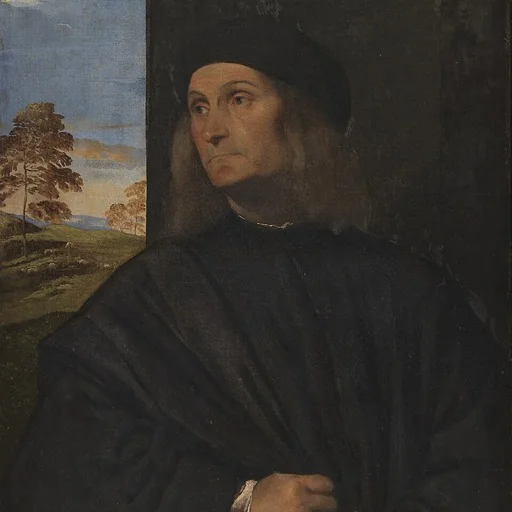
Giovanni Bellini spent his life in Venice, where the city’s soft light and water shaped his view of the world.