Artwork
Bacchus and Ariadne
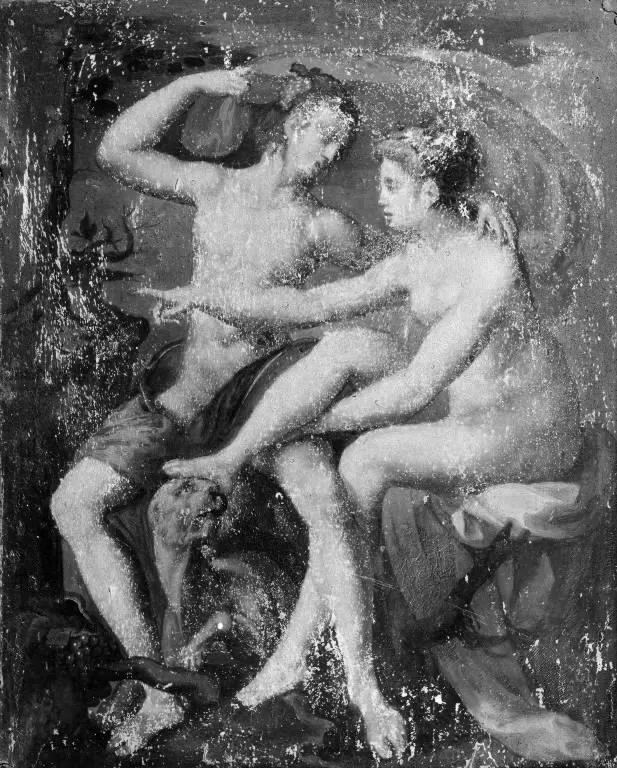
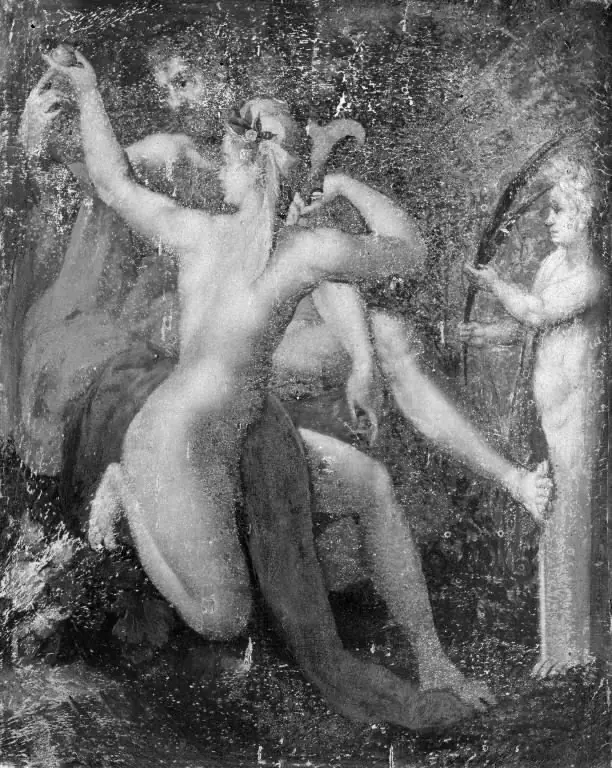
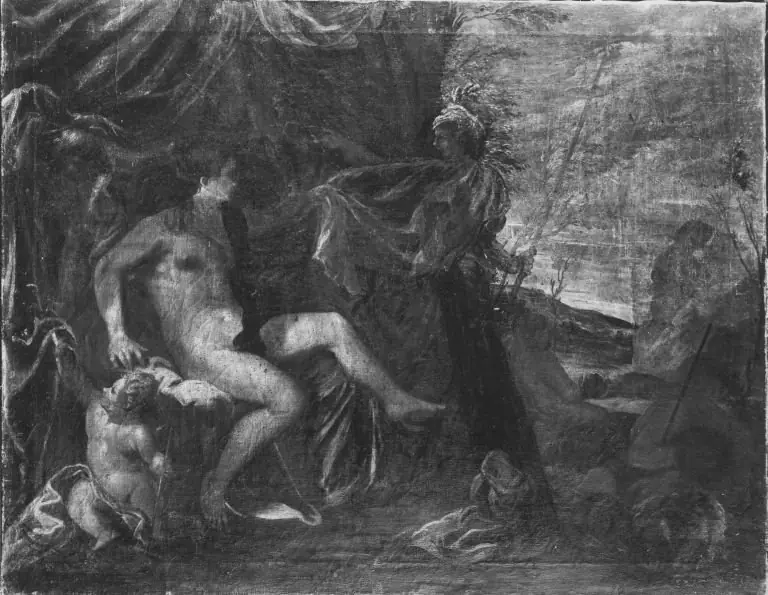
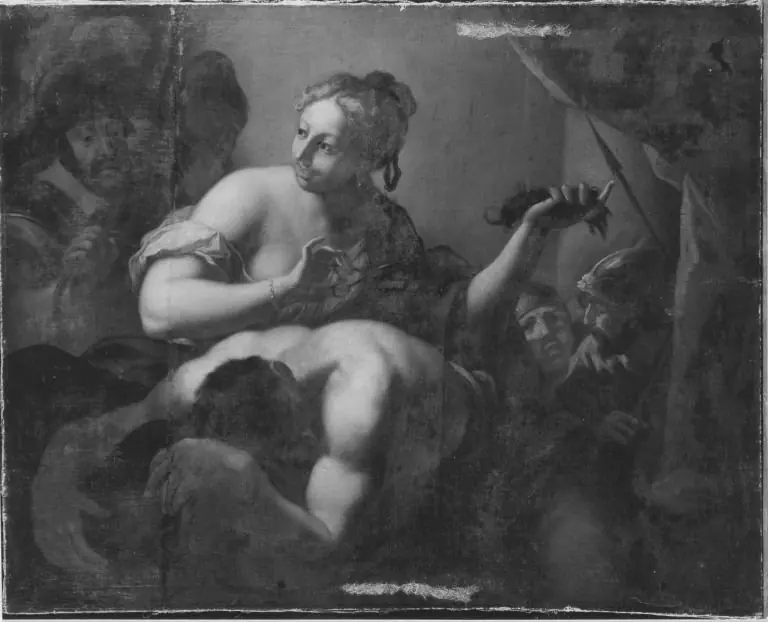
Bacchus and Ariadne is an unspecified painting by the Mannerist artist Giulio Romano. It dates from 1530 and is held in the collection of the Statens Museum for Kunst.
About this work
Overview
The canvas presents the two mythological figures within a shadowy, rocky setting, their forms illuminated by stark contrasts of light and darkness.
Giulio Romano’s *Bacchus and Ariadne*, executed in 1530, belongs to the collection of Denmark’s Statens Museum for Kunst. The canvas presents the two mythological figures within a shadowy, rocky setting, their forms illuminated by stark contrasts of light and darkness. The composition is compact, with the figures occupying the foreground while the background recedes into indistinct, atmospheric shadows.
Subject & Meaning
The painting references the classical tale in which the god Bacchus discovers the abandoned Ariadne on the island of Naxos. Romano captures a moment of intimate encounter: Ariadne appears contemplative, her head supported by a hand, while Bacchus leans back with arms raised, suggesting a gesture of reverence or triumph. The work emphasizes the emotional tension between abandonment and divine rescue.
Technique & Style
Executed in a Mannerist idiom, the surface shows vigorous, uneven brushwork that sometimes seems scraped away, creating a tactile quality. Romano employs pronounced chiaroscuro, allowing patches of near‑luminescence to emerge from deep shadows, heightening the drama. The figures are rendered with elongated proportions and a relaxed pose that departs from the balanced classicism of his master, Raphael.
History & Provenance
Created shortly after Romano’s return to Mantua, the canvas entered the Statens Museum for Kunst’s holdings in the early twentieth century, though its precise acquisition path remains sparsely documented. Its presence in a national collection reflects the museum’s interest in representing the transition from High Renaissance ideals to the more expressive Mannerist style.
Context
Romano, a leading disciple of Raphael, began to diverge from his teacher’s harmonious classicism, embracing the exaggerated forms and emotional intensity that characterize Mannerism. *Bacchus and Ariadne* illustrates this shift, situating a mythological narrative within a theatrical setting that foregrounds the artist’s personal stylistic experimentation during the early sixteenth century.
Artist & collection
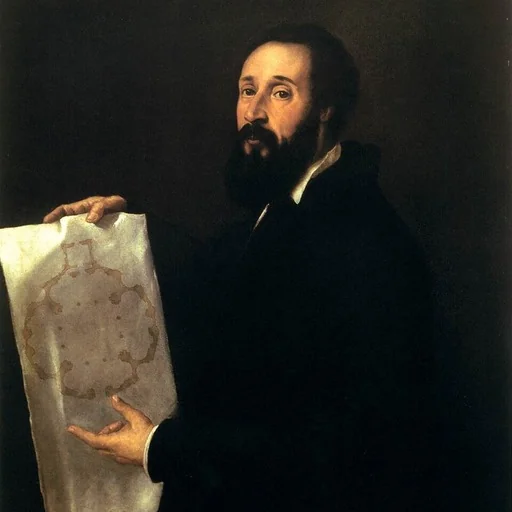
Artist
Giulio Pippi (c. 1499 – 1 November 1546), known as Giulio Romano (US: JOOL-yoh rə-MAH-noh( Italian: ) and sometimes known in French as Jules Romain, was an Italian painter and architect. He was a pupil of Raphael, and…