Artwork
Flowers by a Pond with Frogs
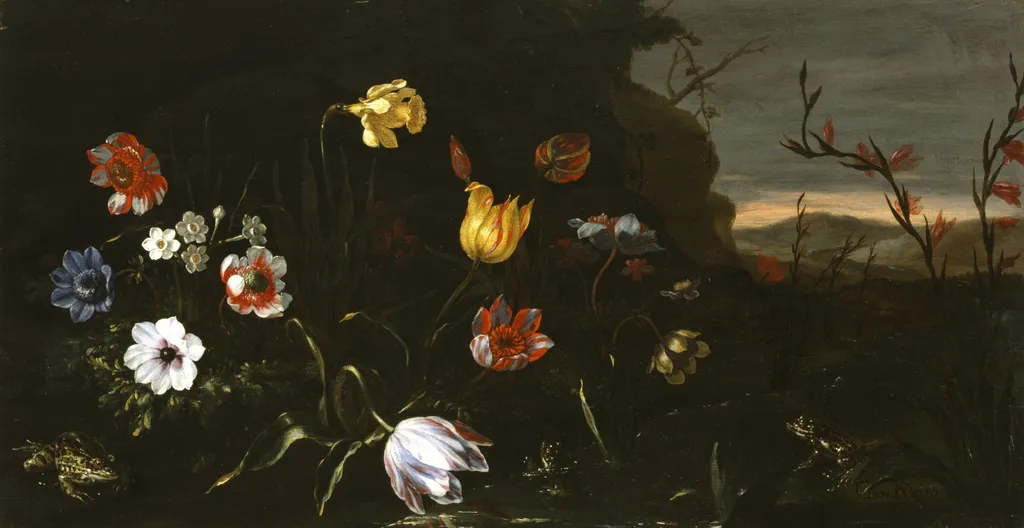
Flowers by a Pond with Frogs is an oil painting by the Flemish Baroque painting artist Giuseppe Recco. It dates from 1670 and is held in the collection of the Walters Art Museum.
About this work
Overview
Painted in 1670 by Giuseppe Recco, this oil-on-canvas work presents a quiet garden scene centered on a cluster of flowers beside a shallow pond.
Painted in 1670 by Giuseppe Recco, this oil-on-canvas work presents a quiet garden scene centered on a cluster of flowers beside a shallow pond. Recco, an Italian artist of the Baroque era, specialized in still life, and this piece reflects his attention to natural detail. The composition balances botanical elements with living creatures, creating a sense of calm observation rather than staged display.
Subject & Meaning
The painting features tulips in vivid hues—yellow, red, white, and purple—arranged loosely as if growing wild near water. Frogs, rendered in earthy greens and browns, rest at the flowers’ base, their upward gazes suggesting quiet interaction with the flora. The scene evokes a moment of coexistence between plant and animal life, without overt symbolism, emphasizing the quiet vitality of the natural world.
Technique & Style
Recco employed fine brushwork to capture the delicate textures of petals and the moist, smooth skin of frogs. The dark, muted background intensifies the chromatic richness of the flowers and amphibians, a technique common in Flemish Baroque still lifes. Light falls subtly across the scene, modeling forms with soft contrasts rather than dramatic chiaroscuro, reinforcing the intimate, observational tone.
History & Provenance
The painting entered the collection of the Walters Art Museum in Baltimore, where it remains today. While its early ownership is undocumented, its style aligns with Recco’s known output from the 1660s and 1670s, a period when he refined his still-life compositions in Naples. Its preservation suggests it was valued as a refined example of Italian naturalism during the late Baroque.
Context
In 17th-century Italy, still life painting gained prominence as collectors sought depictions of nature’s abundance. Recco’s work reflects influences from Flemish traditions, particularly in the meticulous rendering of flora and fauna. Unlike Dutch still lifes that often carried moral messages, Recco’s approach leaned toward sensory observation, capturing the immediacy of a moment in the wild.
Legacy
Though not widely exhibited outside institutional collections, this painting exemplifies Recco’s contribution to Italian Baroque still life. His integration of living animals into floral arrangements distinguished his work from more static compositions of the time. Today, it stands as a quiet testament to the period’s growing interest in natural observation, free from allegory or grandeur.
Artist & collection
Artist
Giuseppe Recco (1634 – 29 May 1695) was an Italian painter in the Baroque style. He specialized in a variety of still lifes.

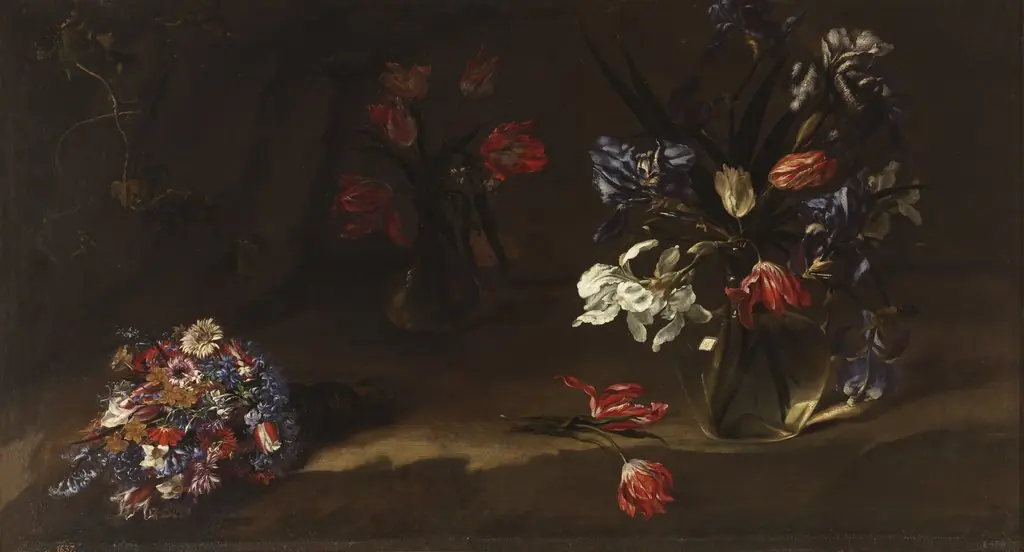 Vases of flowers
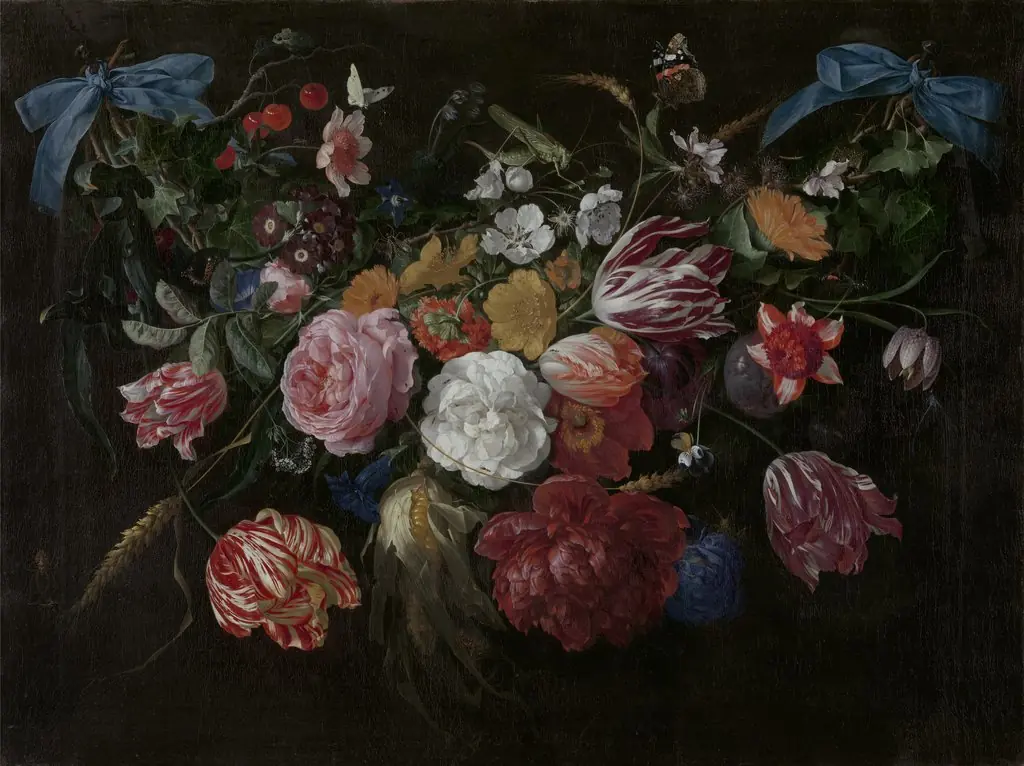 Flowers and Insects
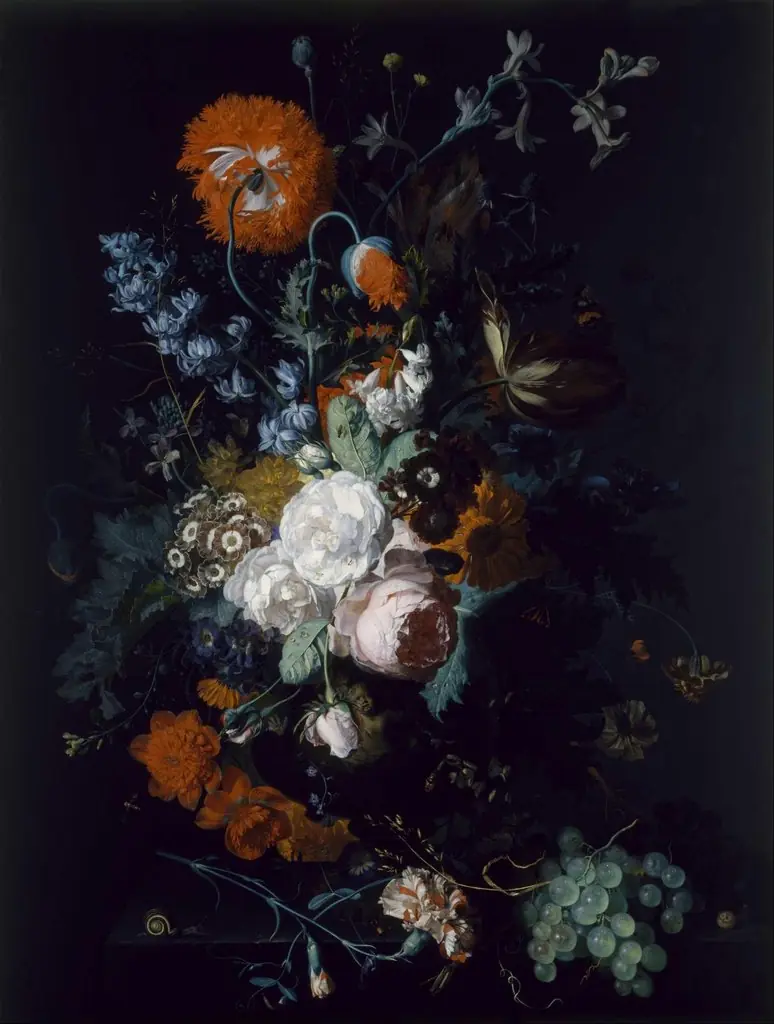 Still Life of Flowers and Fruit
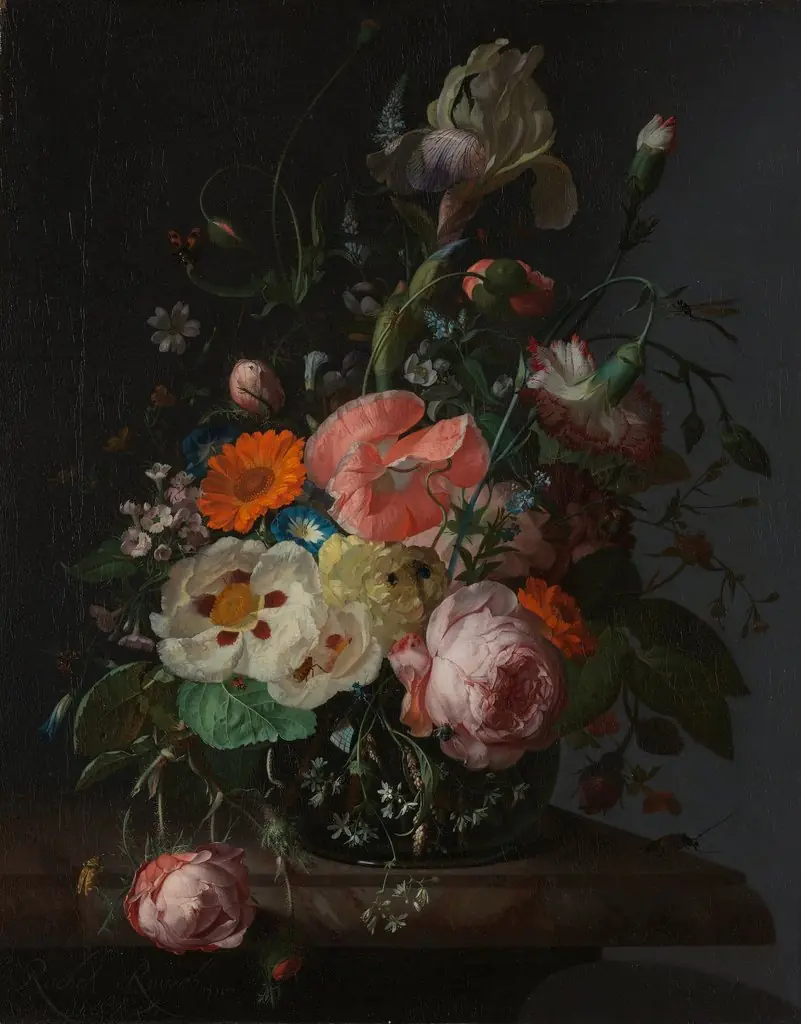 Still Life with Flowers on a Marble Slab
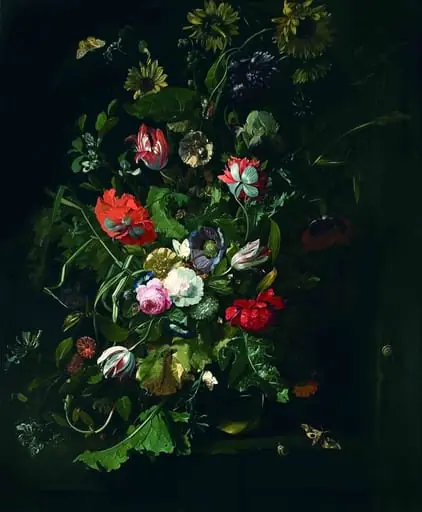 Buchet de flori într-un vas
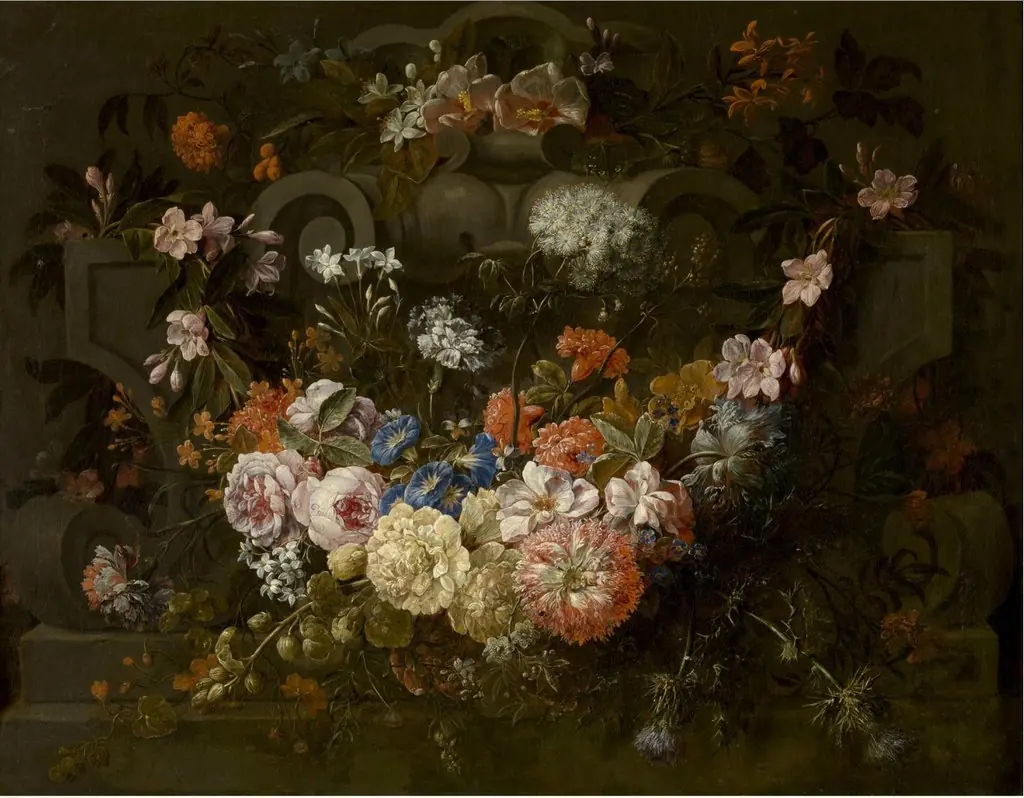 Cartouche with Flowers
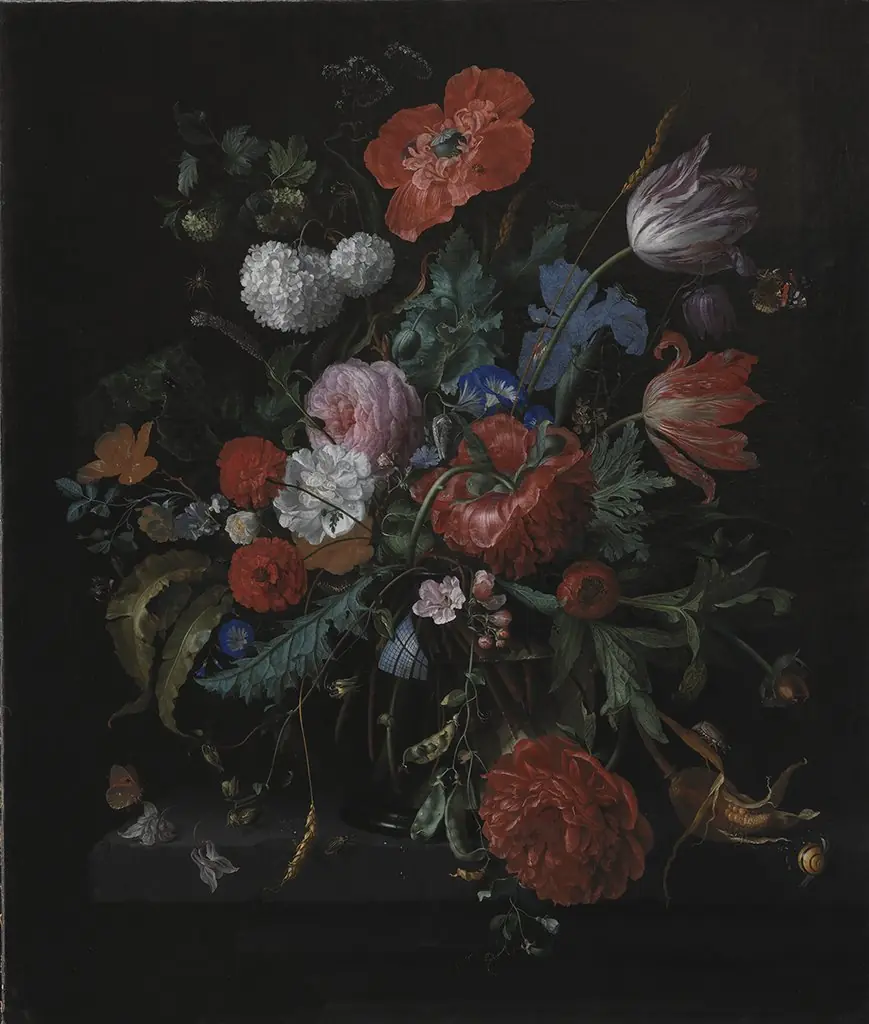 A Bunch of Flowers
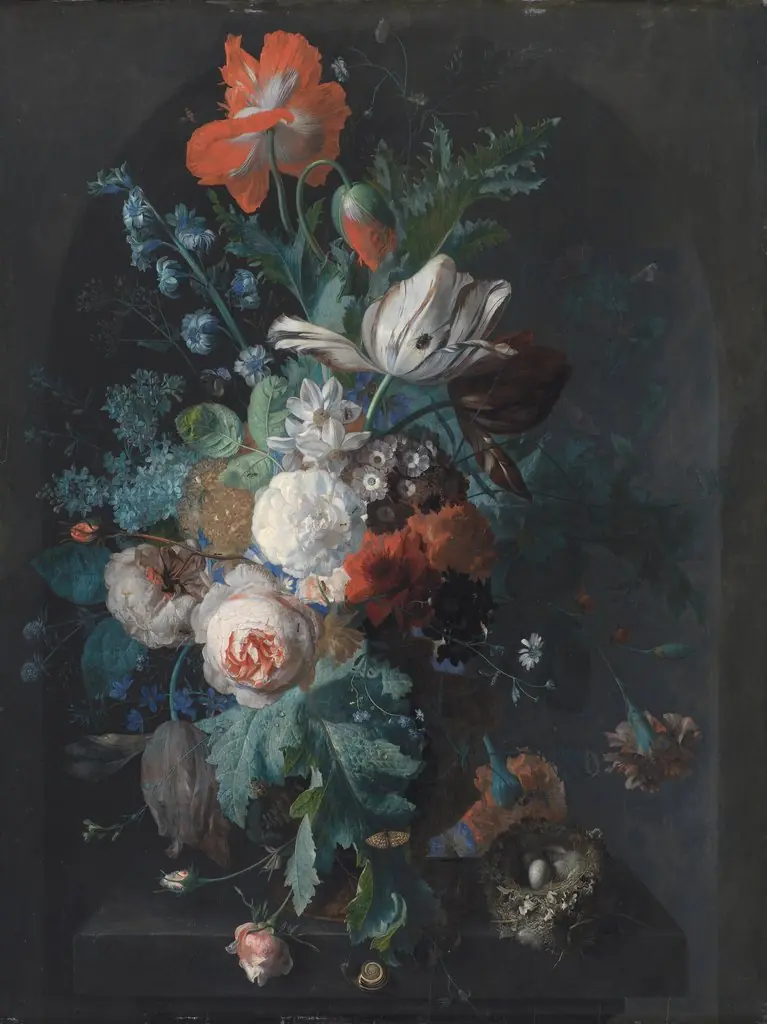 A Vase with Flowers
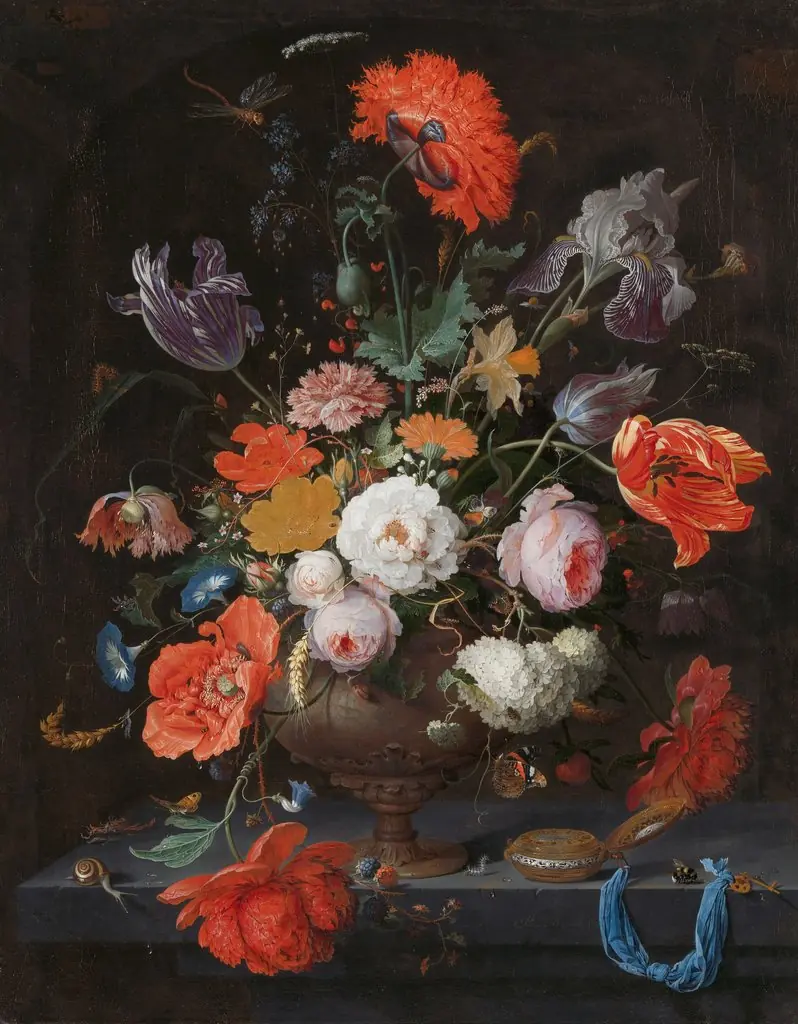 Still life with flowers and a watch
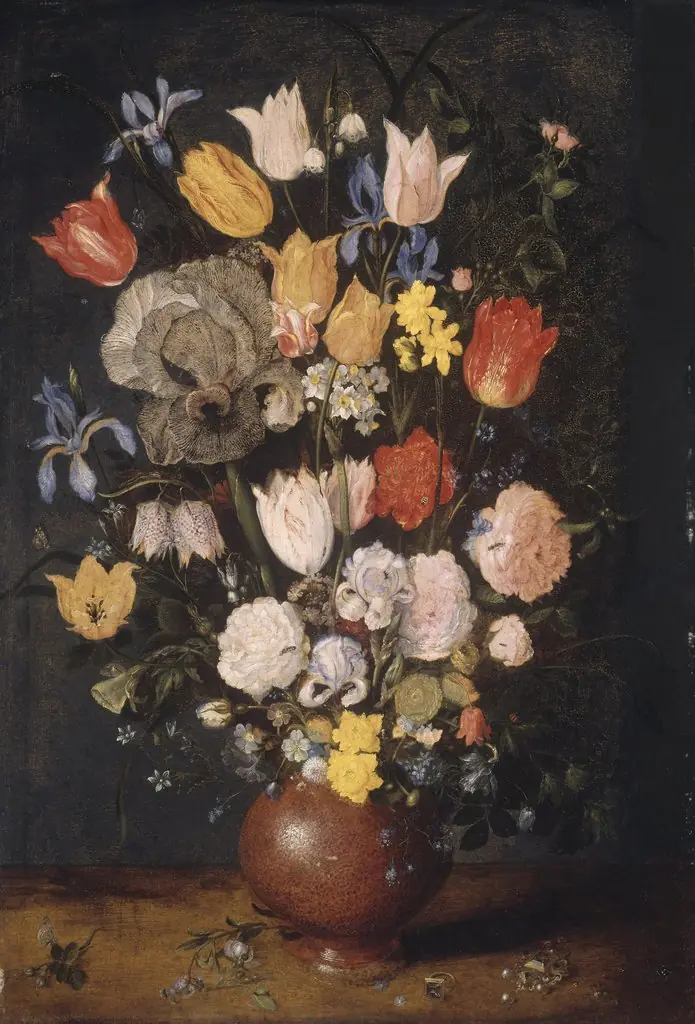 Bouquet of Flowers in an Earthenware Vase
 A Garland of Flowers
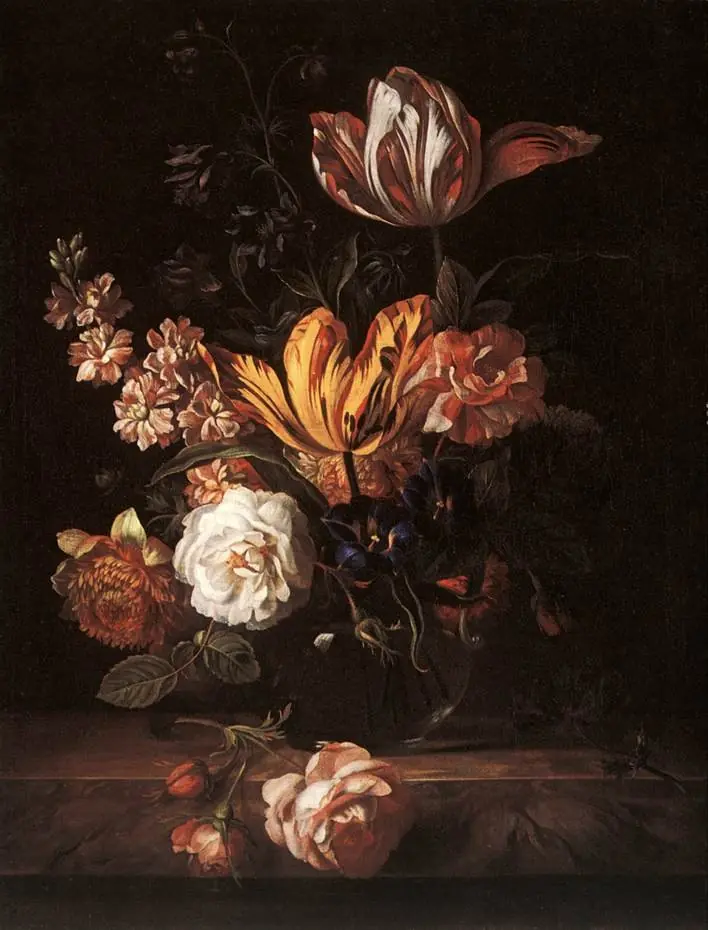 Flowers in a glass vase