Artwork
Portrait of a woman
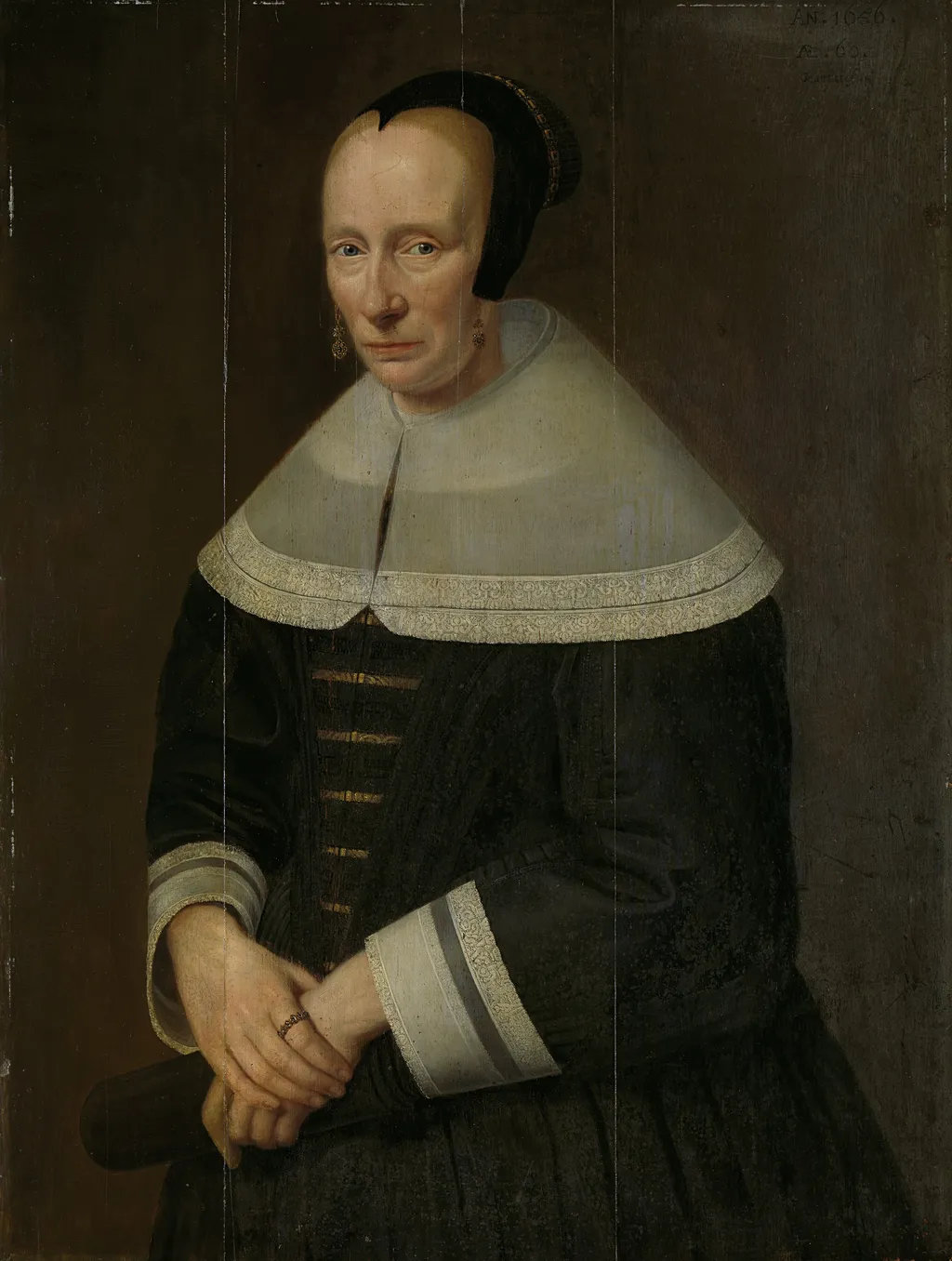
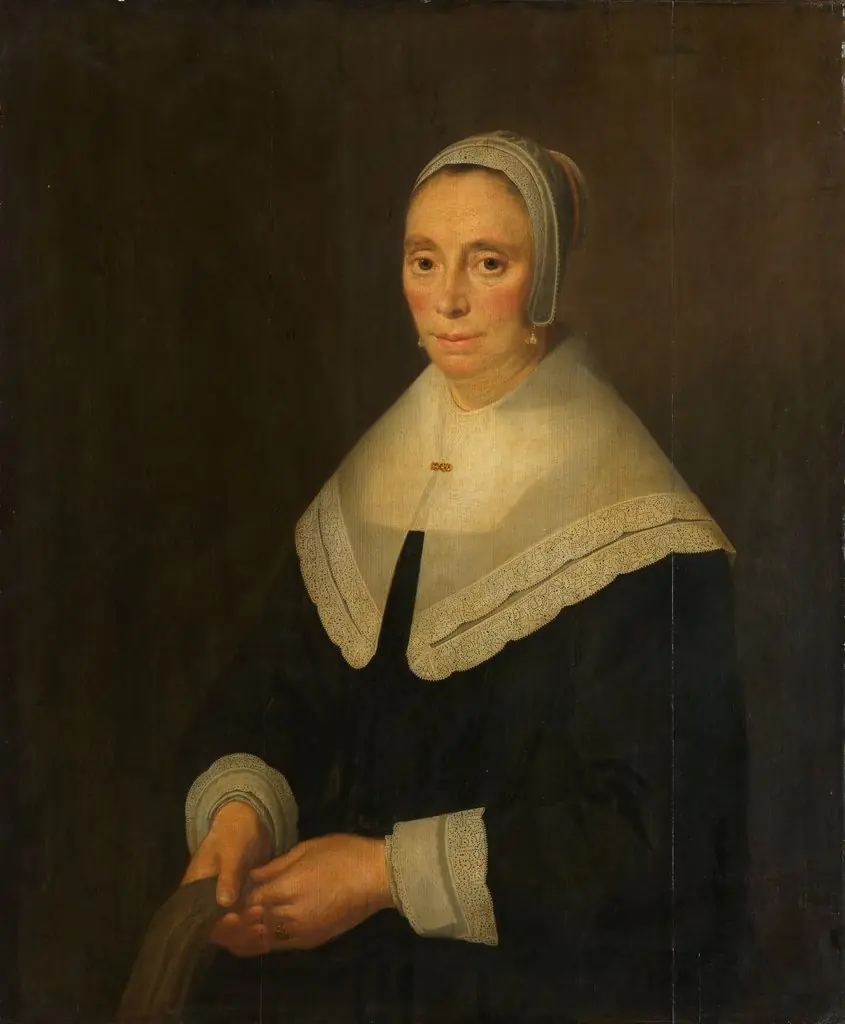
Portrait of a woman is an oil painting by the Dutch Golden Age artist Godaert Kamper. It dates from 1656 and is held in the collection of the Rijksmuseum.
About this work
She is adorned with a black head covering and large earrings, and her hands are clasped together in front of her.
The painting depicts a woman dressed in 17th-century attire, wearing a dark dress with a white collar and cuffs. She is adorned with a black head covering and large earrings, and her hands are clasped together in front of her.
The woman's face is rendered in a realistic style, with a neutral expression. The background of the painting is dark, which helps to highlight the subject's features.
This painting is an example of a portrait from the 17th century, and it is held at the Rijksmuseum.
Overview
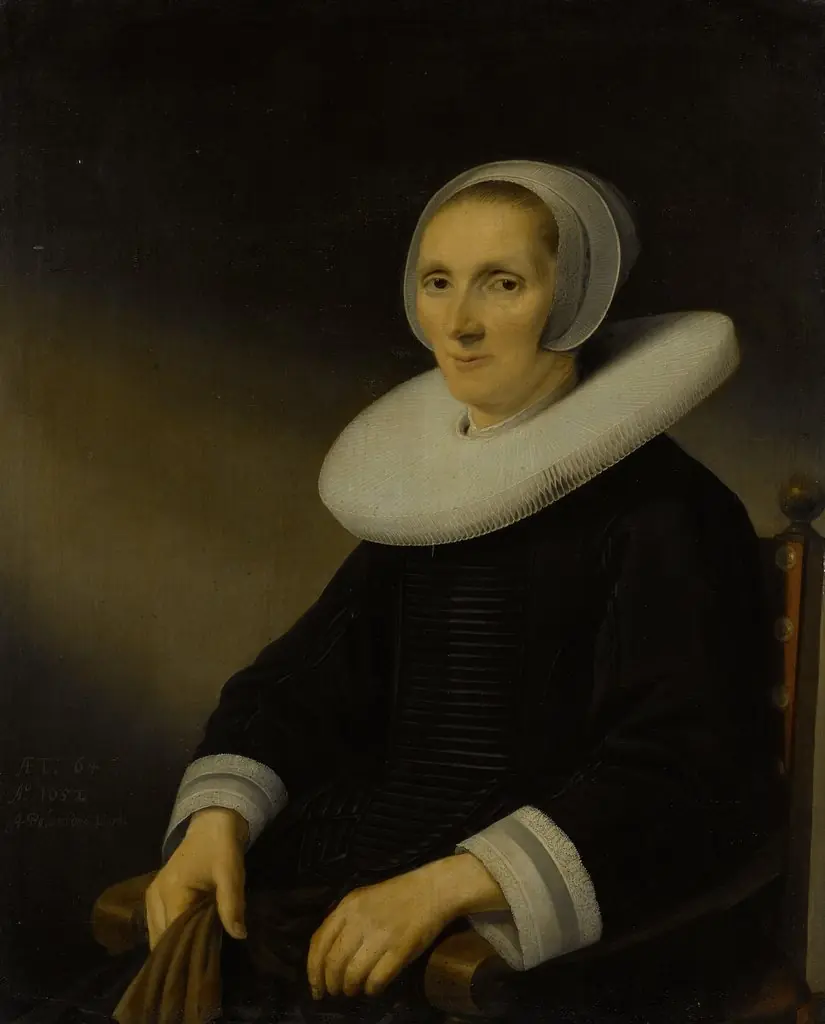
Godaert Kamper’s oil portrait, dated 1656, presents a seated woman in a restrained composition. The work is part of the Rijksmuseum’s collection, where it exemplifies mid‑seventeenth‑century Dutch portraiture. The figure occupies the central space against a darkened backdrop, drawing attention to her attire and facial features.
Subject & Meaning
The sitter is dressed in contemporary 17th‑century clothing: a dark gown trimmed with a white collar and cuffs, a black head covering, and prominent earrings. Her hands are gently clasped before her, and her expression remains neutral, suggesting modesty and decorum typical of private portrait commissions of the period.
Technique & Style
Kamper employs a realistic approach to render the woman’s face, using fine brushwork to model skin tones and subtle light. The dark, almost monochrome background serves to isolate the figure, enhancing the contrast between the luminous white collar and the deep shadows of her dress.
History & Provenance
Created in 1656, the painting entered the Rijksmuseum’s holdings through acquisition in the early 20th century, though earlier ownership records are sparse. Its presence in the museum’s collection underscores the institution’s focus on Dutch Golden Age portraiture.
Context
During the mid‑1600s, Dutch portraiture often emphasized individuality within a restrained aesthetic, reflecting the era’s bourgeois values. Kamper’s work aligns with this trend, presenting a dignified, unembellished representation that mirrors contemporary social expectations of modesty and propriety.
Own this work as a print
Artist & collection