Artwork
Υπερτροφία
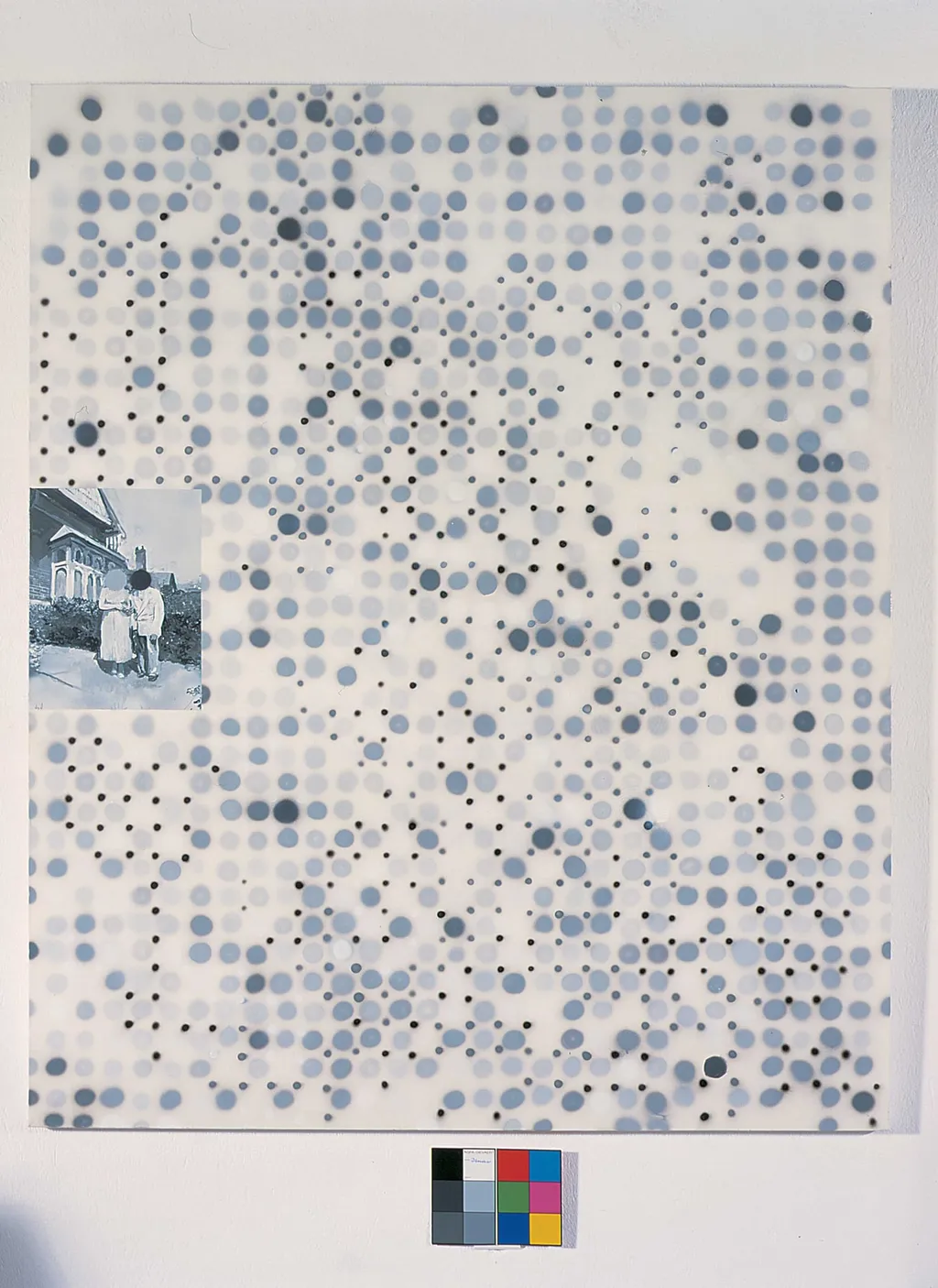
Υπερτροφία is a photography by Vangelis Gokas. It dates from 1998 and is held in the collection of the Metropolitan Organisation of Museums of Visual Arts of Thessaloniki – MOMus.
About this work
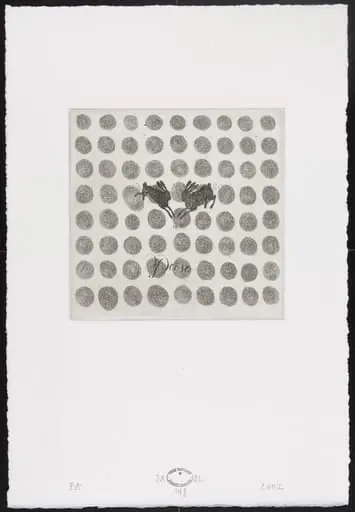
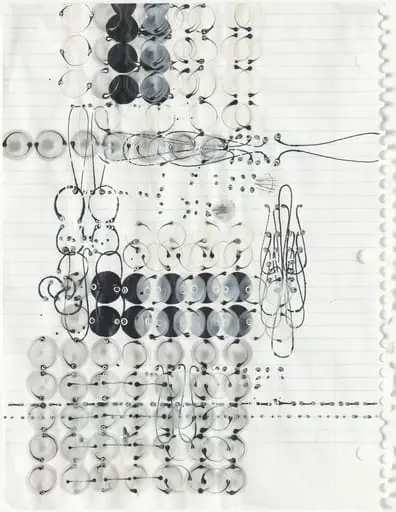
You see two figures in a photograph with grey and black dots covering their faces.
The dots are repeated in different tones throughout the image. This creates a sense of depth and time. It's like the artist is trying to remember something from the past.
Check out the work of artist: Gokas, Vangelis (1969) to see more explorations of memory and photography.
Overview
The repetition of these marks across the canvas suggests the gradual fading and reconstruction of recollection.
Vangelis Gokas's work 'Hypertrophy' engages with the fragility of memory through photographic intervention. By overlaying a found image with dense clusters of grey and black dots, the artist disrupts the clarity of two figures' faces, transforming a static snapshot into a field of visual erosion. The repetition of these marks across the canvas suggests the gradual fading and reconstruction of recollection.
Subject & Meaning
The two figures, obscured by stippled dots, represent the tension between presence and absence in personal memory. Their identities remain ambiguous, inviting viewers to consider how recollection distorts or reconstructs faces and moments. The dots function not as concealment but as traces—echoes of what once was visible, hinting at the mind’s imperfect archive of the past.
Technique & Style
Gokas employs a methodical application of ink-like dots in varying densities and tones, mimicking photographic grain and halftone printing. These marks spread beyond the figures into the surrounding space, blurring boundaries between subject and background. The technique evokes analog photographic processes while introducing a painterly layer that resists mechanical reproduction.
History & Provenance
The work originates from Gokas’s broader investigation into photographic archives and their relationship to personal history. Though the source photograph’s origin is unrecorded, its reuse signals a deliberate engagement with found imagery—common in post-conceptual practices of the late 1990s and early 2000s. The piece reflects a period when artists questioned the reliability of visual documentation.
Context
Emerging in a climate of digital transition, 'Hypertrophy' responds to anxieties about the loss of analog memory systems. As photography moved from physical prints to ephemeral files, Gokas’s tactile intervention underscores the materiality of recollection. His work aligns with contemporaries exploring decay, indexicality, and the emotional weight of obsolete media.
Legacy
Gokas’s approach to memory through visual obstruction has influenced subsequent artists working at the intersection of photography and painting. His use of dot-based erasure as a metaphor for forgetting has become a recognizable strategy in contemporary discourse on archival loss. The work remains a quiet but persistent meditation on what endures when images fade.
Artist & collection
Artist
Museum
Metropolitan Organisation of Museums of Visual Arts of Thessaloniki – MOMus
Continue through works from the same source collection.