Artwork
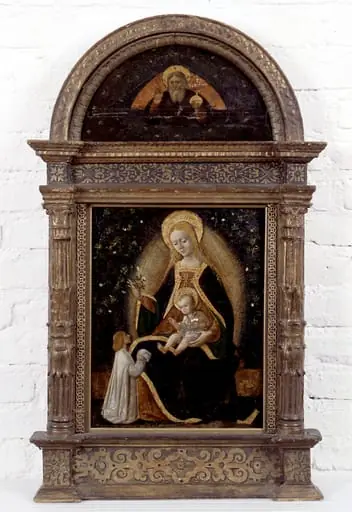
Madonna ja lapsi valtaistuimella
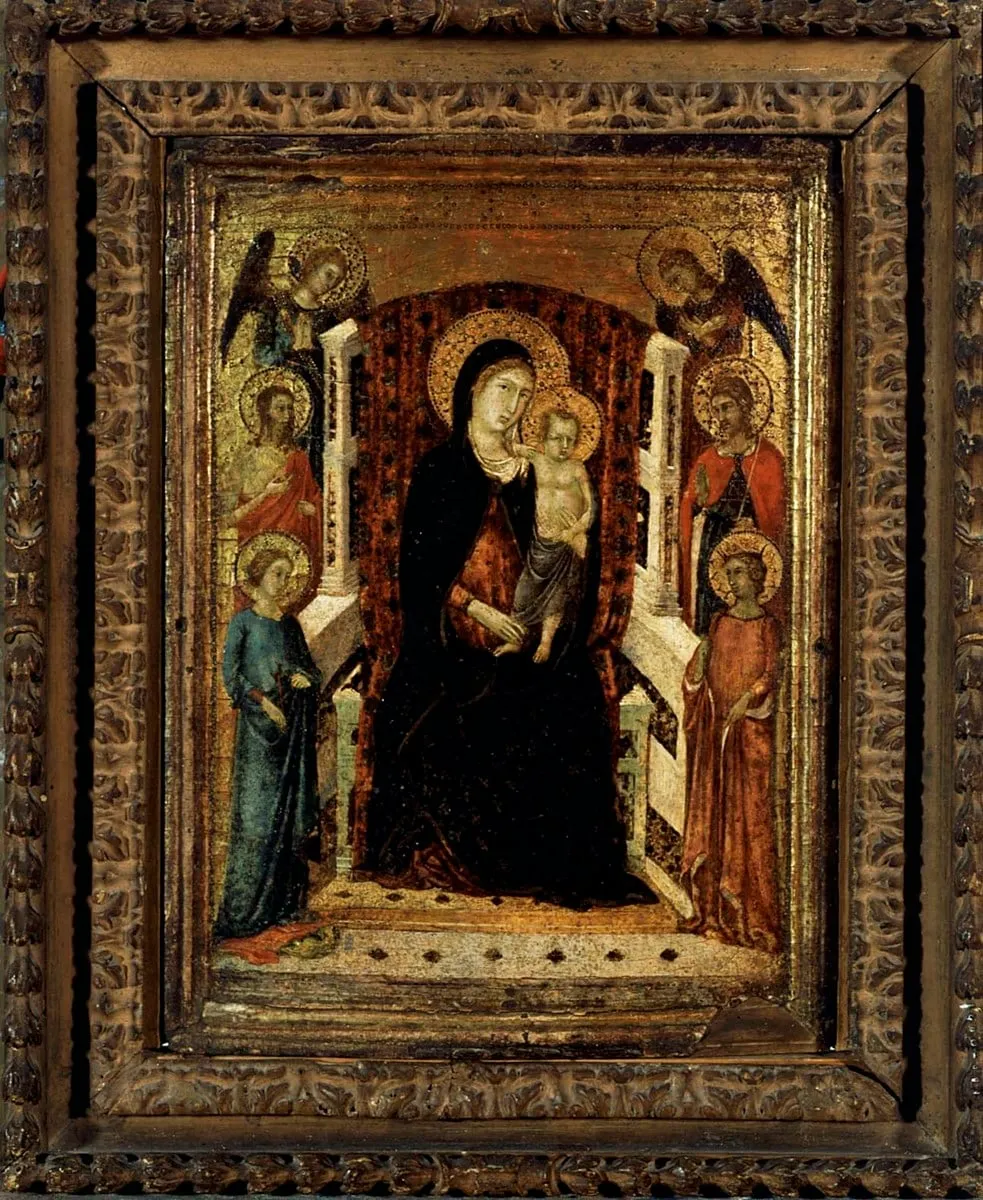
Madonna ja lapsi valtaistuimella is an unspecified painting by Goodhart Master. It is held in the collection of the Finnish National Gallery. This religious panel painting depicts the Virgin Mary seated on a throne with the Christ Child beside her.
About this work
Overview
This religious panel painting depicts the Virgin Mary seated on a throne with the Christ Child beside her. Attributed to the artist known as Goodhartin mestari, it reflects the devotional traditions of late medieval Northern Europe. The composition is restrained, emphasizing stillness and intimacy over grandeur, consistent with regional practices of the time.
Subject & Meaning
The Virgin and Child are portrayed in a quiet, domesticated manner, avoiding overt majesty. Mary’s modest attire and the child’s upward gaze suggest tenderness rather than divine authority. This approach reflects a devotional emphasis on maternal love and human connection, making the sacred more accessible to private contemplation.
Technique & Style
Executed in tempera on wood, the painting employs fine brushwork and flat, layered pigments typical of Northern European panel painting. While the surface shows careful modeling, it does not use sfumato—a technique more characteristic of Italian Renaissance oil painting. Instead, clarity of form and delicate detail define its aesthetic.
History & Provenance
The work originates from a regional workshop active in the late 14th or early 15th century, likely in what is now Finland or Sweden. Its survival suggests it was venerated in a local church or private chapel. No definitive records of its early ownership exist, but its preservation indicates enduring religious significance within its community.
Context
During this period, devotional images of the Virgin and Child were common in Nordic churches, often commissioned for personal or communal prayer. This painting aligns with a broader trend of simplifying iconography to foster emotional engagement, contrasting with the more elaborate styles emerging in southern Europe at the time.
Legacy
Though not widely known outside regional collections, the painting exemplifies the quiet, intimate devotional style that persisted in Northern Europe long after Italian innovations had transformed artistic norms. It remains a testament to the enduring power of modest, handcrafted religious imagery in medieval worship.
Artist & collection
Artist
Italian painter in the early 1300s, Goodhart Master worked with wood panels, layering tempera paint in the old Tuscan tradition.

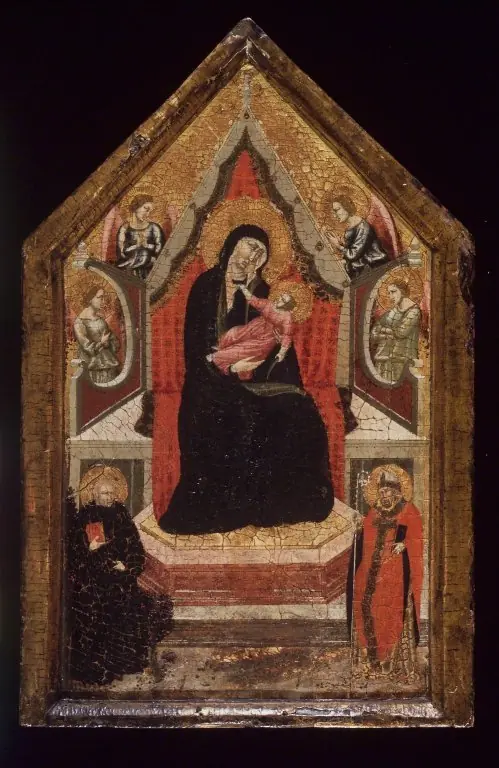 Virgin and Child Enthroned with Saints Benedict and Donato (?) and Four Angels
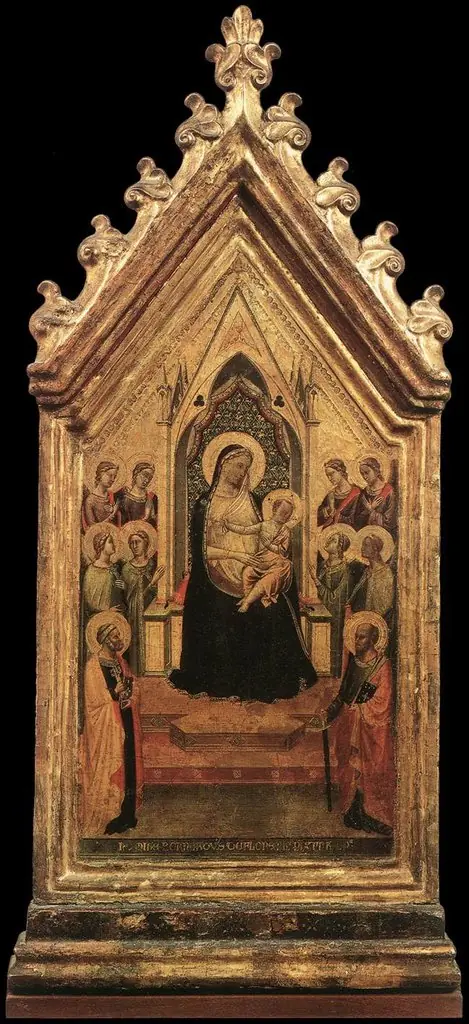 Madonna and Child Enthroned with Angels and Saints
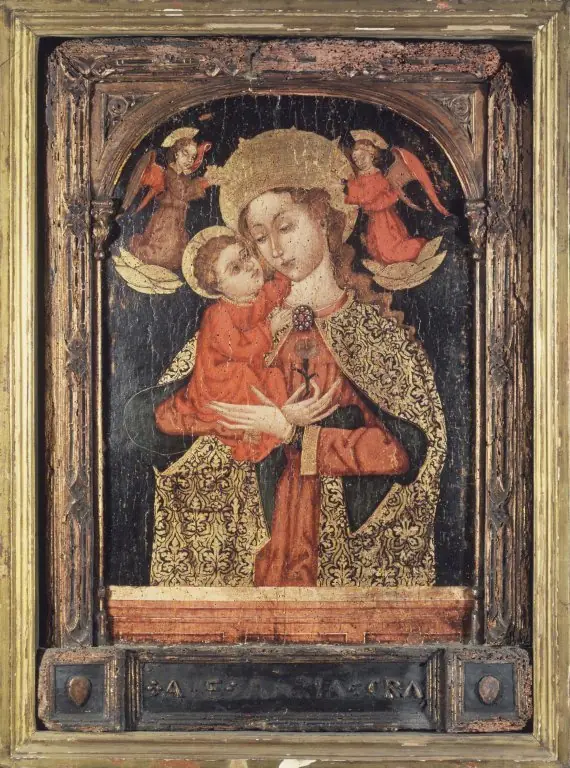 Virgin and Child with Two Angels
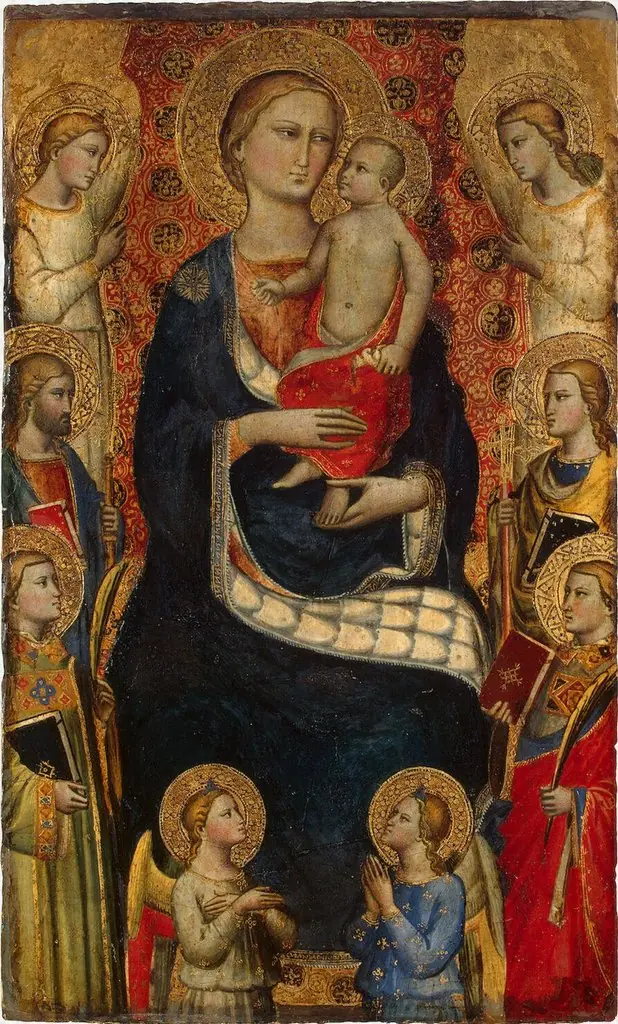 Madonna and Child, Four Saints and Four Angels
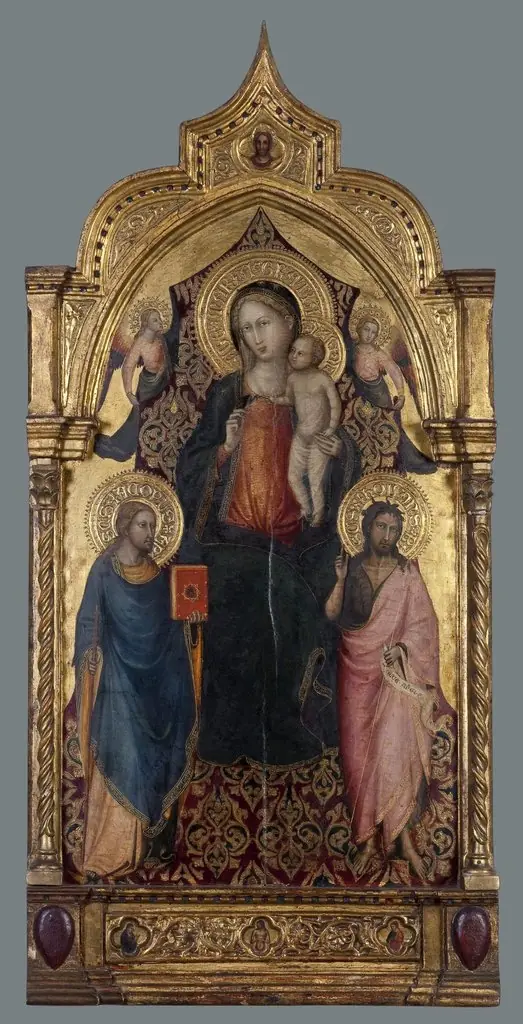 Madonna and Child, with St Jacob the Younger, St John The Baptist and Angels
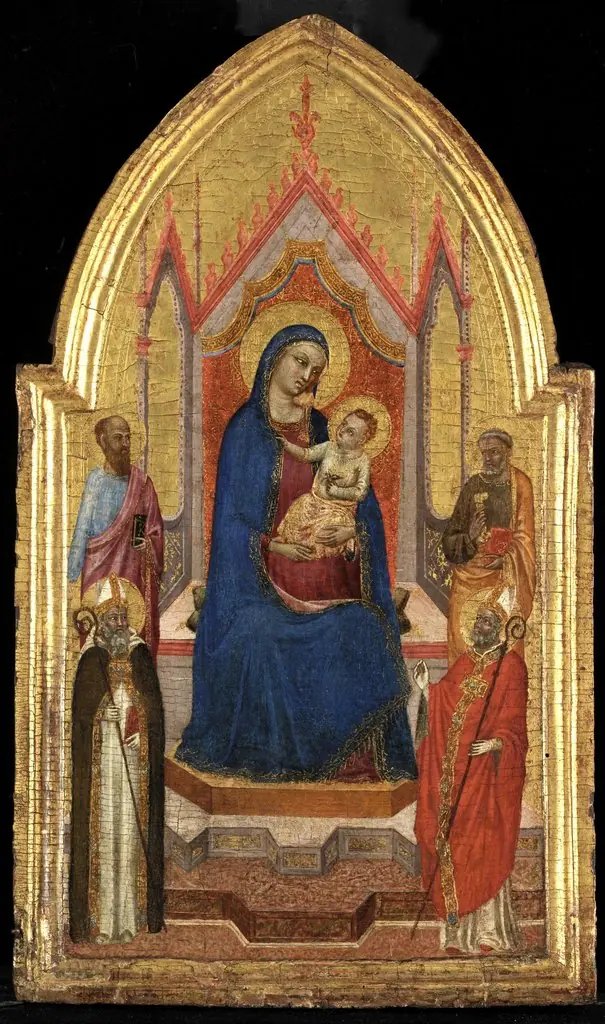 Madonna and Child Enthroned with Four Saints
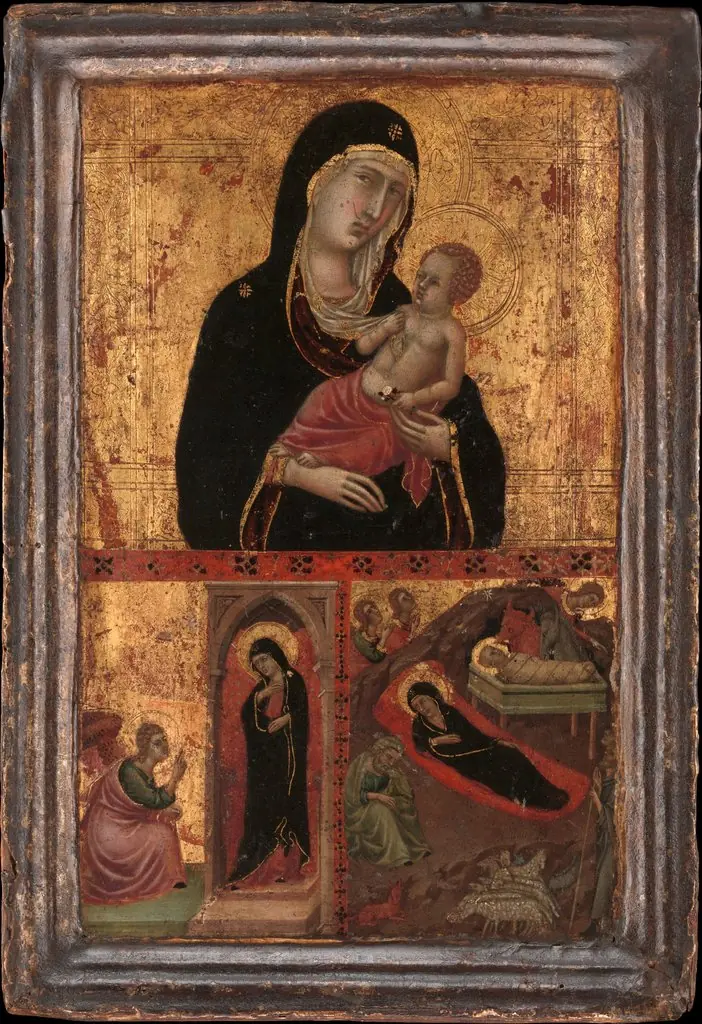 Madonna and Child with the Annunciation and the Nativity
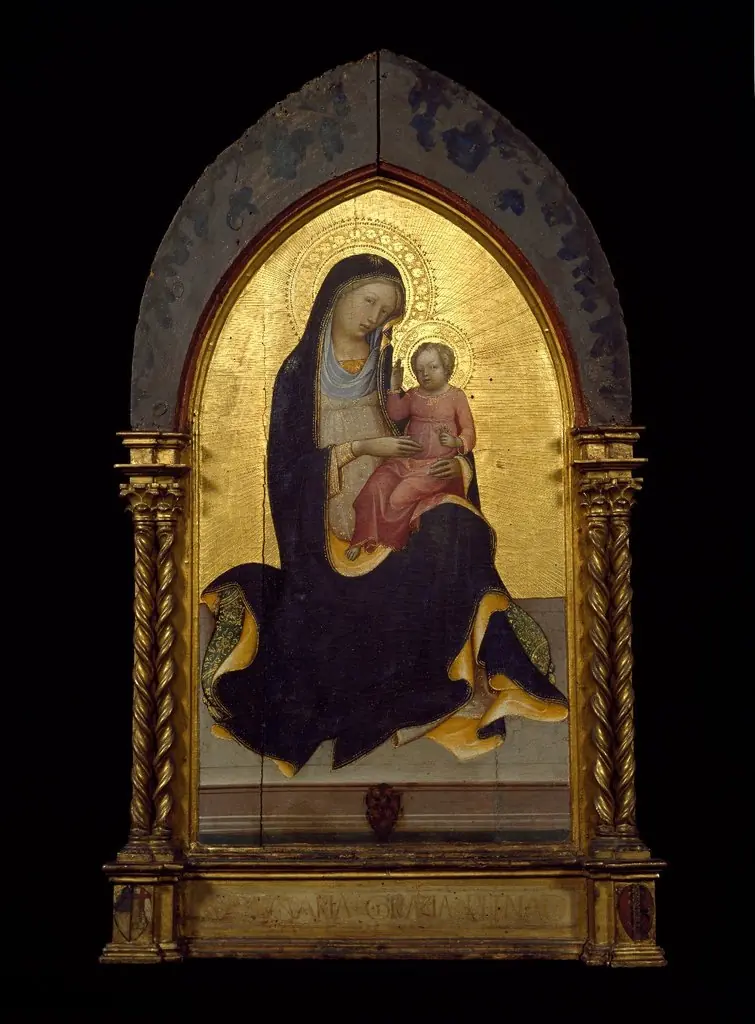 Madonna of humility
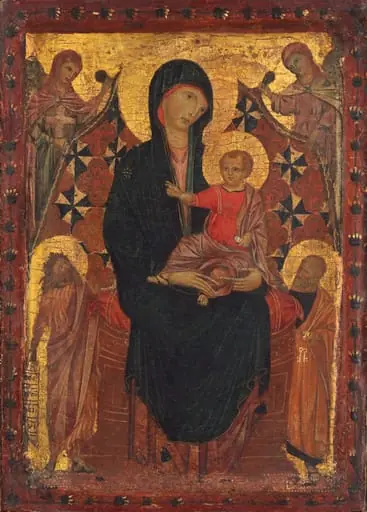 Madonna and Child with Saint John the Baptist, Saint Peter, and Two Angels
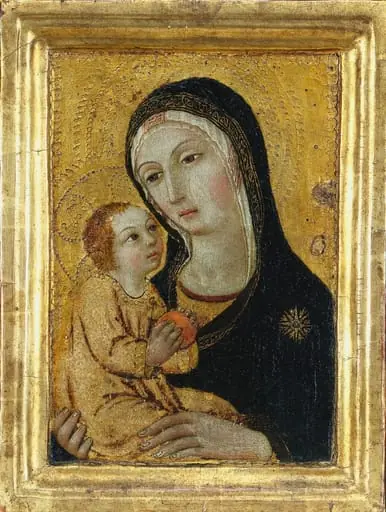 Virgin and Child
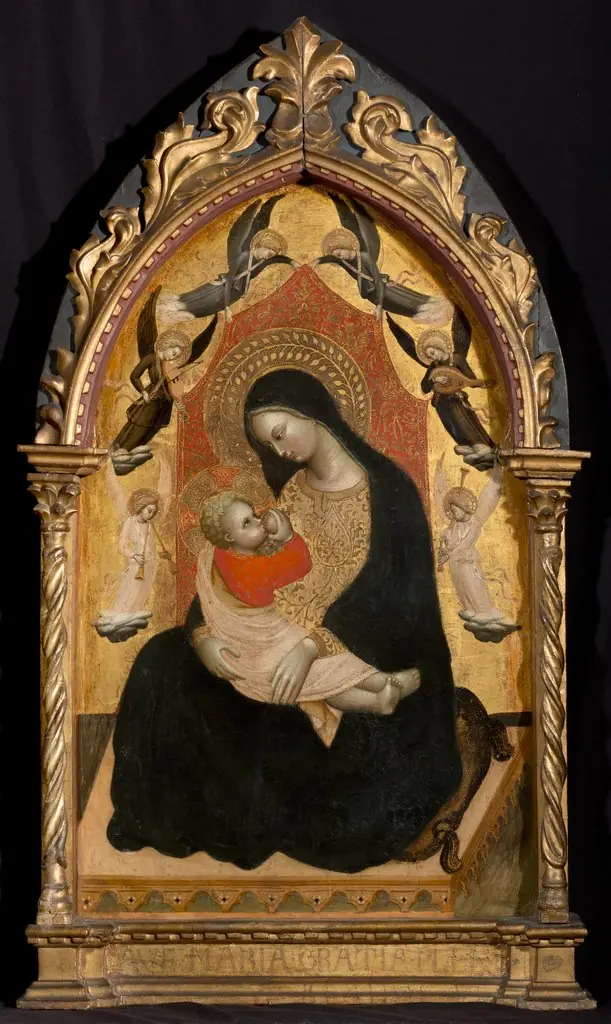 Virgin and Child with Music-Making Angels
 Neitsyt Maria, Jeesus-lapsi ja lahjoittaja