Artwork
Überfahrt über den Tigris
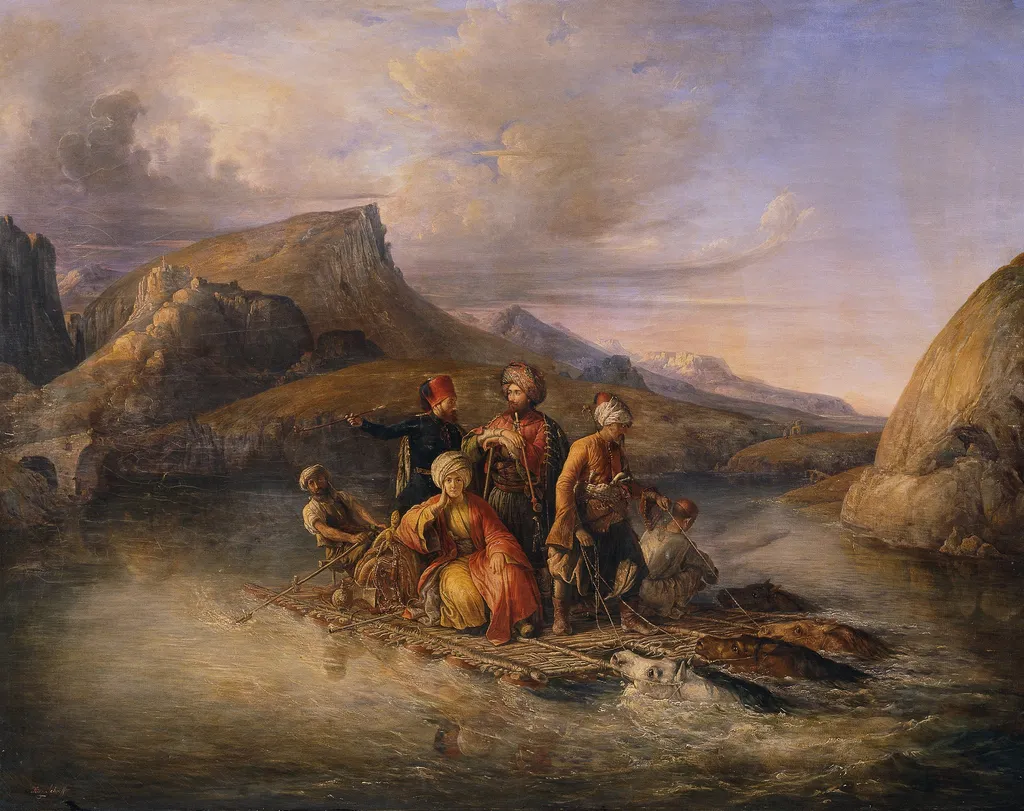
Überfahrt über den Tigris is an oil painting by Ágoston Schoefft. It dates from 1858 and is held in the collection of the Kunsthistorisches Museum.
About this work
Overview
Ágoston Schoefft, a Hungarian painter active in the mid‑19th century, executed the oil canvas titled Überfahrt über den Tigris circa 1858. The work records a river crossing on the Tigris and is part of the Kunsthistorisches Museum’s holdings.
Subject & Meaning
The composition shows a raft crowded with figures dressed in traditional Middle‑Eastern garb, one man gesturing toward the horizon. The scene captures a moment of travel and exchange along the river, reflecting Schoefft’s interest in documenting everyday life encountered during his journeys.
Technique & Style
Rendered in oil, the painting employs a muted palette of earth tones contrasted with warm sunlight that filters through a cloud‑filled sky. Subtle chiaroscuro models the rocky banks and figures, creating depth and a palpable atmospheric quality.
History & Provenance
Schoefft’s career was marked by extensive travel, including stays in the Sikh Empire, the broader Middle East, and North America, where he produced portraits and genre scenes. After its creation, Überfahrt über den Tigris entered the collection of Vienna’s Kunsthistorisches Museum, where it remains on display.
Context
The work belongs to a larger body of travel‑related paintings that emerged in Europe during the 19th century, when artists sought to record exotic locales for audiences back home. Schoefft’s focus on a riverine crossing aligns with contemporary fascination with the geography and cultures of the Ottoman‑controlled Tigris region.
Own this work as a print
Artist & collection
Artist
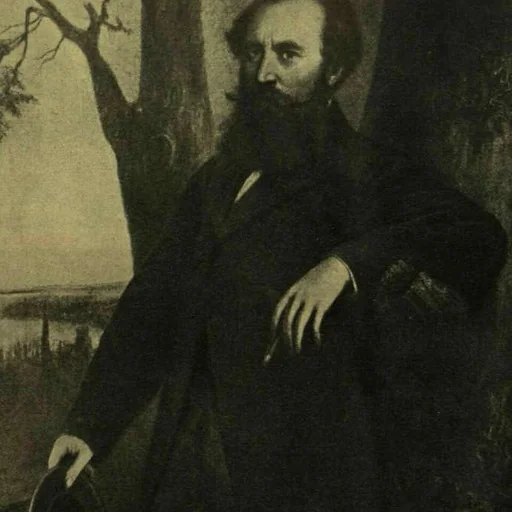
August Theodor Schoefft (1809 – 1888) was a 19th-century Hungarian painter. He spent more than one year in the Sikh Empire, arriving in 1841, where he painted portraits and scenes of the surrounding area. His best known…

 Voyageurs
 View of the Rijn river near Andernach
 Calais Pier
 Miracle of St Paul on the Island of Malta
 Fishing boat at the seaside
 Line Fishing, Off Hastings
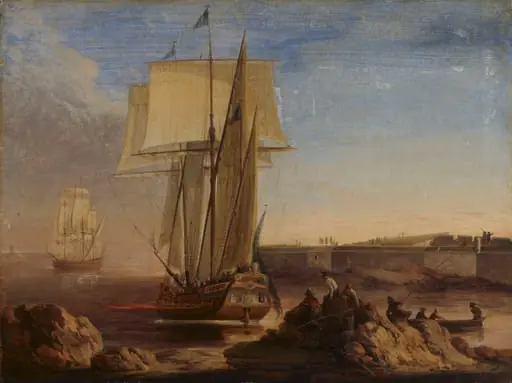 Laivoja Kustaanmiekan salmessa
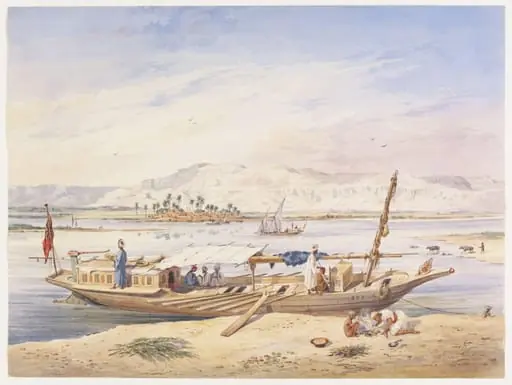 J.W.P.'s Kanja moored beside the East bank of the Nile at Luxor
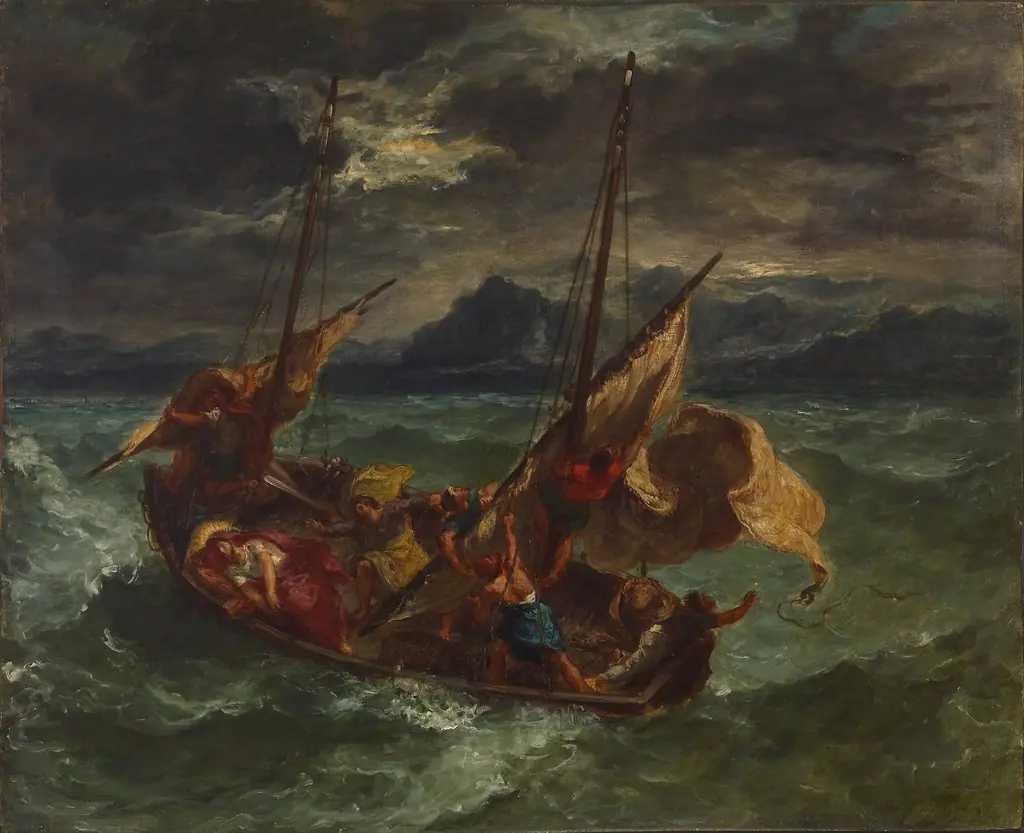 Christ on the Sea of Galilee
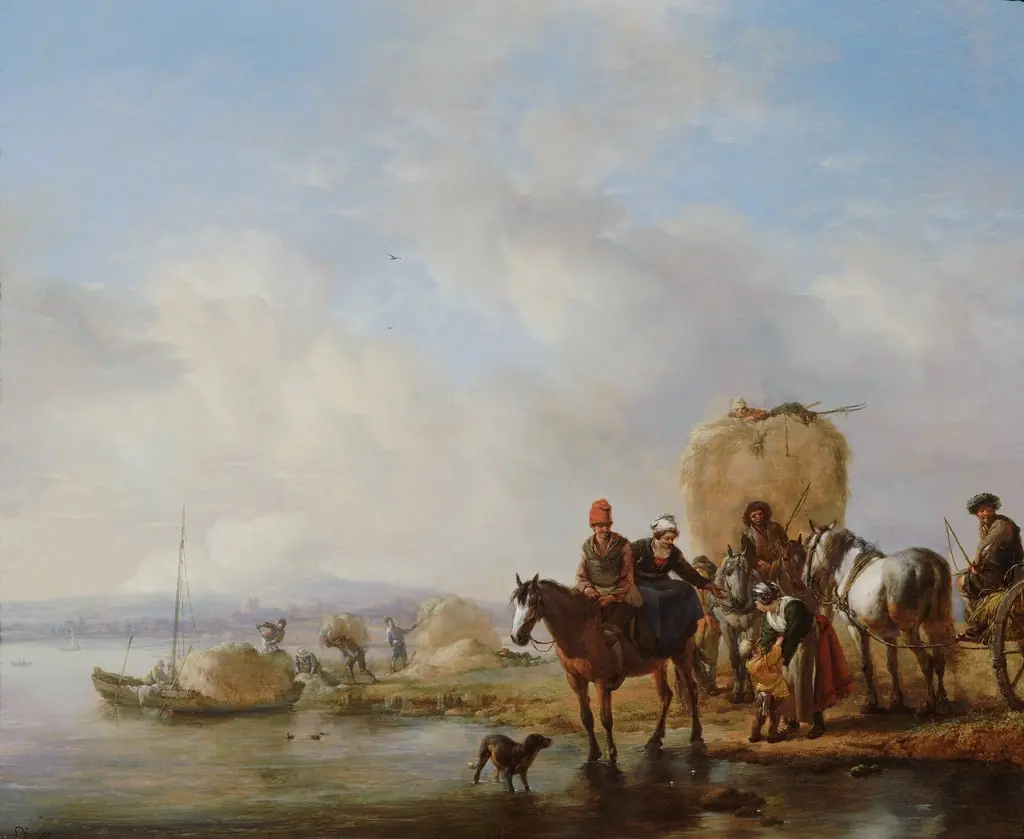 The Hay Wagon
 Halt by the Jordan
 French Fishing Boats off a Rocky Coast