Artwork
Victor Guye
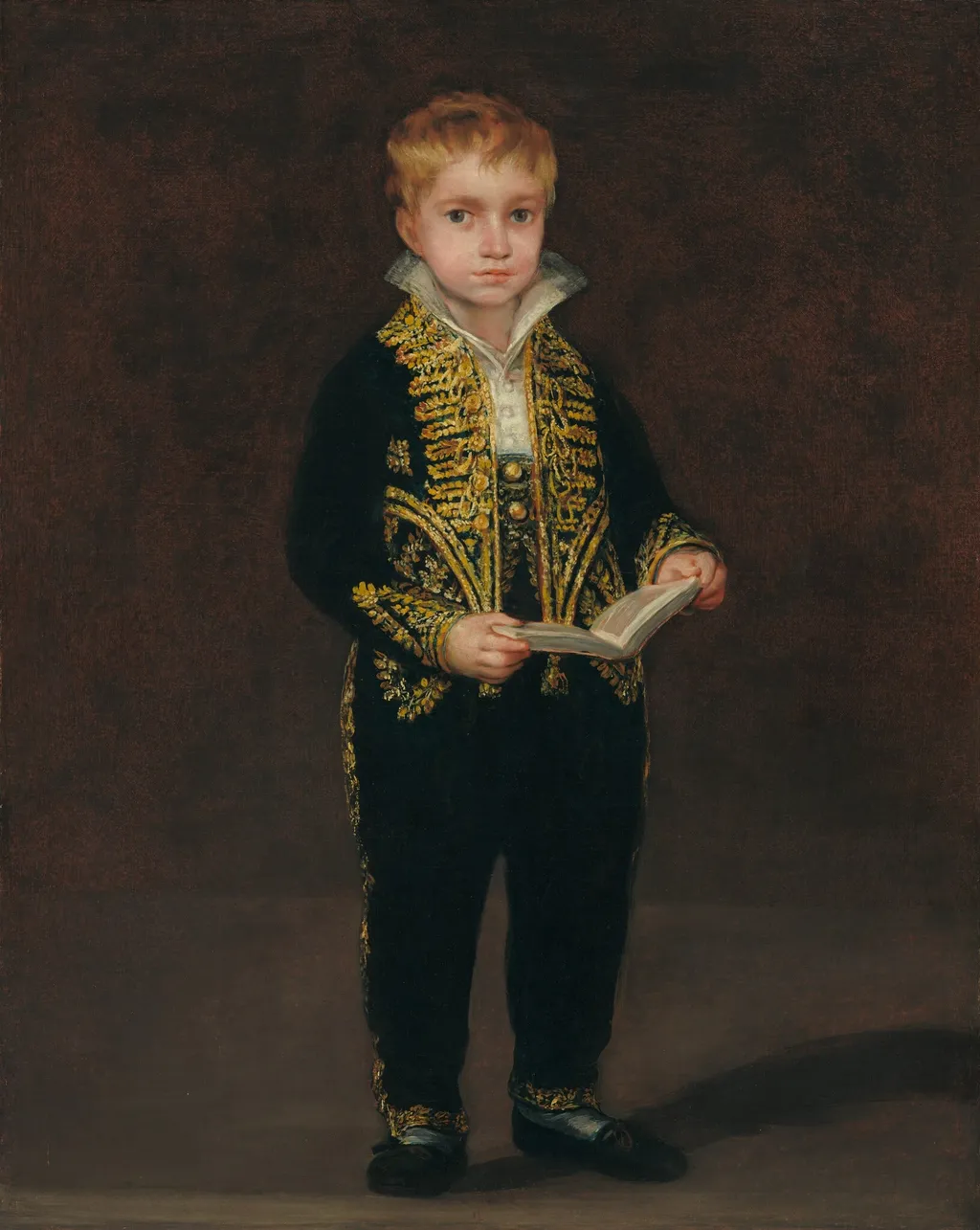
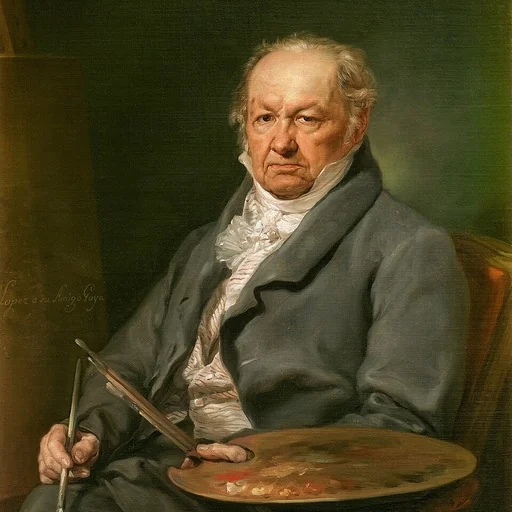
Victor Guye is an oil painting by the Romanticist artist Francisco Goya. It dates from 1810 and is held in the collection of the National Gallery of Art.
About this work
Overview
Created in 1810, this oil on canvas portrait by Francisco de Goya presents a youthful male figure identified as Victor Guye. The work exemplifies Goya’s early 19th‑century output, when he was establishing his reputation as a leading Spanish painter. The composition centers the sitter, emphasizing his attire and a book he holds, offering a glimpse into the personal and social milieu of the period.
Subject & Meaning
The portrait depicts a young boy with short, light‑colored hair, dressed in a dark, gold‑embroidered jacket over a white shirt. He grasps a book in his right hand, a detail that may allude to education or intellectual pursuits. The formality of his clothing suggests a background of affluence, positioning the sitter within the educated elite of his time.
Technique & Style
Executed in oil, the painting displays the loose brushwork and atmospheric handling characteristic of Goya’s Romantic phase. Light falls softly on the boy’s face, while the richly textured fabric of the jacket is rendered with fine detail. The overall effect balances realistic observation with an emotional emphasis on the sitter’s inner world, a hallmark of Romantic portraiture.
History & Provenance
The work was produced during a period when Goya was receiving commissions from aristocratic patrons and the Spanish court. Although specific ownership records are limited, the portrait’s subject, Victor Guye, is presumed to belong to a well‑to‑do family, reflecting the social networks that supported Goya’s career in the early 1800s.
Own this work as a print
Artist & collection
Artist
Francisco José de Goya y Lucientes (; Spanish: ; 30 March 1746 – 16 April 1828) was a Spanish romantic painter and printmaker.