Artwork
The Feast of Herod and the Beheading of Saint John the Baptist
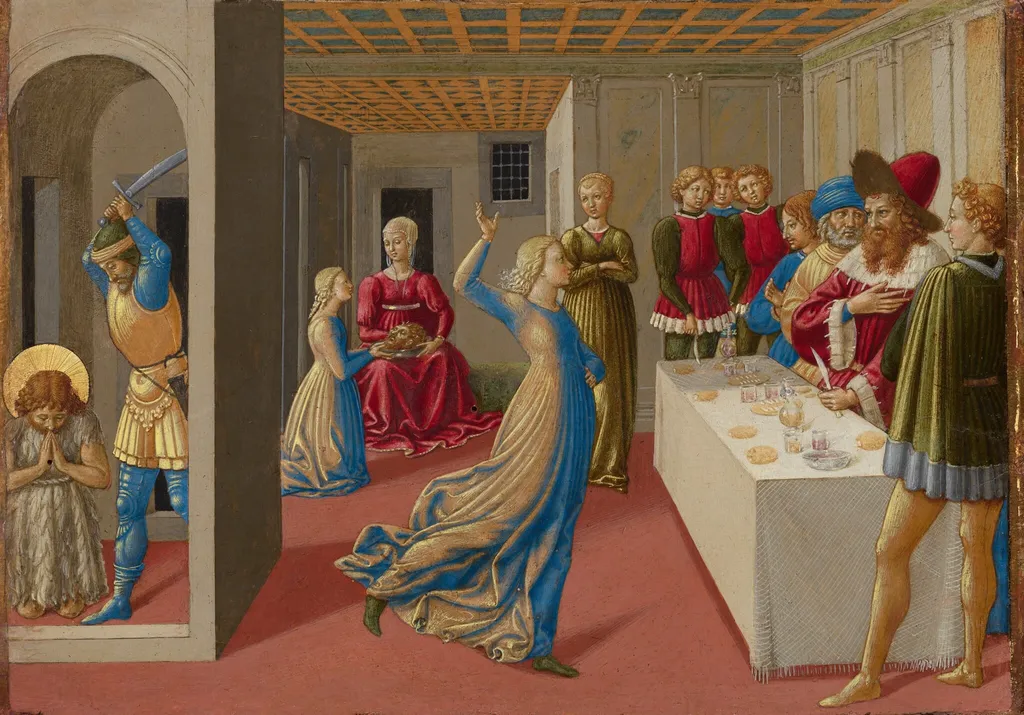
The Feast of Herod and the Beheading of Saint John the Baptist is a tempera painting by the Early Renaissance artist Benozzo Gozzoli. It dates from 1462 and is held in the collection of the National Gallery of Art.
About this work
Overview
Benozzo Gozzoli's 1462 panel painting, The Feast of Herod and the Beheading of Saint John the Baptist, utilizes tempera on poplar to illustrate a dramatic biblical event. This early Renaissance work showcases the Florentine artist's characteristic attention to detail, depicting a complex indoor scene with numerous figures and architectural elements, reflecting his training and stylistic approach to narrative painting.
Subject & Meaning
On one side, an executioner, sword in hand, stands over a kneeling figure, while on the other, a feast unfolds with richly dressed guests.
The painting vividly portrays two distinct moments from the biblical account of Saint John the Baptist. On one side, an executioner, sword in hand, stands over a kneeling figure, while on the other, a feast unfolds with richly dressed guests. The central figures, including a worried woman in red and a woman in blue, likely depict Salome presenting the Baptist's head, linking the violent act to the celebratory meal.
Technique & Style
Gozzoli executed this work in tempera on a poplar panel, a common technique during the Early Renaissance. His style reflects his training under Fra Angelico, evident in the meticulous rendering of figures and architectural settings. The painting combines the decorative qualities of International Gothic with the burgeoning naturalism characteristic of the Florentine Renaissance, creating a vibrant and detailed narrative through bright colors and finely rendered forms.
Context
As a Florentine painter active in the mid-15th century, Benozzo Gozzoli was a significant figure in the Early Renaissance. He is particularly renowned for his extensive fresco cycles, such as the elaborate murals in the Magi Chapel of the Palazzo Medici-Riccardi. This panel painting exemplifies his broader artistic practice, which often involved intricate storytelling through detailed compositions and a blend of traditional and emerging artistic trends.
Own this work as a print
Artist & collection
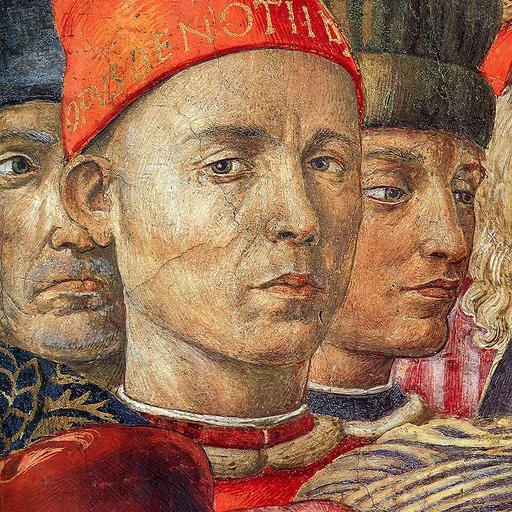
Artist
Benozzo Gozzoli (pronounced ; born Benozzo di Lese; c. 1421 – 4 October 1497) was an Italian Renaissance painter from Florence. A pupil of Fra Angelico, Gozzoli is best known for a series of murals in the Magi Chapel of…