Artwork
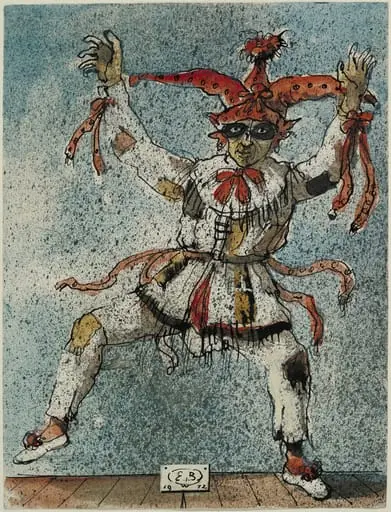
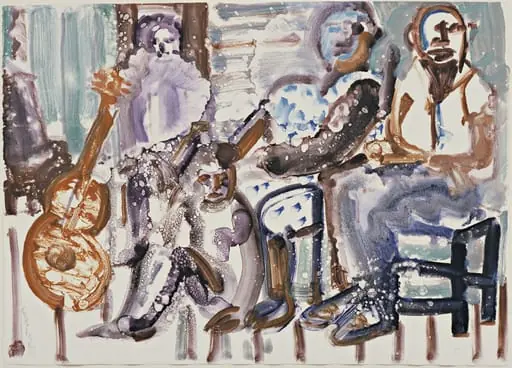
Chocolate & Company, The Rastelli Clowns, appearing as a speciality act in the pantomime Robinson Crusoe, Bristol Hippodrome, 1969.
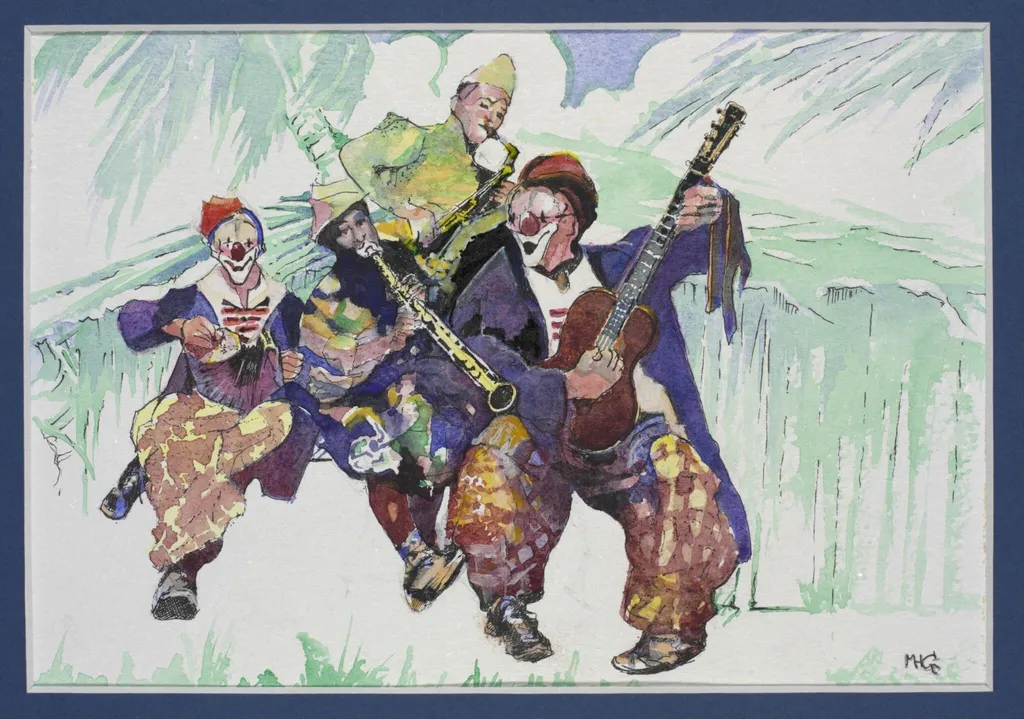
Chocolate & Company, The Rastelli Clowns, appearing as a speciality act in the pantomime Robinson Crusoe, Bristol Hippodrome, 1969. is a paint painting by Mary Hardy Grierson. It dates from 2001 and is held in the collection of the Victoria and Albert Museum.
About this work
Their faces are painted with big smiles, and one wears a tall, striped hat while another has a red nose.
Four clowns are mid-jump in the air, playing instruments like they’re dancing. Bright colors—reds, yellows, blues—stand out against a pale, sketchy background. Their faces are painted with big smiles, and one wears a tall, striped hat while another has a red nose.
This painting was made to celebrate a clown troupe performing in a 1969 show. The artist captured their energy with loose, quick brushstrokes.
Next, check out the Victoria and Albert Museum to see more playful art like this.
Overview
Mary Hardy Grierson created this watercolour and pen painting in 1969, capturing a moment from the Bristol Hippodrome’s production of Robinson Crusoe. The work depicts the Rastelli Clowns, a touring musical troupe, mid-performance. Executed with swift, fluid strokes, the piece reflects the spontaneity of live theatre and the artist’s direct observation from backstage during the show.
Subject & Meaning
The painting portrays four members of the Rastelli family performing as a musical act within the pantomime. Each clown is identified by their instrument and costume: accordion, clarinet, saxophone, and guitar. Their animated postures and exaggerated expressions convey the physicality and humour of circus performance. The work serves as a record of a specific theatrical moment, honoring the troupe’s artistry without overt narrative.
Technique & Style
Grierson employed loose watercolour washes and delicate pen lines to suggest movement and form. The figures are rendered with vibrant, saturated hues—reds, blues, and yellows—contrasting against a faint, atmospheric backdrop of trees and clouds. The background remains intentionally sketchy, drawing focus to the clowns’ dynamic poses and expressive faces, emphasizing immediacy over detail.
History & Provenance
The painting originated from sketches made by Grierson during a 1969 performance at the Bristol Hippodrome. It was completed shortly after, preserving the energy of the live act. The Rastelli Clowns, known for their musical comedy routines, were a notable feature of British variety theatre in the mid-20th century. The work remains a personal record of that era’s touring entertainment culture.
Context
In 1969, traditional variety acts like the Rastelli Clowns still held a place in British theatre, especially within the enduring format of the Christmas pantomime. Though television was rising, live performance retained cultural resonance. Grierson’s work reflects an interest in documenting these transient, populist entertainments, capturing a world that was gradually fading from mainstream attention.
Legacy
The painting stands as a quiet testament to the Rastelli family’s contribution to British circus and variety traditions. It exemplifies a modest but significant genre of 20th-century British art: observational works rooted in live performance. While not widely exhibited, it contributes to the visual archive of performing arts history, preserving the humanity of performers often overlooked by formal art institutions.
Artist & collection
Artist
Mary Hardy Grierson spent weekends sketching backstage at Bristol’s Hippodrome while working the ticket booth.