Artwork
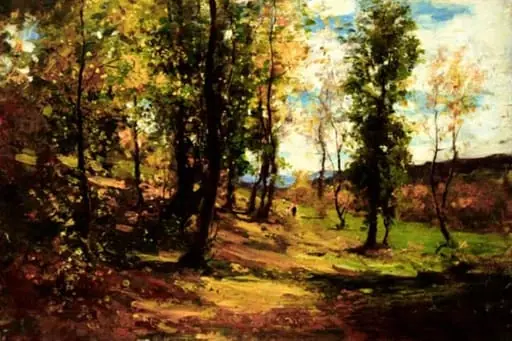
Peisaj de pădure
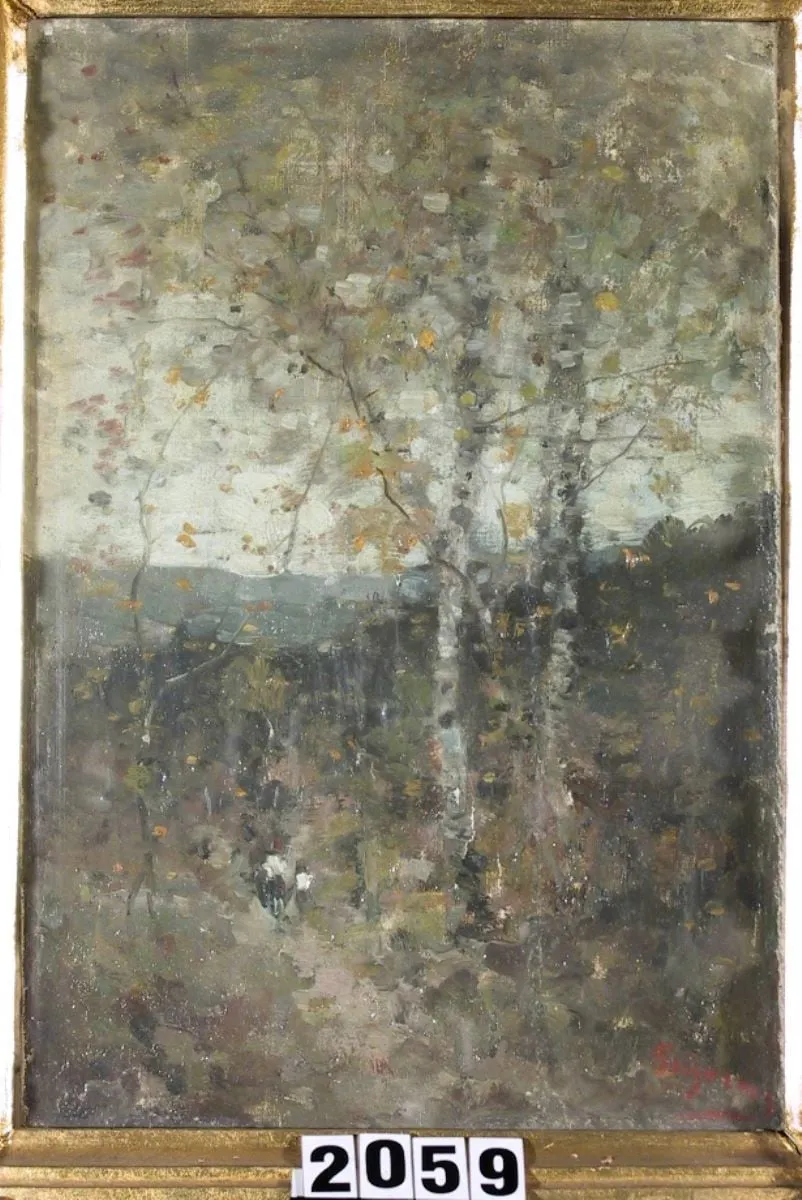
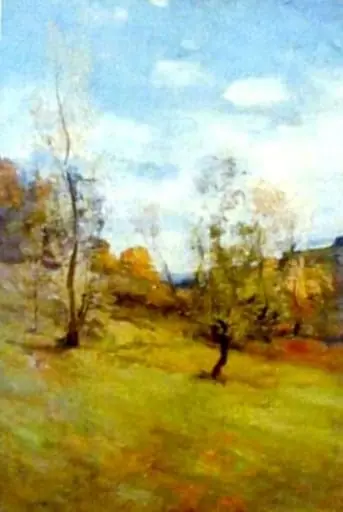
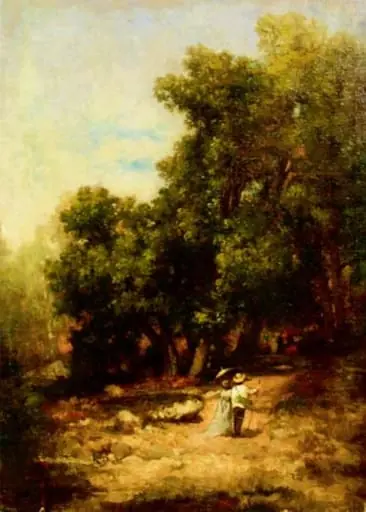
Peisaj de pădure is a print by Nicolae Grigorescu. It dates from 1882 and is held in the collection of the Brukenthal National Museum.
About this work
Overview
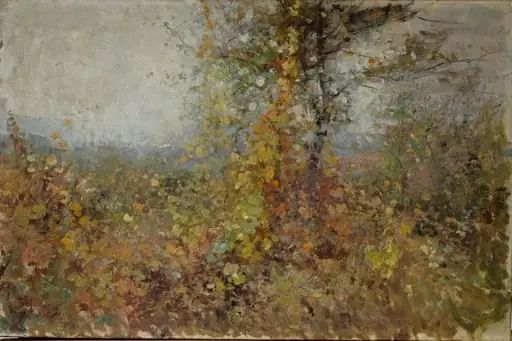
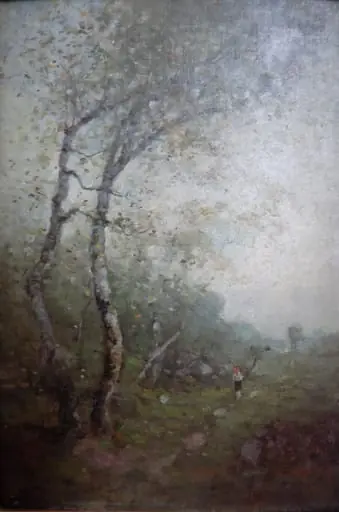
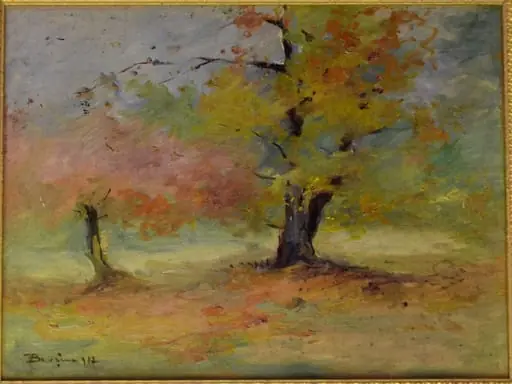
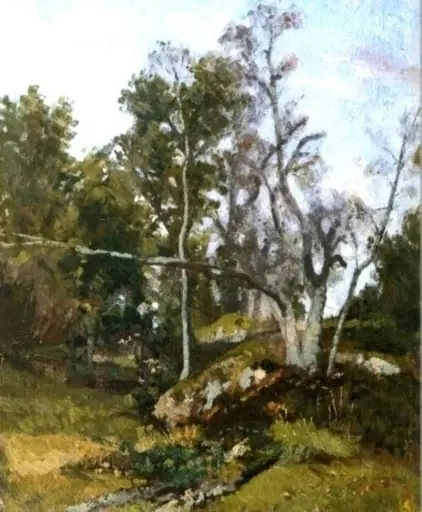
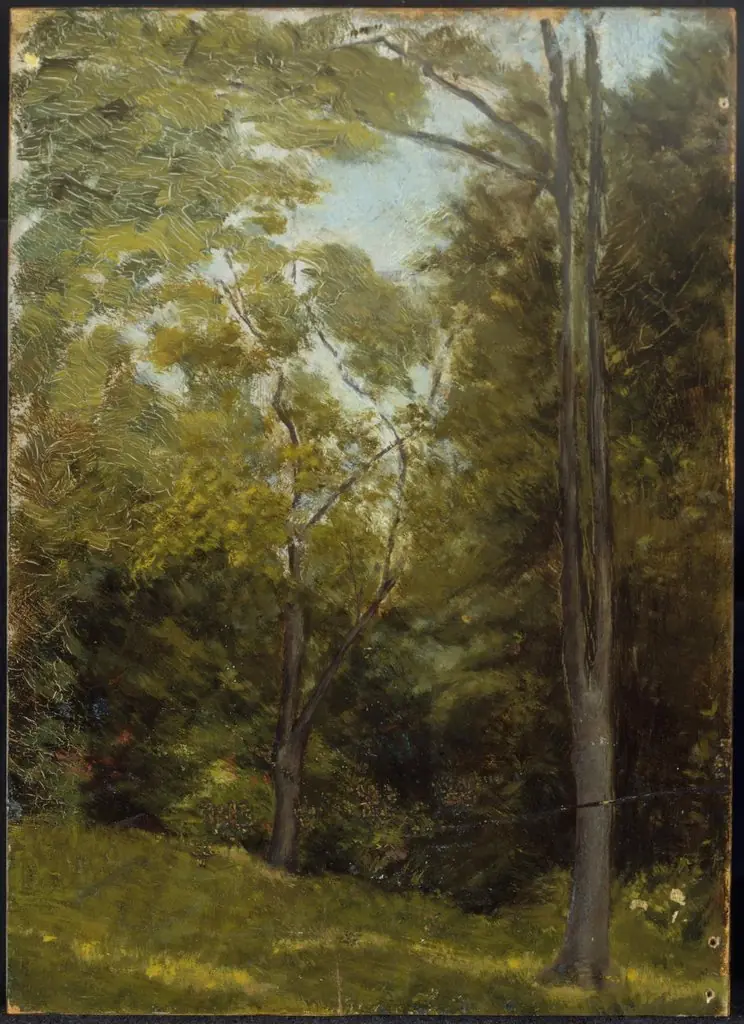
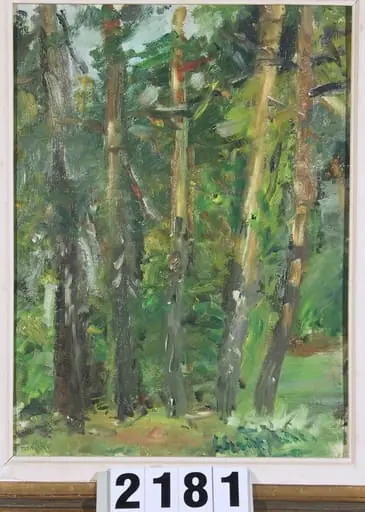
Painted around 1882 by Nicolae Grigorescu, this forest landscape captures a dense woodland in a tactile, expressive manner.
Painted around 1882 by Nicolae Grigorescu, this forest landscape captures a dense woodland in a tactile, expressive manner. The composition avoids idealized harmony, instead emphasizing the raw, unstructured growth of trees and underbrush. The surface is built up with thick layers of pigment, creating a physical depth that invites closer inspection and distinguishes it from smoother academic traditions of the time.
Subject & Meaning
The scene presents a quiet, unpopulated forest, devoid of human presence or narrative. Rather than depicting nature as a pastoral ideal, Grigorescu conveys its untamed, almost chaotic vitality. The interplay of light and shadow suggests transient moments—sunlight breaking through canopy gaps—not a staged composition. This focus on atmosphere over story aligns with a broader shift toward direct observation in late 19th-century Romanian art.
Technique & Style
Grigorescu employed impasto to build texture, applying paint with visible, uneven strokes that convey movement and materiality. Dark greens and browns dominate, punctuated by streaks of white and pale gray to suggest filtered light and mist. The surface is deliberately rough, with ridges and peaks of pigment that catch the eye and mimic the tangled foliage. This method prioritizes sensory immediacy over polished finish.
History & Provenance
Created during Grigorescu’s mature period, the work reflects his immersion in plein air painting and exposure to French Realism and Impressionism. Though exact early ownership records are sparse, the painting is now held within Romania’s national collection, where it has been consistently recognized as a key example of his innovative approach to landscape. Its preservation reflects its significance in the development of modern Romanian painting.
Context
In the 1880s, Romanian artists were moving away from academic conventions toward more personal, observational styles. Grigorescu, influenced by his time in France, brought back techniques that emphasized light, texture, and spontaneity. This forest scene aligns with broader European trends rejecting studio artifice, yet retains a distinctly local sensibility—rooted in the Carpathian woodlands and the quiet rhythms of rural life.
Legacy
The painting helped redefine landscape art in Romania by prioritizing emotional resonance and material presence over idealized composition. Later generations of artists looked to Grigorescu’s textured surfaces and direct handling as models for authenticity. Its unpolished energy continues to inform contemporary discussions about the relationship between technique, nature, and national identity in Romanian visual culture.
Artist & collection

Artist
Nicolae Grigorescu was one of the founders of modern Romanian painting. He is considered by Romanians the greatest Romanian painter, and one of the founders of modern Romanian art. He is most known for paintings…