Artwork
Beach
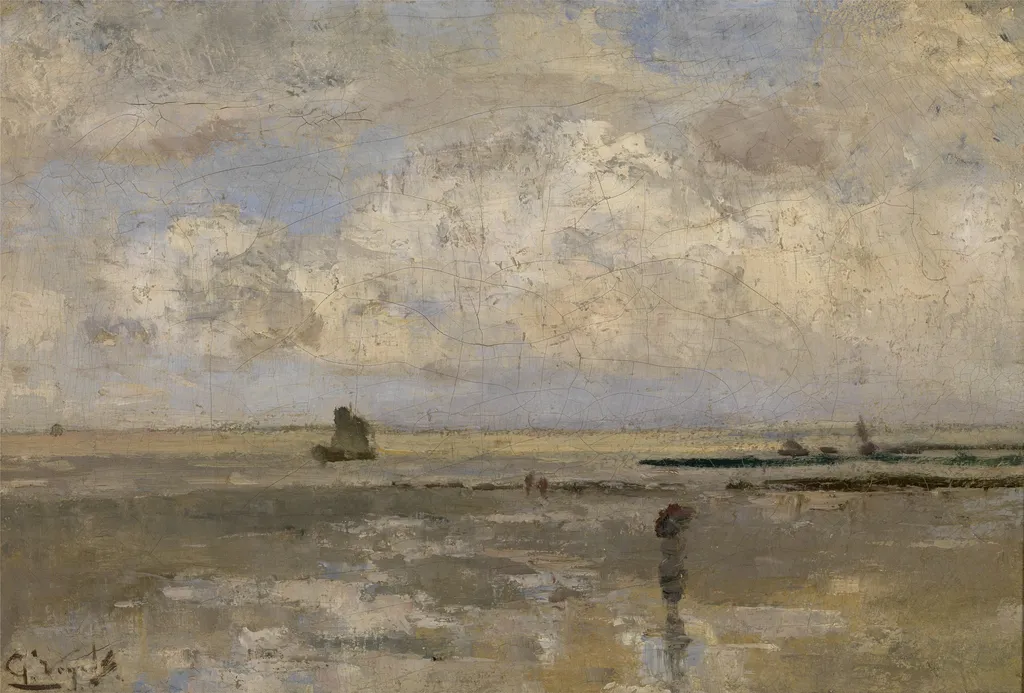
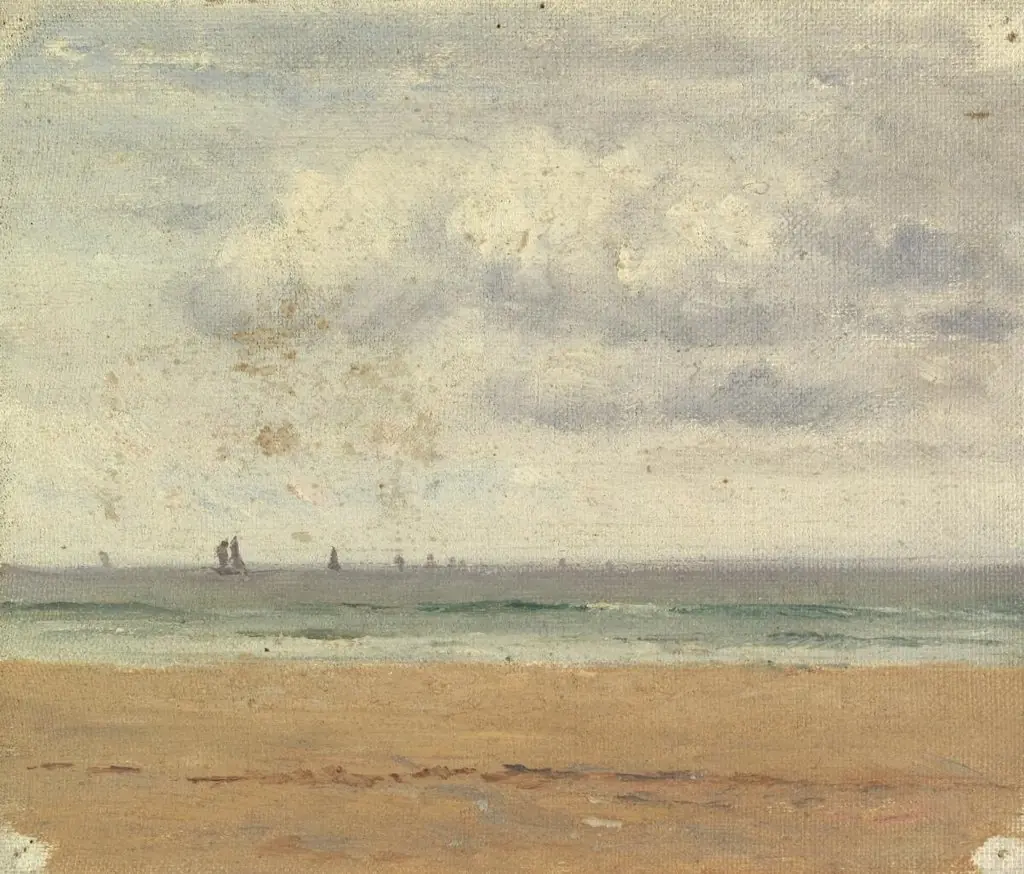
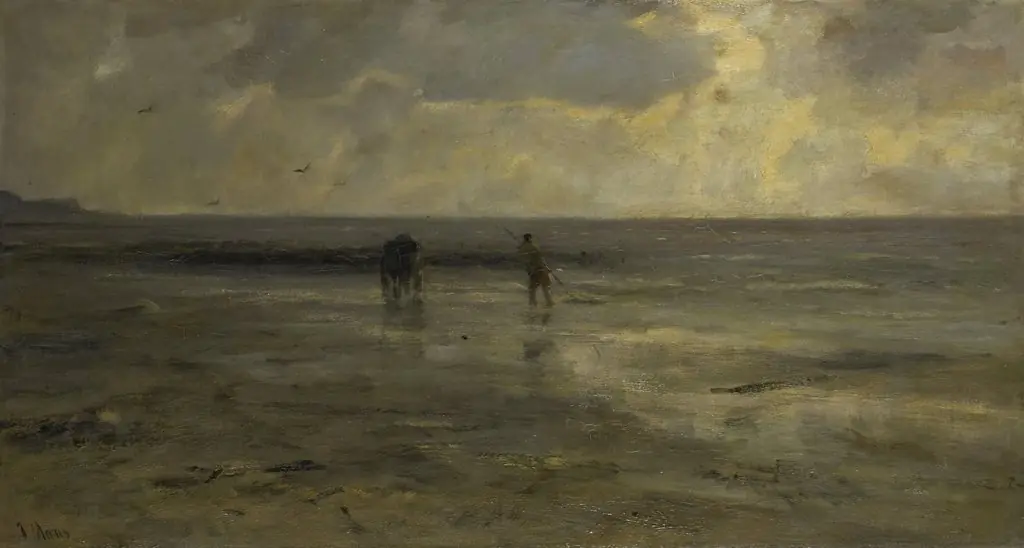
Beach is an oil painting by the Impressionist artist Guillaume Vogels. It dates from 1888 and is held in the collection of the Royal Museum of Fine Arts Antwerp.
About this work
Overview
The work reflects Vogels’ interest in everyday natural environments, rendered with restrained emotion and careful observation.
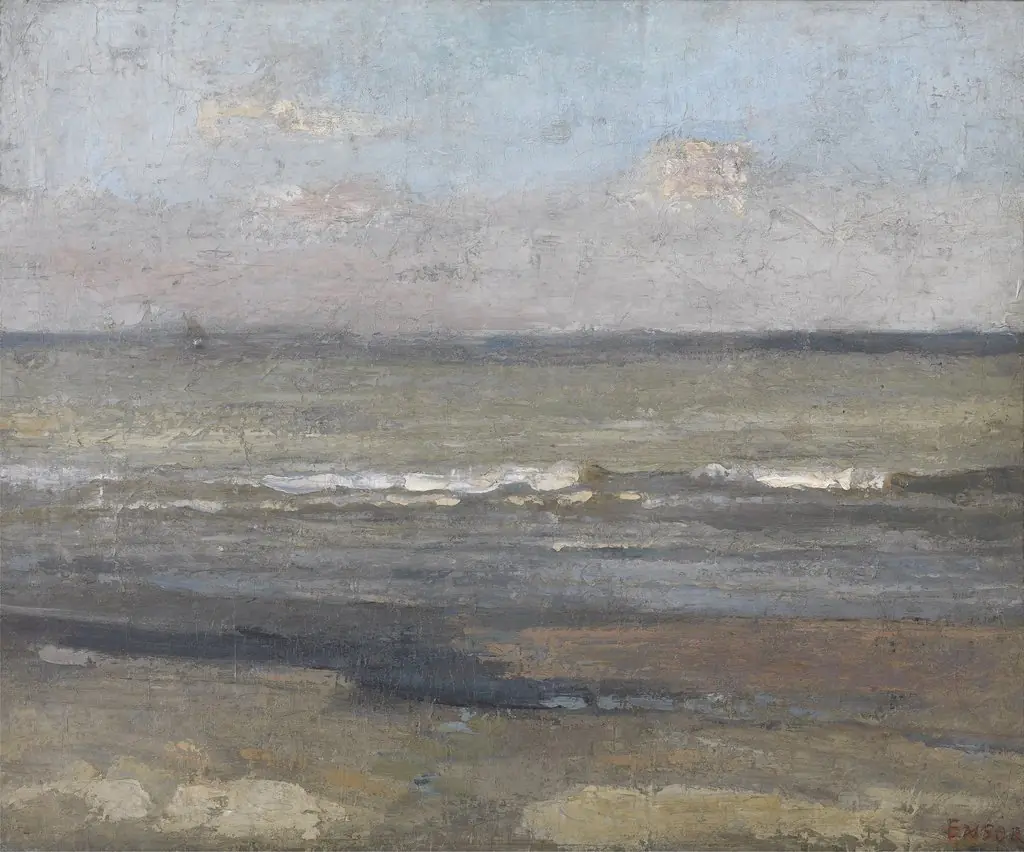
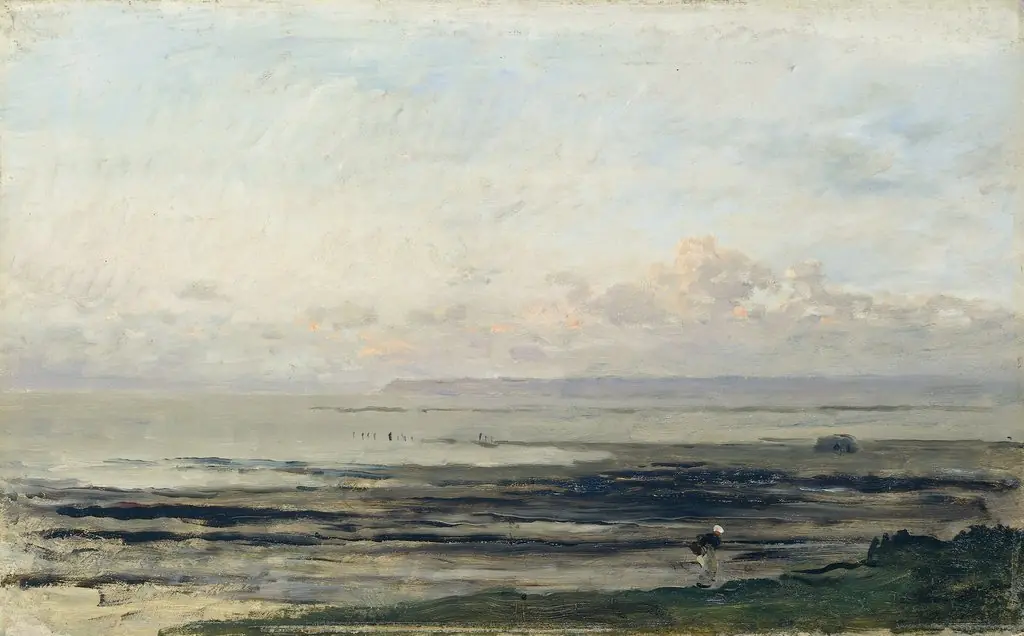
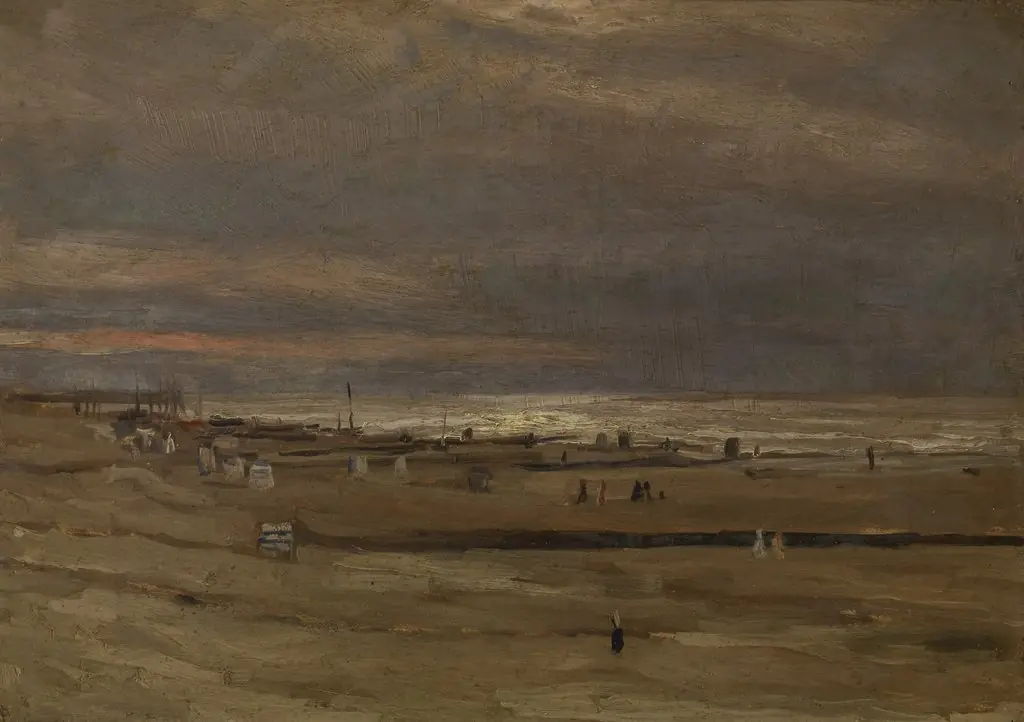
Painted in 1888, Beach is an oil-on-canvas landscape by Belgian artist Guillaume Vogels. It captures a quiet coastal scene and is part of the collection at the Royal Museum of Fine Arts Antwerp. The work reflects Vogels’ interest in everyday natural environments, rendered with restrained emotion and careful observation. Its scale and composition invite contemplation rather than dramatic engagement.
Subject & Meaning
The painting portrays a tranquil shoreline with minimal human presence—figures are small and distant, integrated into the landscape rather than dominating it. The absence of activity emphasizes stillness, suggesting a moment suspended between sea and sky. This quietude aligns with late 19th-century tendencies to find calm in ordinary natural settings, away from industrial or urban noise.
Technique & Style
Vogels employed soft, blended brushwork to render the sky and sea, avoiding sharp edges in favor of gradual tonal shifts. Muted hues of pale blue, beige, and gray dominate, reinforcing the scene’s serenity. Subtle texture in the sand and water is achieved through light impasto, giving the surface a quiet tactility without drawing attention to the paint itself.
History & Provenance
Created in 1888, the painting entered the collection of the Royal Museum of Fine Arts Antwerp shortly after its completion. It remained in institutional hands throughout the 20th century, with no record of private ownership or public exhibition beyond museum displays. Its consistent presence in the museum’s holdings suggests early recognition of its quiet aesthetic value.
Context
Vogels worked during a period when Belgian artists increasingly turned to landscape and coastal scenes as subjects of personal reflection. Influenced by French and Dutch realism, he avoided romanticized views, favoring understated compositions. Beach reflects this trend, aligning with contemporaries who sought authenticity in ordinary, uneventful moments of nature.
Legacy
Though not widely reproduced or celebrated outside Belgium, Beach remains a representative example of Vogels’ mature style. It contributes to the understanding of late 19th-century Belgian landscape painting as a quiet, introspective practice. The work continues to be studied for its restrained palette and sensitivity to atmospheric light, offering insight into regional artistic priorities of the era.
Artist & collection