Artwork
Bather Sleeping by a Brook
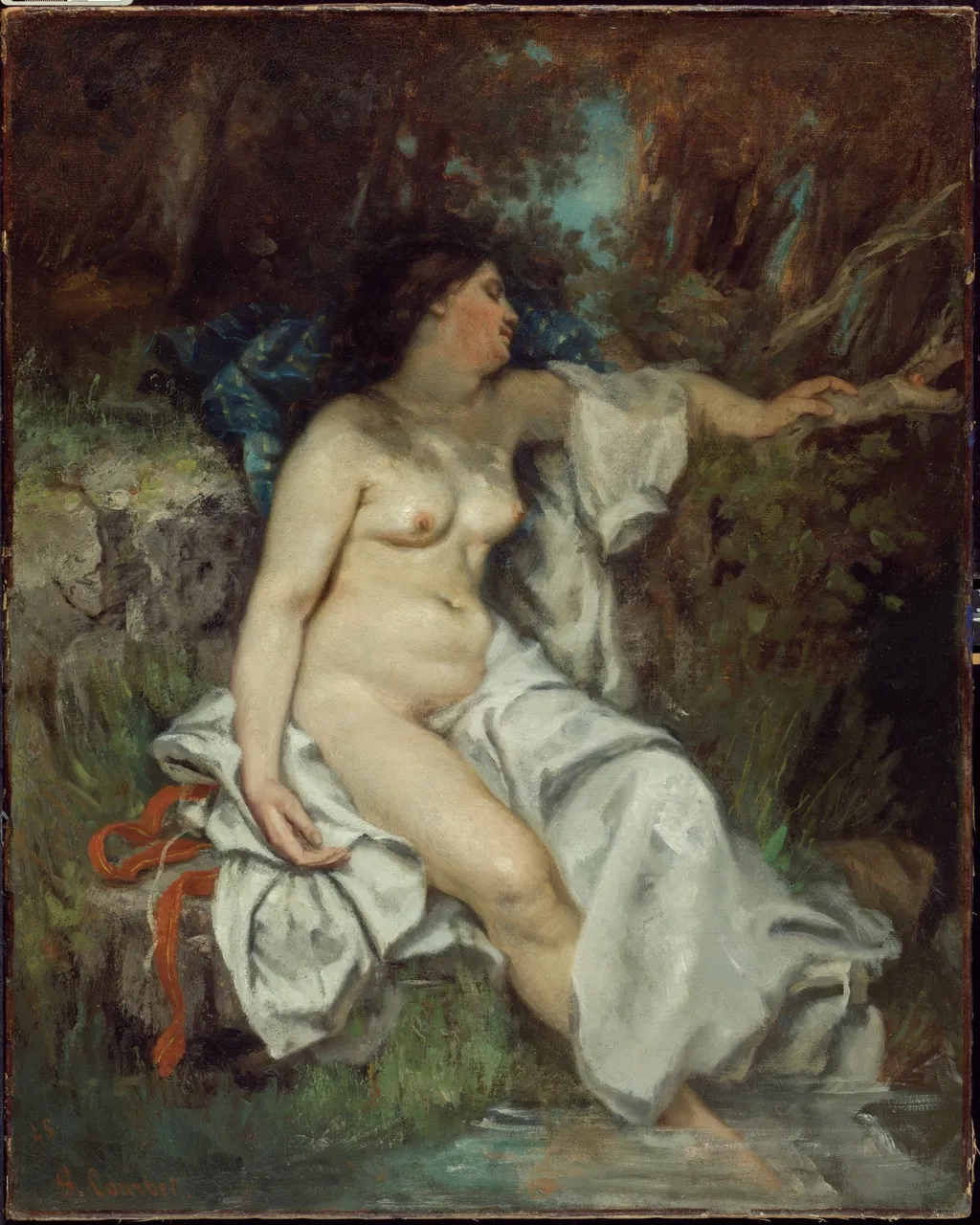
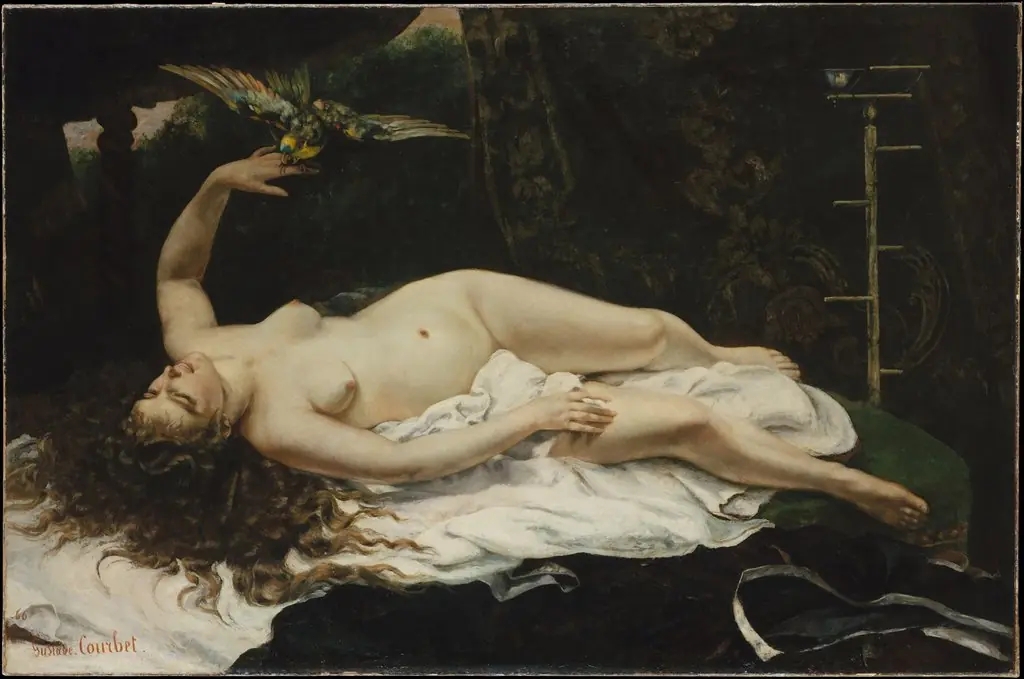
Bather Sleeping by a Brook is an oil painting by the Realist artist Gustave Courbet. It dates from 1845 and is held in the collection of the Detroit Institute of Arts.
About this work
Overview
Painted in 1845 by Gustave Courbet, this oil on canvas work depicts a solitary female figure at rest beside a brook. It reflects Courbet’s commitment to Realism, emphasizing unidealized, everyday scenes drawn from direct observation. The painting’s quiet composition and natural setting distinguish it from the mythological or historical subjects favored by academic art of the period.
Subject & Meaning
Her gaze and extended arm connect her subtly to the surrounding environment, blurring the boundary between body and landscape.
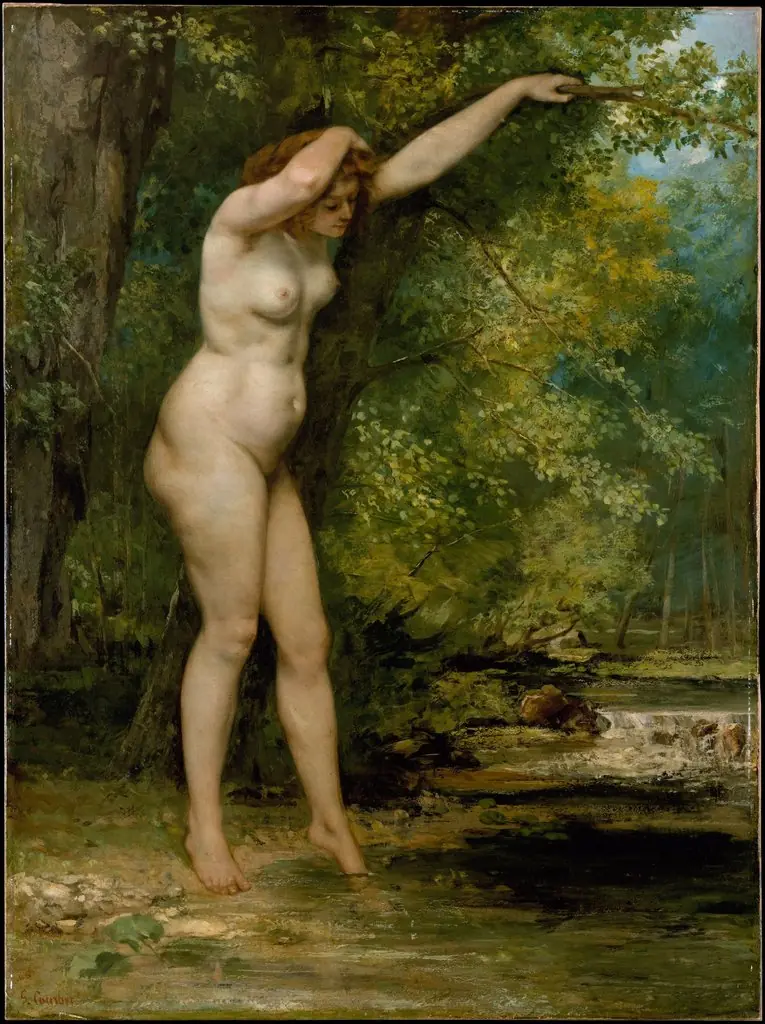
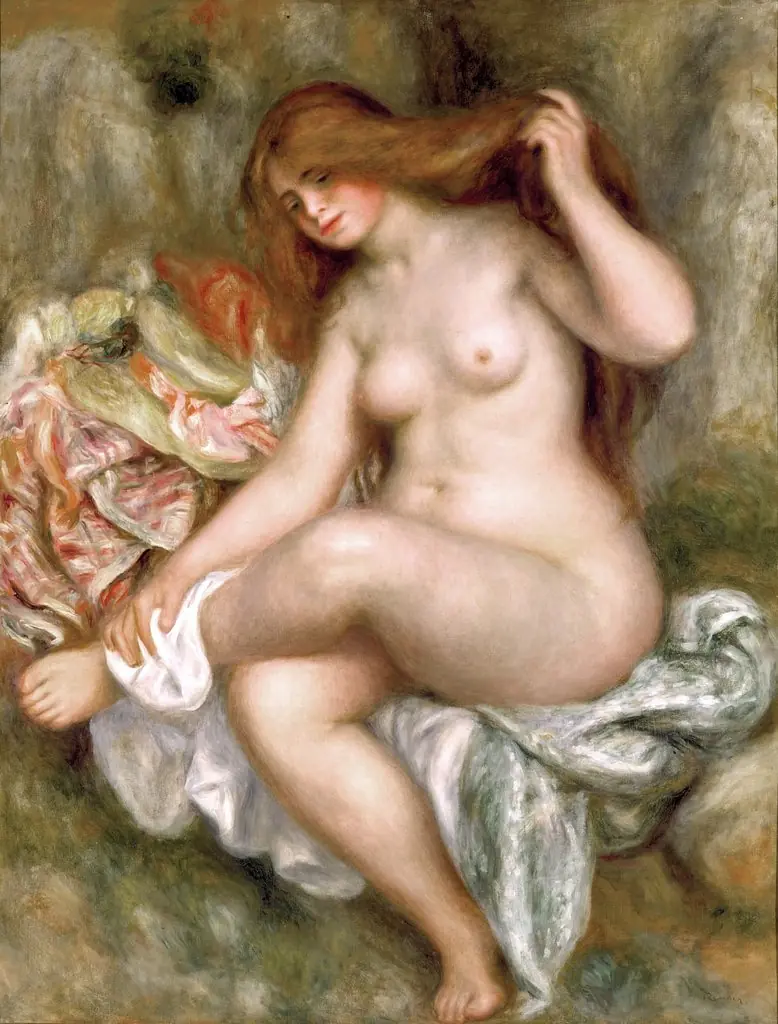
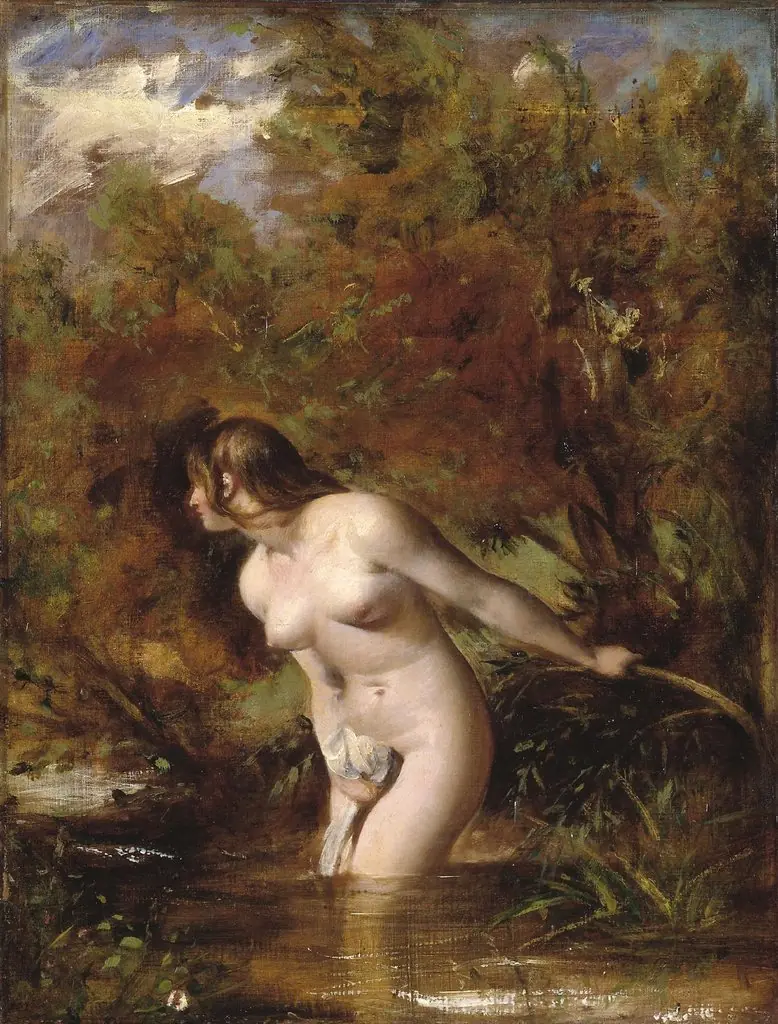
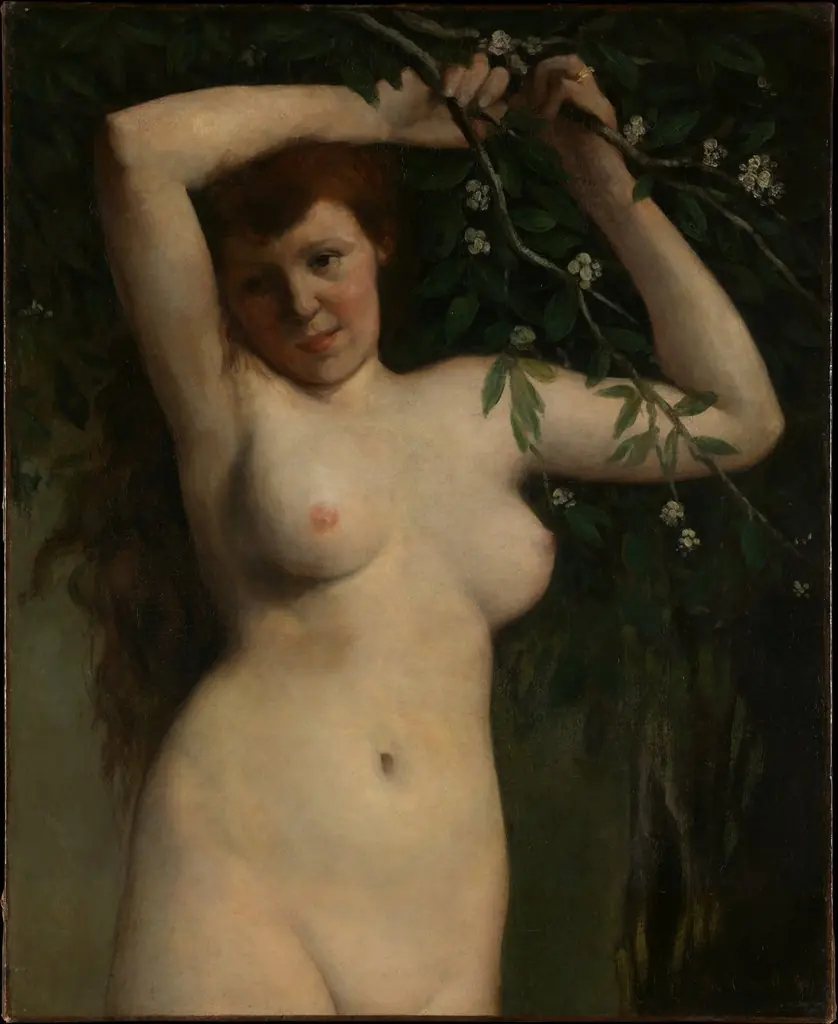
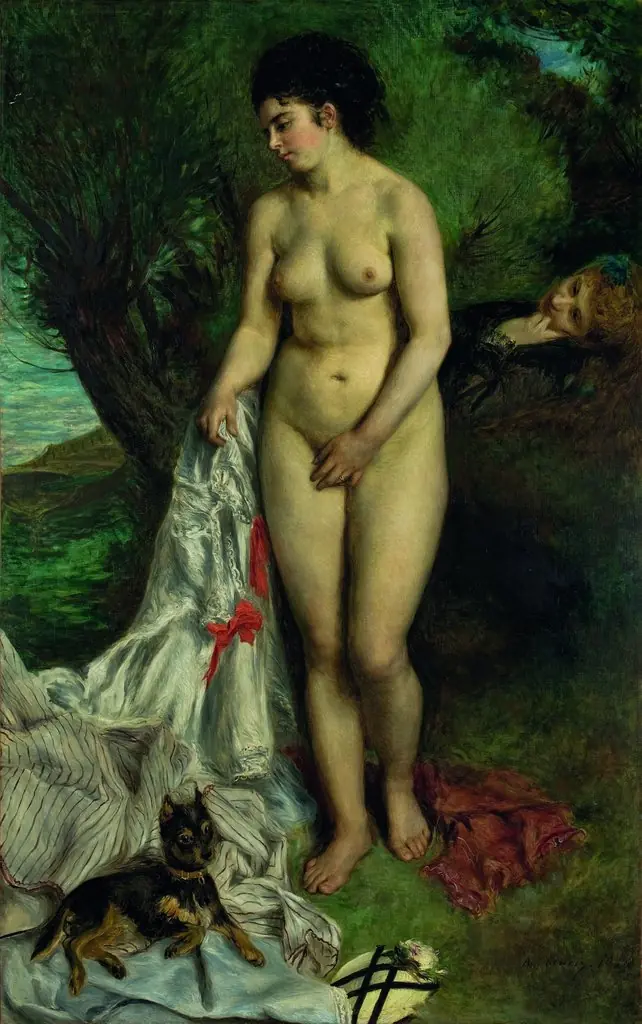
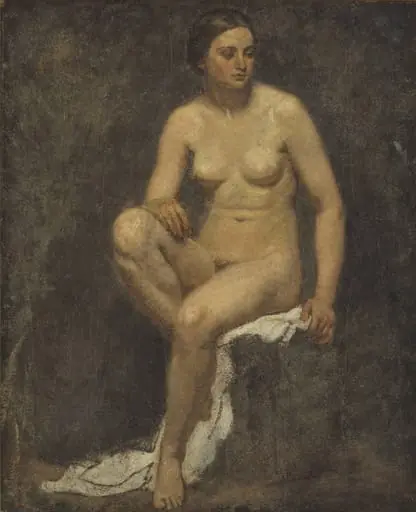
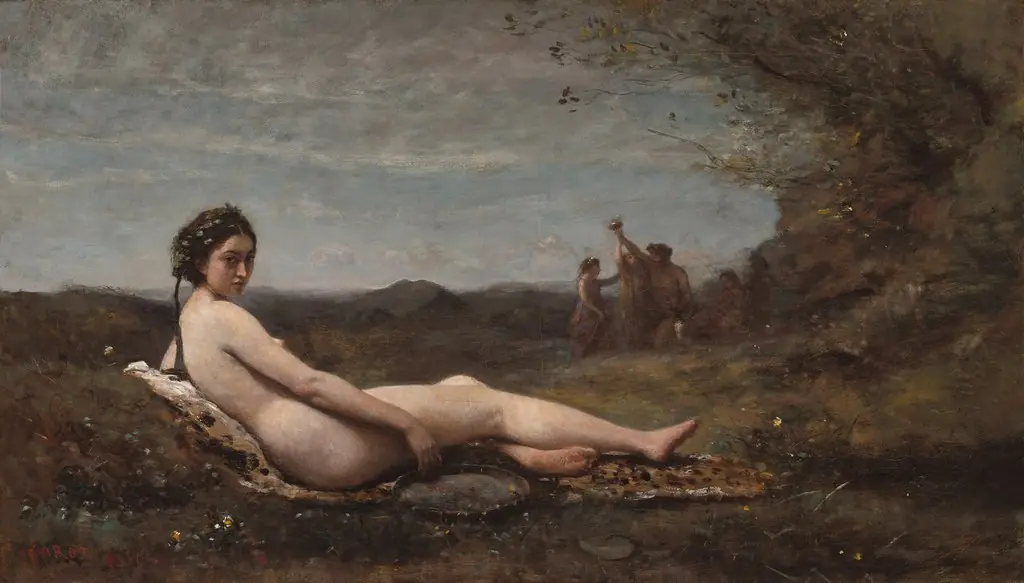
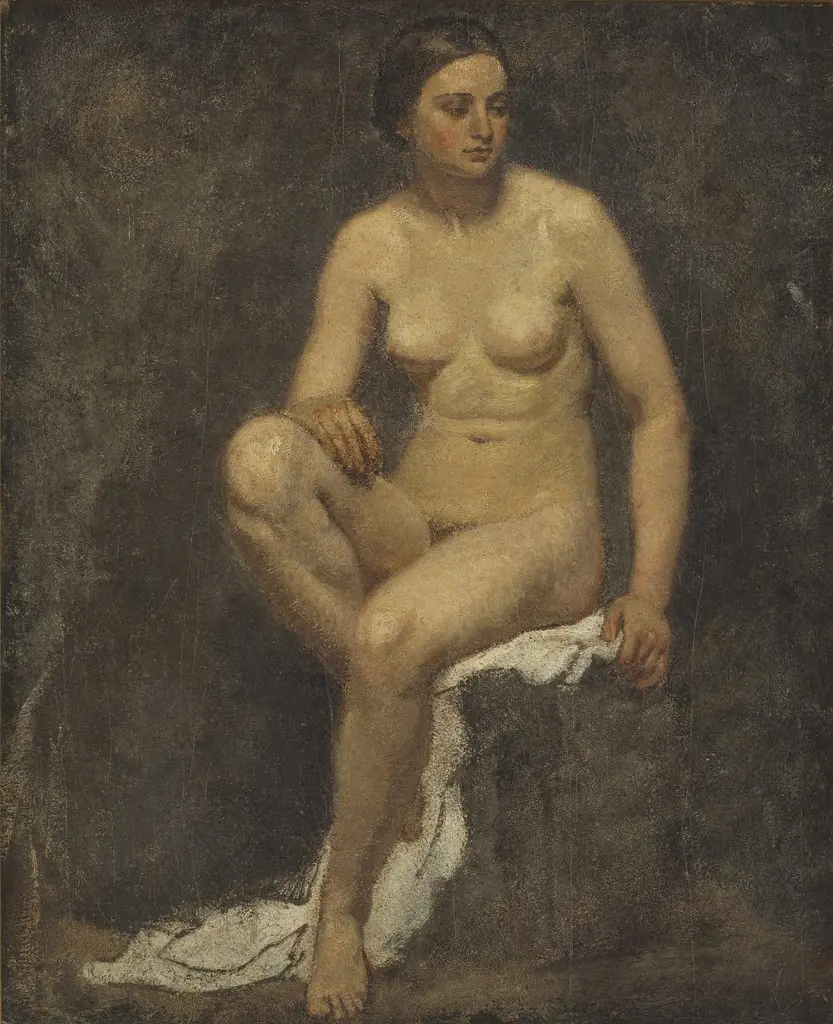
The figure, nude and relaxed, lies on a white sheet draped over stones, her posture suggesting quiet repose. Her gaze and extended arm connect her subtly to the surrounding environment, blurring the boundary between body and landscape. Rather than idealizing the form, Courbet presents it as a natural, unembellished presence, inviting contemplation of solitude and physicality without narrative or moralizing.
Technique & Style
Courbet employs a restrained palette dominated by pale tones to highlight the figure against a dark, earthy background. Brushwork is deliberate but not overly refined, capturing texture in fabric, skin, and foliage with equal attention. The contrast between the luminous form and the shadowed woods enhances the intimacy of the scene, grounding the figure in a tangible, tactile world.
History & Provenance
Created early in Courbet’s career, the painting was likely made during his formative years in the Franche-Comté region, where he often painted local landscapes and figures. It entered the Detroit Institute of Arts’ collection in the 20th century, where it remains part of their European painting holdings. Its survival and preservation reflect its significance as an early example of Realist practice.
Context
In mid-19th century France, academic institutions promoted idealized nudes drawn from classical mythology. Courbet’s decision to depict a real, unnamed woman in a rural setting challenged these conventions. His focus on ordinary subjects and rejection of theatricality aligned with broader cultural shifts toward empirical observation and social authenticity in art.
Legacy
This work contributed to the foundation of Realism as a movement that prioritized truth over ornament. Though not widely exhibited during Courbet’s lifetime, it later became a reference point for artists seeking to represent the human form without romanticization. Its quiet dignity helped redefine the possibilities of genre painting in modern art.
Artist & collection
Artist
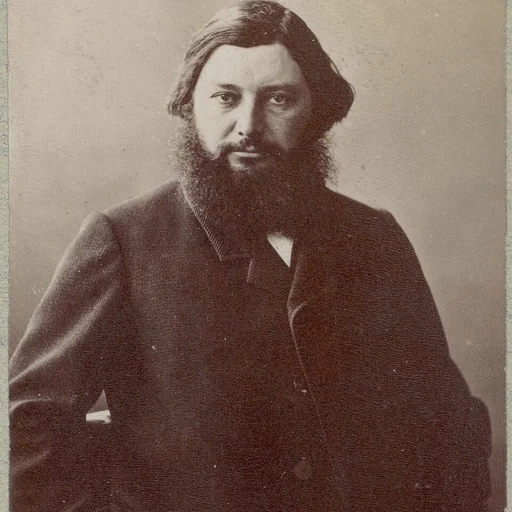
Jean Désiré Gustave Courbet (UK: KOOR-bay; US: koor-BAY; French: ; 10 June 1819 – 31 December 1877) was a French painter who led the Realism movement in 19th-century French painting.