Artwork
La Pauvresse de village
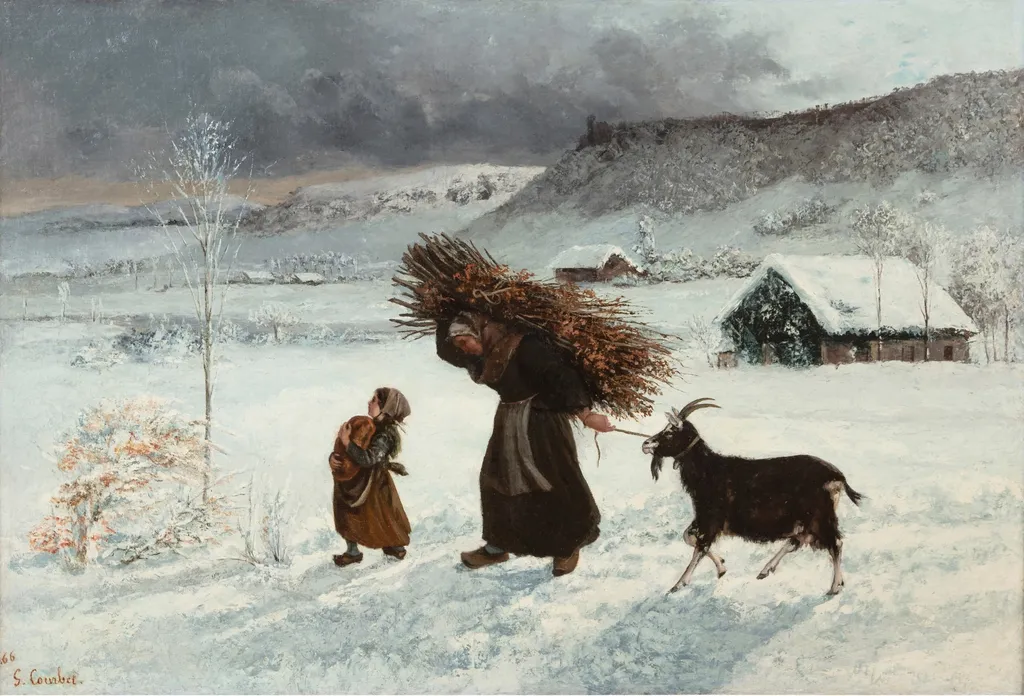
La Pauvresse de village is an oil painting by the Realist artist Gustave Courbet. It dates from 1866 and is held in the collection of the National Gallery of Art.
About this work
Overview
Gustave Courbet created the oil painting *La Pauvresse de village* in 1866. The work belongs to the French Realist movement, which sought to portray ordinary people and everyday situations without romantic embellishment. It is part of the National Gallery of Art’s collection in Washington, D.C.
Subject & Meaning
The canvas depicts a wintry village landscape populated by a laboring woman, a child, and a goat. The woman bears a heavy bundle of sticks on her back, her posture bent under the load, while the child walks bundled against the cold. The scene conveys the hardships of rural life, emphasizing the physical strain of poverty.
Technique & Style
Courbet applied oil paint with a pronounced impasto, building up thick layers that give the snow a tactile, almost three‑dimensional quality. The palette is muted, dominated by grays and dark tones that blend the figures into the shadows, reinforcing the stark realism of the composition.
Context
By the mid‑1860s Courbet had turned away from Romantic idealization and the academic hierarchy of subjects, choosing instead to document the observable world. *La Pauvresse de village* exemplifies this shift, focusing on a humble, unnamed peasant woman rather than mythological or historical figures.
History & Provenance
Since its creation, the painting has remained in private and institutional hands before entering the National Gallery of Art. The museum acquired it as part of its effort to represent the development of Realist painting in the nineteenth century.
Own this work as a print
Artist & collection
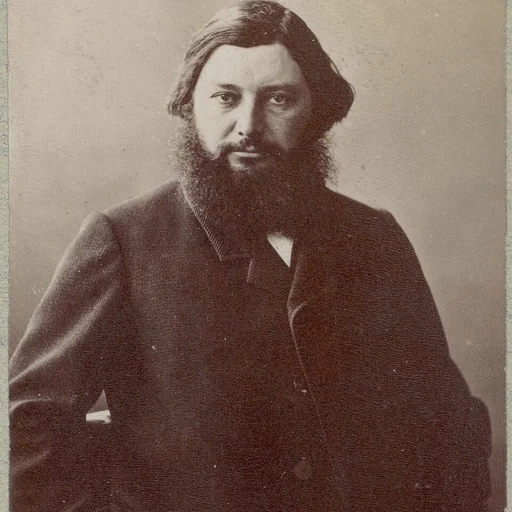
Artist
Jean Désiré Gustave Courbet (UK: KOOR-bay; US: koor-BAY; French: ; 10 June 1819 – 31 December 1877) was a French painter who led the Realism movement in 19th-century French painting.