Artwork
Branches fleuries et Fleurs
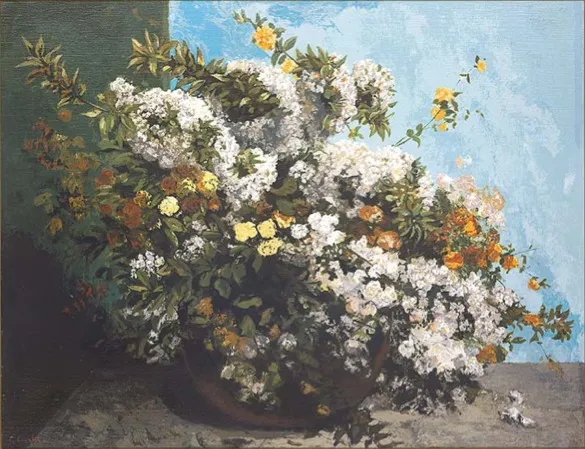
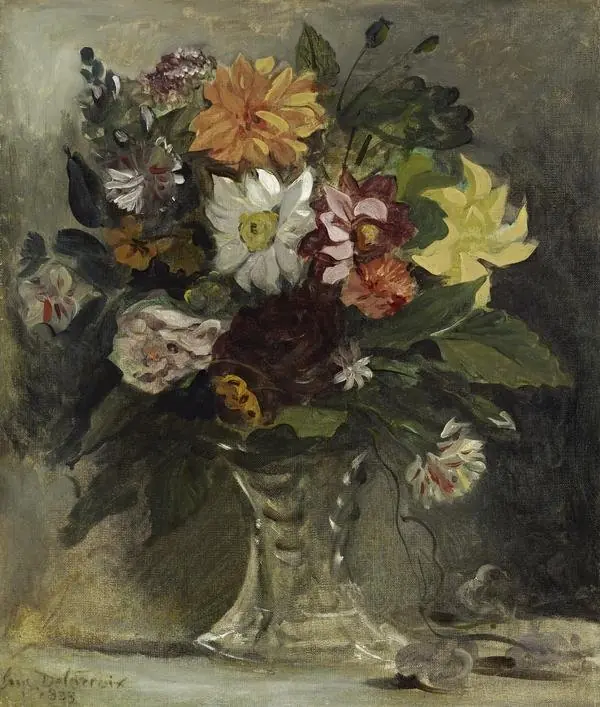
Branches fleuries et Fleurs is an oil painting by the Realist artist Gustave Courbet. It dates from 1855 and is held in the collection of the Hamburger Kunsthalle.
About this work
Overview
Its quiet composition and unadorned presentation align with the broader goals of the Realist movement in mid-19th-century France.
Painted in 1855, *Branches fleuries et Fleurs* is an oil work by Gustave Courbet that exemplifies his commitment to Realism. Rather than idealizing nature, Courbet rendered a simple floral arrangement with direct observation. The painting reflects his rejection of academic traditions, favoring unembellished subjects drawn from everyday life. Its quiet composition and unadorned presentation align with the broader goals of the Realist movement in mid-19th-century France.
Subject & Meaning
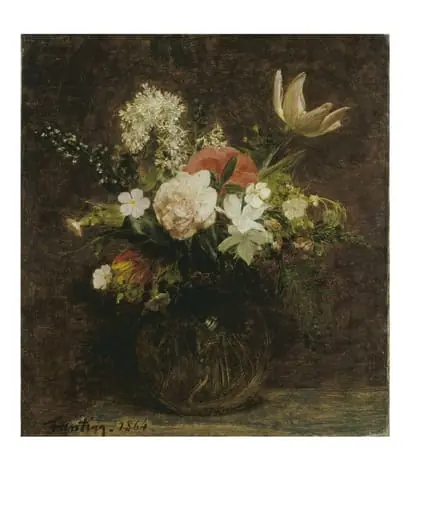
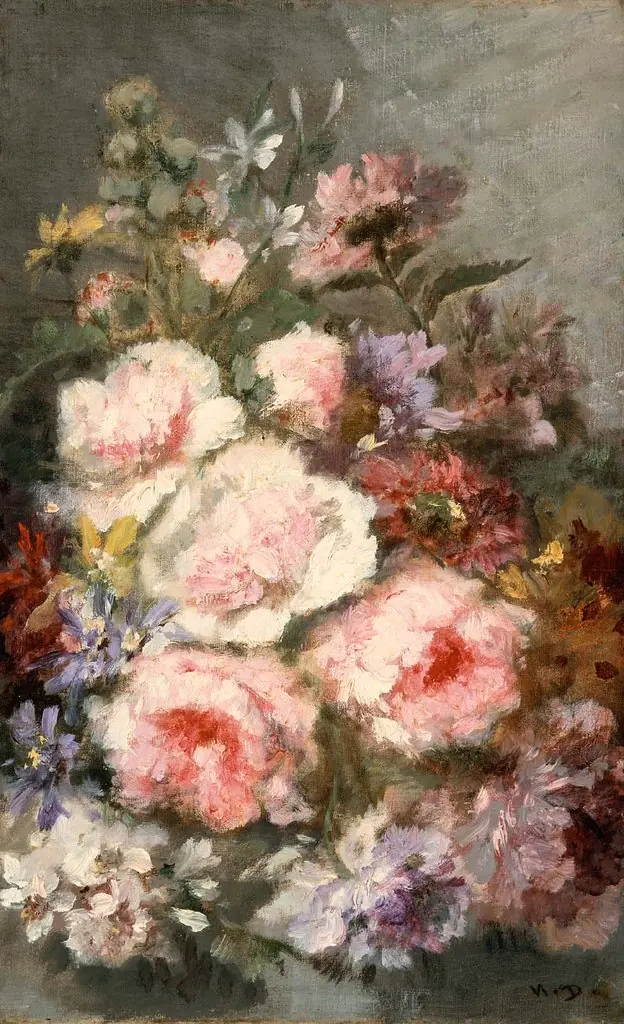
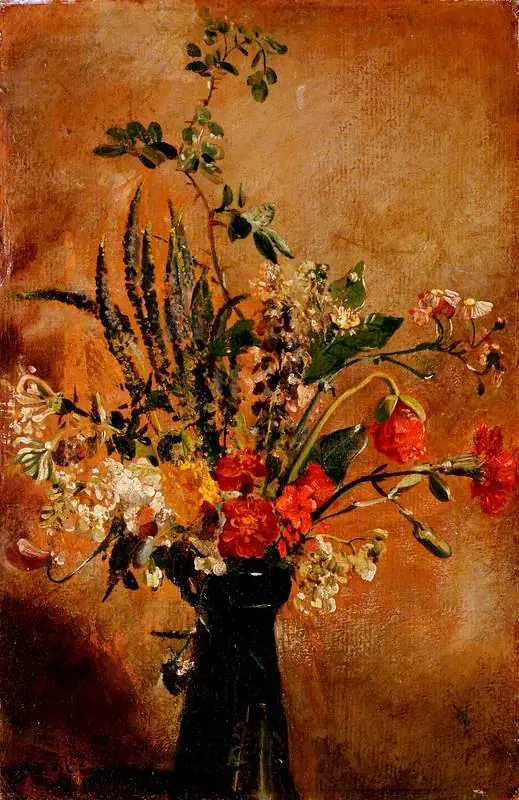
The painting depicts a modest bouquet of white and yellow flowers in a dark brown vase, arranged without ornamentation. Set against a pale blue wall with a shadowed green section to the left, the scene avoids symbolic or decorative intent. Courbet’s focus on the physical presence of the flowers—without allegory or sentiment—emphasizes their material reality, inviting contemplation of form and light rather than narrative or emotion.
Technique & Style
Courbet applied oil paint with assertive, textured brushwork, capturing the weight and texture of petals and the glossy surface of the vase. Light is rendered subtly, highlighting the curves of the blooms and the vase’s contours without artificial highlights. The background is simplified, allowing the bouquet to dominate the space. The technique conveys physical presence through direct handling, not idealized refinement, reinforcing the Realist ethos.
History & Provenance
Created in 1855, the same year Courbet exhibited independently at the Pavilion of Realism, the painting emerged during a pivotal moment in his career. It entered the collection of the Hamburger Kunsthalle in the 19th century and has remained there since. Its preservation in a major European institution underscores its significance as a representative work of French Realism outside France.
Context
In the mid-1800s, French art was dominated by historical and mythological themes sanctioned by the Academy. Courbet challenged this by elevating ordinary subjects—like this bouquet—into the domain of serious painting. His choice to depict a humble still life with such deliberate presence was a quiet act of defiance, asserting that truth in art lay in direct observation, not inherited convention.
Legacy
Though not among Courbet’s most famous works, *Branches fleuries et Fleurs* exemplifies the quiet radicalism of his Realism. It influenced later artists who sought to depict the mundane with dignity and material honesty. The painting’s endurance in a major museum collection affirms its role as a quiet but persistent statement about the value of seeing the world as it is, without embellishment.
Artist & collection
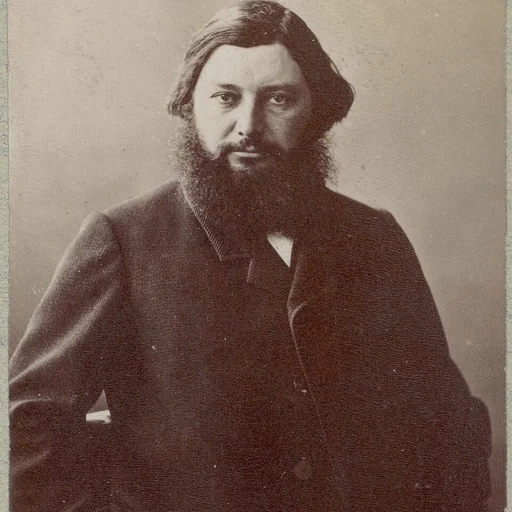
Artist
Jean Désiré Gustave Courbet (UK: KOOR-bay; US: koor-BAY; French: ; 10 June 1819 – 31 December 1877) was a French painter who led the Realism movement in 19th-century French painting.