Artwork
Vase of Lilacs, Roses, and Tulips
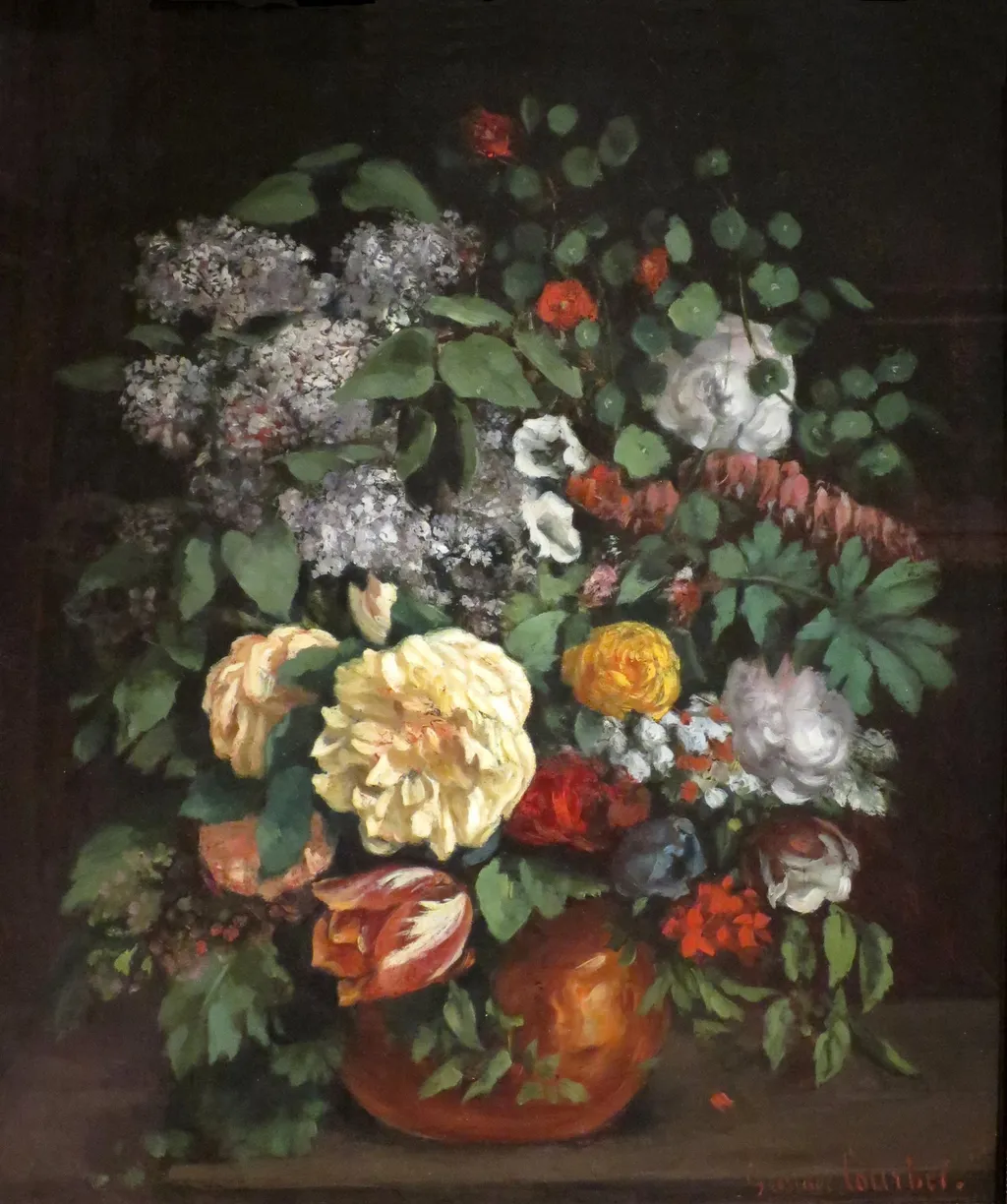
Vase of Lilacs, Roses, and Tulips is an oil painting by the Realist artist Gustave Courbet. It dates from 1863 and is held in the collection of the Norton Simon Museum.
About this work
Overview
Painted in 1863 by Gustave Courbet, this still life presents a modest arrangement of lilacs, roses, and tulips in a simple ceramic vase.
Painted in 1863 by Gustave Courbet, this still life presents a modest arrangement of lilacs, roses, and tulips in a simple ceramic vase. Executed in oil on canvas, the work embodies Courbet’s dedication to depicting ordinary, observable reality. Unlike the idealized compositions of academic tradition, it embraces the unadorned presence of common flora, reflecting his broader rejection of Romantic embellishment in favor of direct visual experience.
Subject & Meaning
The painting centers on a loose, overflowing bouquet of white, pink, and yellow blossoms, accompanied by lush green foliage. There is no symbolic narrative or allegorical intent; instead, the focus lies in the quiet dignity of everyday nature. Courbet’s choice of transient garden flowers underscores his interest in the fleeting, the unremarkable, and the materially present—hallmarks of his Realist philosophy.
Technique & Style
Courbet applied thick, deliberate brushstrokes to capture the texture of petals, leaves, and the glazed surface of the vase. The palette is restrained, with muted tones that enhance the naturalism of the scene. Dark, indistinct background tones isolate the bouquet, drawing attention to its organic forms. The composition avoids symmetry, favoring a spontaneous, almost casual arrangement that mirrors the irregularity of nature.
History & Provenance
The painting was completed during a period when Courbet was actively challenging the Paris Salon’s dominance and promoting independent exhibitions. It remained in private hands until entering the Norton Simon Museum’s collection, where it has been held since the mid-20th century. Its provenance reflects its status as a quiet but significant example of Courbet’s post-1850s still-life output.
Context
In the 1860s, Courbet’s Realism positioned him as a counterpoint to both academic history painting and the emerging Impressionist focus on light. While his peers began experimenting with color and atmosphere, Courbet remained anchored in tangible form and material presence. This still life aligns with his broader project: elevating the mundane through unembellished observation, influencing later artists who sought to break from tradition.
Legacy
Though not among Courbet’s most famous works, this painting exemplifies his contribution to shifting artistic priorities toward direct observation and material honesty. Its influence can be traced in the compositional freedom and attention to everyday subjects adopted by Impressionists and, later, by early modernists like Cézanne, who similarly found structure in ordinary arrangements.
Artist & collection
Artist
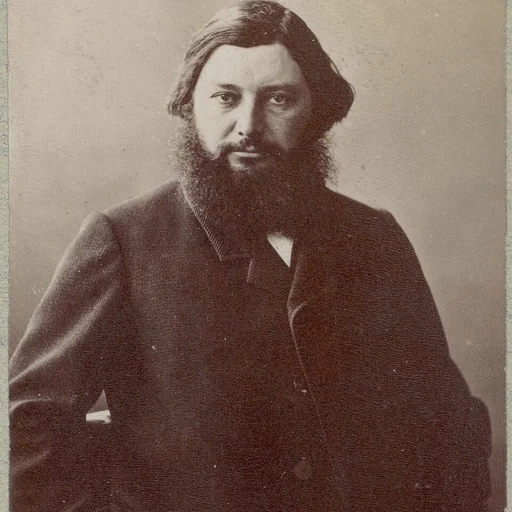
Jean Désiré Gustave Courbet (UK: KOOR-bay; US: koor-BAY; French: ; 10 June 1819 – 31 December 1877) was a French painter who led the Realism movement in 19th-century French painting.

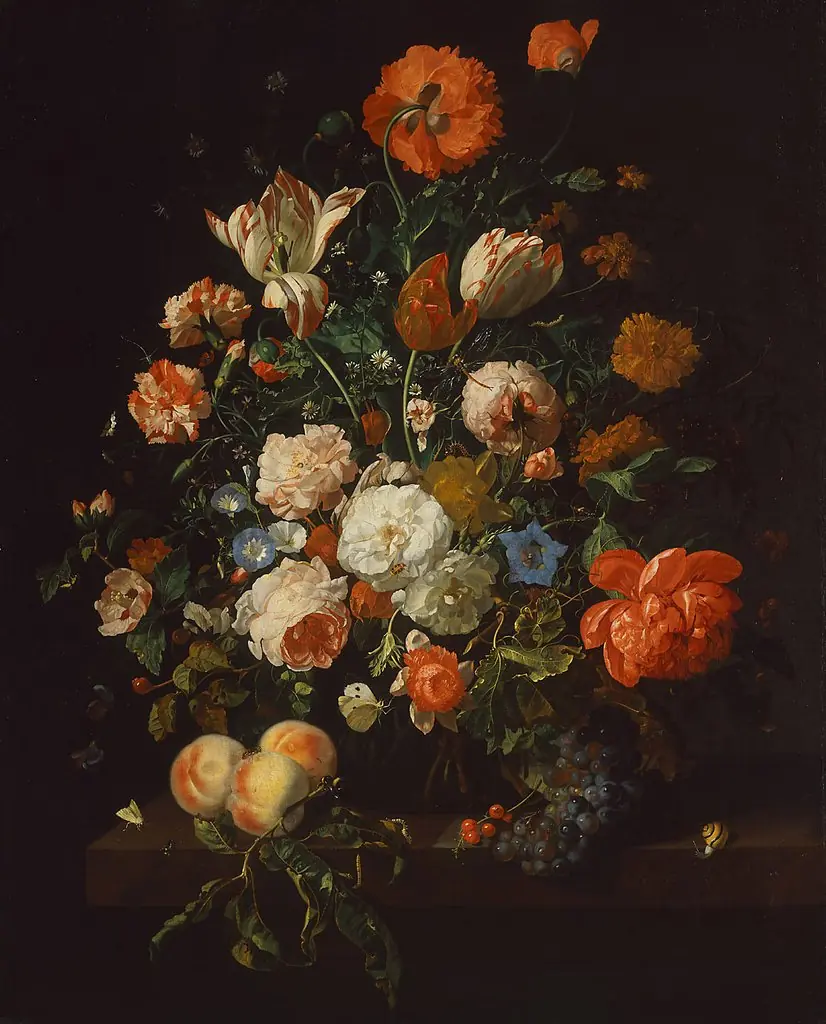 Vase with Flowers
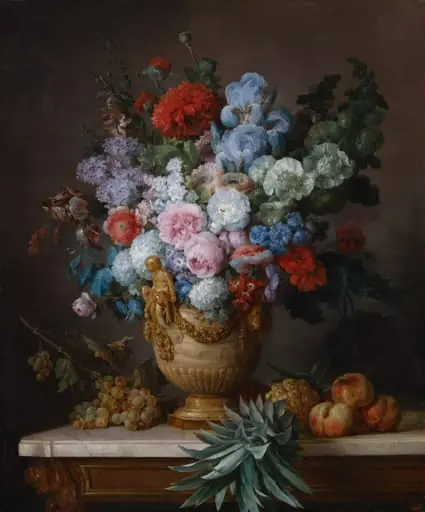 Still Life with Flowers in an Alabaster Vase and Fruit
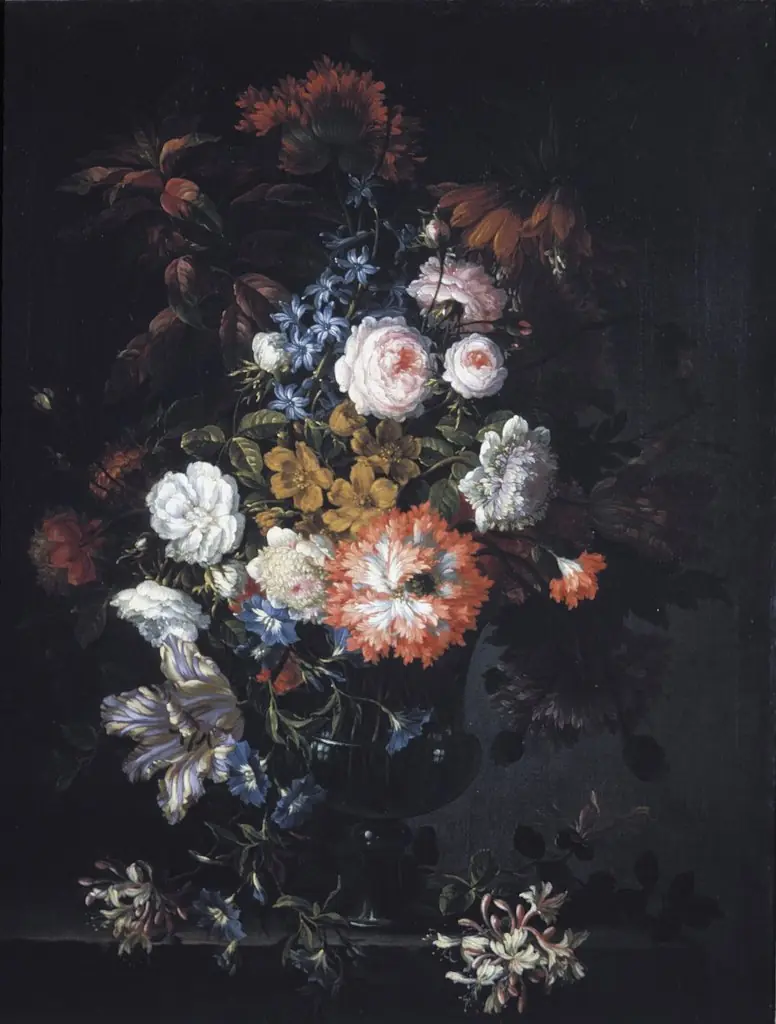 Still Life with Flowers
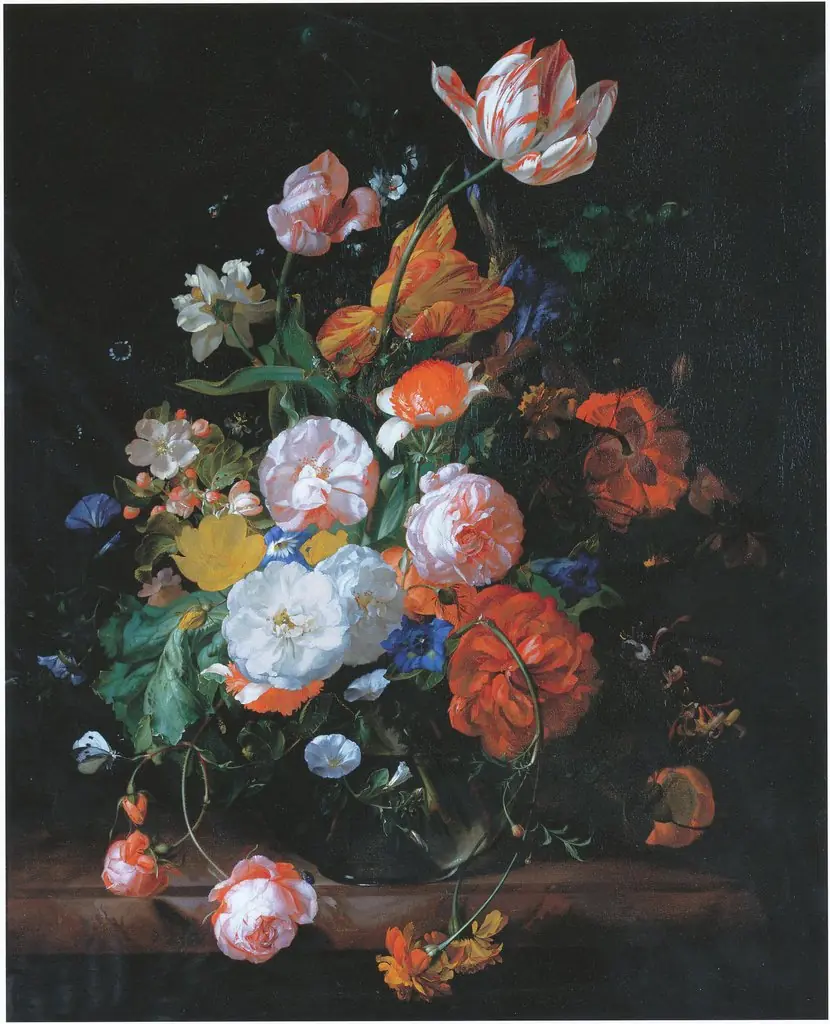 Roses, tulips and other flowers in a glass vase on a marble ledge
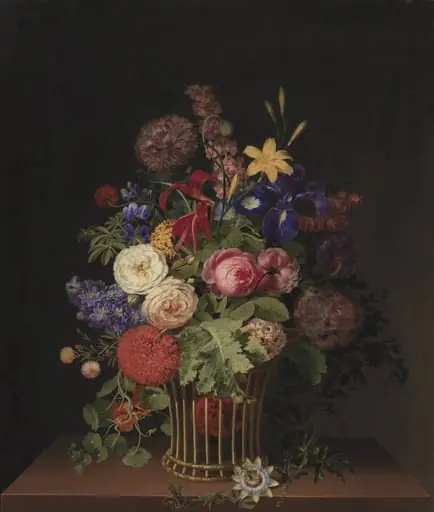 En let rørkurv med blomster
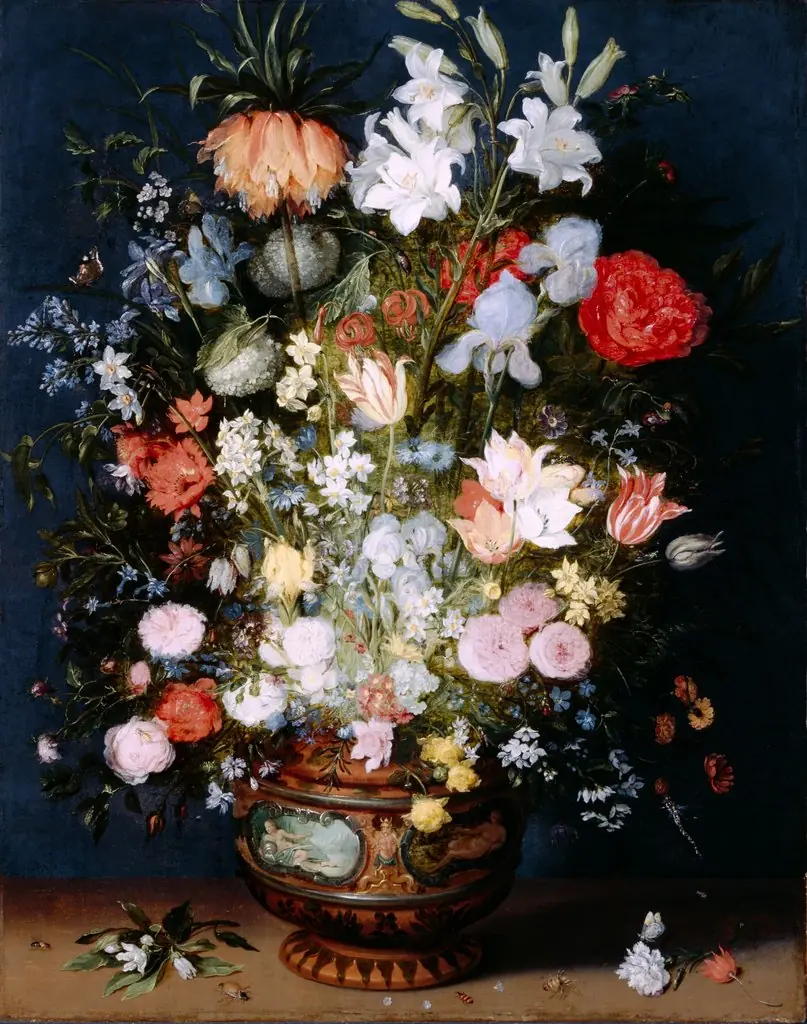 Bouquet of Flowers in a Ceramic Vase
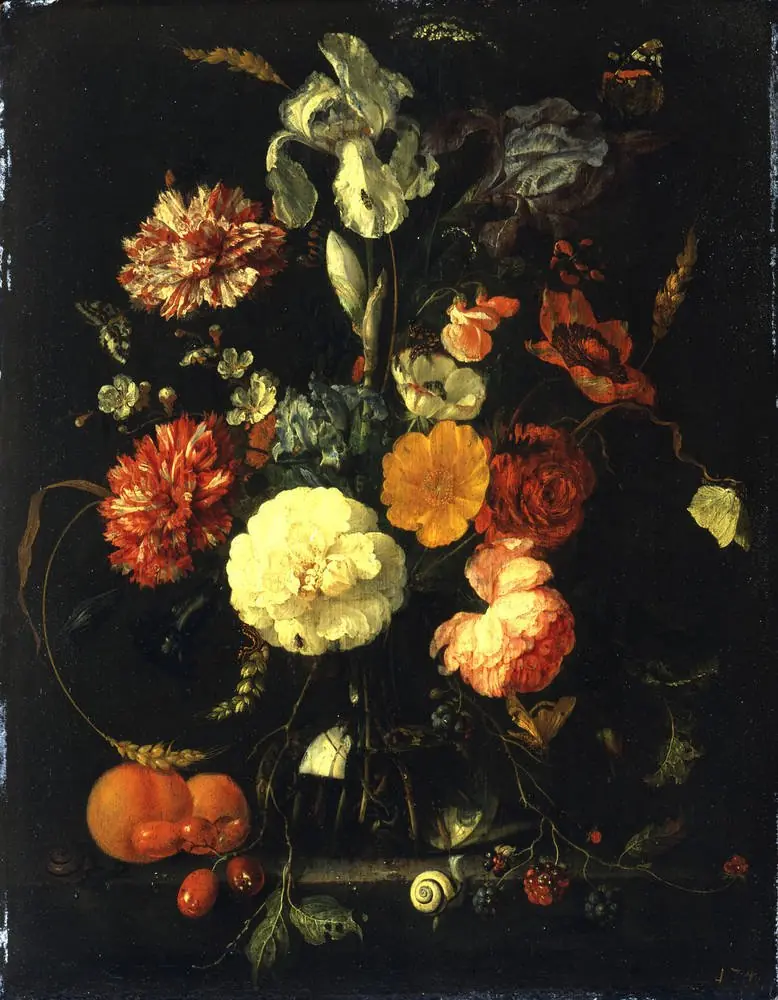 Bouquet with Blue Iris in a Glass Vase
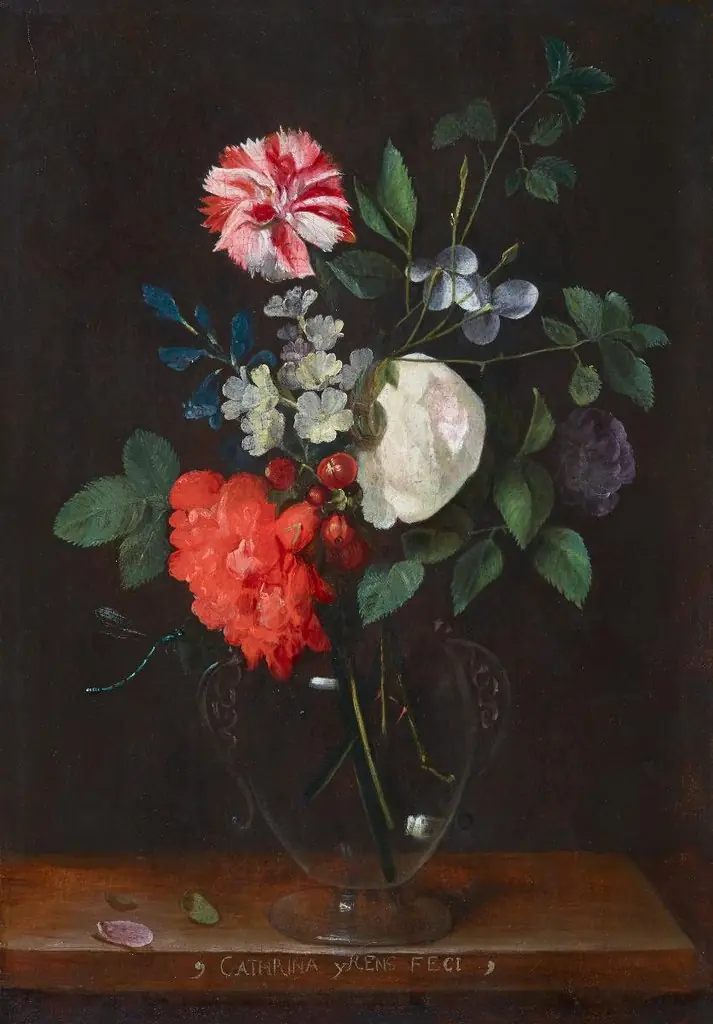 Blumenstillleben in Glasvase mit Libelle auf Tisch