Artwork
Sugar Mill on Jawa
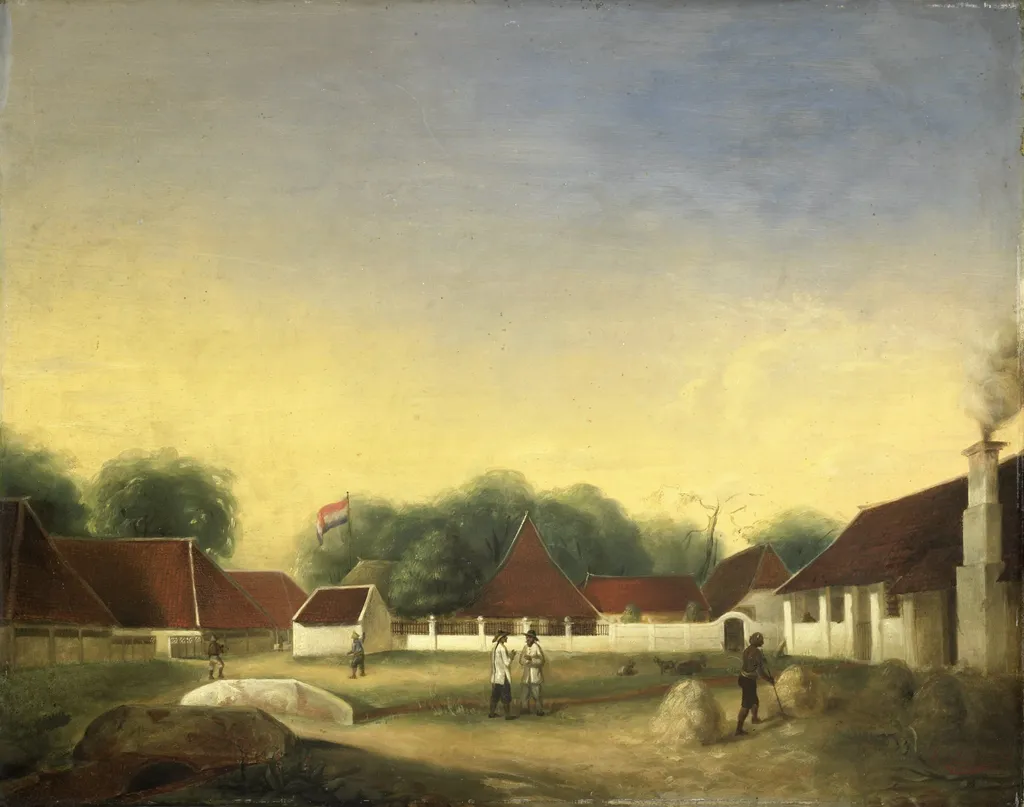
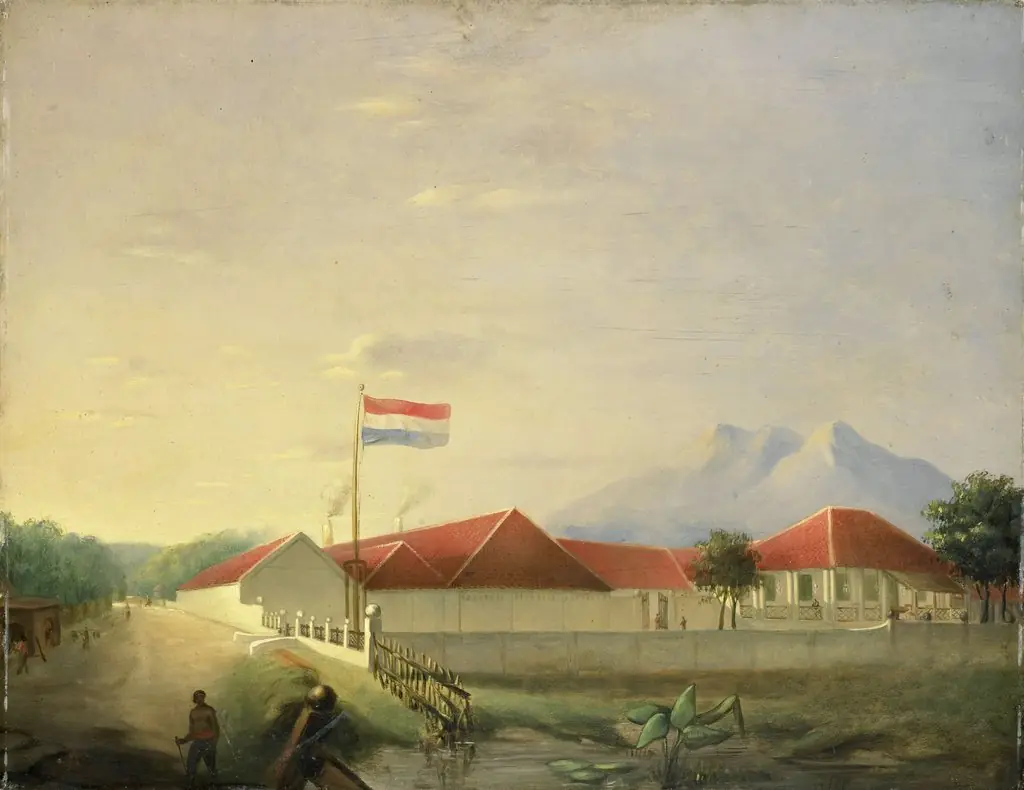
Sugar Mill on Jawa is an oil painting by the Realist artist H.Th. Hesselaar. It dates from 1849 and is held in the collection of the Rijksmuseum. Painted in 1849 by H.
About this work
Overview
The work is part of the Rijksmuseum’s collection and offers a glimpse into mid‑nineteenth‑century colonial landscapes.
H.Th. Hesselaar’s 1849 oil painting, Sugar Mill on Jawa, presents a tropical industrial scene on the island of Java. The composition centers on a sugar-processing facility surrounded by modest dwellings and foliage, with a modest bridge spanning a shallow watercourse in the foreground. The work is part of the Rijksmuseum’s collection and offers a glimpse into mid‑nineteenth‑century colonial landscapes.
Subject & Meaning
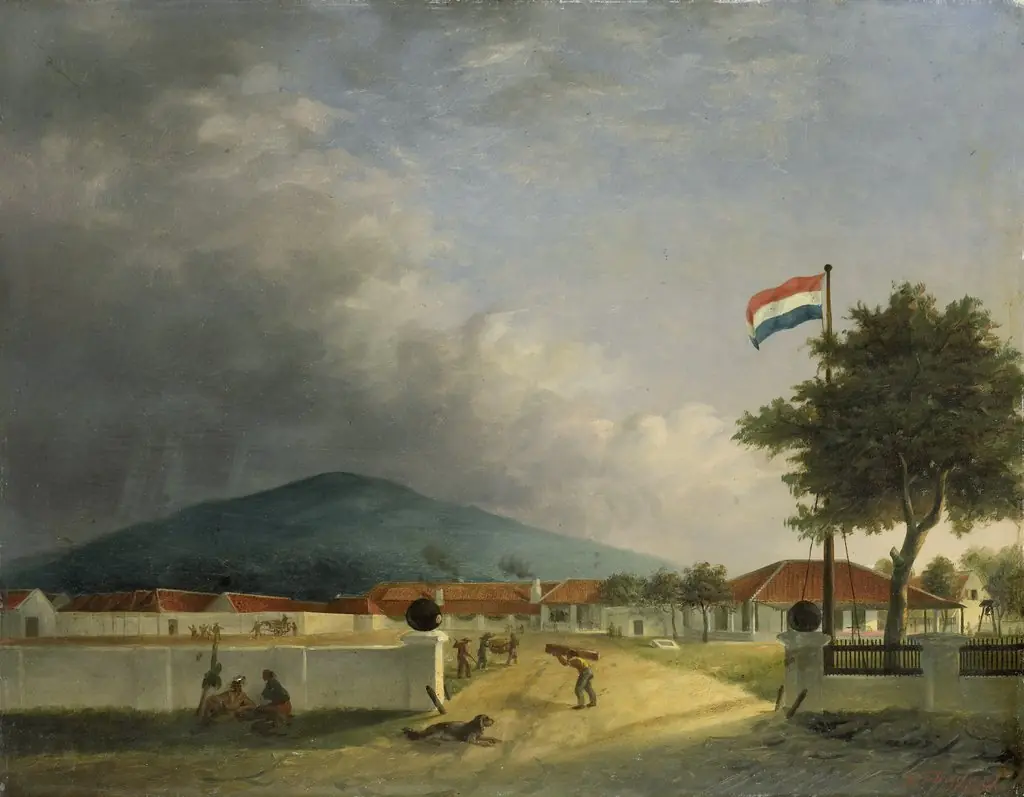
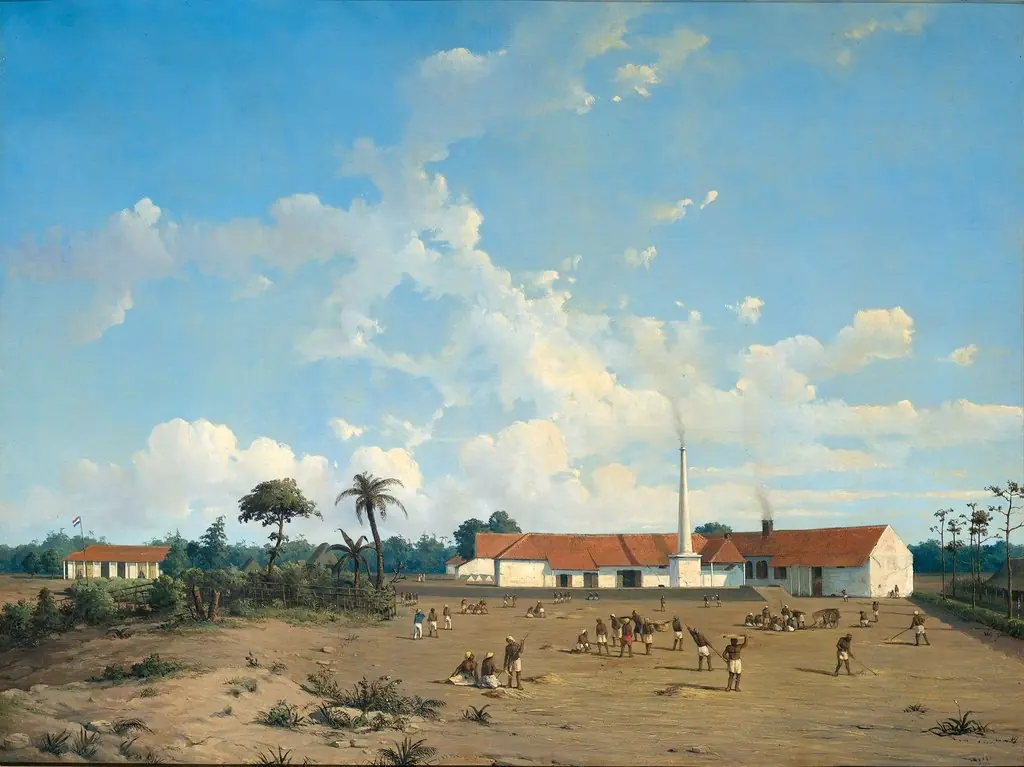
The canvas records daily activity at a Javanese sugar mill, where laborers in simple attire attend to their tasks, carrying tools and baskets. Houses and trees frame the mill, suggesting a settled community integrated with the plantation economy. The inclusion of the bridge and stream underscores the functional relationship between the built environment and the surrounding natural landscape.
Technique & Style
Executed in oil on canvas, Hesselaar employs a palette that balances warm yellows in the sky with cooler greens and earthy browns for vegetation and architecture. Brushwork varies from broader, atmospheric strokes in the background to finer detailing on figures and structural elements, creating depth while maintaining a cohesive, observational tone.
History & Provenance
Created in 1849, the painting entered the Rijksmuseum’s holdings, where it remains on display. Its acquisition reflects the museum’s interest in documenting Dutch colonial enterprises and the visual records produced by artists who traveled to or depicted overseas territories during the period.
Own this work as a print
Artist & collection