Artwork
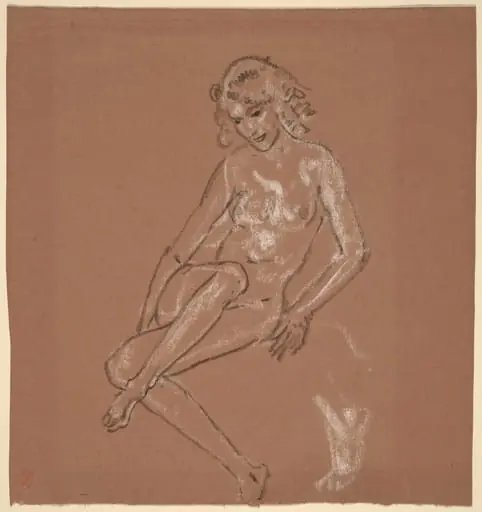
Seated Female Nude
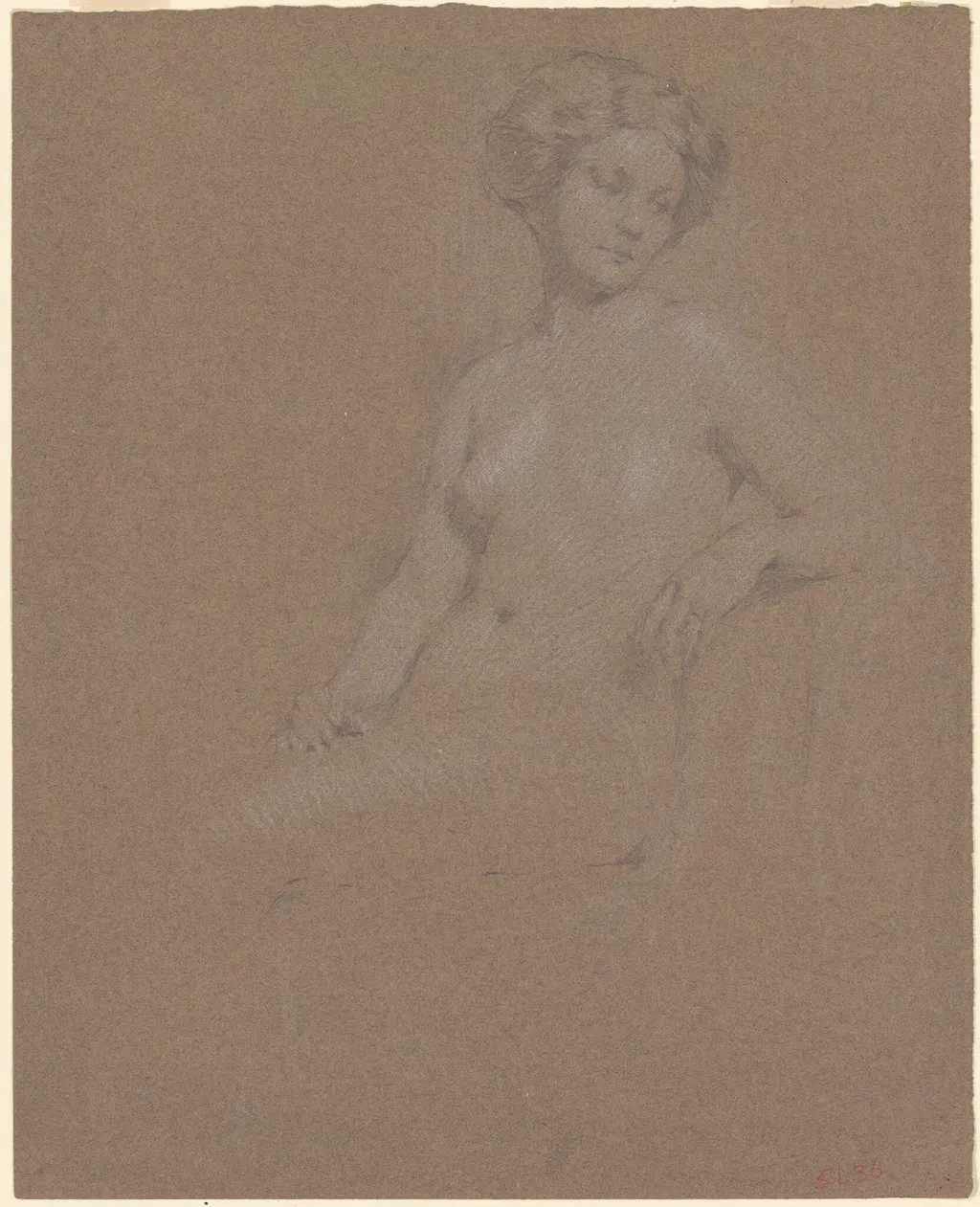
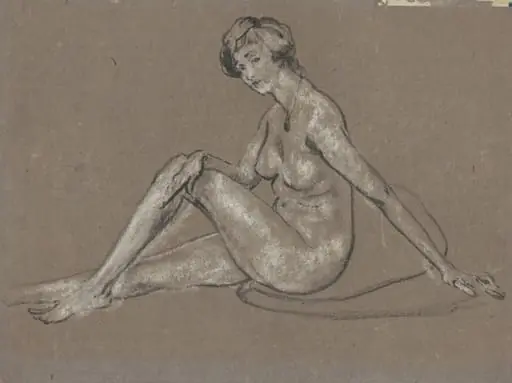
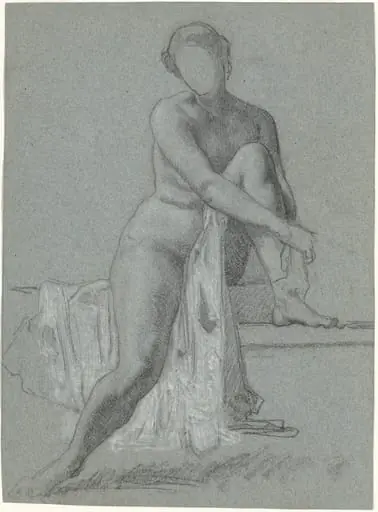
Seated Female Nude is a graphite drawing by the Impressionist artist Philip Leslie Hale. It dates from 1887 and is held in the collection of the National Gallery of Art.
About this work
Overview
Created in 1887, this drawing by Philip Leslie Hale is a study of the female form executed in graphite and white chalk on brown wove paper. As a work on paper, it reflects the artist’s engagement with figure drawing as a foundational practice. Its modest scale and intimate medium distinguish it from his larger painted works, offering a direct glimpse into his observational process.
Subject & Meaning
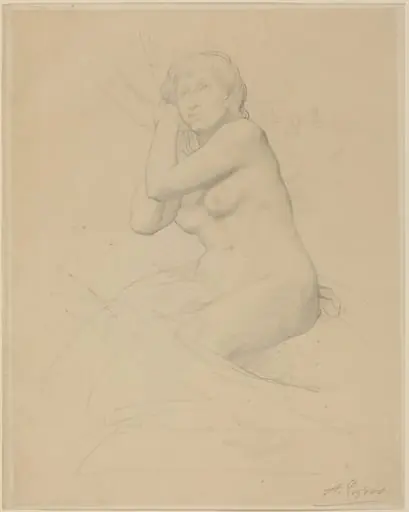
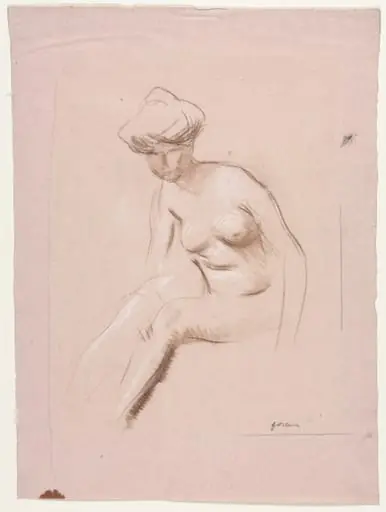
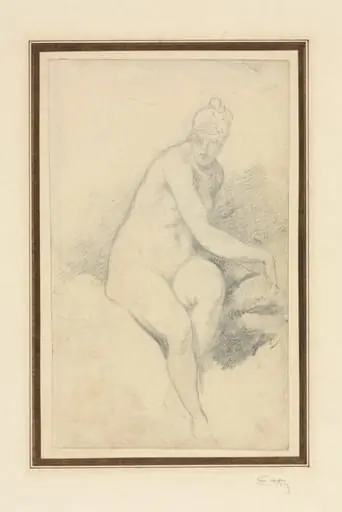
The drawing portrays a seated female nude, rendered without narrative context or idealization. The figure is presented in a natural, unadorned pose, suggesting an emphasis on anatomical truth rather than symbolic or mythological reference. This approach aligns with academic traditions of life study, even as it subtly engages with the Impressionist interest in unposed, everyday moments.
Technique & Style
Hale employed graphite for delicate tonal modeling and white chalk to highlight areas of light, creating contrast against the warm brown paper.
Hale employed graphite for delicate tonal modeling and white chalk to highlight areas of light, creating contrast against the warm brown paper. The lines are loose and suggestive, avoiding rigid outlines in favor of fluid, gestural marks. This sketch-like quality conveys immediacy and captures the transient effects of light on form, reflecting a shift from rigid academic draftsmanship toward more spontaneous rendering.
History & Provenance
The drawing was produced during Hale’s early career, a period when he was actively studying and teaching figure drawing. It likely originated from his time at the Massachusetts Normal Art School or during private sessions with models. Its survival as a standalone work suggests it was retained as a pedagogical or personal reference, rather than intended for public display.
Context
In late 19th-century America, figure drawing was central to art training, though public displays of nudity remained controversial. Hale, influenced by both European academic methods and emerging Impressionist sensibilities, navigated this tension by focusing on the formal qualities of the body. This drawing exemplifies how artists used private studies to explore light, form, and composition away from institutional constraints.
Legacy
Though not widely exhibited, this work contributes to understanding Hale’s role in advancing life drawing in American art education. It reflects a broader trend among his contemporaries who valued direct observation over idealized representation. As a surviving example of academic practice in a non-finished medium, it offers insight into the private processes behind more public artworks of the era.
Artist & collection
Artist
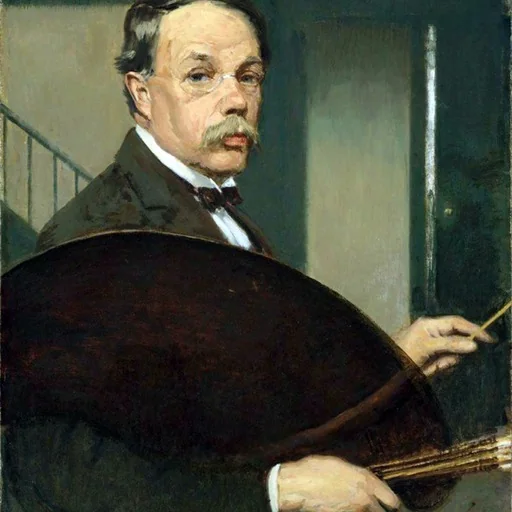
Philip Leslie Hale (1865–1931) was an American Impressionist artist, writer and teacher. His work was part of the painting event in the art competition at the 1932 Summer Olympics.