Artwork
Two McLaughlin Pears
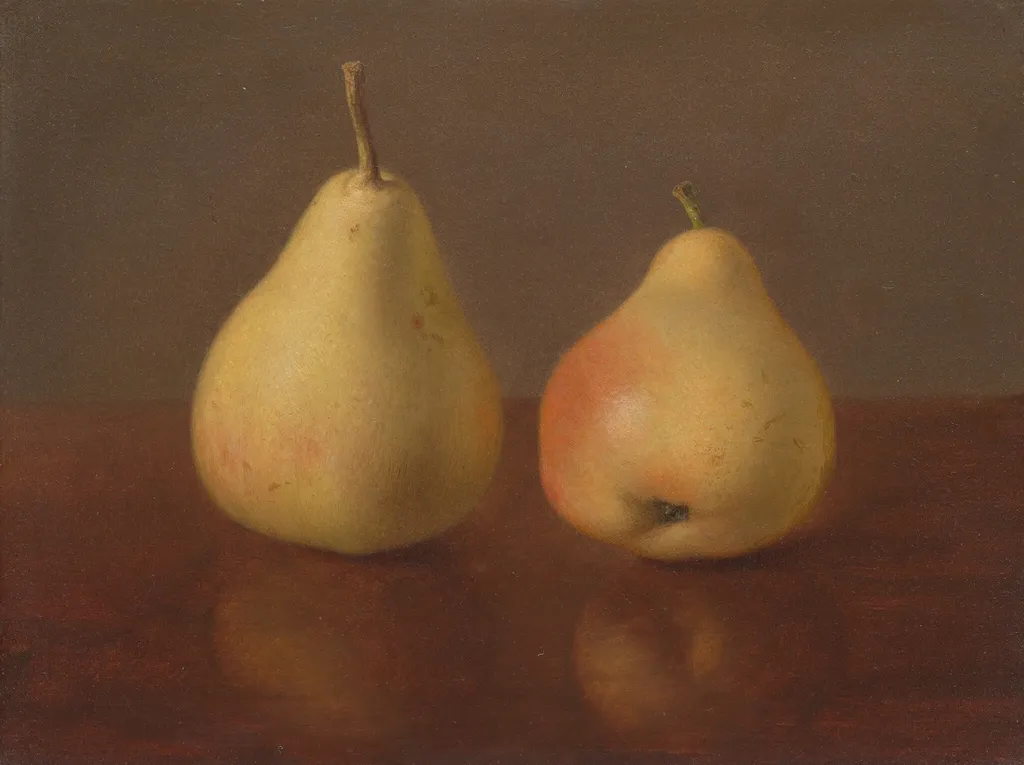
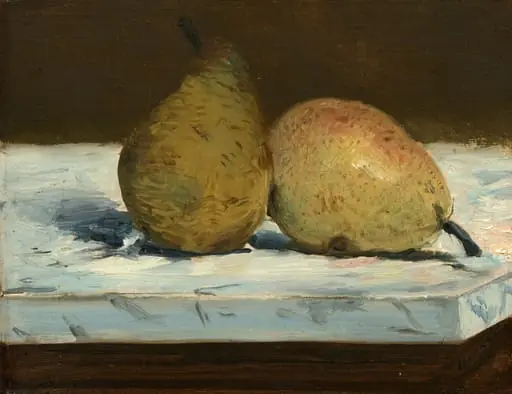
Two McLaughlin Pears is an oil painting by the Realist artist Jeremiah Pearson Hardy. It dates from 1844 and is held in the collection of the National Gallery of Art.
About this work
Overview
Jeremiah Pearson Hardy, a 19th‑century portraitist based in Bangor, Maine, completed the oil‑on‑board work *Two McLaughlin Pears* in 1844. Though best known for likenesses, Hardy turned his meticulous observation to a still‑life that exemplifies the Realist concern for accurate representation of everyday objects.
Subject & Meaning
The composition presents a pair of pears placed side by side on a darkened surface. The left fruit displays a pale yellow skin and a modest stem, while the right fruit shows a blend of yellow and reddish hues. The simple arrangement invites contemplation of natural variation and the quiet dignity of ordinary produce.
Technique & Style
Hardy employs a restrained chiaroscuro, using a deep brown background to accentuate the luminous flesh of the pears. Careful modulation of light and shadow creates a three‑dimensional effect, rendering the fruit’s texture and translucency with a precision that approaches photographic realism, characteristic of mid‑century American Realism.
History & Provenance
Created during Hardy’s most active period in Bangor, the painting remained in the region’s private collections for much of the 19th century before entering a public institution’s holdings in the early 20th century. Its title references the McLaughlin family, who were likely the original patrons or owners.
Context
At a time when Bangor’s artistic community was expanding, Hardy worked alongside family members and apprentices, contributing to a local school of portrait and genre painting. *Two McLaughlin Pears* reflects the broader American shift toward depicting domestic subjects with the same seriousness previously reserved for historical or religious themes.
Own this work as a print
Artist & collection
Artist
Jeremiah Pearson Hardy (c. 1800–1888) was a painter who specialized in portraits.He spent most of his career in Bangor, Maine. He was also the central figure in a circle of 19th-century Bangor painters that included his…