Artwork
Henry Fancourt White, nephew of the painter, when an infant
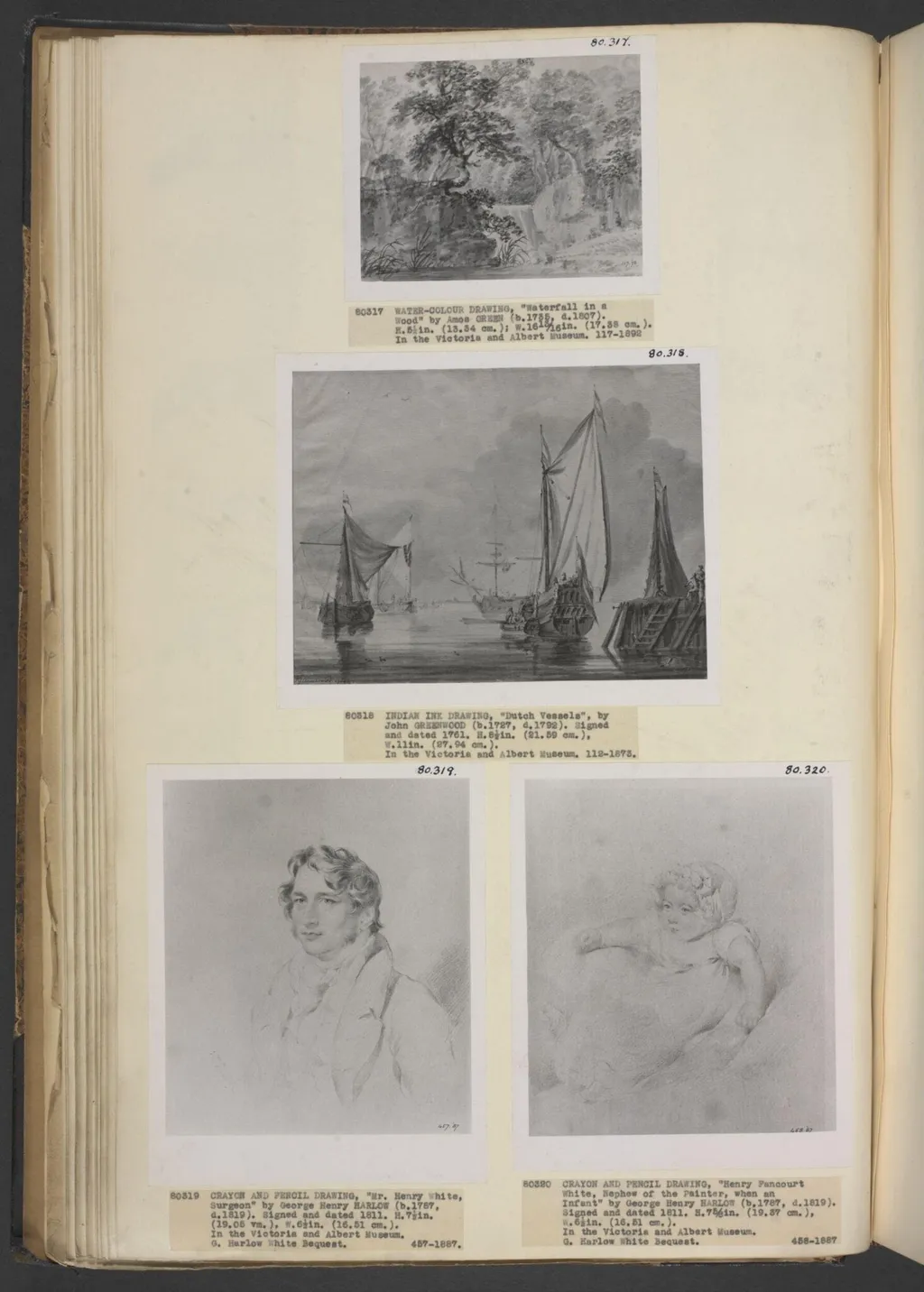
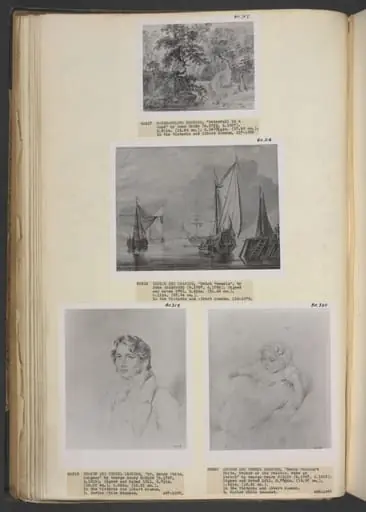
Henry Fancourt White, nephew of the painter, when an infant is a drawing by the Romanticist artist George Henry Harlow. It dates from 1811 and is held in the collection of the Victoria and Albert Museum. A delicate crayon and pencil drawing captures Henry Fancourt White as a very young child, likely under a year old.
About this work
Overview
A delicate crayon and pencil drawing captures Henry Fancourt White as a very young child, likely under a year old. The artist, his uncle, inscribed his name and the date, affirming personal connection and immediate observation. The work is intimate in scale and quiet in tone, presenting a fleeting moment rather than a formal portrait.
Subject & Meaning
The infant lies prone, arms extended as if testing movement, head turned with a soft, unguarded gaze. There is no staged pose or symbolic element—only the natural posture of a child discovering bodily control. The image conveys tenderness through stillness, reflecting an observer’s quiet affection rather than a public commemoration.
Technique & Style
Soft, fluid lines define the child’s form with minimal detail, relying on light shading to suggest volume around the face and shoulders. The sketchy, rapid strokes imply the artist worked swiftly, possibly from memory or direct observation. Cross-hatching is sparingly used, creating subtle gradations without heavy texture, enhancing the sense of immediacy.
History & Provenance
Created by the child’s uncle, the drawing remained within the family, preserving its personal significance. Its survival suggests it was valued not as a public artwork but as a private memento. The artist’s signature and date confirm authorship and timing, anchoring the image to a specific moment in the child’s early life.
Context
In early 19th-century Britain, informal drawings of family members—especially children—were common among artists as personal exercises. Such works often served as studies or keepsakes, distinct from commissioned portraits. This piece aligns with a domestic tradition of recording kinship through spontaneous, unidealized sketches.
Legacy
The drawing endures as a quiet testament to familial observation, offering insight into the artist’s private world. It stands apart from grander artistic narratives, instead preserving the ordinary tenderness of childhood through unadorned draftsmanship. Its value lies in its authenticity, not its scale or finish.
Artist & collection
Artist
George Henry Harlow made drawings and prints of people in early 19th-century Britain.