Artwork
Mount Hood, Oregon
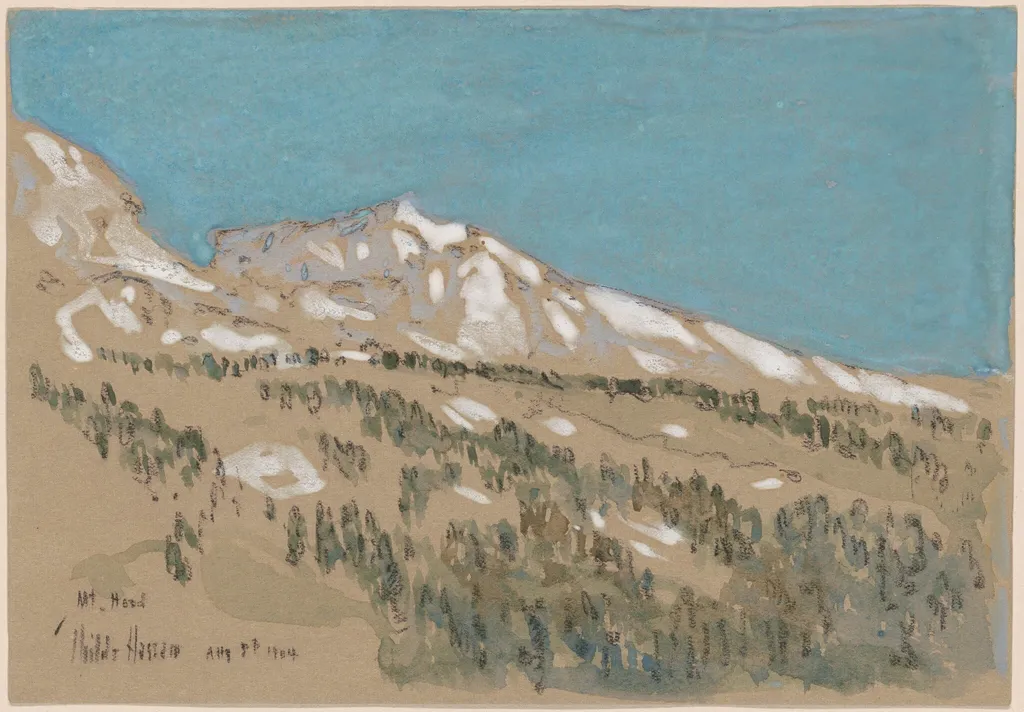
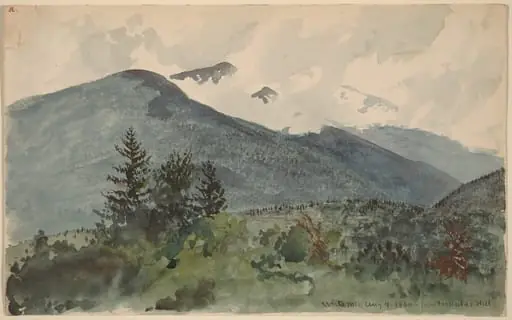
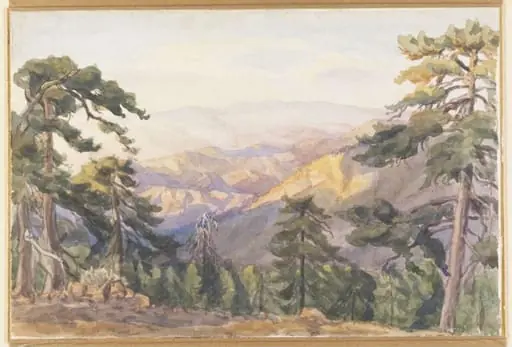
Mount Hood, Oregon is a gouache drawing by Childe Hassam. It dates from 1904 and is held in the collection of the National Gallery of Art.
About this work
Overview
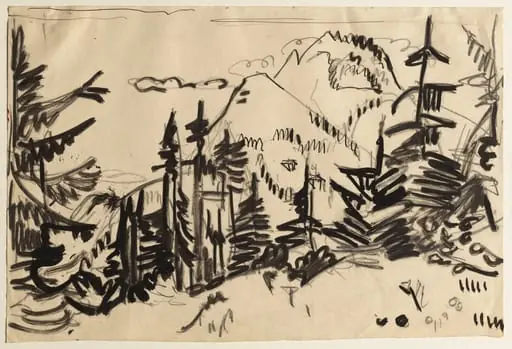
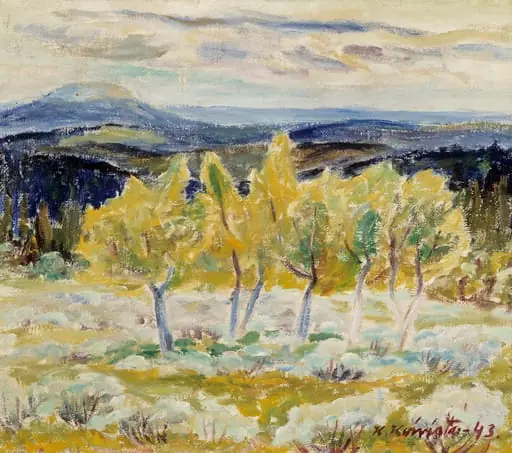
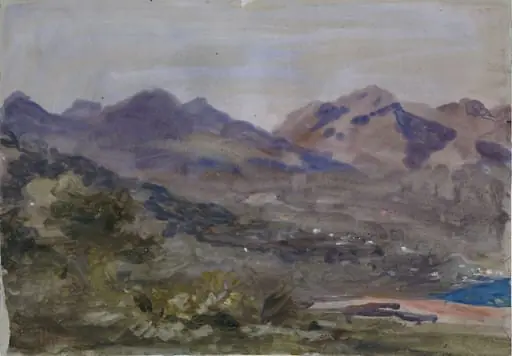
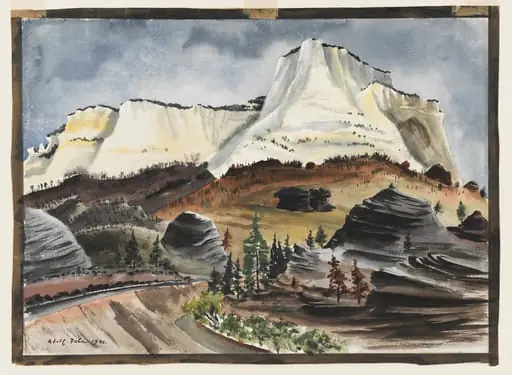
It presents the volcanic peak of Mount Hood rising above a dense forest of evergreens, rendered with layered pigments and precise linear marks.
Childe Hassam's 'Mount Hood, Oregon' is a landscape drawing executed in watercolor, gouache, and charcoal on wove paper. It presents the volcanic peak of Mount Hood rising above a dense forest of evergreens, rendered with layered pigments and precise linear marks. The work exemplifies Hassam’s interest in atmospheric effects and the structural qualities of natural forms, combining delicate washes with bold, dry charcoal strokes to define texture and form.
Subject & Meaning
The painting centers on Mount Hood, a dominant geological feature of Oregon, framed by towering conifers and softened by a distant haze. Rather than idealizing the scene, Hassam conveys a quiet, observational presence—emphasizing the mountain’s quiet majesty and the subtle shifts in light across its snowfields. The composition suggests a moment of stillness, where nature exists without human intervention, grounded in direct experience rather than romanticized grandeur.
Technique & Style
Hassam employed thin, transparent watercolor glazes to build luminous tones in the sky and snow, while gouache added opacity for the mountain’s brighter highlights. Charcoal was used sparingly but decisively to define the sharp contours of tree trunks and rocky outcrops. He alternated wet and dry brushwork to vary surface texture, creating a tactile contrast between the soft, hazy distance and the crisp, detailed foreground.
History & Provenance
Created during Hassam’s 1903 trip to the Pacific Northwest, the work emerged from his sketching excursions in Oregon. It was likely made on-site, as part of a series of studies capturing regional landscapes. The drawing remained in private hands for decades before entering a public collection, where it is now recognized as a significant example of American plein air drawing from the early 20th century.
Context
Hassam’s depiction of Mount Hood aligns with broader American artistic interest in western landscapes during the early 1900s, though his approach diverged from grand, heroic treatments. Influenced by Impressionist principles, he favored intimate, light-sensitive renderings over monumental scale. His use of mixed media reflects a transitional moment in American drawing, where traditional techniques merged with modernist experimentation in material and perception.
Legacy
The work stands as a quiet testament to Hassam’s versatility beyond his better-known urban scenes. It demonstrates his capacity to translate the subtleties of natural light and form through restrained, thoughtful technique. Though less widely exhibited than his cityscapes, 'Mount Hood, Oregon' remains a key example of his commitment to direct observation and his nuanced handling of medium to evoke spatial depth and atmospheric mood.
Own this work as a print
Artist & collection
Artist
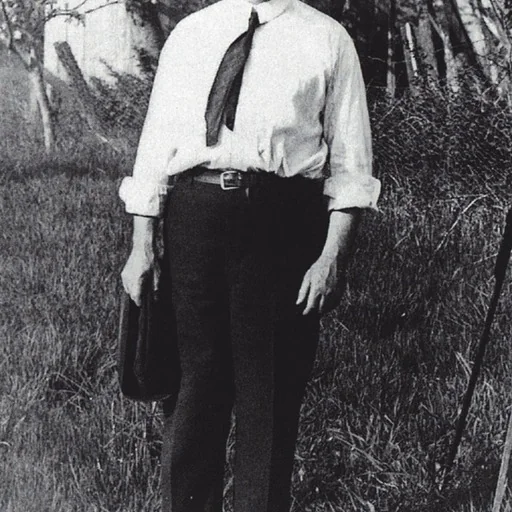
Frederick Childe Hassam was an American Impressionist painter, noted for his urban and coastal scenes.