Artwork
The Heart of Easthampton
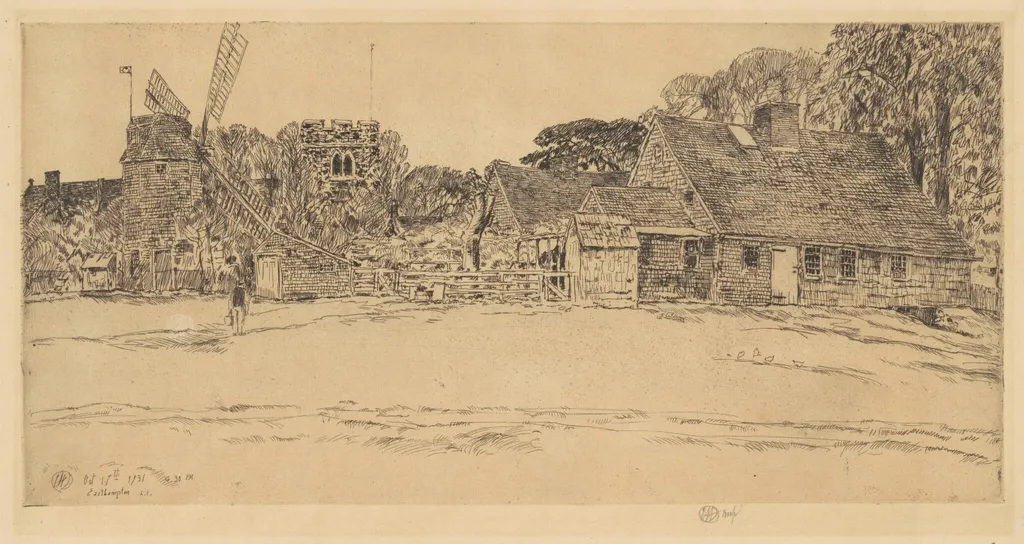
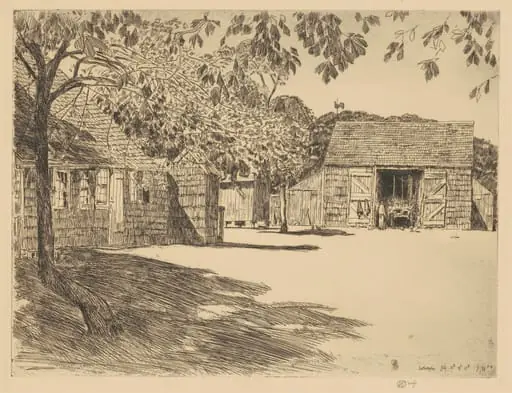
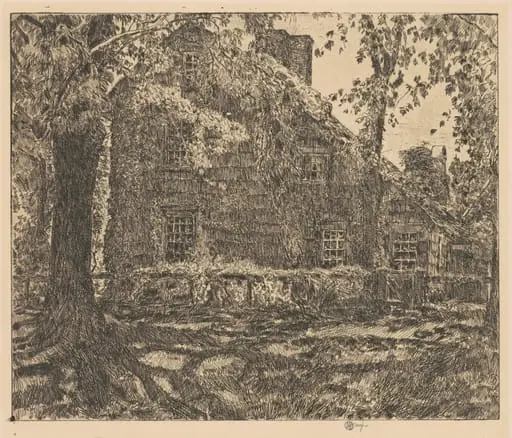
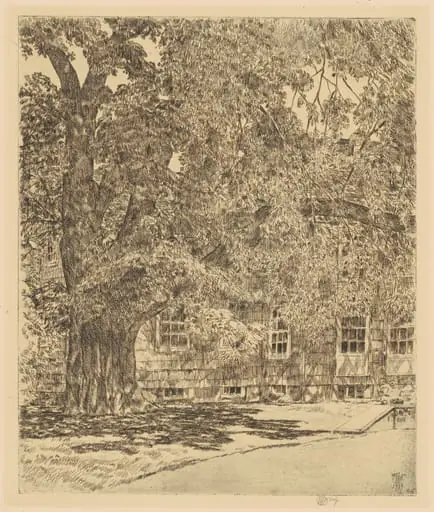
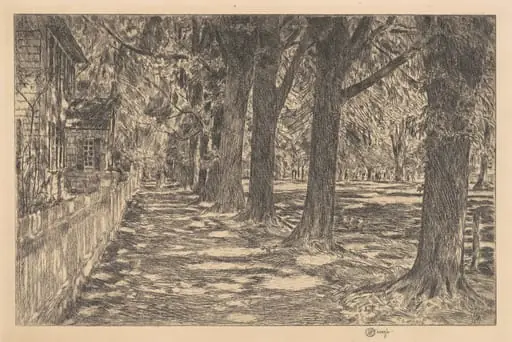
The Heart of Easthampton is an ink print by Childe Hassam. It dates from 1931 and is held in the collection of the National Gallery of Art.
About this work
Overview
Created in 1931, The Heart of Easthampton is a black-and-white etching by American artist Childe Hassam. Executed on laid paper, the print captures a quiet street scene with modest residential architecture and a lone figure, rendered in a restrained palette of sepia tones and deep black ink.
Subject & Meaning
The composition presents a narrow road flanked by aged houses, their roofs and windows outlined in fine line work. A solitary woman in a simple dress stands on the left, gazing down the street, suggesting a moment of contemplation amid an otherwise still, rural environment.
Technique & Style
Hassam employed a needle to incise lines directly into the copper plate, producing crisp, sharp shadows through cross‑hatching. The dense black ink covers most of the paper, while the white of the laid paper emerges as thin, precise lines that define architectural details and the figure’s silhouette, lending the image a crisp, paused quality.
Context
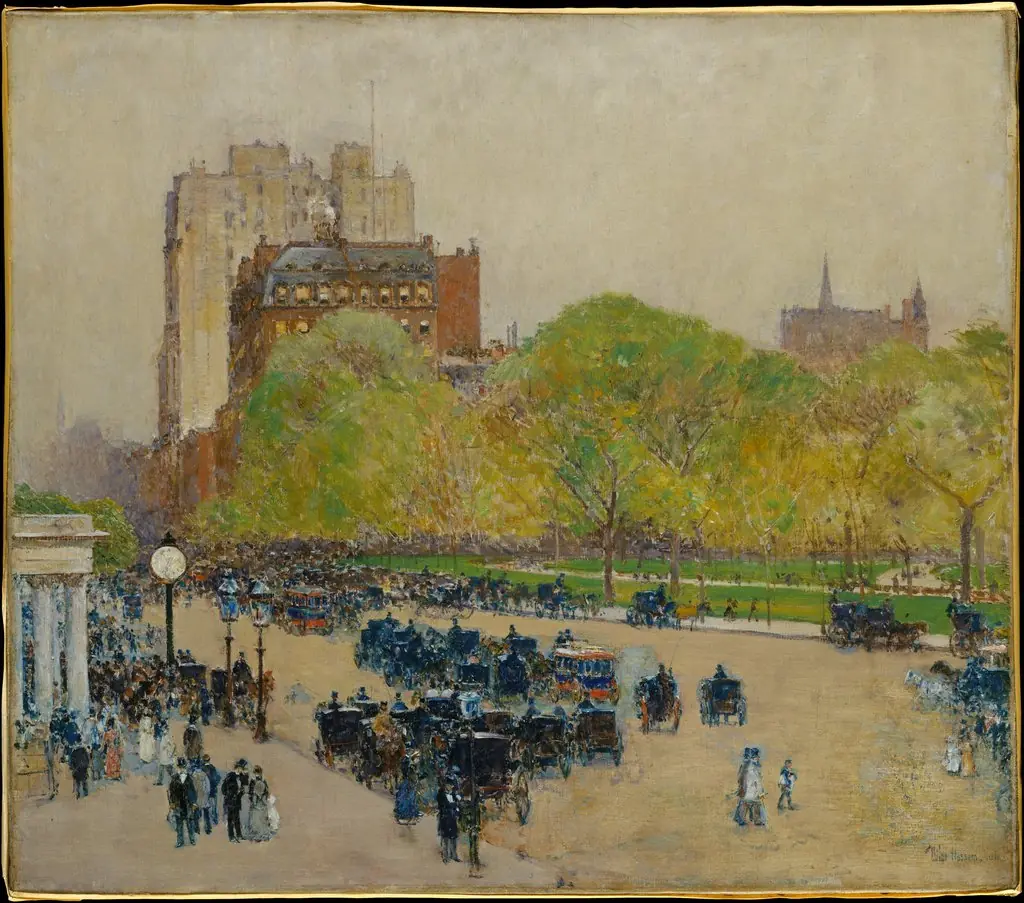
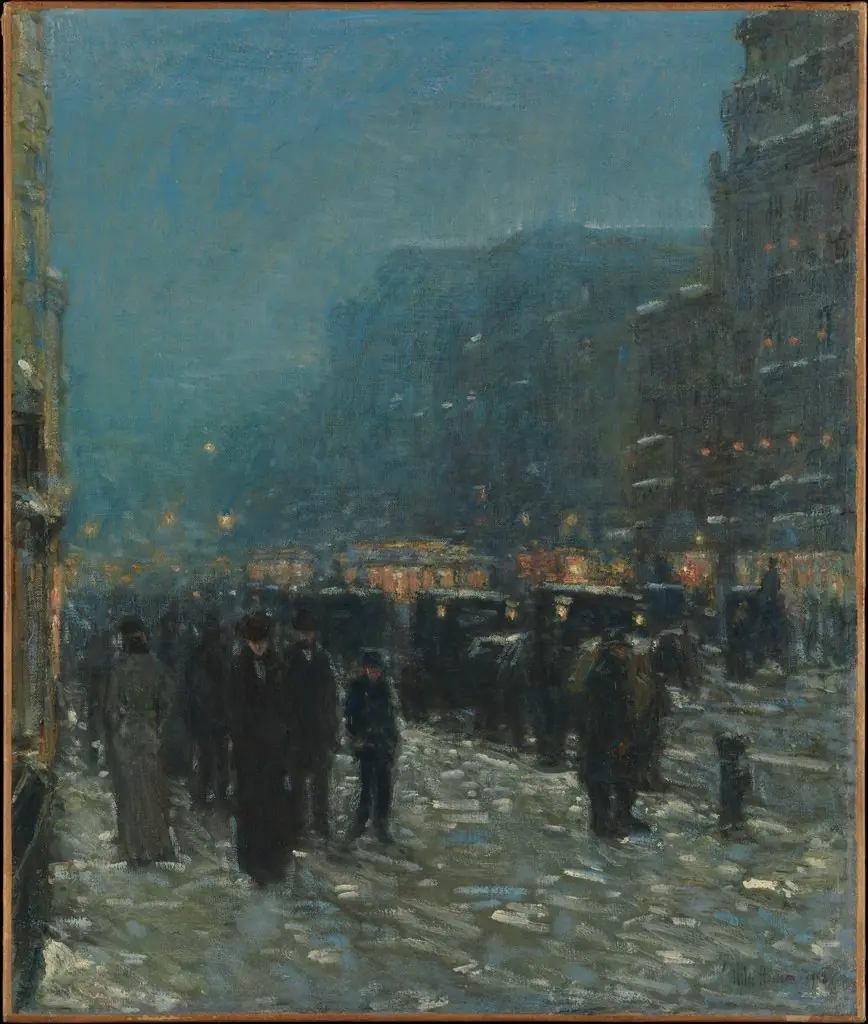
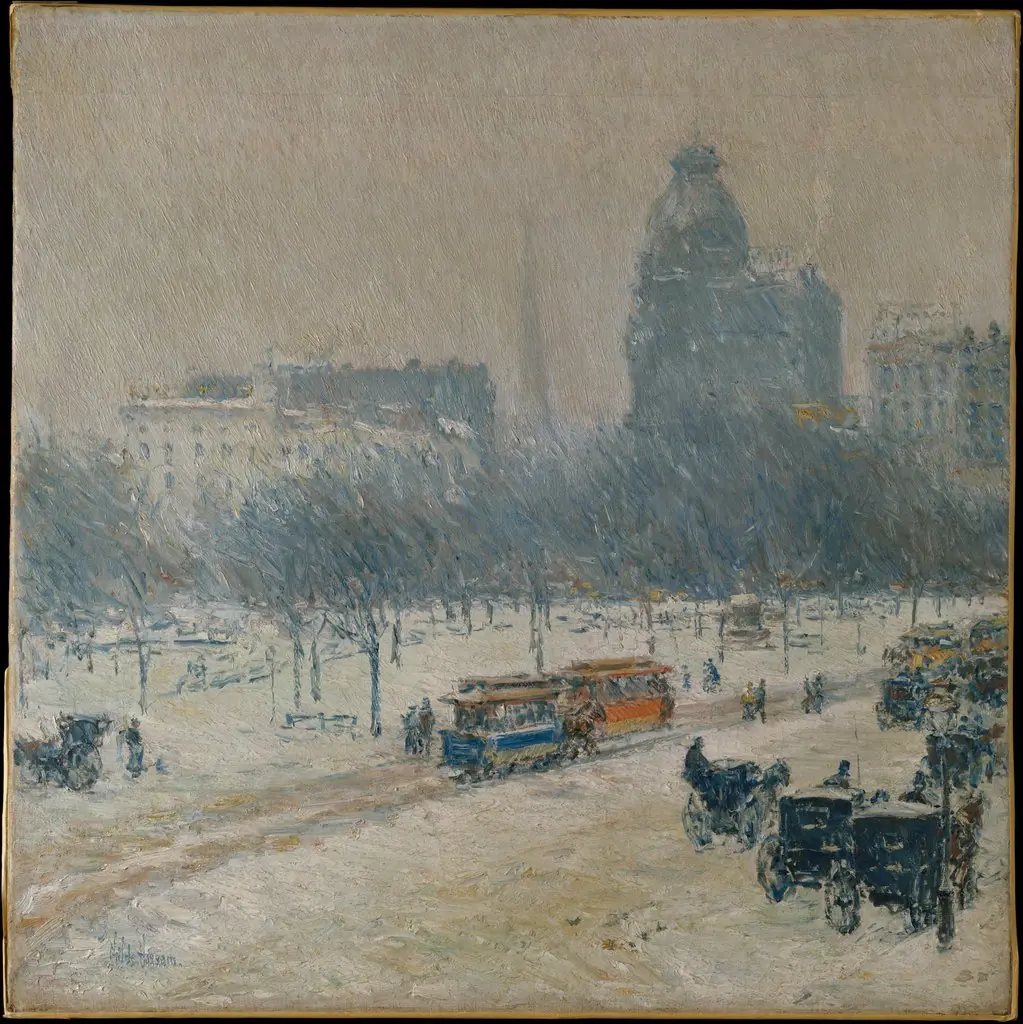
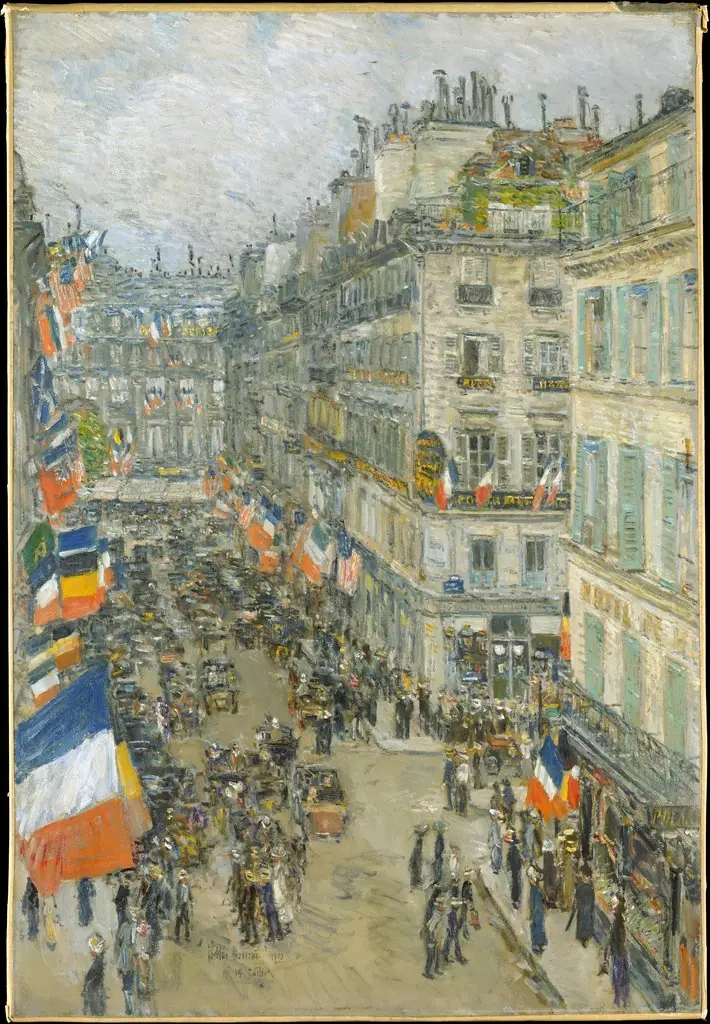
The print reflects Hassam’s interest in quiet, everyday American scenes, contrasting with his more celebrated oil depictions of bustling urban life, such as his luminous New York cityscapes. By focusing on a subdued, rural moment, the work underscores his versatility in handling both light and atmosphere across media.
Artist & collection
Artist
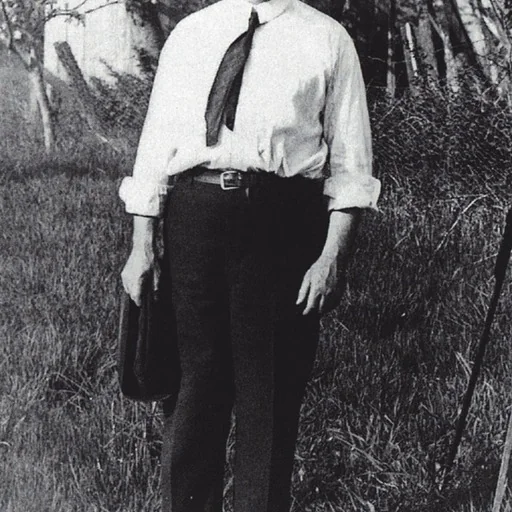
Frederick Childe Hassam was an American Impressionist painter, noted for his urban and coastal scenes.