Artwork
The Up-Tide on the Avenue
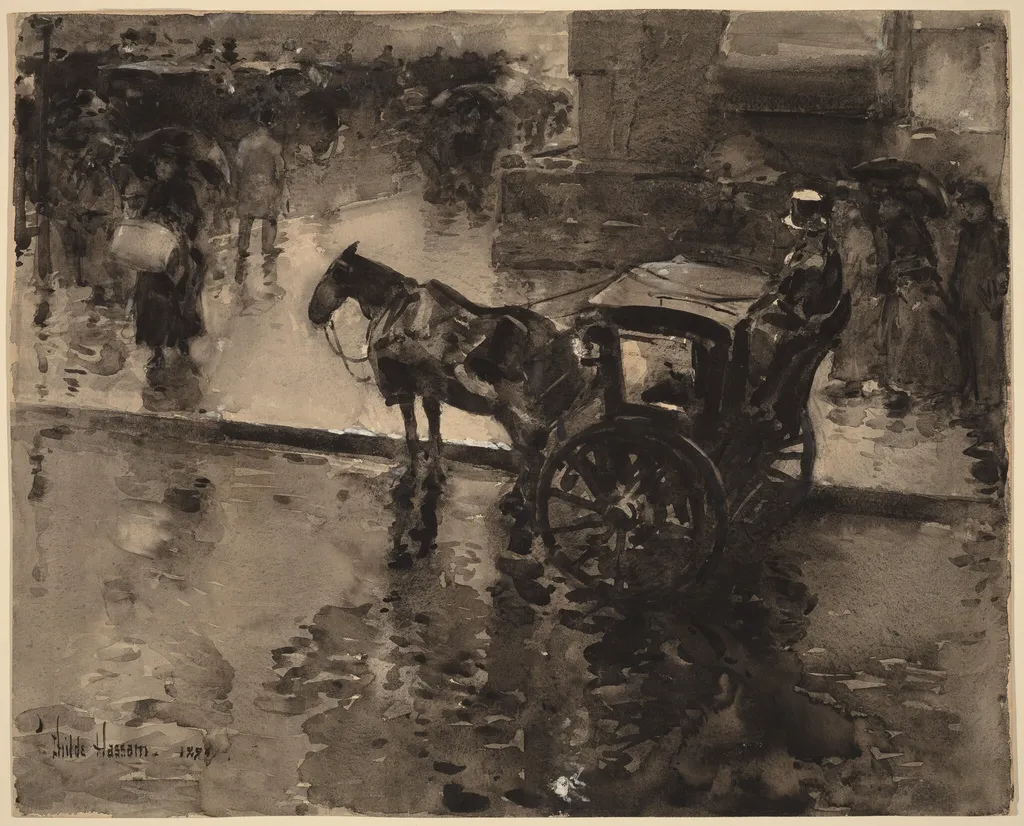
The Up-Tide on the Avenue is a drawing by the Impressionist artist Childe Hassam. It dates from 1890 and is held in the collection of the National Gallery of Art.
About this work
Overview
The Up-Tide on the Avenue, a drawing by Childe Hassam circa 1890, employs black and gray wash with white heightening to depict a mundane urban scene, characteristic of Hassam's Impressionist focus on everyday life and atmospheric conditions.
Subject & Meaning
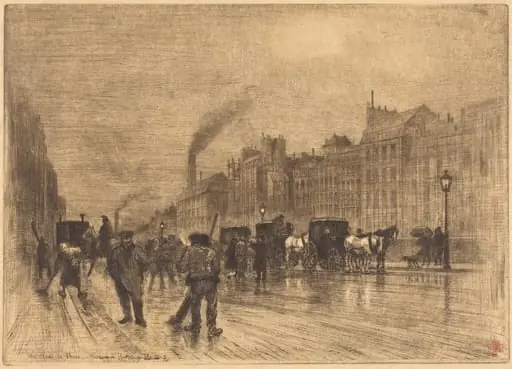
The drawing shows a horse-drawn wagon navigating a muddy city street lined with dark, imposing buildings and puddled rainwater, emphasizing the gritty reality of urban life on a rainy day.
Technique & Style
Hassam utilized a predominantly black, gray, and white palette to create a somber, rainy atmosphere. The watery quality of the wash, akin to ink, contrasts with strategic white highlights, underscoring his Impressionist approach to capturing light and mood.
History & Provenance
Created around 1890, this work is part of Childe Hassam's extensive oeuvre of over 3,000 pieces across mediums, highlighting his role as a pivotal figure in introducing Impressionism to America.
Context
This piece aligns with Hassam's broader interest in urban and coastal scenes, reflecting the Impressionist movement's emphasis on modern life and natural light, akin to the works of his contemporaries like Mary Cassatt.
Legacy
While specific legacy details of 'The Up-Tide on the Avenue' are not provided, as part of Hassam's body of work, it contributes to the broader legacy of American Impressionism, influencing subsequent generations of artists in capturing everyday American life.
Own this work as a print
Artist & collection
Artist
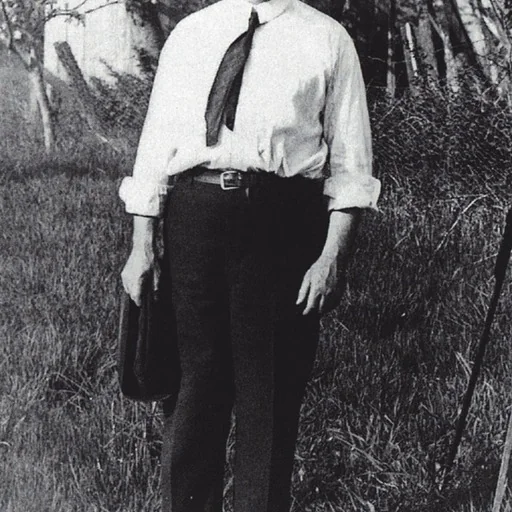
Frederick Childe Hassam was an American Impressionist painter, noted for his urban and coastal scenes.

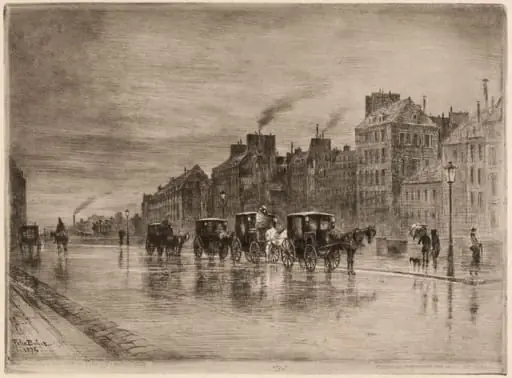 Une Matinée d'Hiver au Quai de l'Hôtel-Dieu (Winter Morning on the Quai de l'Hôtel-Dieu)
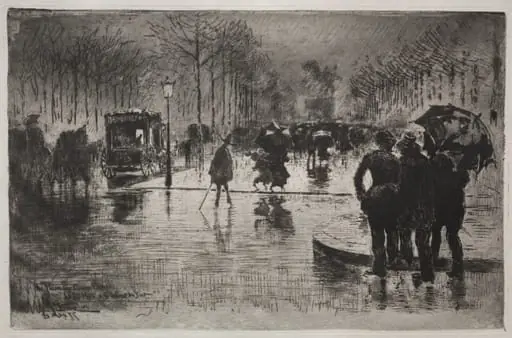 Artists Returning from the Salon
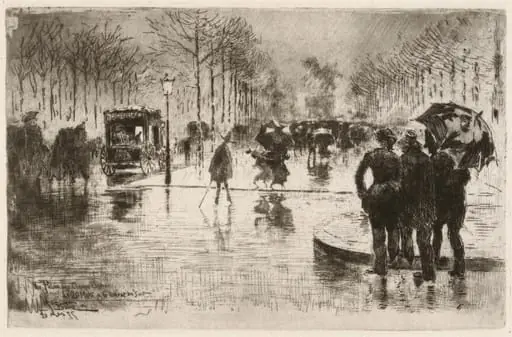 Le retour des artistes (The Return of the Artists)
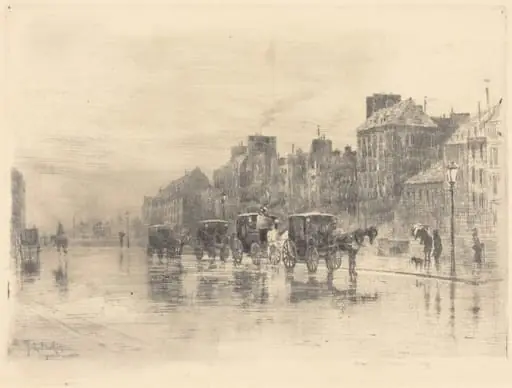 Une Matinée d'Hiver au Quai de l'Hôtel-Dieu (Winter Morning on the Quai de l'Hôtel-Dieu)
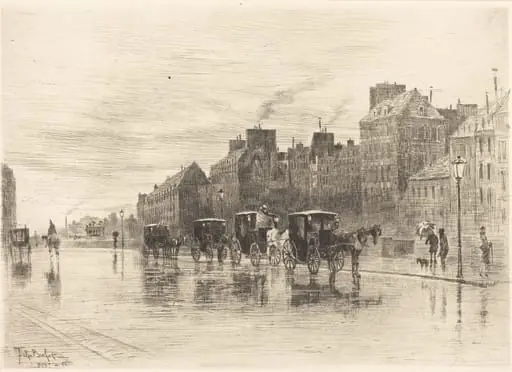 Une Matinée d'Hiver au Quai de l'Hôtel-Dieu (Winter Morning on the Quai de l'Hôtel-Dieu)
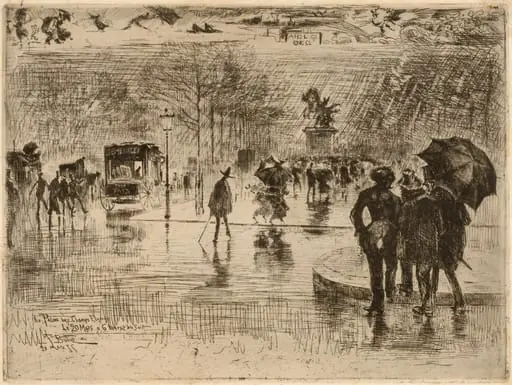 Le Retour des Artistes
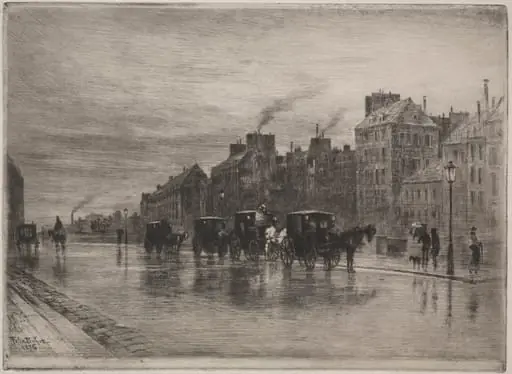 A Winter Morning on the Quai de L'Hotel-Dieu
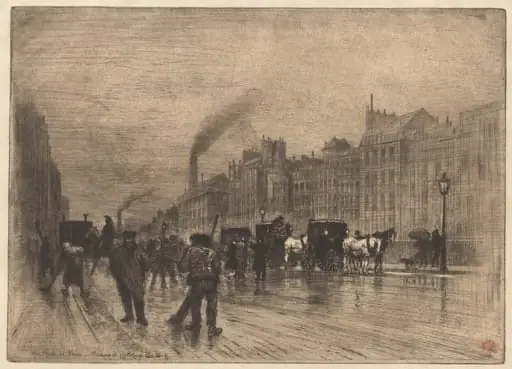 Matinée d'Hiver sur les Quais (Winter Morning on the Quays)
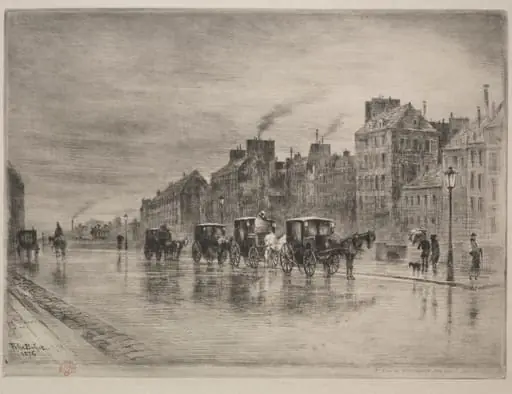 A Winter Morning on the Quai de l'Hôtel -Dieu
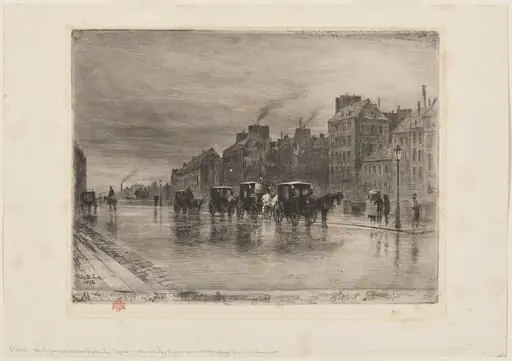 Une Matinée d'Hiver au Quai de l'Hôtel-Dieu (Winter Morning on the Quai de l'Hôtel-Dieu)
 Matinée d'Hiver sur les Quais
 La Place Pigalle en 1878 (Place Pigalle in 1878)