Artwork
Penal Colony
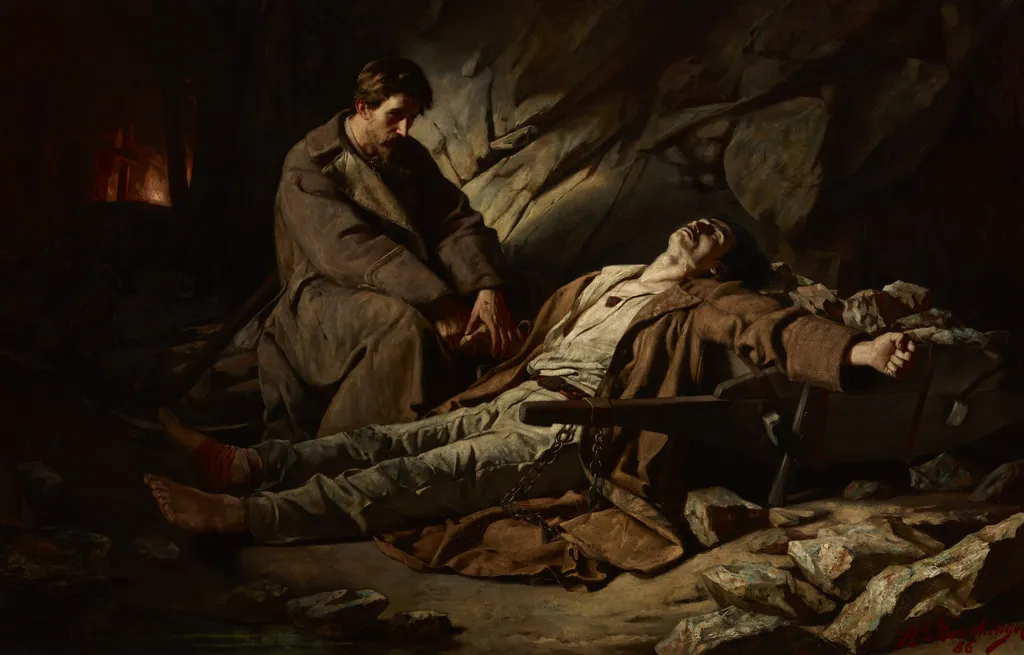
Penal Colony is an oil painting by the Post-Impressionist artist Heinrich Rauchinger. It dates from 1894 and is held in the collection of the National Museum in Kraków.
About this work
Overview
Heinrich Rauchinger, an artist born in Kraków, completed *Penal Colony* in 1894 using oil on canvas. The work is part of the National Museum in Kraków’s permanent collection and reflects his interest in narrative subjects drawn from human experience. Though associated with post-impressionism, the painting leans toward symbolic realism, emphasizing emotional weight over decorative form.
Subject & Meaning
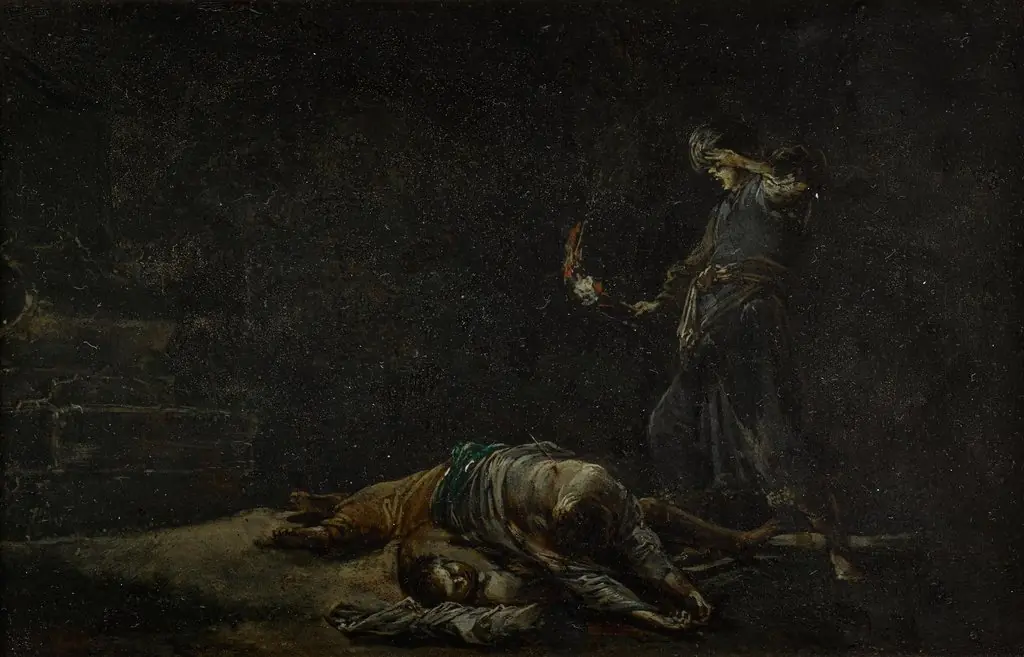
The scene depicts two figures in a desolate, rocky enclosure: one man stands, gripping the hand of another who lies prone, head tilted upward.
The scene depicts two figures in a desolate, rocky enclosure: one man stands, gripping the hand of another who lies prone, head tilted upward. The posture suggests a moment of connection amid suffering, possibly a guard and prisoner, or a dying man attended by a companion. The confined space and dim lighting imply isolation and institutional control, evoking themes of mortality and human endurance.
Technique & Style
Rauchinger employs chiaroscuro to heighten the painting’s gravity, directing light toward the figures’ faces and clasped hands while plunging the surrounding rocks and walls into shadow. Brushwork is controlled, with muted earth tones dominating the palette. The lack of decorative detail focuses attention on the physical and emotional tension between the two men, reinforcing the scene’s solemnity.
History & Provenance
Painted in 1894, *Penal Colony* entered the National Museum in Kraków’s collection shortly after its completion. Rauchinger, active in the city’s artistic circles, frequently depicted historical and social themes. The work’s early acquisition suggests it was recognized locally for its emotional depth, though it never achieved widespread international exposure.
Context
In late 19th-century Europe, penal reform and the visibility of state punishment were subjects of public debate. Rauchinger’s painting reflects this climate, avoiding overt political commentary but capturing the quiet dignity and despair of individuals within oppressive systems. Its setting, stripped of temporal markers, allows the scene to resonate beyond a specific era or location.
Legacy
Though not widely reproduced or studied outside Poland, *Penal Colony* remains a significant example of Rauchinger’s commitment to humanist themes. It stands as a quiet counterpoint to the more flamboyant styles of his contemporaries, valued within its institutional context for its restrained power and psychological nuance.
Own this work as a print
Artist & collection
Artist
Heinrich Rauchinger (Polish name Henryk, pronounced /xɛnrɨk/, 1858–1942) was a Kraków-born history painter and portrait painter.