Artwork
Leaf from a Jain Manuscript: Yoga-shastra: Jain monk with Disciple and Two Laymen, Two Nuns and a Laywoman below (verso)
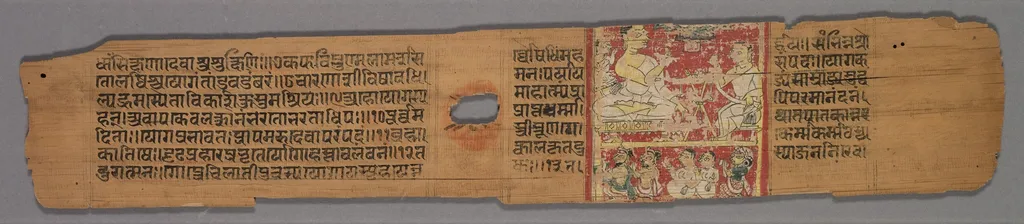
Leaf from a Jain Manuscript: Yoga-shastra: Jain monk with Disciple and Two Laymen, Two Nuns and a Laywoman below (verso) is an unspecified painting by Hemachandra. It dates from 1290 and is held in the collection of the Cleveland Museum of Art. This painted leaf, part of a Jain manuscript dated to the late thirteenth century, measures a narrow, elongated panel of wood.
About this work
If you're interested in learning more about Jain art, you might want to check out the work of Hemachandra, the artist who created this piece.
This image shows a piece of a Jain manuscript from 1279. It's painted on a long, narrow strip of wood with black text and colorful pictures. The text is written in an Indian language and includes a few small holes. The pictures show a group of people, including a monk, his disciple, and some laypeople. They're all wearing traditional Indian clothes and are gathered around the monk.
The monk is sitting in a special position, and the people around him seem to be listening to him. The colors used are mostly red, yellow, and white. The style of the painting is very detailed and intricate.
If you're interested in learning more about Jain art, you might want to check out the work of Hemachandra, the artist who created this piece.
Overview
This painted leaf, part of a Jain manuscript dated to the late thirteenth century, measures a narrow, elongated panel of wood. Executed by the artist Hemachandra around 1290, it now belongs to the collection of the Cleveland Museum of Art. The work combines black script in an Indian language with vivid miniature scenes that illustrate a teaching moment.
Subject & Meaning
The central figure is a Jain monk seated in a meditative posture, attended by his disciple. Around them stand two laymen, two nuns, and a laywoman, all dressed in contemporary Indian attire. The composition suggests a didactic scene in which the monk imparts spiritual instruction to both monastic and lay audiences.
Technique & Style
The illustration is rendered on a wooden strip using mineral pigments that produce a palette dominated by reds, yellows, and whites. Fine line work defines the figures and their garments, while the surrounding black text is incised with small perforations. The overall effect is highly detailed, reflecting the meticulous miniature painting tradition of Jain manuscript art.
History & Provenance
Created in the Indian subcontinent in the late 1200s, the leaf eventually entered the Western art market and was acquired by the Cleveland Museum of Art, where it is displayed as part of the museum’s South Asian holdings. Its attribution to Hemachandra is based on stylistic analysis and historical records of Jain scribal workshops.
Context
Jain manuscripts of this period often combined doctrinal texts with illustrative scenes to aid comprehension among both monks and lay followers. The presence of multiple lay participants in the image underscores the inclusive educational role of Jain teachers, while the monk’s seated pose reflects the yogic practices central to Jain spiritual discipline.
Artist & collection
Artist
Hemachandra made delicate manuscript pages for a Jain text called the Yoga-shastra in 1279.

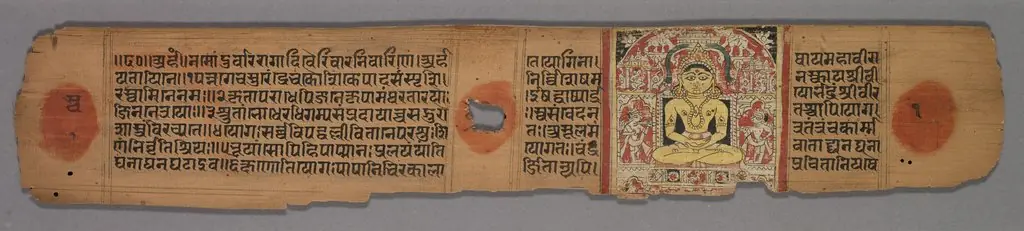
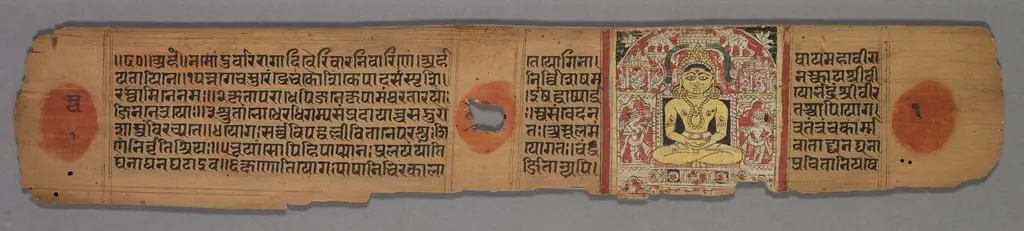 Seated Rishabha Enthroned, Folio 1 verso of a Yoga-shastra of Hemachandra
 Seated Rishabha Enthroned, Folio 1 verso of a Yoga-shastra of Hemachandra
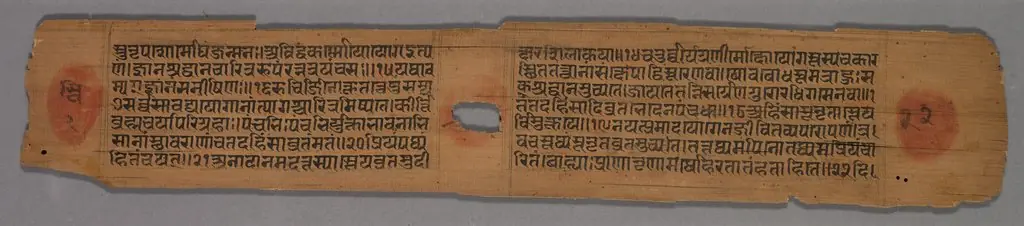 Leaf from a Jain Manuscript: Yoga-shastra: Text (recto); Leaf from a Jain Manuscript: Yoga-shastra: Jain monk with Disciple and Two Laymen, Two Nuns and a Laywoman below (verso)
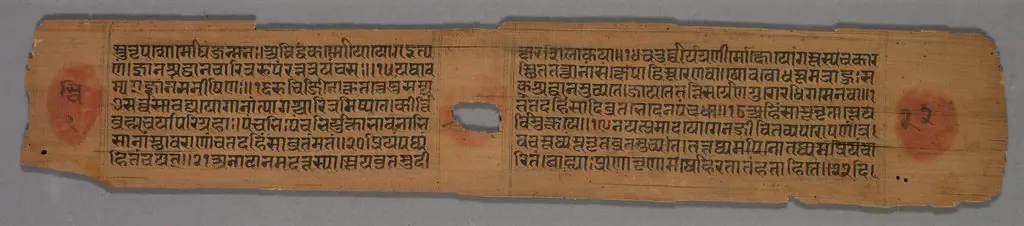 Leaf from a Jain Manuscript: Yoga-shastra: Text (recto)
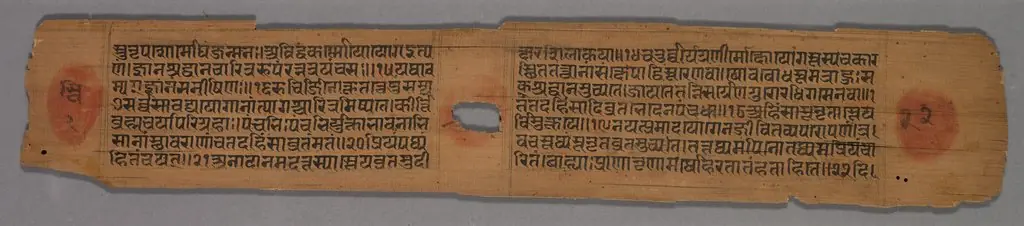 Rishabha enthroned, folio 1 (verso) from a Yoga-shastra of Hemachandra
 Leaf from a Jain Manuscript: Kalpa-sutra: Text (verso)
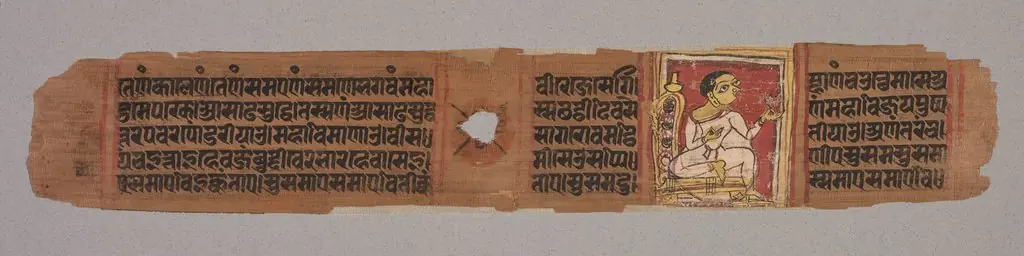
 Leaf from a Jain Manuscript: Kalpa-sutra: The Monk Gautama, Enthroned (recto)
 Leaf from a Jain Manuscript: Kalpa-sutra: Enthroned Monk (recto); Leaf from a Jain Manuscript: Kalpa-sutra: Text (verso)
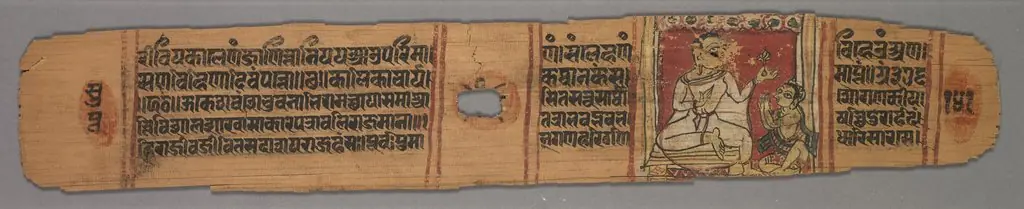
 Leaf from a Jain Manuscript: Kalpa-sutra: Monk Holding a Flower (recto)
 Leaf from a Jain Manuscript: The Story of Kalakacharya: Colophon Page, Text (recto)
 Leaf from a Jain Manuscript: The Story of Kalakacharya of Devachandra: Text (recto)