Artwork
Calm sea
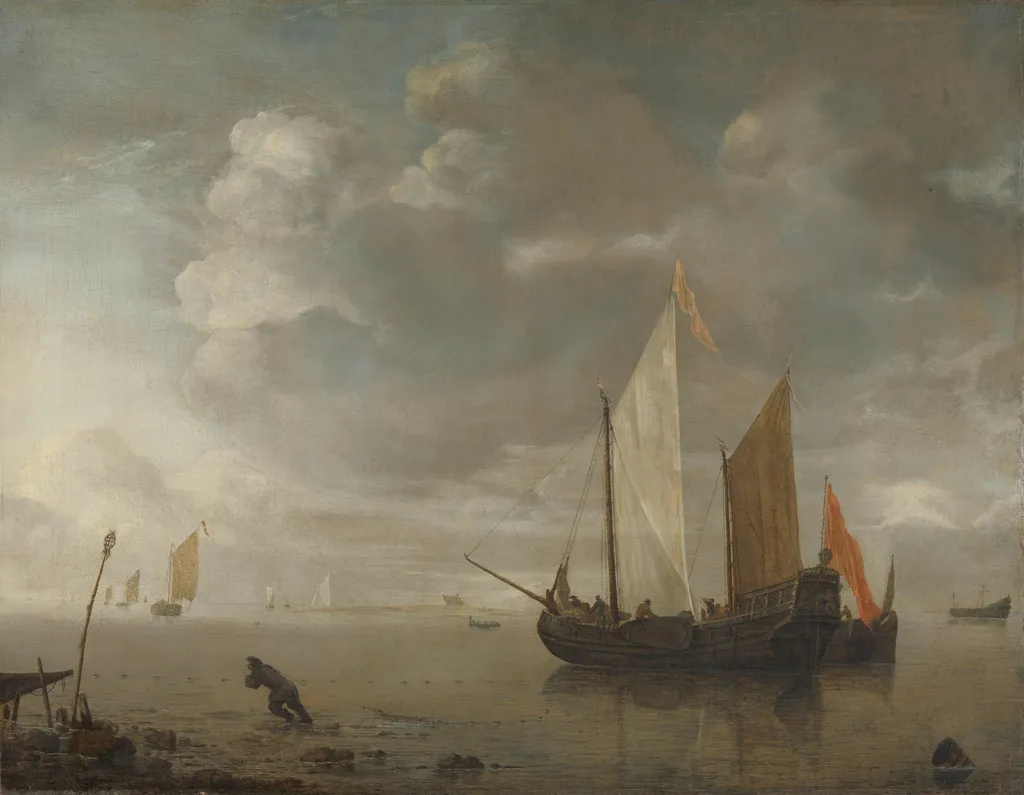
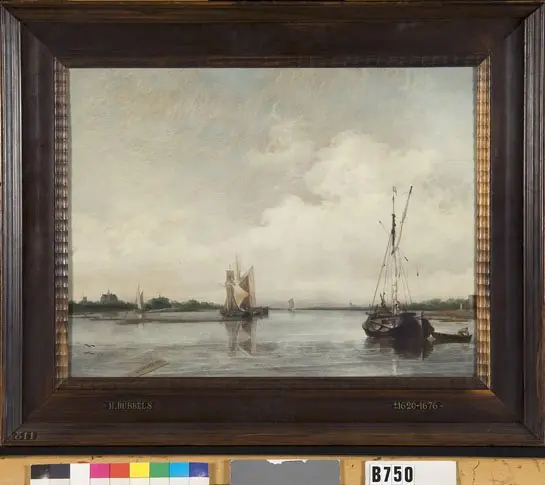
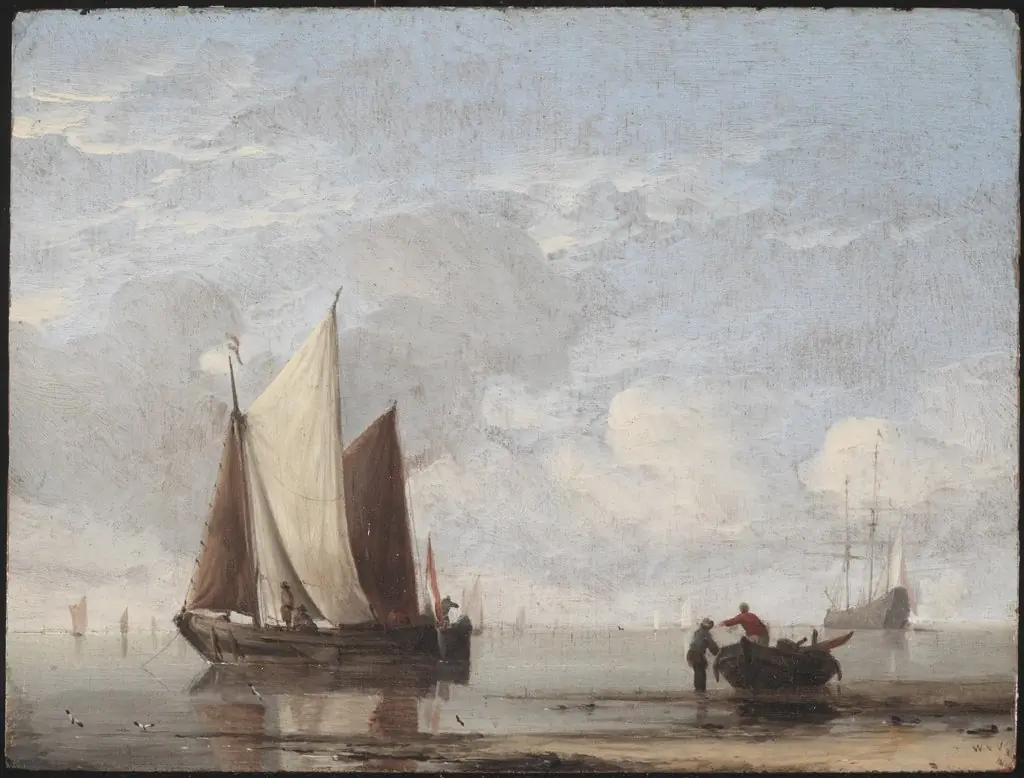
Calm sea is an oil painting by the Dutch Golden Age artist Hendrick Dubbels. It dates from 1650 and is held in the collection of the Rijksmuseum.
About this work
Overview
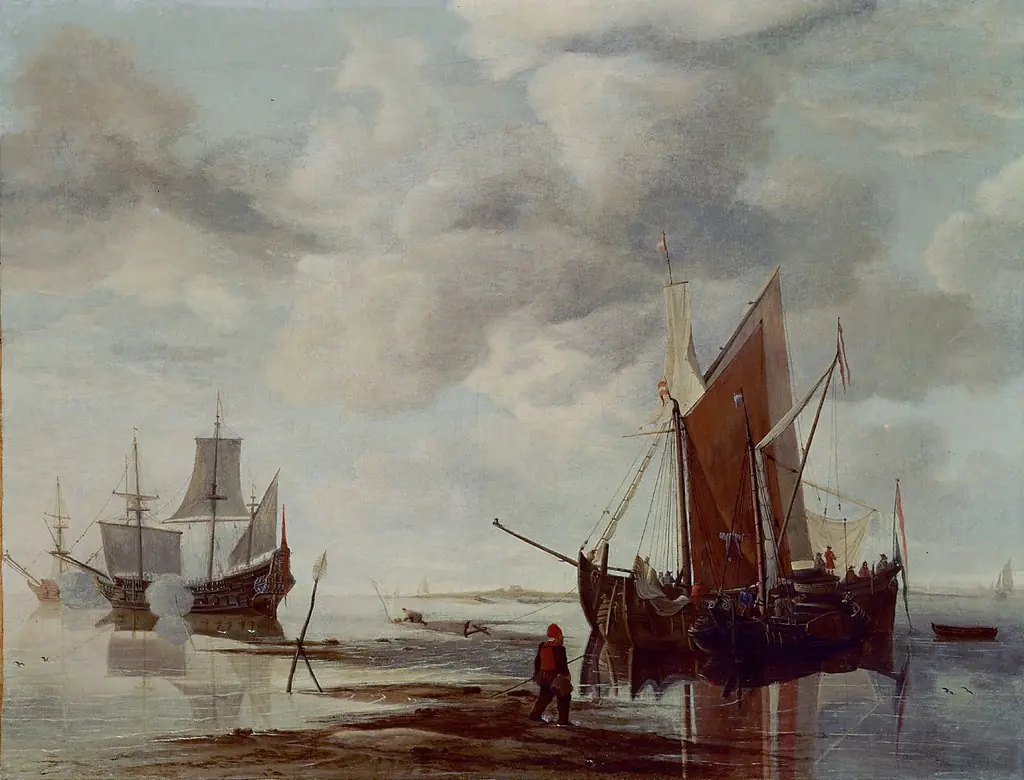
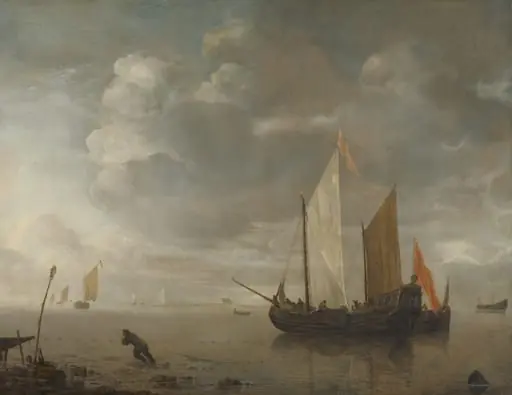
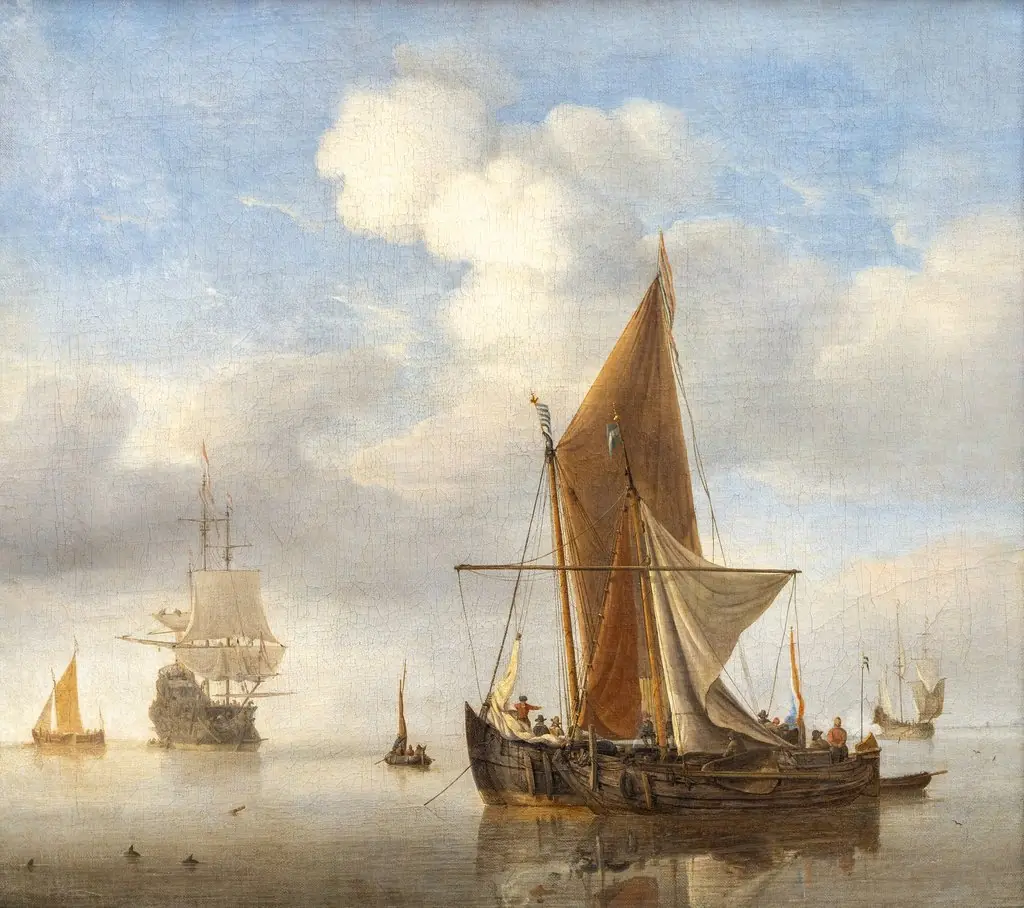
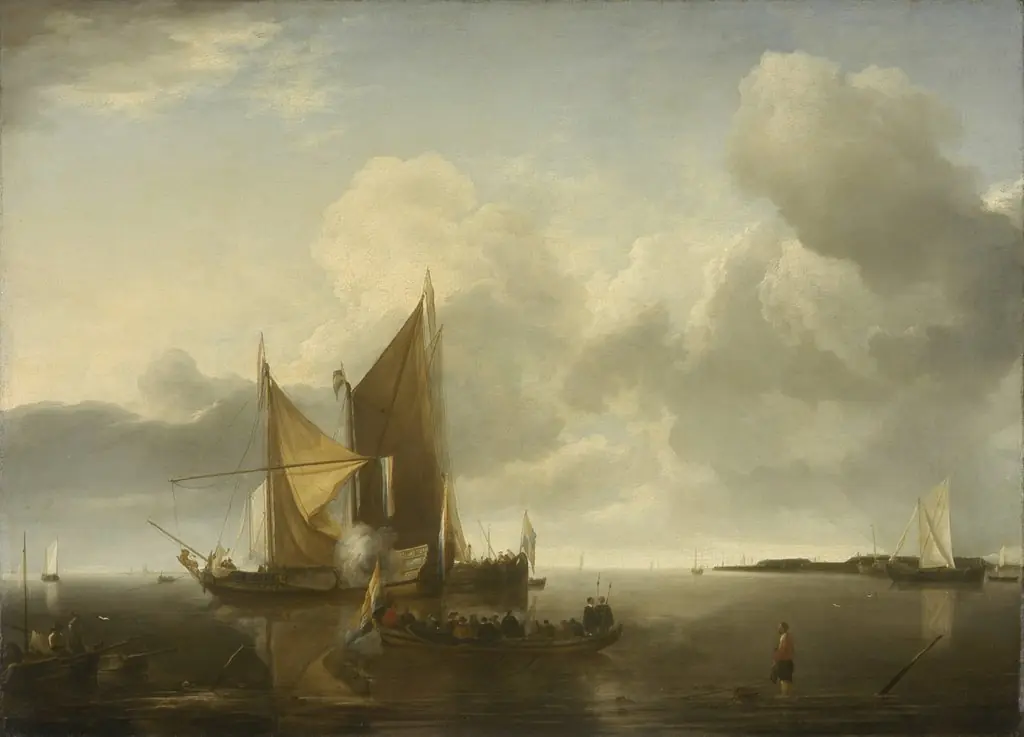
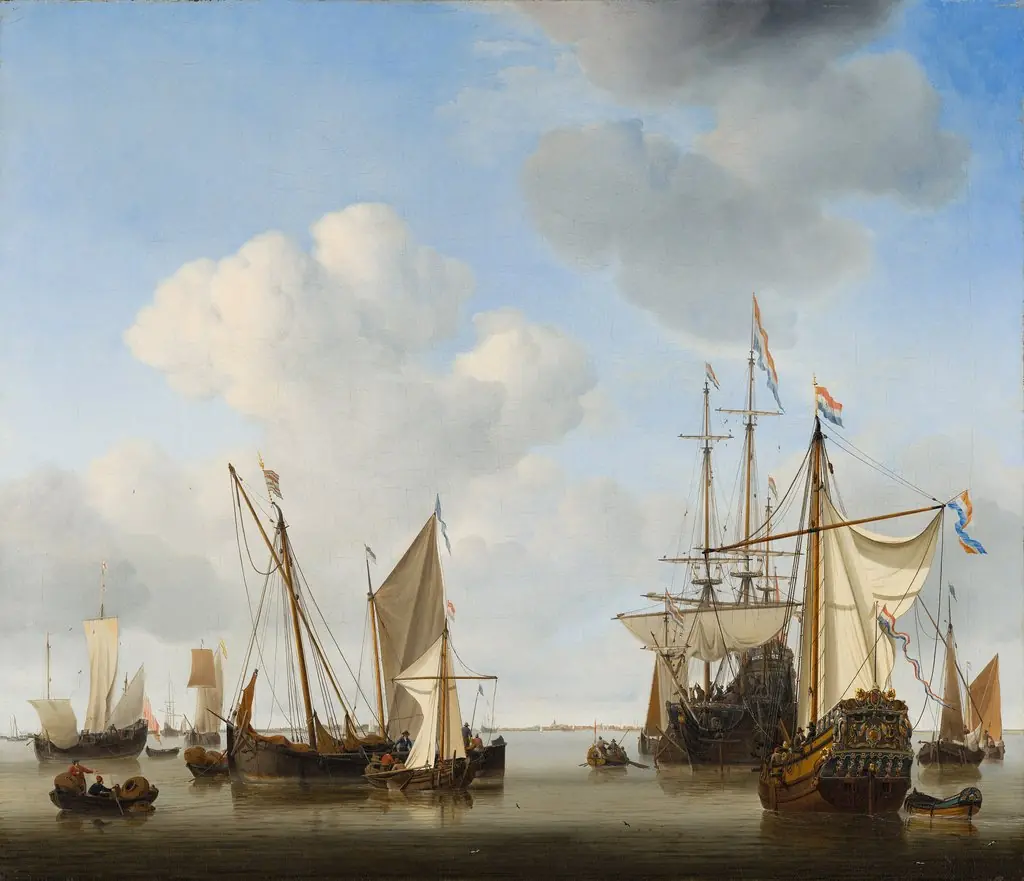
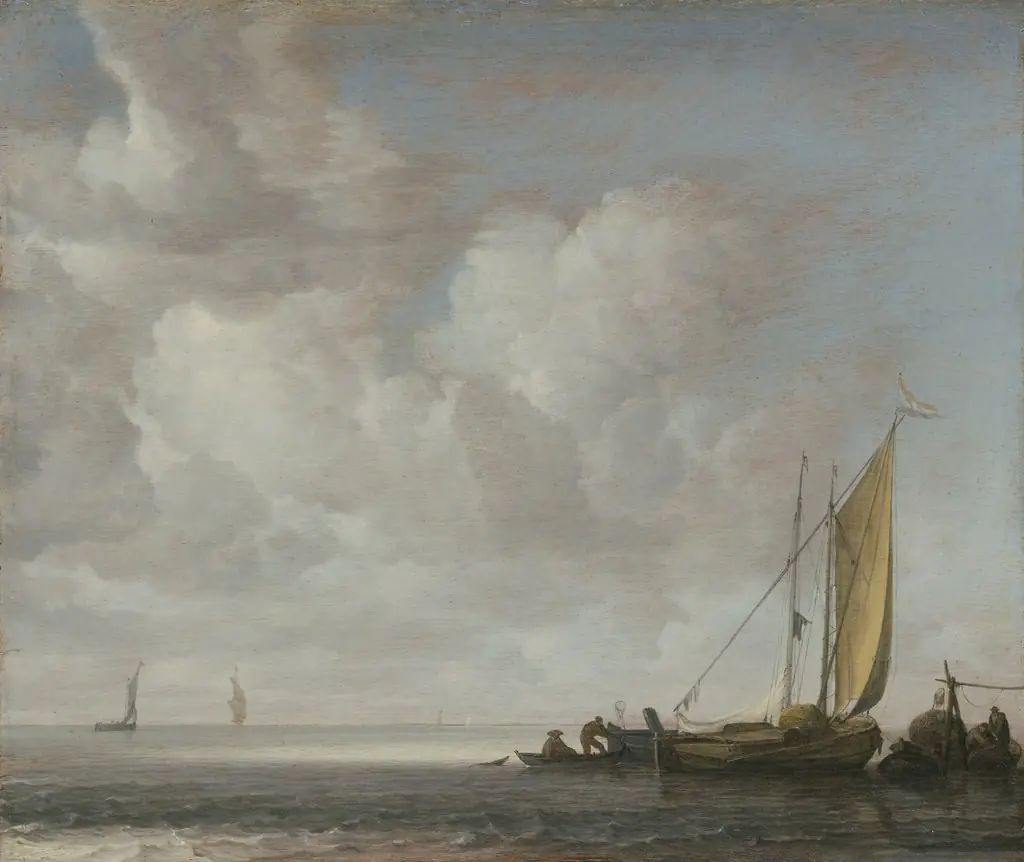
Calm sea is an oil painting created by Hendrick Dubbels around 1650, exemplifying the Dutch Golden Age tradition of maritime-themed artwork. The scene depicts a serene beach with a small, double-sailed boat on the shore, accompanied by a figure engaged in an activity near the water’s edge, set against a backdrop of calm waters and a cloudy sky.
Subject & Meaning
The painting captures a moment of tranquility, focusing on the interplay between a deserted beach, a moored boat with a distinctive red flag, and distant vessels on placid waters. The subject conveys a sense of peacefulness, characteristic of Dubbels’ seascapes.
Technique & Style
Dubbels employed muted blues and grays to dominate the palette, achieving depth through meticulous rendering of light on three-dimensional sails and fluffy clouds, showcasing his skill in capturing luminosity within the Dutch Golden Age aesthetic.
History & Provenance
Created circa 1650 by Hendrick Dubbels, a Amsterdam-born painter known for collaborations on marine and winter landscapes, *Calm sea* is now part of the Rijksmuseum’s collection.
Context
As a product of the Dutch Golden Age, *Calm sea* reflects the era’s fascination with maritime themes, often produced in collaboration with fellow artists specializing in similar subjects.
Legacy
While specific direct influences are not highlighted, *Calm sea* contributes to the broader legacy of Dutch Golden Age marine painting, preserved and showcased through the Rijksmuseum’s holdings.
Own this work as a print
Artist & collection
Artist
Hendrick Jacobszoon Dubbels (1621–1707) was a Dutch Golden Age painter of marine subjects and winter landscapes, who spent much of his career working in the studios of other marine artists.