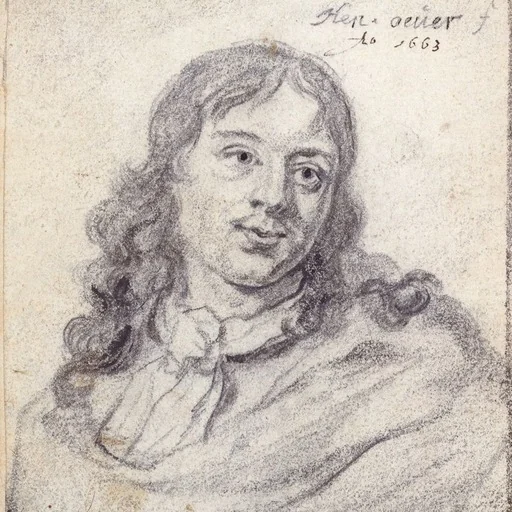
Artwork
A family on the terrace of a country house
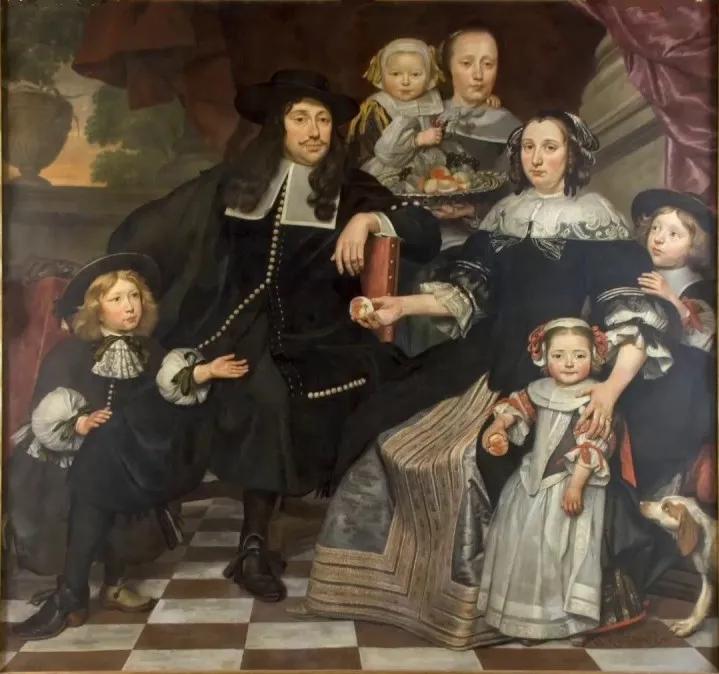
A family on the terrace of a country house is an oil painting by the Dutch Golden Age artist Hendrick ten Oever. It dates from 1669 and is held in the collection of the Rijksmuseum.
About this work
Overview
Five children in elaborate period attire surround the couple, arranged in a mix of standing and seated poses that create a balanced, hierarchical grouping.
Painted in 1669 by the Dutch artist Hendrick ten Oever, this oil on canvas work depicts a formal group portrait of a family situated on the terrace of a country residence. The composition centers on the patriarch, dressed in a dark coat and wide-brimmed hat, who stands on a checkered floor while holding a book, a traditional attribute signifying learning or status. Beside him, the matriarch wears a white dress and cap, holding a plate of fruit that likely symbolizes abundance or domestic virtue. Five children in elaborate period attire surround the couple, arranged in a mix of standing and seated poses that create a balanced, hierarchical grouping. The background features a dark, curtained wall, which serves to isolate the figures and emphasize their social standing. This work exemplifies Ten Oever's contribution to 17th-century Dutch portraiture, blending the genre's characteristic attention to textile detail and individual characterization with the specific context of a prosperous rural household. The date places the work in the artist's mature period, reflecting the enduring Dutch tradition of depicting family unity and civic pride within a domestic setting.
Subject & Meaning
The composition centers on a well‑dressed father, identifiable by his dark coat and wide‑brimmed hat, who holds a book, suggesting literacy or status. Adjacent, his wife in a white dress offers a bowl of fruit, a traditional symbol of abundance. The children, arrayed in elaborate attire, reinforce the image of a prosperous, orderly household.
Technique & Style
Ten Oever employs a pronounced chiaroscuro, illuminating the father’s face against deep shadows that recede into the background. The checkered floor and the subtle curtain‑draped wall provide a structured setting, while a faint landscape painted above the wall adds depth. The handling of light and texture reflects Dutch Baroque sensibilities of the mid‑seventeenth century.
History & Provenance
Created in 1669, the painting entered the Rijksmuseum’s holdings through acquisition (specific acquisition details are not recorded in the source). It remains on display as an example of Dutch family portraiture, illustrating both the artist’s oeuvre and the period’s social conventions.
Artist & collection