Artwork
Portrait of a man dressed as a shepherd
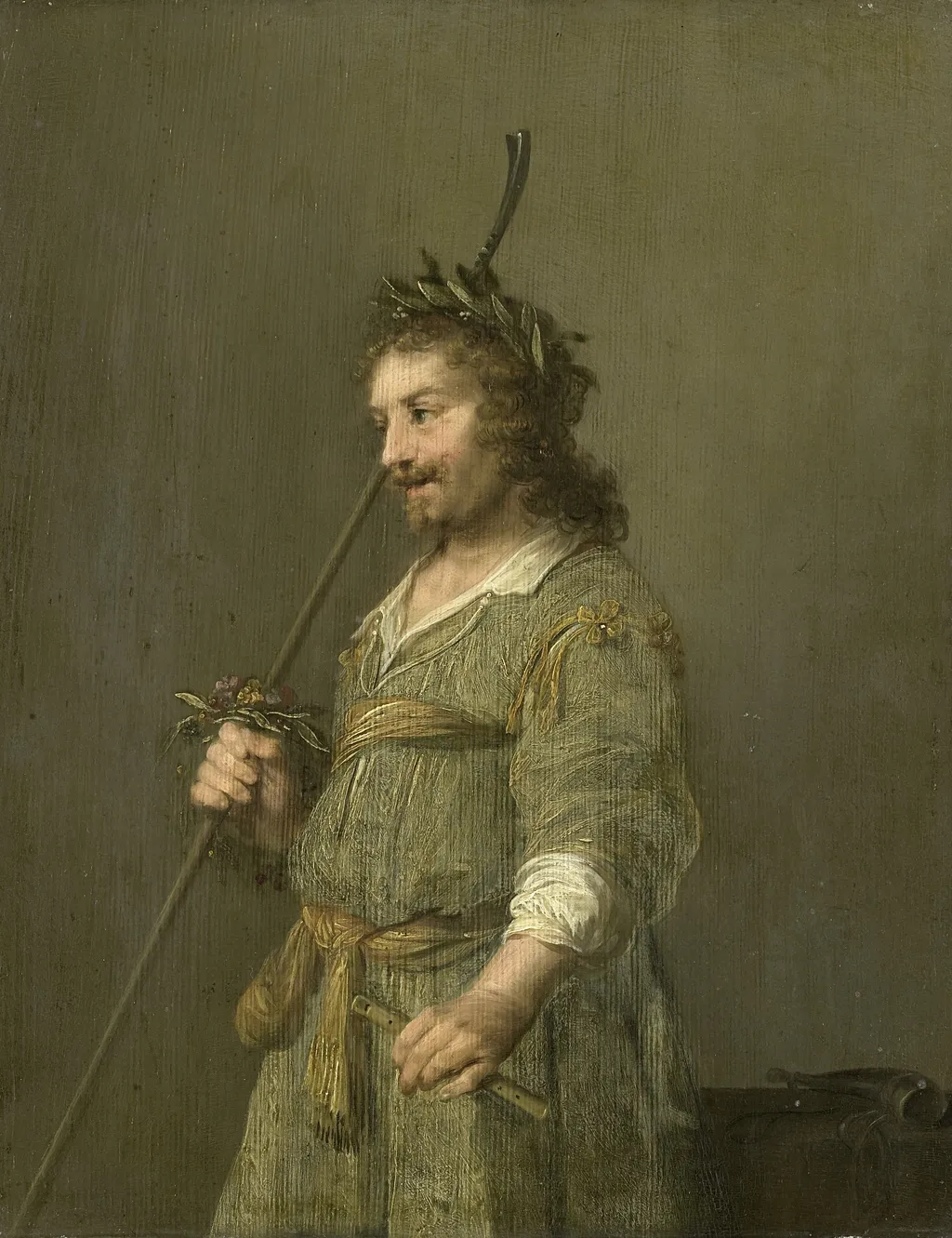
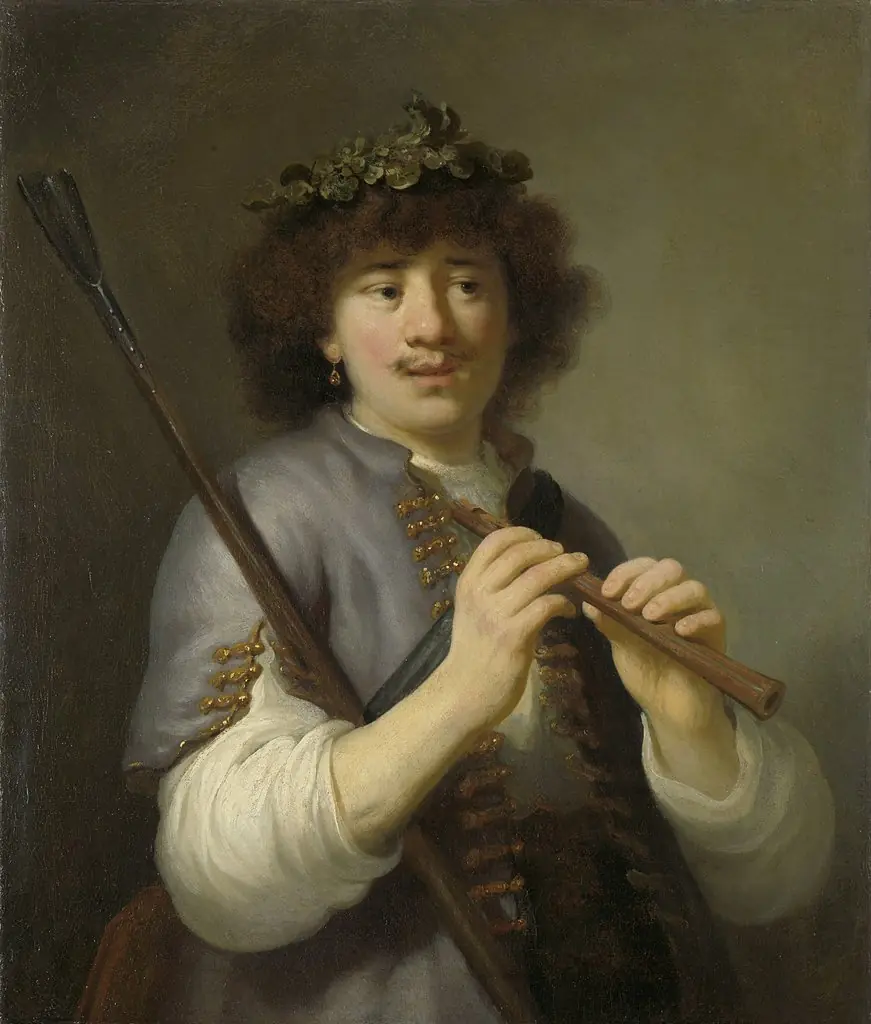
Portrait of a man dressed as a shepherd is an oil painting by the Dutch Golden Age artist Hendrik Gerritsz Pot. It dates from 1637 and is held in the collection of the Rijksmuseum.
About this work
Overview
In 1637 Hendrik Gerritsz Pot, a Haarlem painter of the Dutch Golden Age, completed an oil portrait of a man dressed as a shepherd. The work is part of the Rijksmuseum’s collection and exemplifies the period’s interest in genre scenes that blend portraiture with pastoral motifs.
Subject & Meaning
The figure is presented in shepherd’s garb—a green tunic trimmed in gold, a hat decorated with leaves and flowers, a staff in his right hand and a flute in his left—evoking a romanticized connection to the countryside and the ideal of the simple, rustic life.
Technique & Style
Executed in oil on canvas, the painting employs a muted brown background that accentuates the warm, earthy tones of the subject’s clothing. The brushwork renders the textures of fabric and foliage with a restrained realism characteristic of Dutch portraiture of the era.
History & Provenance
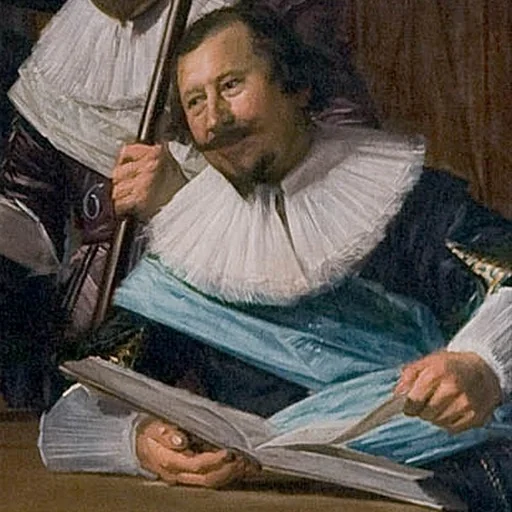
Pot, who also served as an officer in Haarlem’s civic militia, appears in Frans Hals’s 1633 group portrait of the St Adrian Militia Company. The shepherd portrait remained in Dutch collections and was eventually acquired by the Rijksmuseum, where it is displayed today.
Context
The work reflects a broader Dutch fascination with pastoral themes during the 1630s, when artists often used allegorical dress to convey moral or philosophical ideas while maintaining the conventions of formal portraiture.
Own this work as a print
Artist & collection
Artist
Hendrik Gerritsz Pot (c. 1580 – 15 October 1657 (buried)) was a Dutch Golden Age painter, who lived and painted in Haarlem, where he was an officer of the militia, or schutterij. Dutch artist Frans Hals painted Pot in…