Artwork
Lute Player
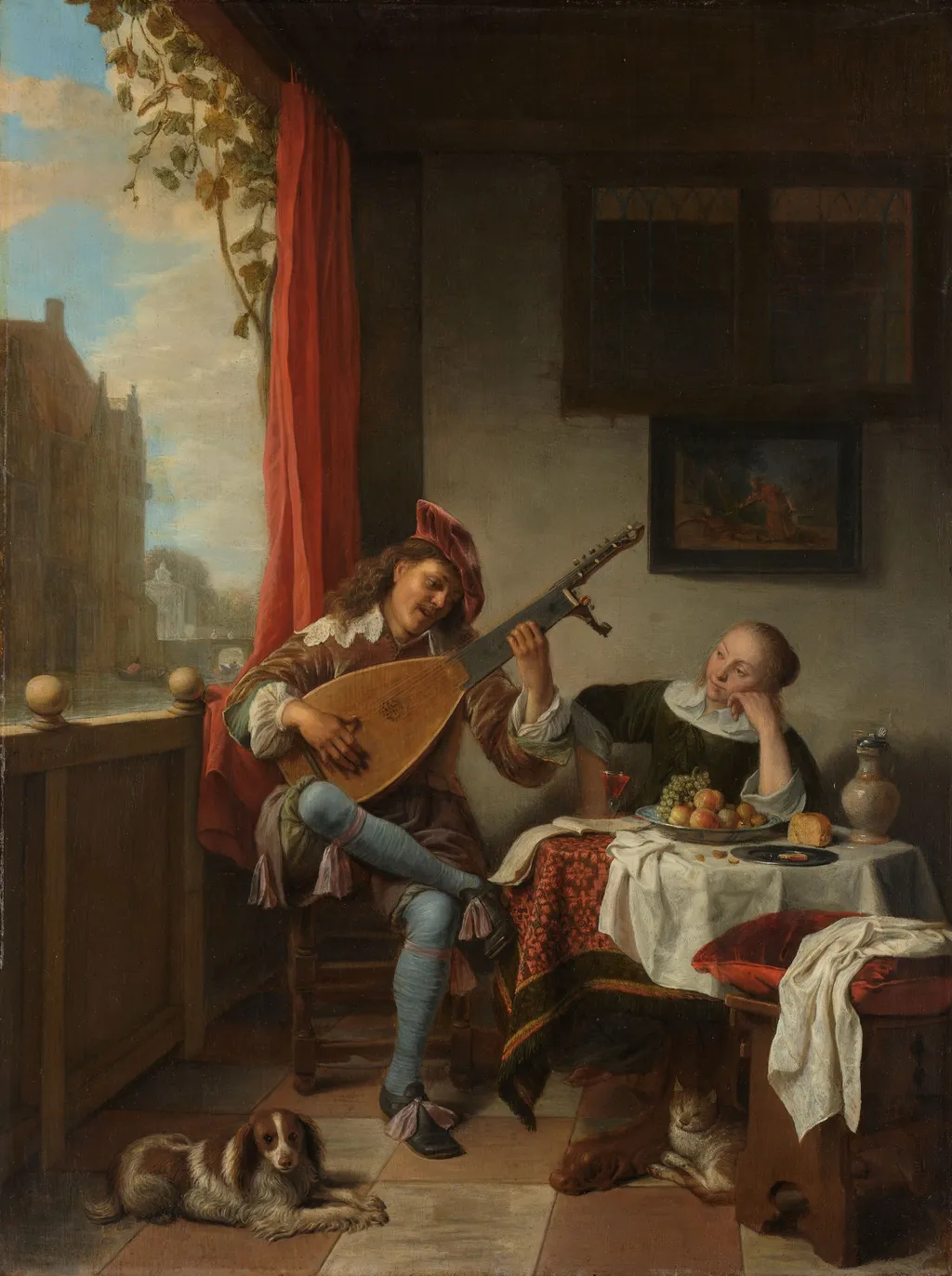
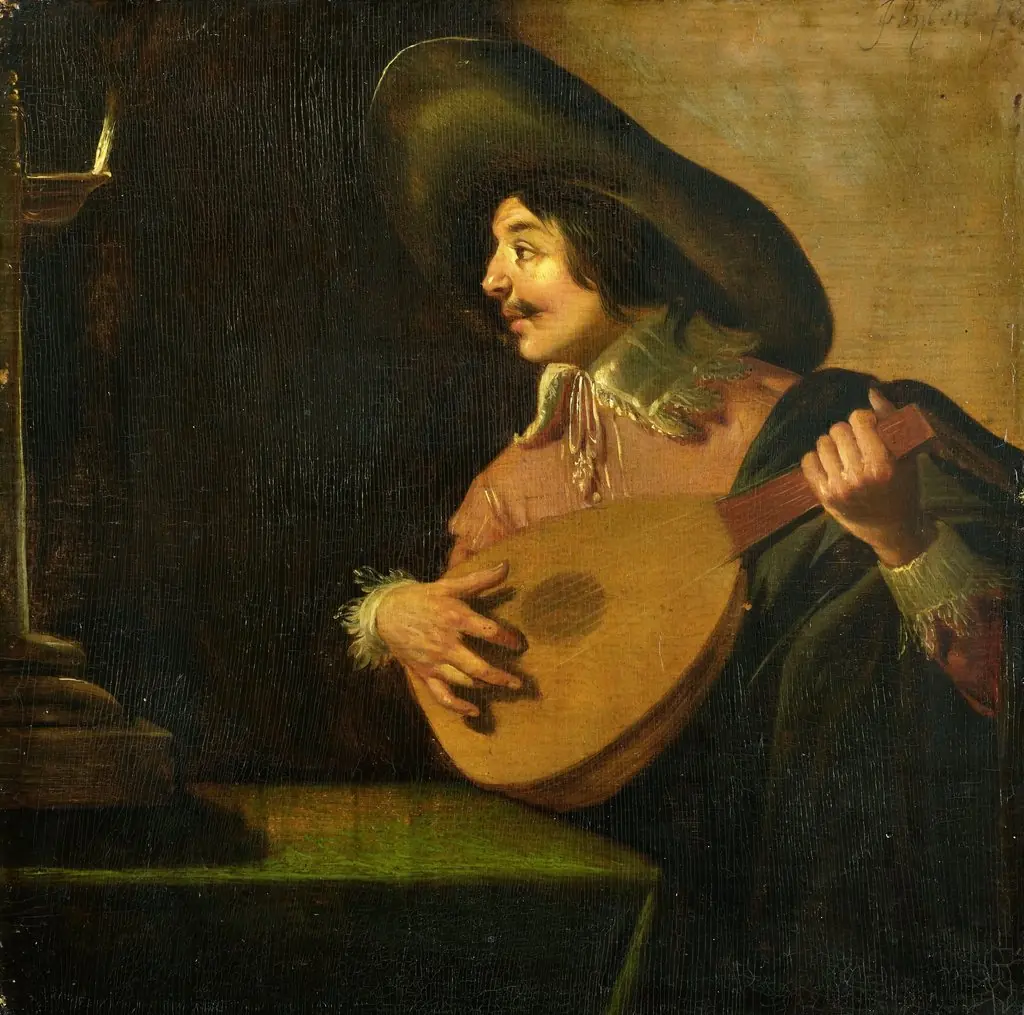
Lute Player is an oil painting by the Dutch Golden Age artist Hendrik Martenszoon Sorgh. It dates from 1661 and is held in the collection of the Rijksmuseum.
About this work
Overview
Hendrik Martenszoon Sorgh’s oil painting Lute Player, executed in 1661, presents an intimate domestic scene. The work is part of the Rijksmuseum’s collection and exemplifies the Dutch genre tradition of portraying everyday life with careful observation and subtle narrative.
Subject & Meaning
The composition shows a youthful musician in a red cap, smiling as he plucks a lute while seated on a simple wooden chair. Opposite him, an older woman rests her head on her hand, appearing weary as she surveys a modest spread of fruit, bread, and a drink. A dog lies at their feet and a cat curls on a nearby bench, adding a touch of domestic realism.
Technique & Style
Sorgh employs a restrained palette for the interior, allowing the bright red of the lute player’s attire to draw the eye. The handling of light creates a gentle chiaroscuro effect, modeling faces and objects with a soft three‑dimensional quality. Fine brushwork renders textures such as the wooden chair, fabric folds, and the gleam on the lute’s strings.
History & Provenance
Painted during the height of the Dutch Golden Age, Lute Player entered the Rijksmuseum’s holdings as part of its 19th‑century acquisitions of Dutch genre works. The painting has remained in the museum’s collection, where it is displayed among other 17th‑century Dutch interiors.
Context
The scene reflects the 17th‑century Dutch interest in music as a symbol of harmony and leisure within the household. The inclusion of everyday objects—a dog, a cat, foodstuffs—aligns with contemporary genre conventions that aimed to convey moral or social commentary through ordinary moments.
Own this work as a print
Artist & collection
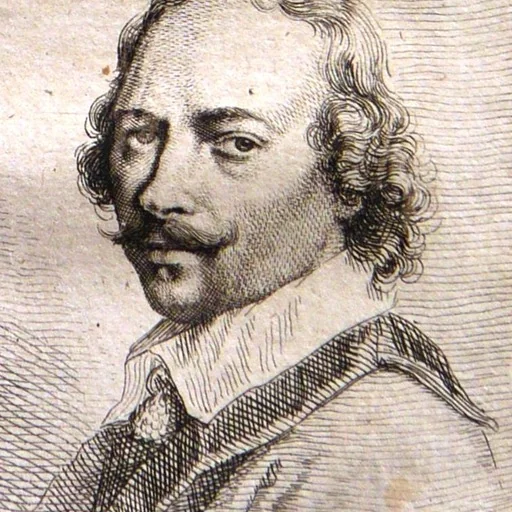
Artist
Hendrik Martenszoon Sorgh (1610–1670) was an artist, born in Rotterdam.