Artwork
Standing Woman
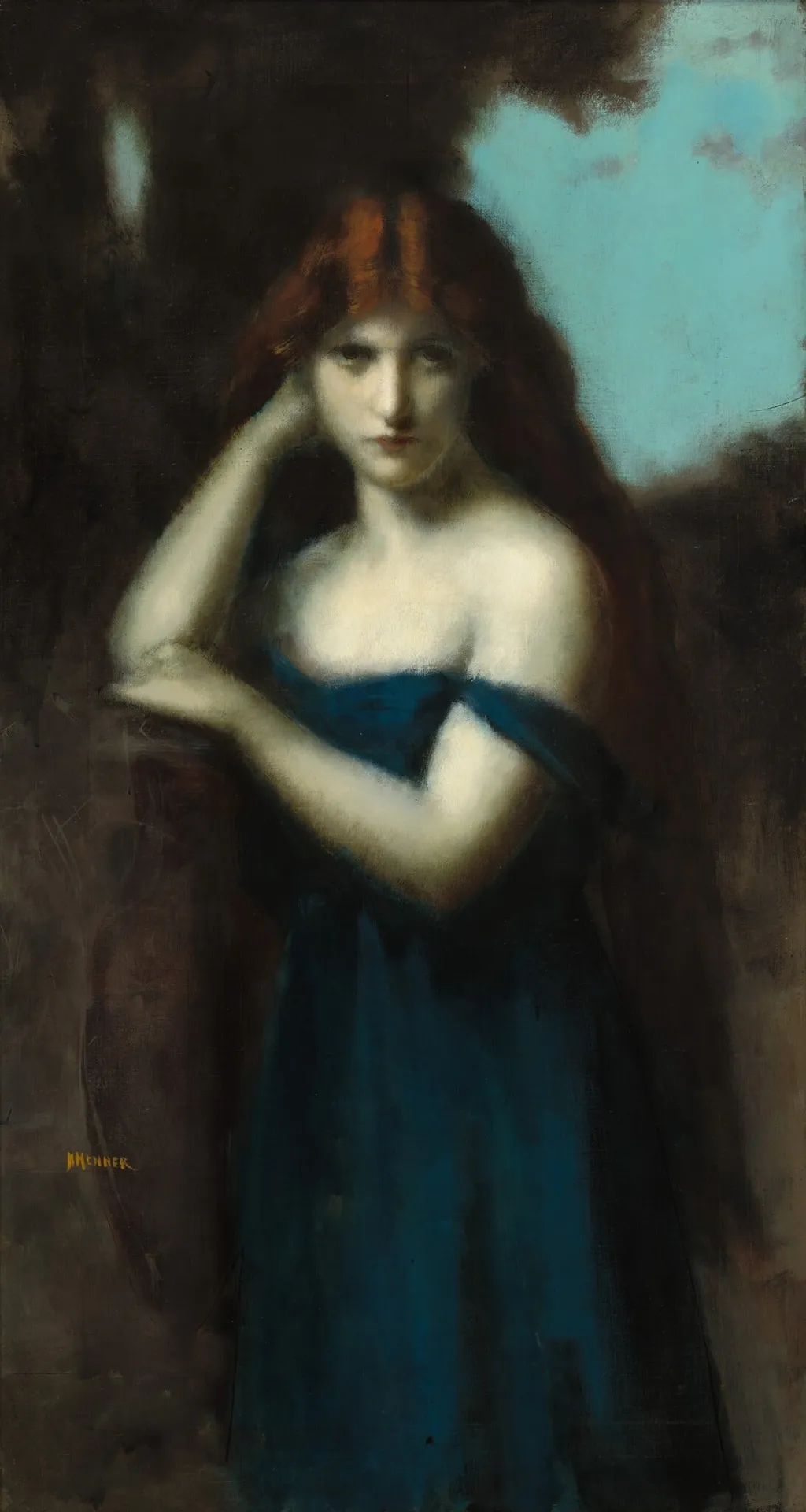
Standing Woman is an oil painting by the Post-Impressionist artist Jean-Jacques Henner. It dates from 1903 and is held in the collection of the National Gallery of Art.
About this work
Overview
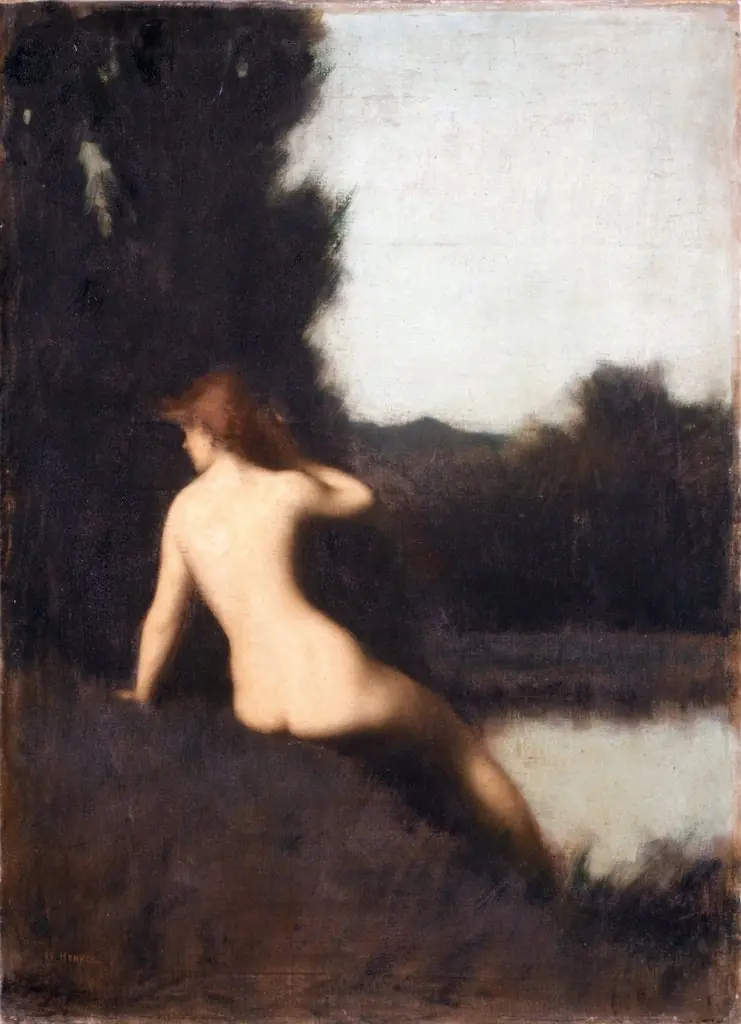
Created circa 1903 by French artist Jean-Jacques Henner, *Standing Woman* is an oil on canvas that presents a solitary female figure against a muted backdrop. The work belongs to the later phase of Henner’s career, when he was exploring the interplay of light and shadow in figurative subjects.
Subject & Meaning
The composition centers on a woman with long red hair, dressed in a blue garment that reveals her shoulders. Her right arm is bent, the hand lightly touching her hair, while her gaze falls downward, lending a contemplative, somber tone to the scene.
Technique & Style
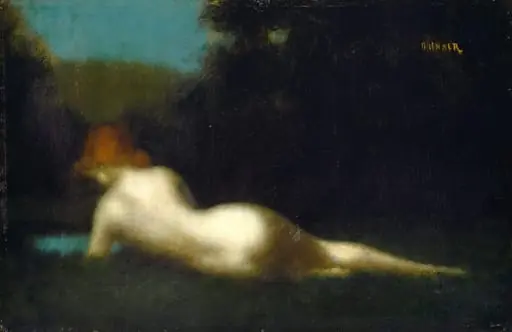
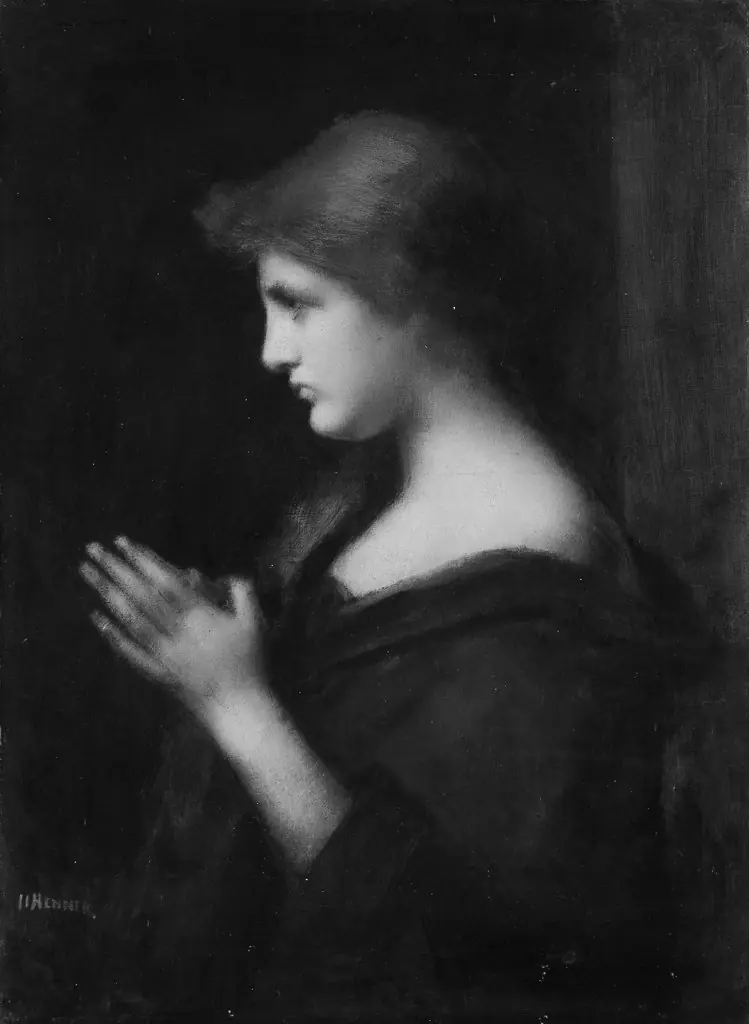
Henner employs a pronounced chiaroscuro, using strong contrasts between illuminated flesh and a dark surrounding to model the figure in three dimensions. Subtle sfumato softens edges, especially in the transition from the figure to the dark background, creating a sense of atmospheric depth.
Context
Working in the post‑Impressionist era, Henner frequently painted nudes, religious scenes, and portraits, integrating academic techniques with a more expressive handling of light. *Standing Woman* reflects this synthesis, illustrating his continued interest in the human figure as a vehicle for mood and tonal investigation.
Artist & collection
Artist
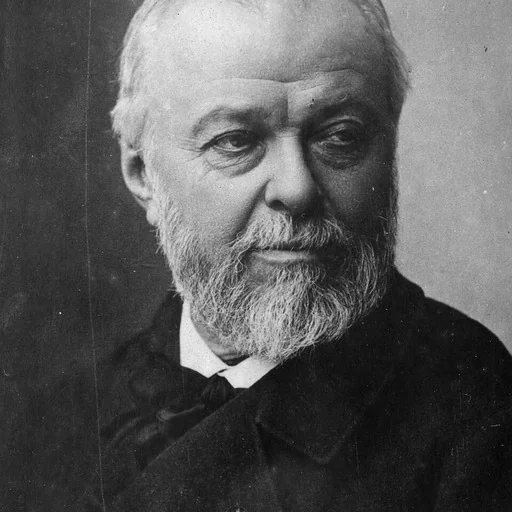
Jean-Jacques Henner (5 March 1829 – 23 July 1905) was a French painter, noted for his use of sfumato and chiaroscuro in painting nudes, religious subjects and portraits.