Artwork
Farmhouse
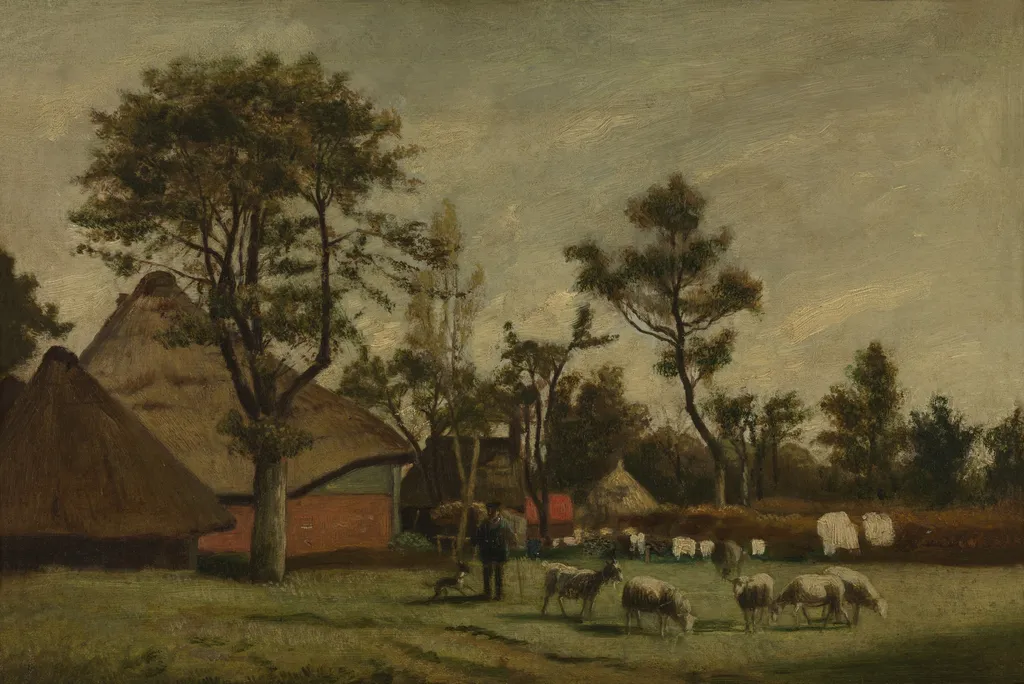
Farmhouse is an oil painting by the Realist artist Henri de Braekeleer. It dates from 1870 and is held in the collection of the Royal Museum of Fine Arts Antwerp.
About this work
Overview
Rooted in the Realist tradition, the work reflects his commitment to depicting ordinary life without idealization.
Henri de Braekeleer painted Farmhouse in 1870, capturing a quiet rural scene in northern Belgium. Rooted in the Realist tradition, the work reflects his commitment to depicting ordinary life without idealization. Trained in Antwerp under family mentors and at the Royal Academy, he developed a precise, observational approach to everyday environments, favoring subdued tones and naturalistic composition over dramatic flair.
Subject & Meaning
The painting presents a tranquil moment in agricultural life: a lone figure stands beside a tree with a dog at his side, while sheep graze in a nearby field. The farmhouse, partially hidden by foliage, suggests domestic quietude rather than labor. No narrative climax is offered—instead, the scene invites contemplation of routine, unremarkable existence, aligning with Realism’s focus on the dignity of the mundane.
Technique & Style
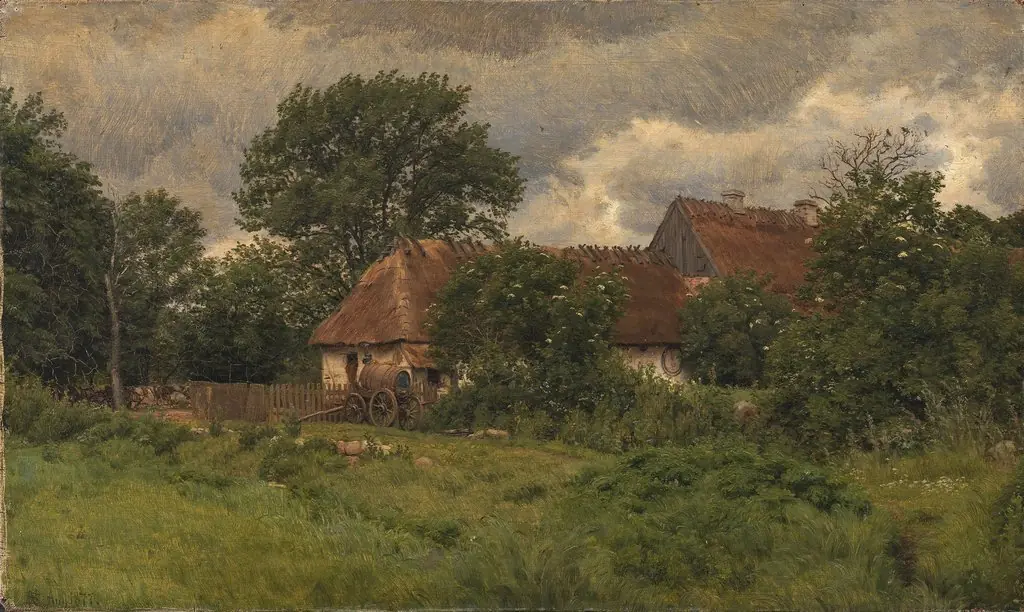
De Braekeleer employed visible brushwork to convey texture in grass, bark, and thatch, avoiding smooth finish in favor of tactile realism. Chiaroscuro subtly models forms, particularly in the shadowed side of the farmhouse and the tree’s trunk, enhancing spatial depth without theatrical lighting. The muted grey sky and earth-toned palette reinforce the painting’s restrained mood, reflecting the artist’s preference for natural illumination over artificial drama.
History & Provenance
Created during a period when Belgian artists were increasingly turning to local subjects, Farmhouse emerged from de Braekeleer’s established practice of documenting rural life. Likely held in private collections in Belgium after its completion, it remained within regional circles until entering public institutional care. No major exhibitions or documented sales from its early years are recorded, suggesting modest initial circulation.
Context
In the late 19th century, Belgian Realism diverged from French counterparts by emphasizing quiet, localized scenes over social commentary. De Braekeleer’s work reflects this trend, influenced by his academic training and familial legacy in genre painting. While urbanization advanced, artists like him preserved a visual record of vanishing rural rhythms, responding to a cultural nostalgia for pre-industrial life.
Legacy
Though not widely known outside Belgium, de Braekeleer’s oeuvre contributed to the regional Realist movement’s coherence. Farmhouse exemplifies his consistent focus on understated rural moments, influencing later Belgian painters who sought authenticity over spectacle. His work remains a quiet reference point in the history of 19th-century Northern European genre painting, valued for its restraint and observational fidelity.
Own this work as a print
Artist & collection
Artist
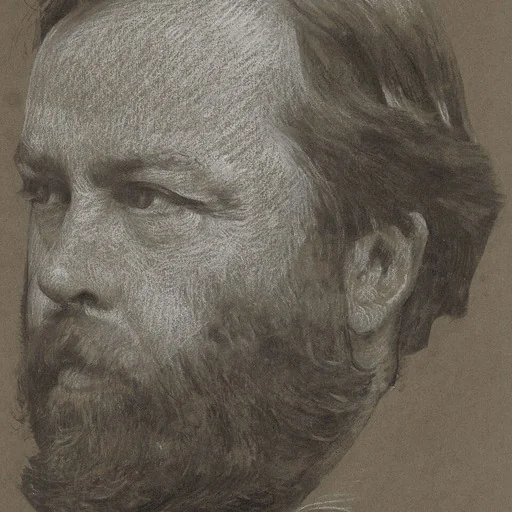
Henri Jean Augustin de Braekeleer (11 June 1840 – 20 July 1888) was a Belgian painter.

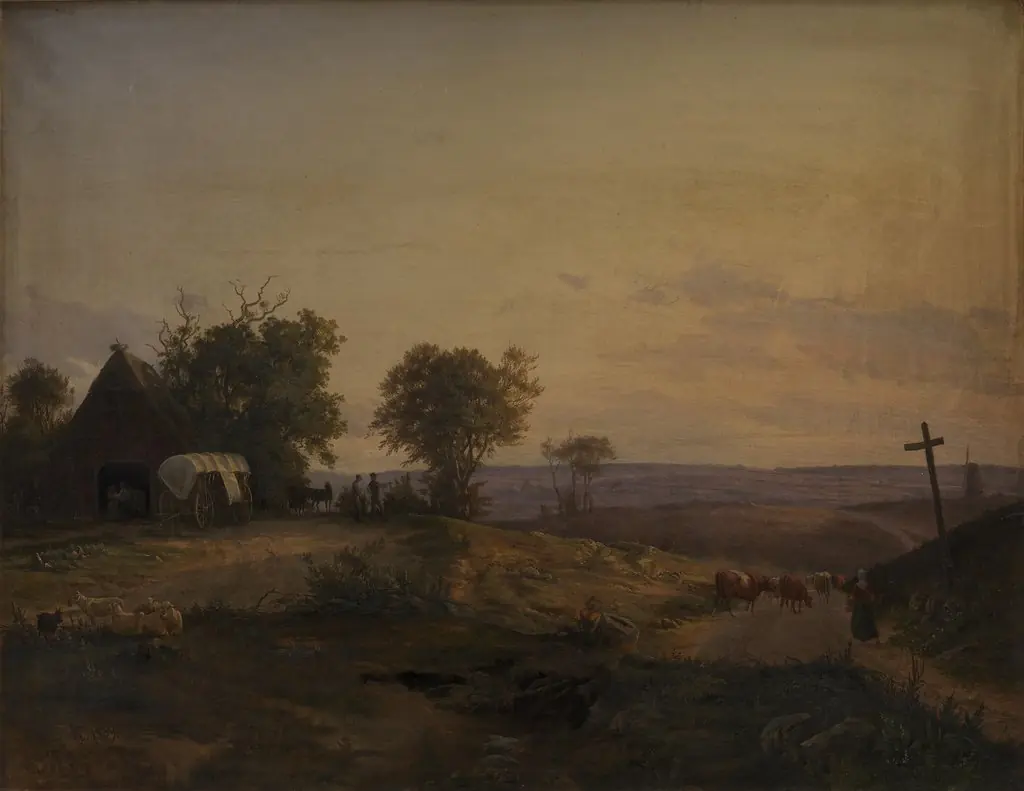 View of the District near Segeberg, Germany
 View of the District near Segeberg, Germany
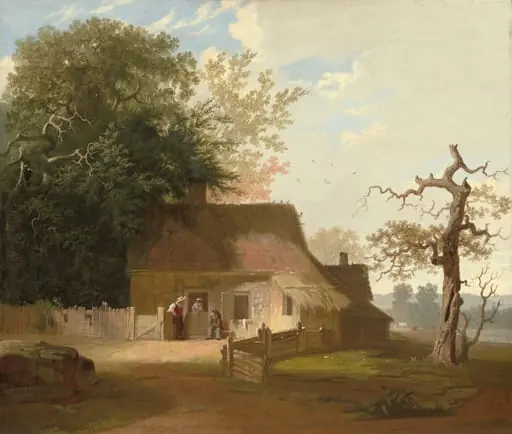 Cottage Scenery
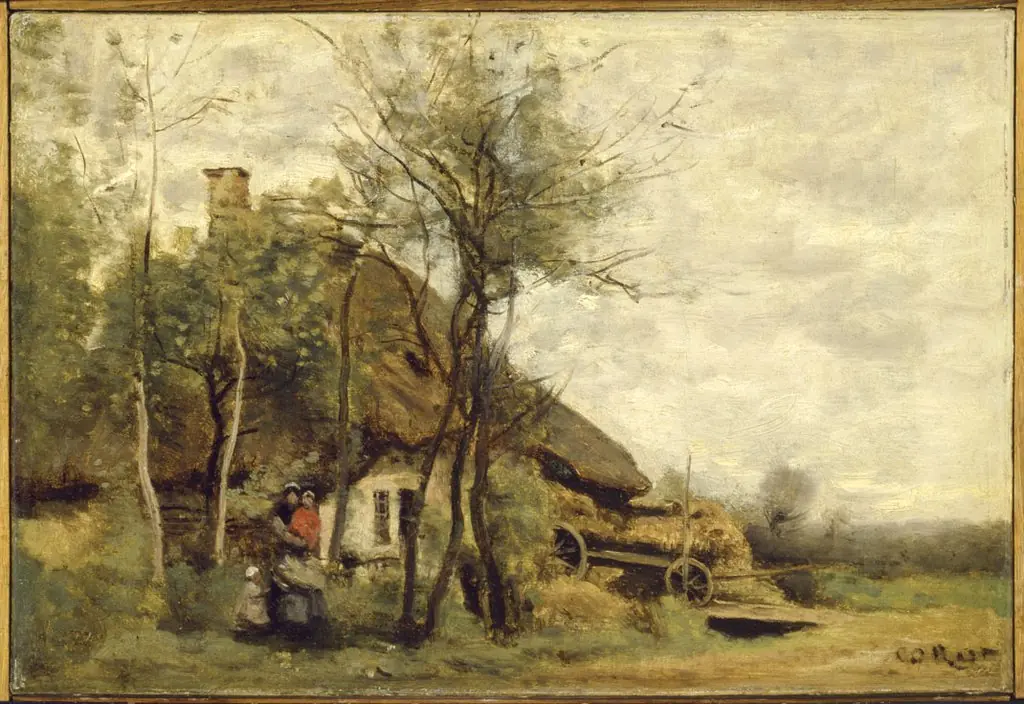 Little farm near Saint-Lô
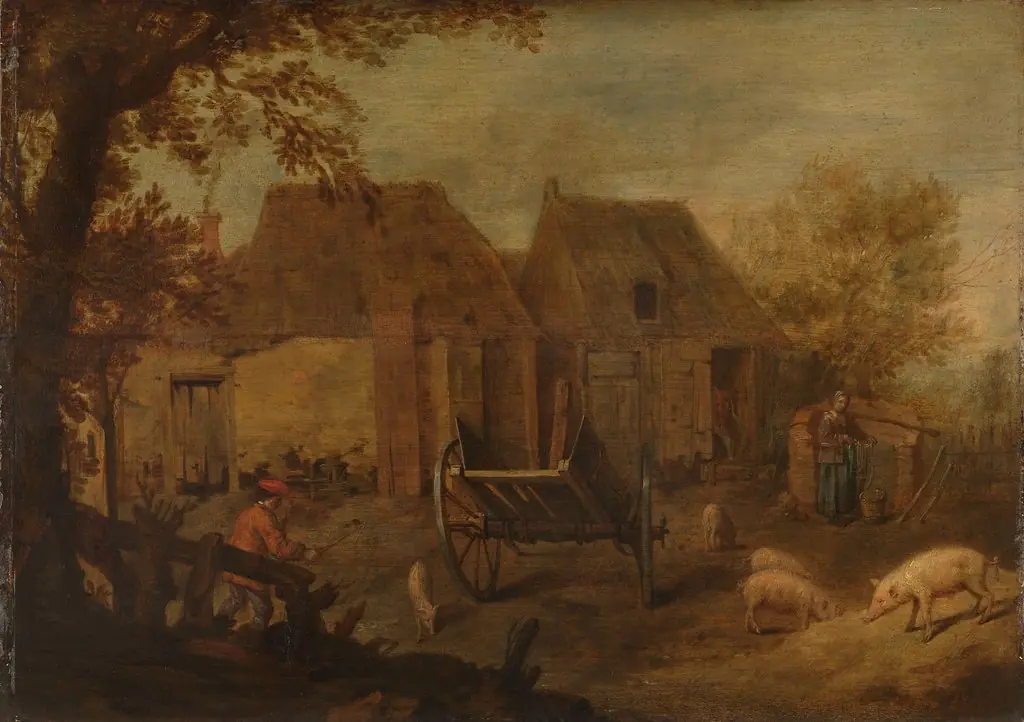 Farmyard
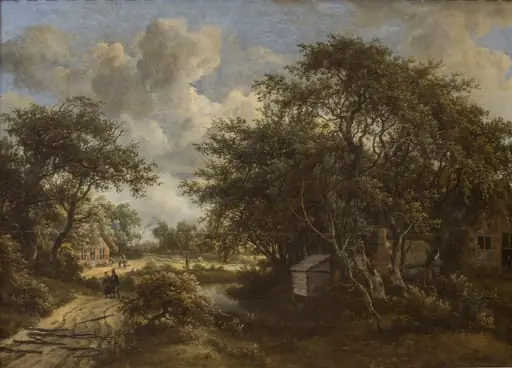 A Village among Trees
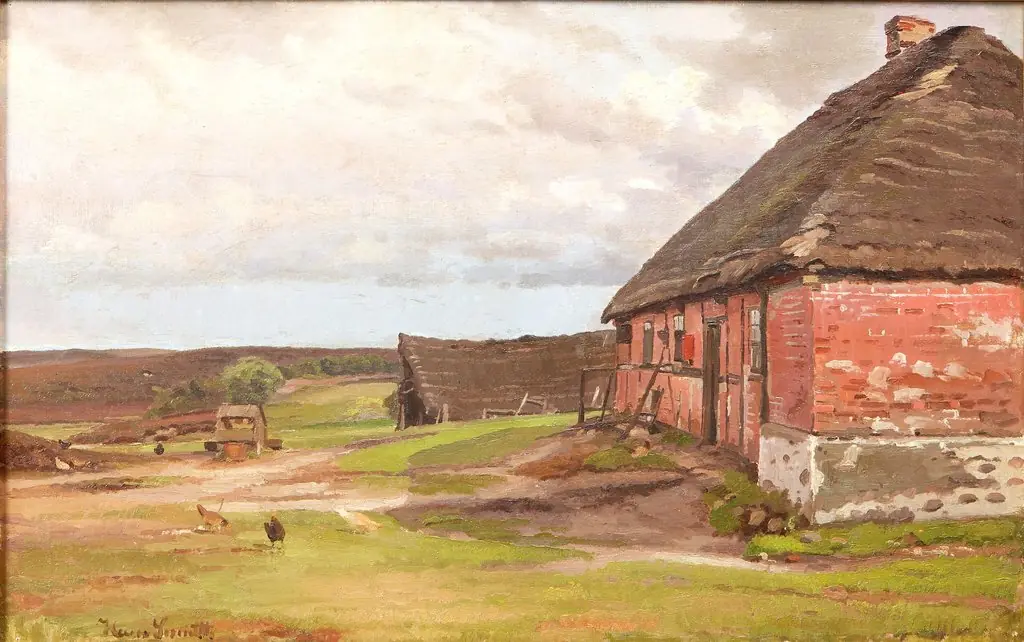 Et hus på Alheden
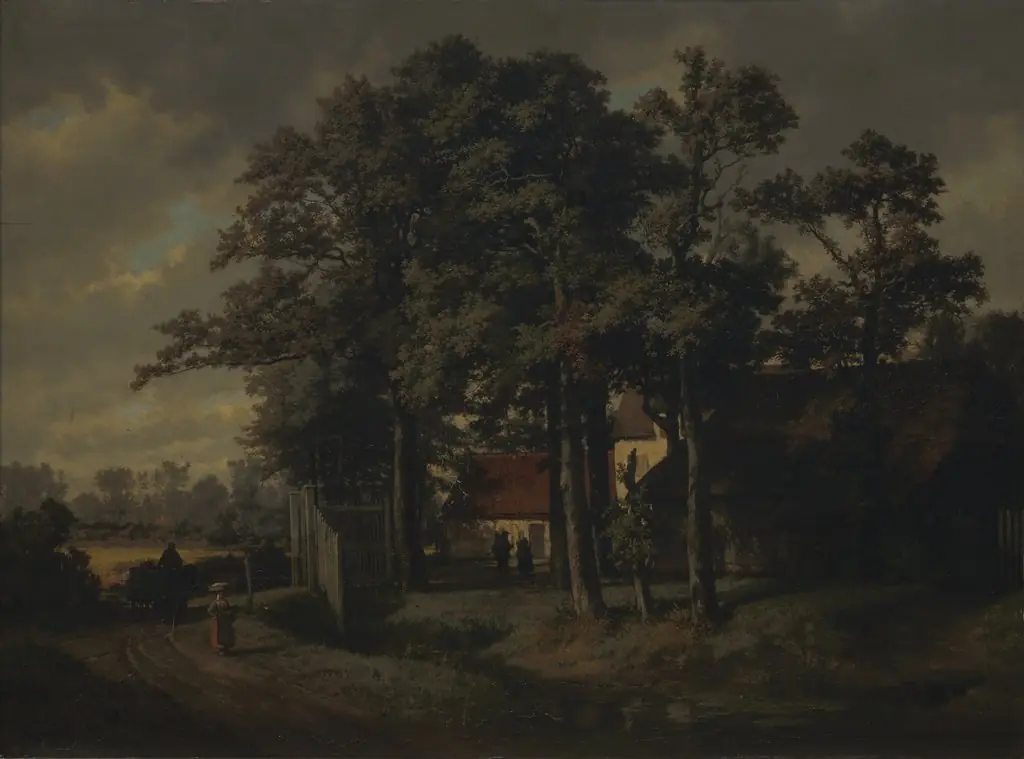 Farm in Merksem
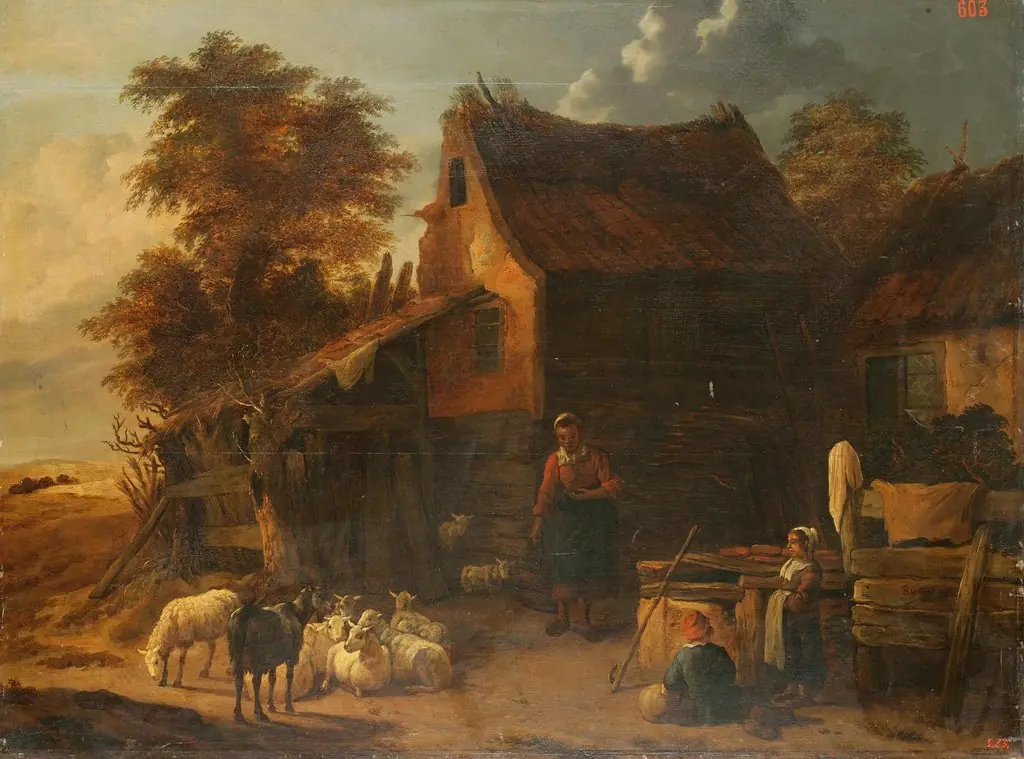 Herd of Sheep near a Peasant House
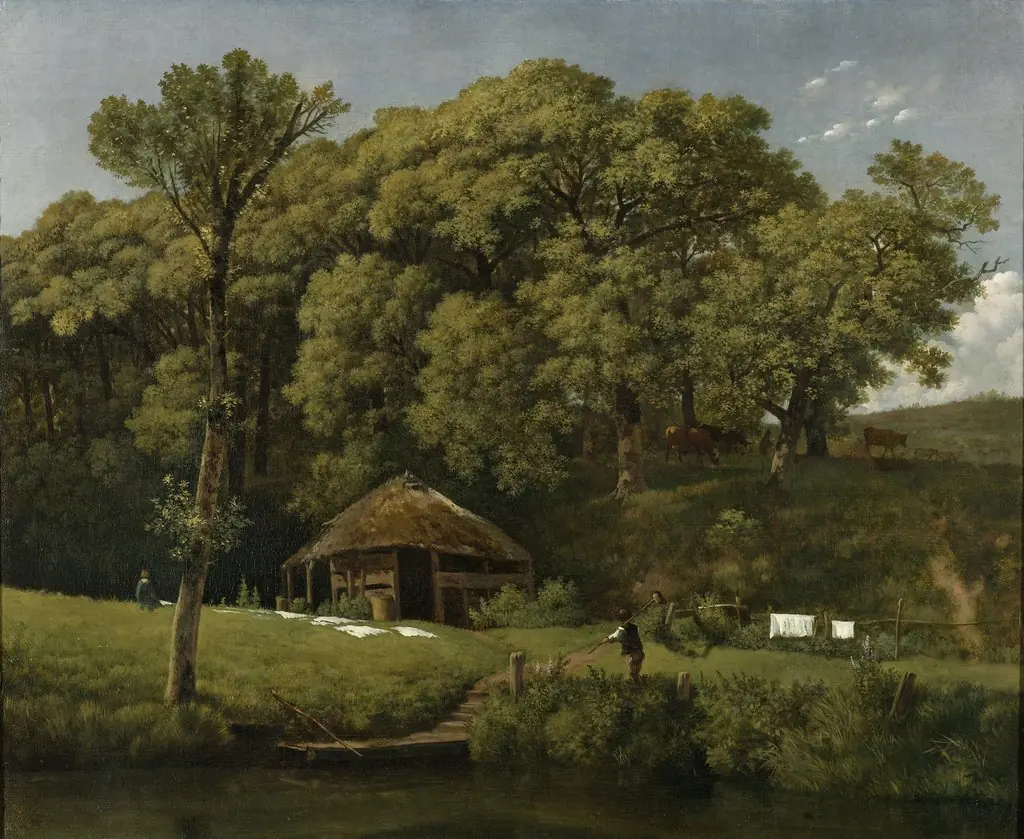 A Barn on the Bank of a Stream in Gelderland
 Gamle udbygninger ved en herregård
 Meadow with cows