Artwork
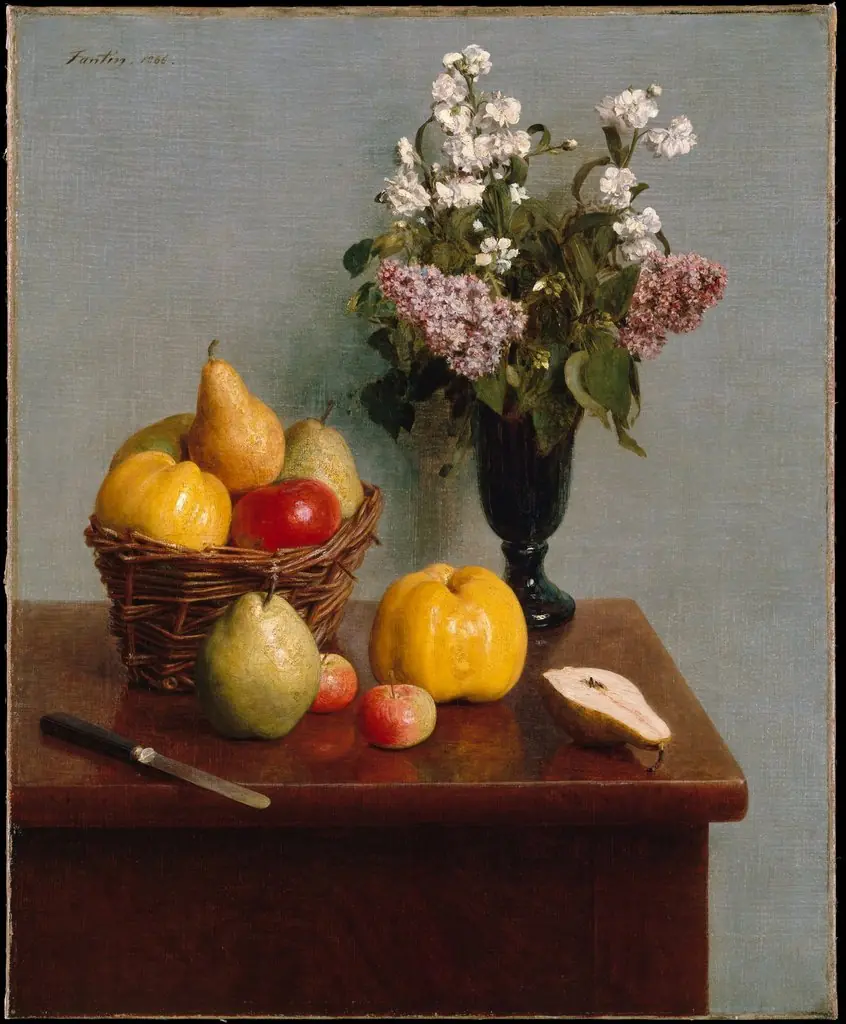
Flowers and Fruit on a Table
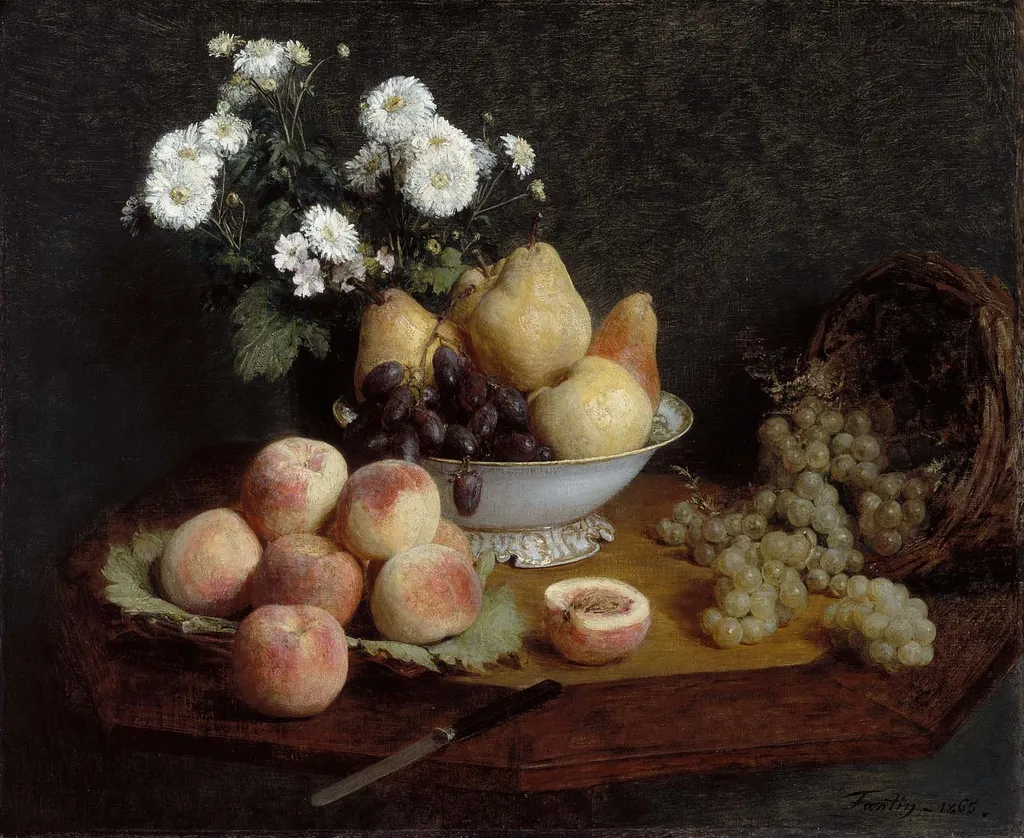
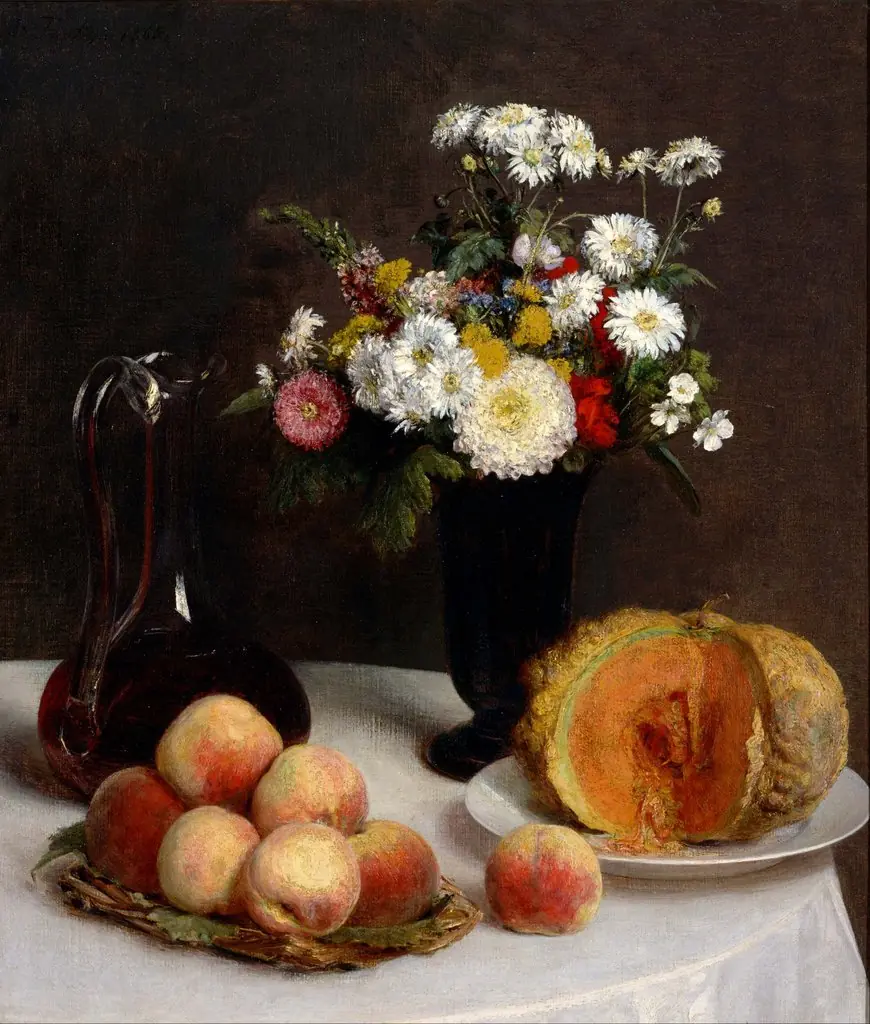
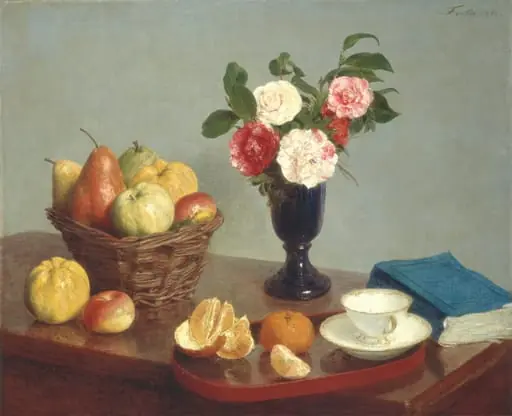
Flowers and Fruit on a Table is an oil painting by the Realist artist Henri Fantin-Latour. It dates from 1865 and is held in the collection of the Museum of Fine Arts Boston.
About this work
Overview
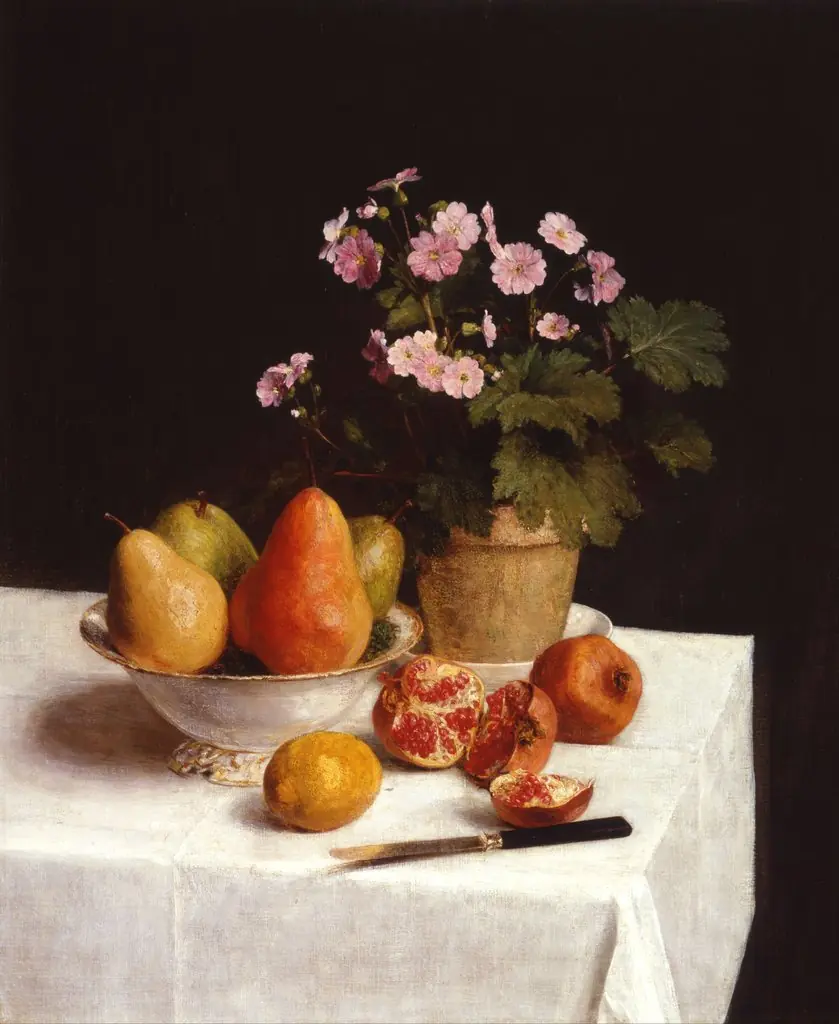
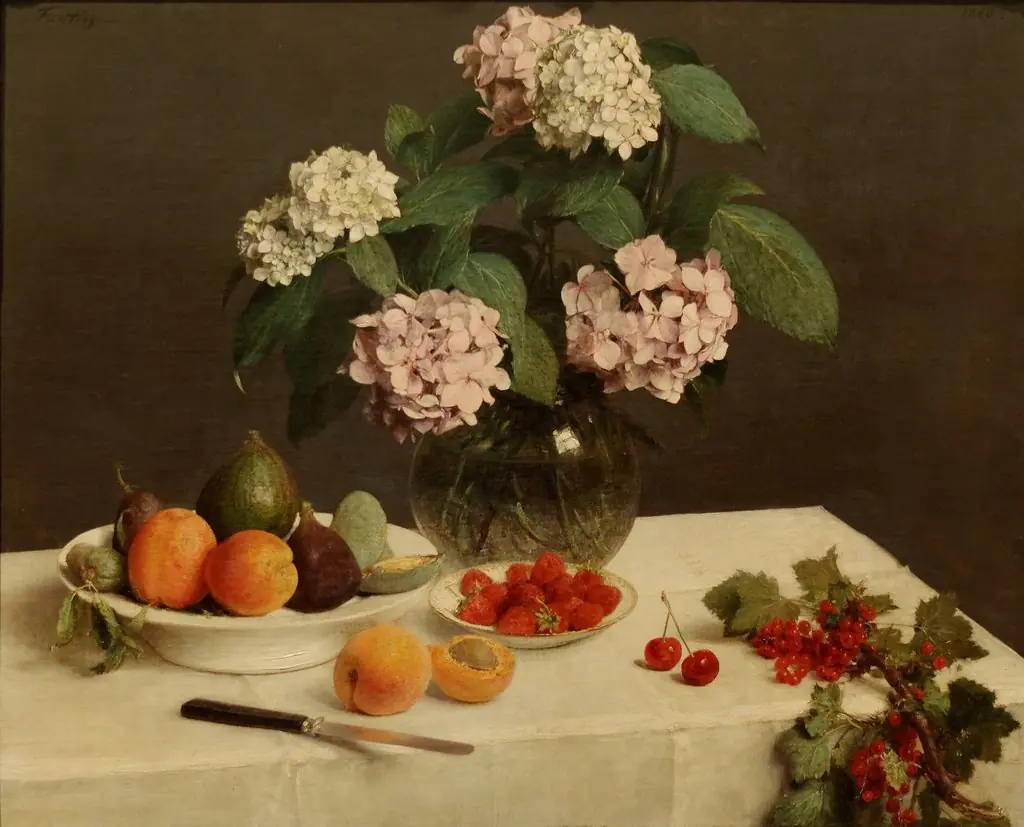
Painted in 1865, this oil on canvas work by Henri Fantin-Latour presents a quiet still life of fruit and blossoms arranged on a tabletop. The composition avoids theatricality, favoring a restrained arrangement that emphasizes texture and subtle tonal shifts. Fantin-Latour, known for his precision in depicting everyday objects, here focuses on the quiet dignity of transient natural forms.
Subject & Meaning
The arrangement includes a bowl of fruit, some spilling onto the surface, and a vase of white flowers positioned behind.
The arrangement includes a bowl of fruit, some spilling onto the surface, and a vase of white flowers positioned behind. These elements—common in 19th-century French still life—suggest themes of abundance and impermanence. The absence of human figures or symbolic references directs attention to the objects themselves, inviting contemplation of their form and fleeting beauty without overt narrative.
Technique & Style
Fantin-Latour employed a methodical brushwork to render surfaces with quiet realism. Soft gradients in the fruit’s skin, the translucence of petals, and the play of light across porcelain and wood are rendered with deliberate precision. Shadows are muted but present, grounding the objects in space without dramatic contrast. The palette remains restrained, dominated by pale pinks, creams, and earth tones.
History & Provenance
Created during a period when Fantin-Latour was refining his still-life practice, the painting emerged from his studio in Paris amid a broader cultural interest in domestic realism. It was likely painted for private collectors rather than public exhibition, reflecting the artist’s preference for intimate, non-political subjects. Its early ownership remains undocumented, though it entered public collections by the early 20th century.
Context
In mid-19th century France, still life was often dismissed as secondary to historical or portrait painting. Fantin-Latour, however, elevated the genre through meticulous observation and tonal harmony, aligning with Realist ideals while avoiding the social commentary of contemporaries like Courbet. His work resonated with a circle of writers and musicians who valued quiet aesthetic discipline.
Legacy
Though less celebrated than his group portraits, this painting exemplifies Fantin-Latour’s enduring contribution to still-life painting. His approach influenced later artists who sought to capture the quiet presence of ordinary things. The work remains a reference point for studies in light, composition, and the emotional resonance of restrained subject matter within 19th-century European art.
Own this work as a print
Artist & collection
Artist
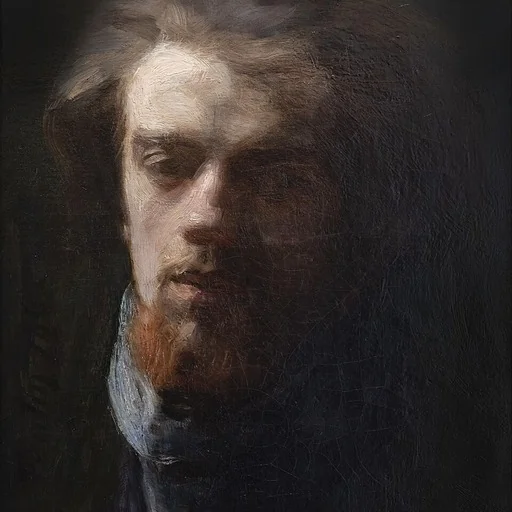
Ignace Henri Jean Theodore Fantin-Latour (French pronunciation: ; 14 January 1836 – 25 August 1904) was a French painter and lithographer best known for his flower paintings and group portraits of Parisian artists and writers.