Artwork
Lemons on a Pewter Plate
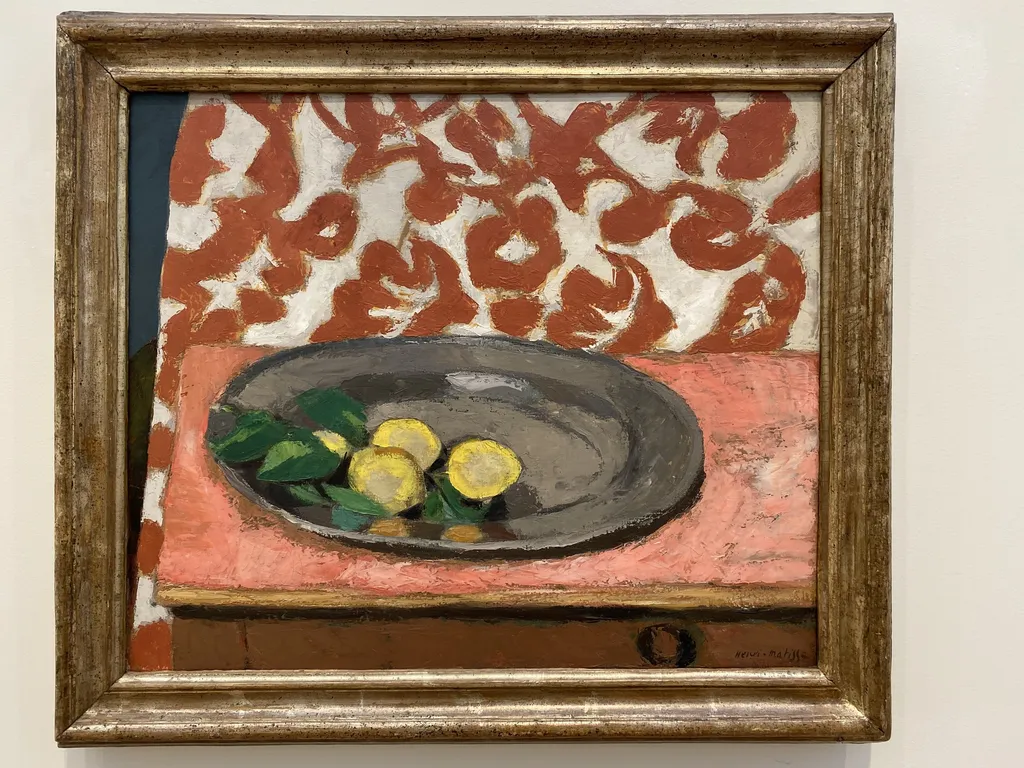
Lemons on a Pewter Plate is an oil painting by the Post-Impressionist artist Henri Matisse. It dates from 1926 and is held in the collection of the Art Institute of Chicago.
About this work
Overview
Henri Matisse completed the oil painting Lemons on a Pewter Plate in 1926. The work presents a modest still‑life arrangement: three lemons with a few green leaves rest on a dark, reflective pewter dish, set upon a pink‑toned tablecloth edged in brown. A patterned red‑and‑white wallpaper forms the background, giving the composition a quiet, domestic atmosphere.
Subject & Meaning
The painting focuses on ordinary objects—a fruit and a metal plate—elevated through careful composition. By isolating the lemons and their subtle shadows, Matisse draws attention to the interplay of form and surface, suggesting a contemplation of everyday beauty without overt narrative.
Technique & Style
Executed in oil, the canvas displays Matisse’s characteristic fluid handling of paint, yet the palette is restrained, favoring muted pinks, yellows, and browns. The sheen of the pewter is rendered with delicate highlights, while the wallpaper pattern is suggested with loose, rhythmic brushwork, reflecting his post‑impressionist sensibility.
History & Provenance
Created during the mid‑1920s, Lemons on a Pewter Plate belongs to a period when Matisse was exploring still‑life after his more famous decorative series. The work has remained in private collections before entering a museum holding, where it is displayed as part of the artist’s broader oeuvre.
Context
Matisse’s still‑life paintings of the 1920s were produced alongside the rise of modernist movements and his long‑standing dialogue with contemporaries such as Pablo Picasso. While he is best known for bold color fields, this piece illustrates his continued interest in subtle tonal relationships and the formal possibilities of everyday subjects.
Artist & collection
Artist
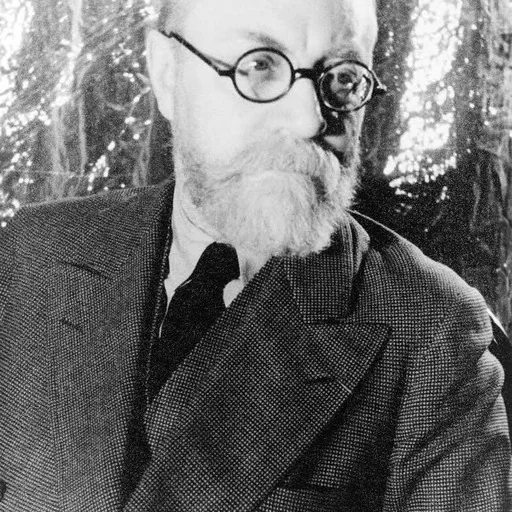
Henri Émile Benoît Matisse (French: ; 31 December 1869 – 3 November 1954) was a French visual artist, known for both his use of colour and his fluid and original draughtsmanship.