Artwork
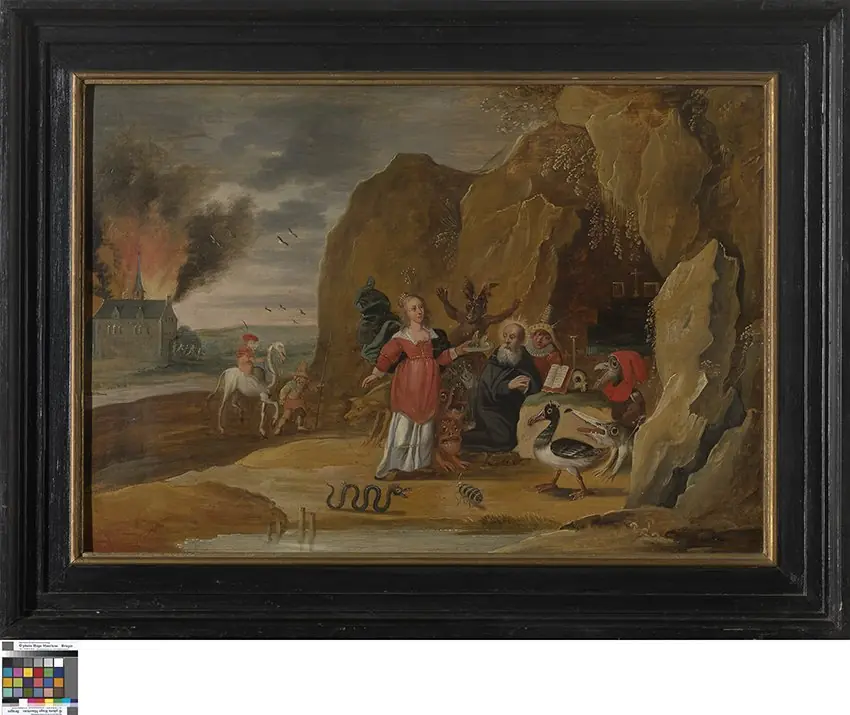
The Invocation of Saint Apollonia
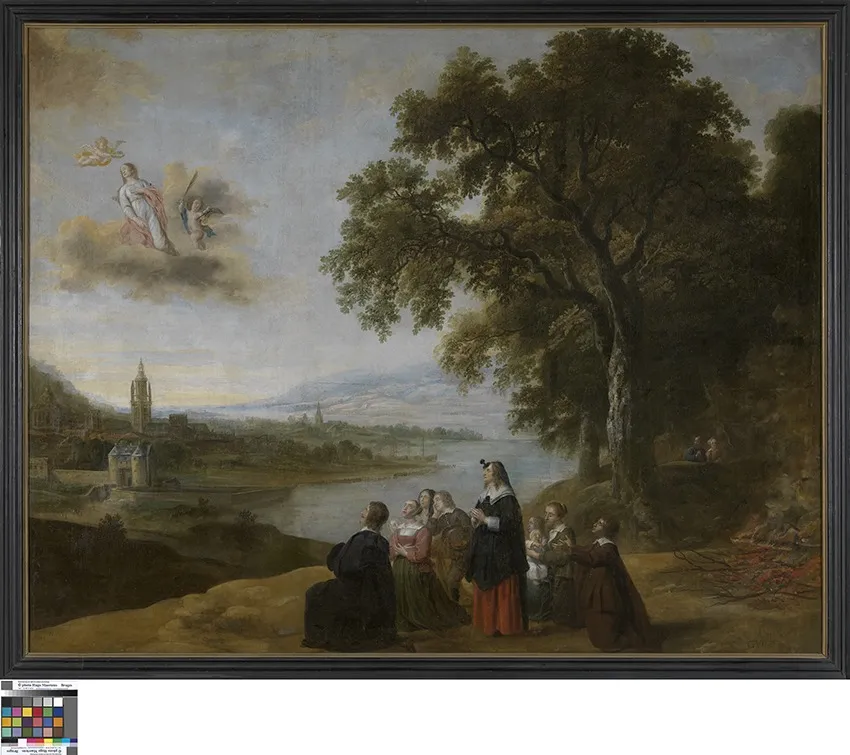
The Invocation of Saint Apollonia is an oil painting by Henricus Guilielmus. It dates from 1645 and is held in the collection of the Groeningemuseum.
About this work
Overview
Henricus Guilielmus painted The Invocation of Saint Apollonia in 1645 using oil on canvas. The work is part of the collection of the Groeningemuseum and presents a devotional scene that combines a landscape setting with a celestial figure.
Subject & Meaning
The composition centers on a group gathered on a riverbank beneath a large tree, while a woman in a flowing robe hovers above, cup in hand, gesturing downward. The floating figure is identified as Saint Apollonia, whose traditional attribute—a cup—references her martyrdom and patronage of dentistry.
Technique & Style
Guilielmus employs a muted palette of earthy greens and soft blues, rendering the foliage and water with gentle modeling. The figure in the sky is treated with a lighter, almost ethereal brushwork that contrasts with the more solid, grounded treatment of the landscape and architecture.
History & Provenance
Created in the mid‑17th century, the painting entered the Groeningemuseum’s holdings at an unspecified date, where it remains on display as part of the museum’s Dutch and Flemish Baroque collection.
Context
The work reflects the Counter‑Reformation emphasis on saintly intercession, situating the holy figure within a familiar, everyday environment. By placing Saint Apollonia above a river scene, the artist links the spiritual invocation to a tangible, local landscape.
Artist & collection
Artist
This Dutch painter in the 1600s had a habit of slipping tiny scenes into the corners of his religious paintings—like a dog chasing its tail in the shadows of a saint’s halo.