Artwork
The Return of the Reapers
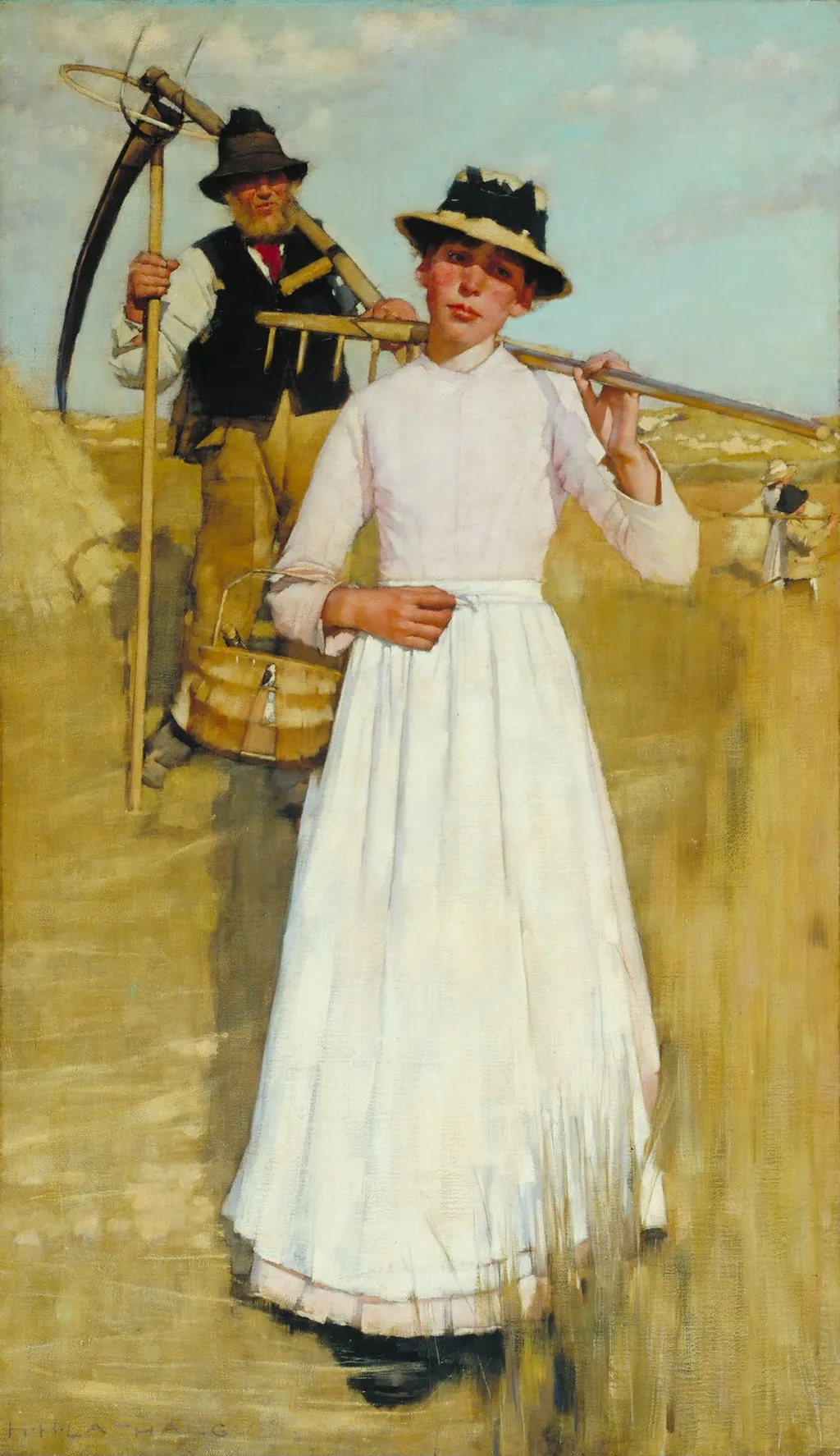
The Return of the Reapers is an oil painting by the Post-Impressionist artist Henry Herbert La Thangue. It dates from 1894 and is held in the collection of the Tate.
About this work
Overview
Created in 1894 by English painter Henry Herbert La Thangue, *The Return of the Reapers* is an oil on canvas that belongs to the Tate Britain collection. The work reflects La Thangue’s realist approach to rural subjects and aligns with the post‑impressionist tendencies of the late nineteenth century.
Subject & Meaning
The composition presents a woman in a white dress and hat, shoulder‑bearing a scythe, accompanied by a man in a black vest and hat with a visible red tie, also holding a scythe. Set against a light blue sky dotted with clouds, the figures embody a moment of agricultural labor, emphasizing the quiet dignity of countryside life.
Technique & Style
La Thangue employs a palette of muted blues, whites, and earth tones, arranging the figures centrally to achieve visual balance. Bold, expressive brushwork adds texture to the field and sky, while the handling of light creates a harmonious atmosphere that underscores the simplicity of the scene.
History & Provenance
The painting was completed in 1894 during La Thangue’s association with the Newlyn School, a group noted for its naturalistic depictions of rural England. After its exhibition, the work entered the collection of Tate Britain, where it remains accessible to the public as part of the museum’s holdings of late‑19th‑century British art.
Artist & collection
Artist
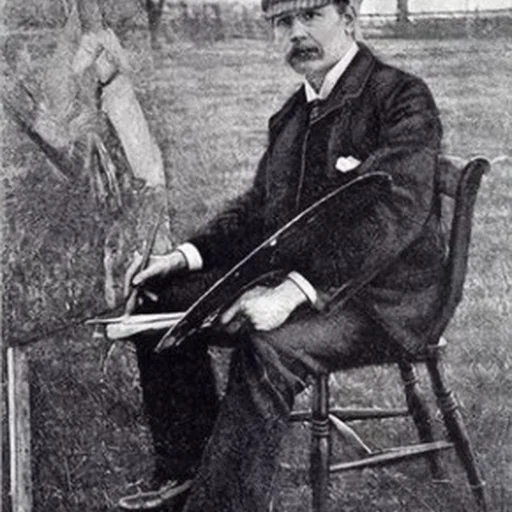
Henry Herbert La Thangue (19 January 1859 – 21 December 1929) was an English realist rural landscape painter associated with the Newlyn School.

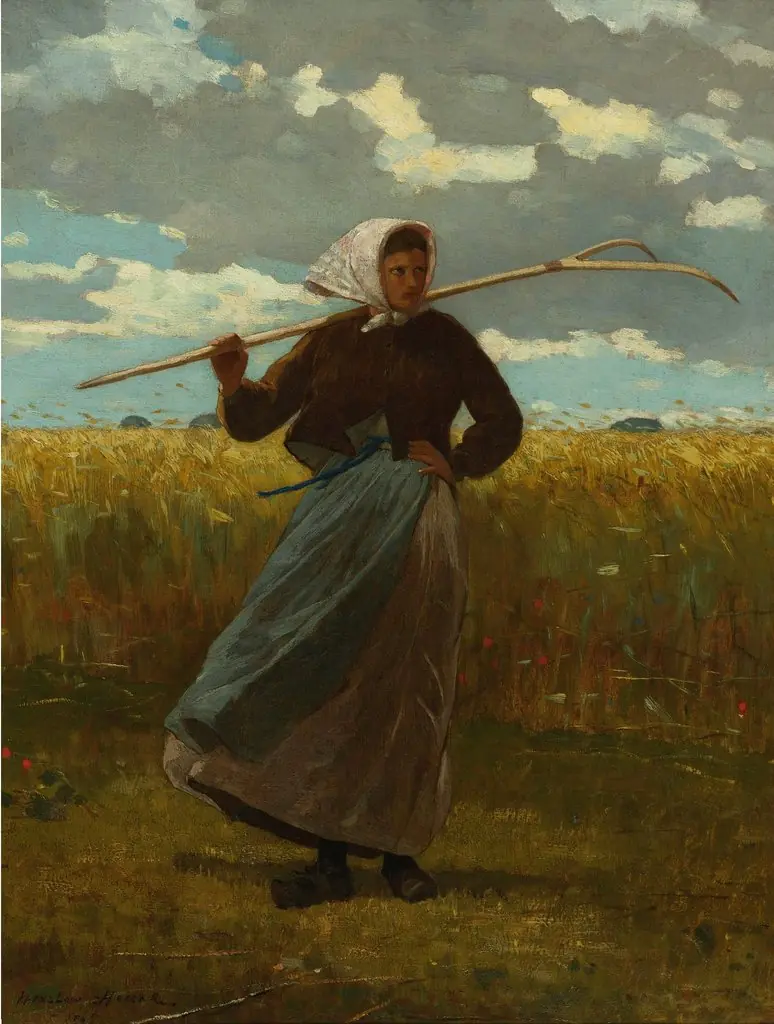 The Return of the Gleaner
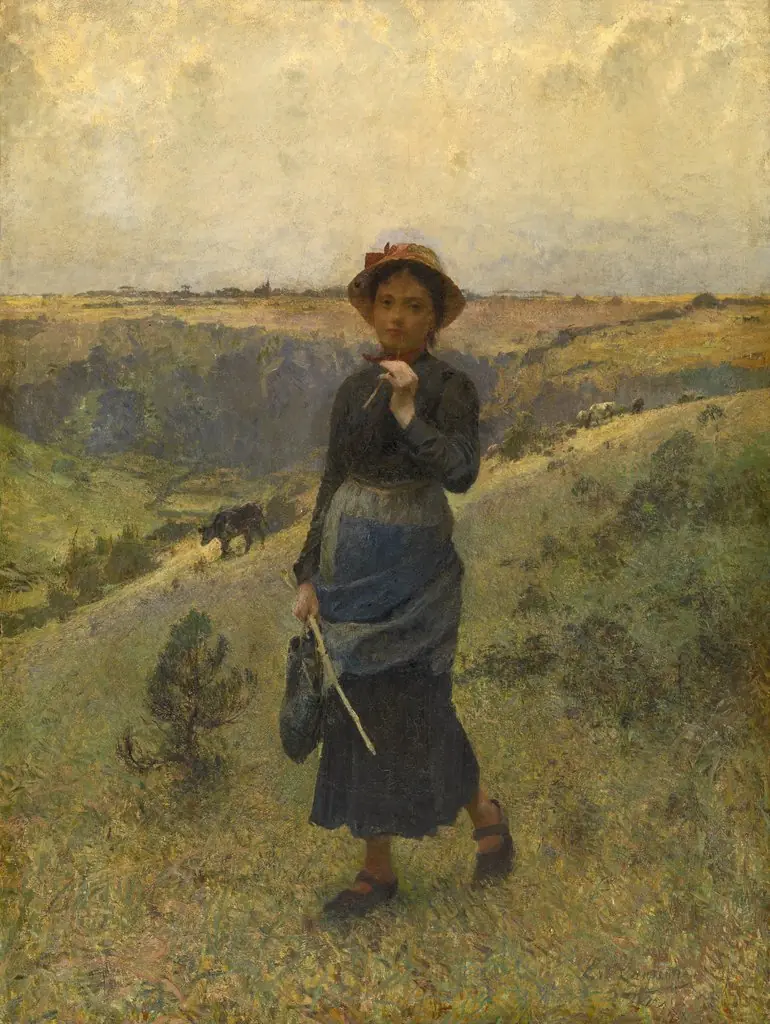 Cowherd in the Ardennes
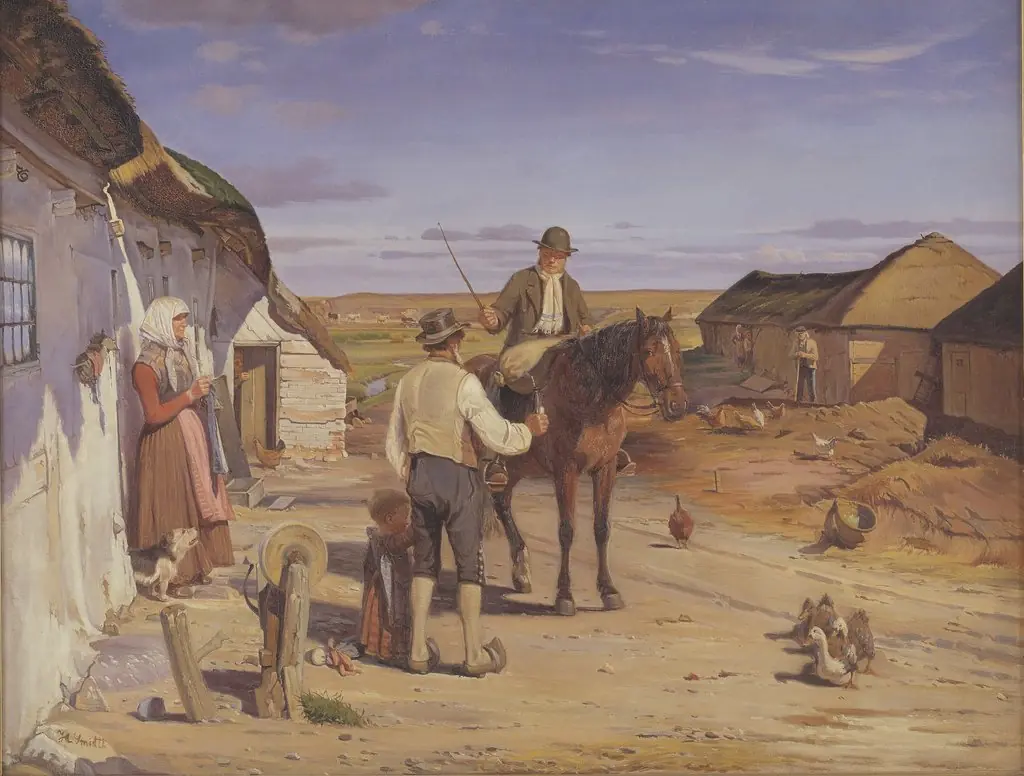 A Stranger Asking his Way at a Farm on the Moors
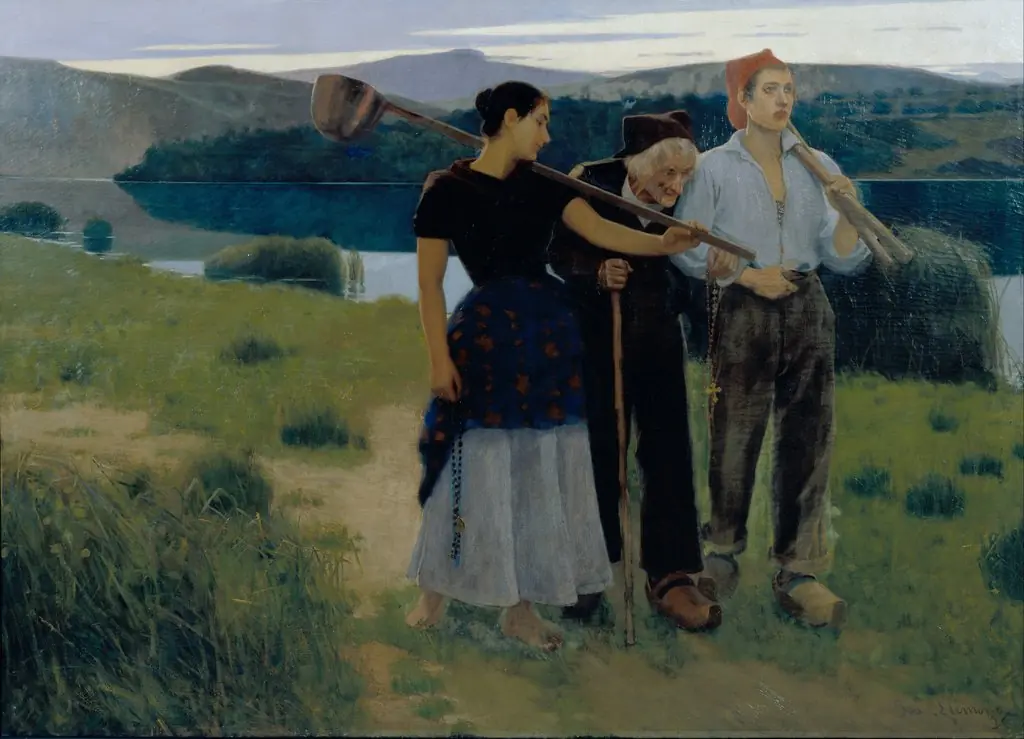 Returning from the Plot
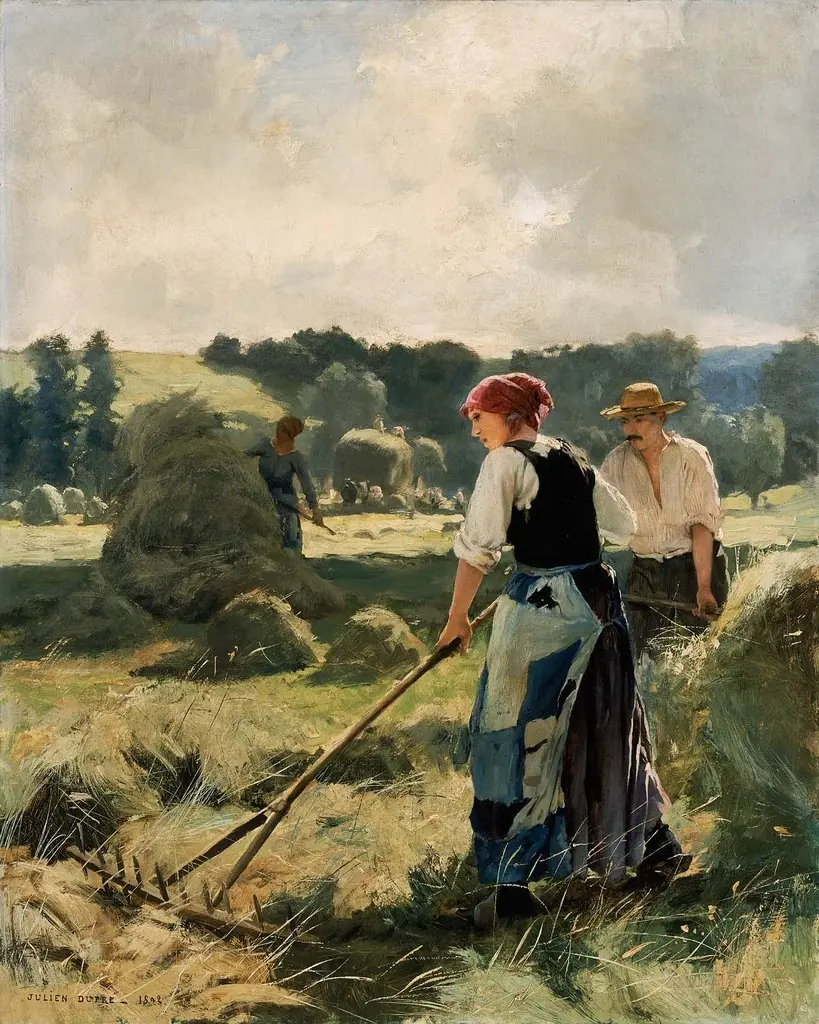 Haymaking
 La câmp
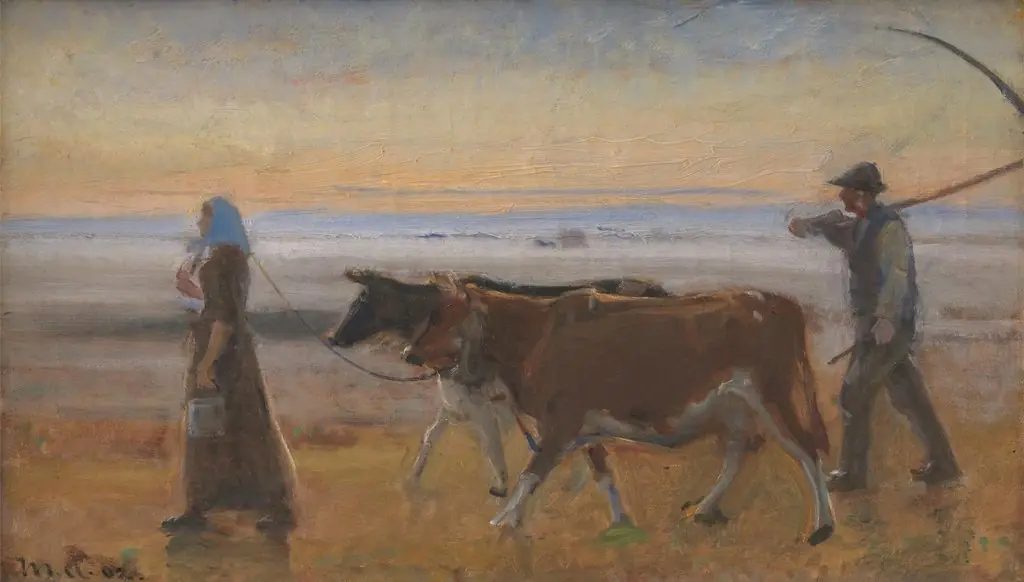 Cows Being Driven across the Moor
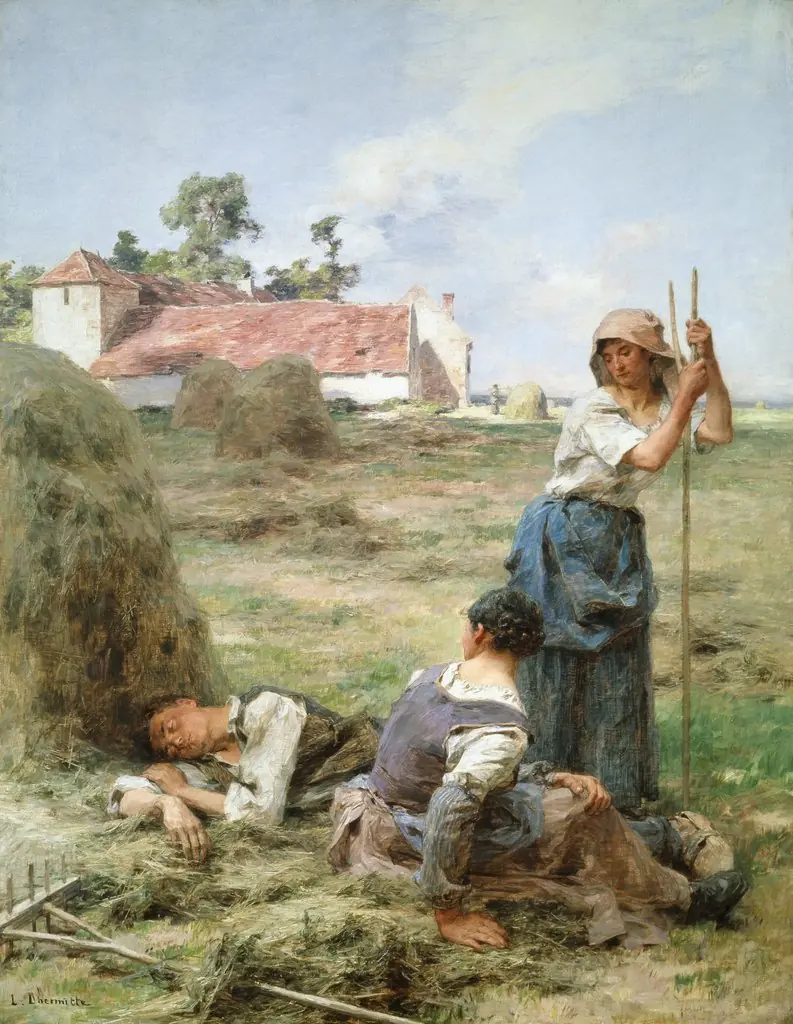 Harvesters at Rest
 Cows Being Driven across the Moor
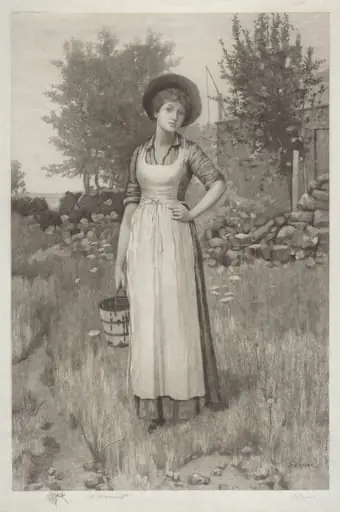 Untitled (Farmer's Daughter)
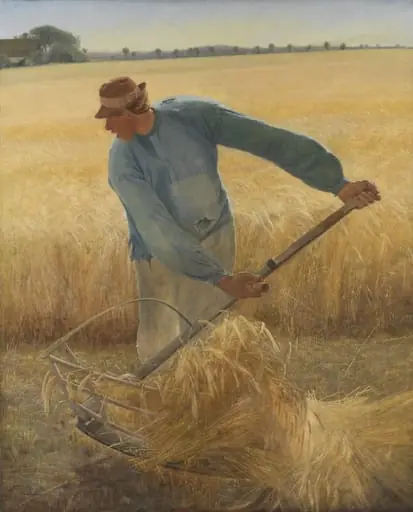 Harvest
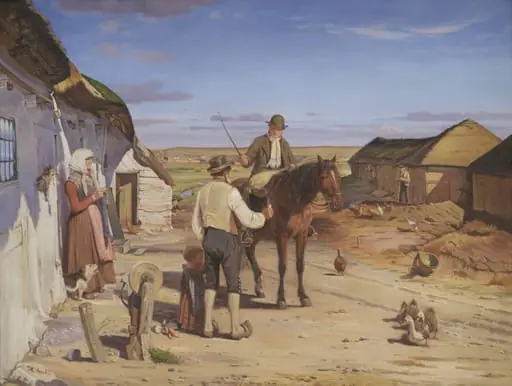 A Stranger Asking his Way at a Farm on the Moors