Artwork
Landscape
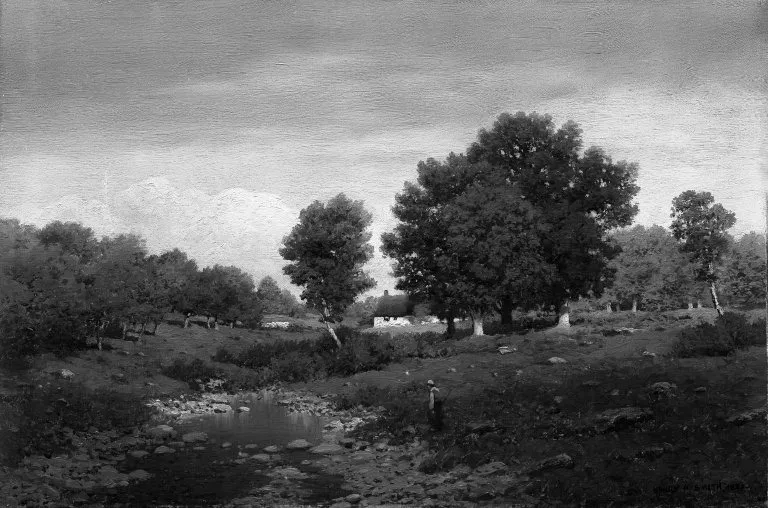
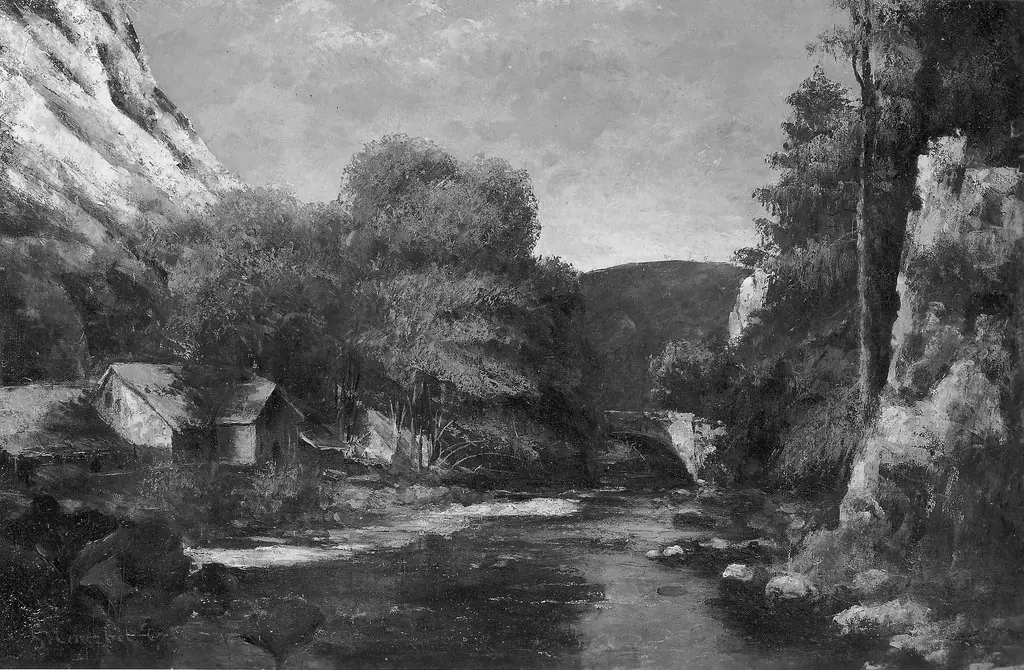
Landscape is an oil painting by the Impressionist artist Henry Pember Smith. It dates from 1892 and is held in the collection of the Brooklyn Museum.
About this work
Overview
It captures a quiet rural scene in Connecticut, characterized by rolling fields, scattered rocks, a narrow stream, and a modest dwelling nestled among trees.
Painted in 1892, this oil-on-canvas landscape is the work of American artist Henry Pember Smith. It captures a quiet rural scene in Connecticut, characterized by rolling fields, scattered rocks, a narrow stream, and a modest dwelling nestled among trees. The sky, heavy with clouds, casts soft, shifting light across the terrain, suggesting a momentary atmospheric condition rather than an idealized vision.
Subject & Meaning
The painting presents an unembellished view of the Connecticut countryside, emphasizing the quiet interplay between human habitation and natural elements. The house, barely prominent, integrates into the landscape rather than dominating it. This subtle balance reflects a reverence for everyday rural life, avoiding romanticism in favor of observed truth and tranquil stillness.
Technique & Style
Smith employed oil paint with careful attention to tonal gradations, using chiaroscuro to model forms and suggest depth. Brushwork is precise yet fluid, capturing the texture of grass, stone, and foliage without overt impasto. The composition avoids dramatic focal points, instead guiding the eye through the stream and across the field, echoing the observational approach of late 19th-century landscape traditions influenced by European realism.
History & Provenance
Created after Smith’s studies in Paris, Brittany, and Venice during the 1880s, the painting reflects his exposure to European techniques and compositional methods. It entered the Brooklyn Museum’s collection at some point after its completion, where it remains as part of a broader effort to document American regional painting of the period. No record of prior ownership or exhibition is widely documented.
Context
While contemporaries like the Hudson River School emphasized grandeur, Smith’s work aligns more closely with the quiet realism of American Impressionism and the emerging interest in localized, intimate landscapes. His time in Europe likely reinforced a preference for naturalism over spectacle, situating him within a broader shift toward everyday subjects in American art during the 1890s.
Legacy
Smith’s landscapes, including this one, contribute to a lesser-known but significant strand of American painting that prioritized understated observation over dramatic narrative. Though not widely exhibited today, his work remains a quiet testament to regional artistic practice and the enduring appeal of unadorned natural scenes in late 19th-century America.
Artist & collection

Artist
Henry Pember Smith (February 20, 1854 – October 16, 1907) was an American painter, best known for his depictions of country cottages and river scenes around Lyme and East Lyme, Connecticut, and paintings of the sea and…

 Spring
 A Summer's Day in the Jægersborg Deer Park, North of Copenhagen
 Landscape
 A Summer's Day in the Jægersborg Deer Park, North of Copenhagen
 From the Flume House, Franconia, New Hampshire
 In the Connecticut Hills
 Les bords de l'Arc près d'Aix-en-Provence
 Mountainous Landscape
 Vinterbillede fra Bretagne. Den første sne
 Bjerglandskab
 Landscape at Bruflat in Valdres, Norway
 Bog on a Wooded Islet