Artwork
Specimens of Polyautography: Along the Bank of a River
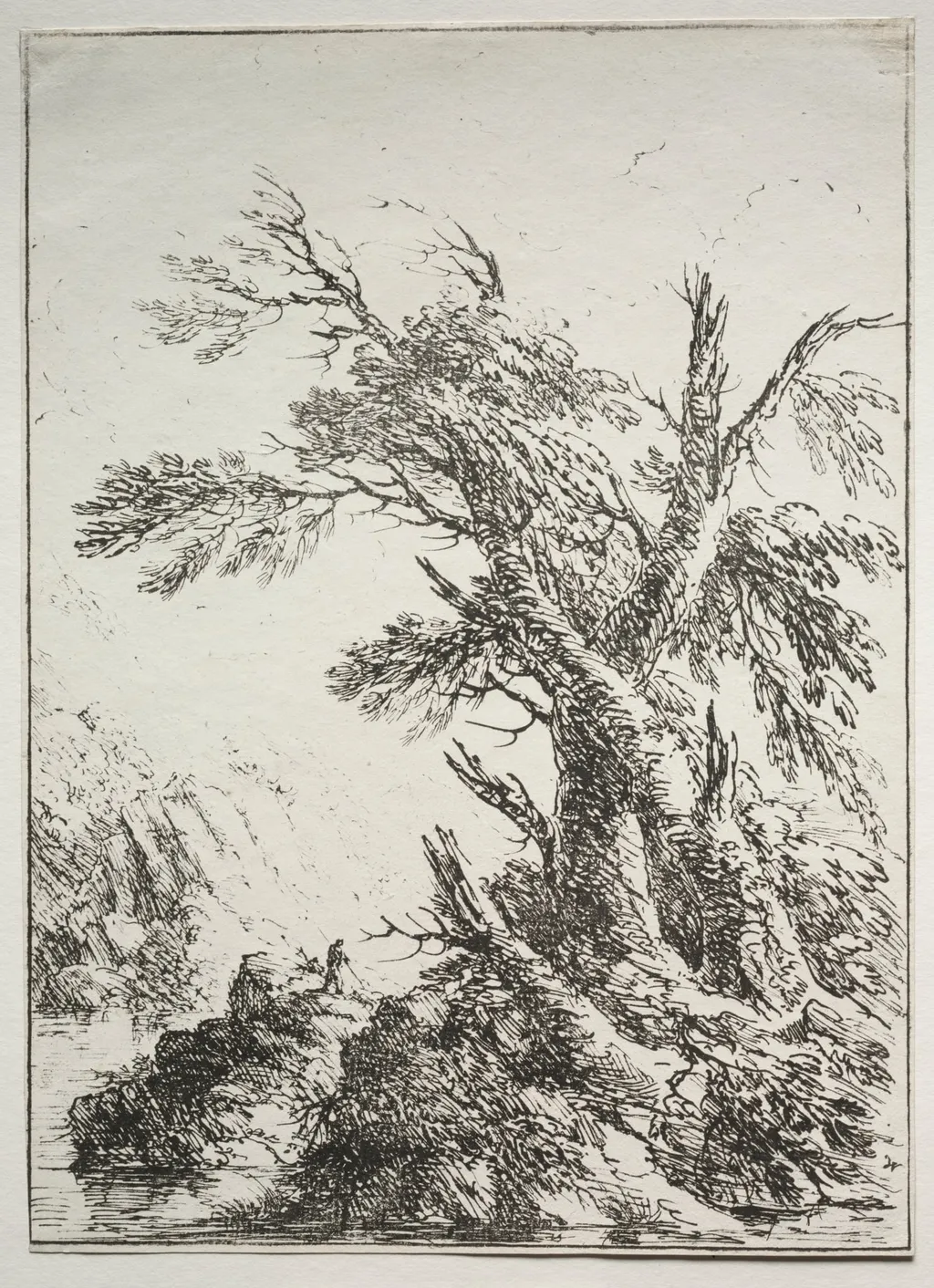
Specimens of Polyautography: Along the Bank of a River is a print by Henry Richard Warwick. It dates from 1826 and is held in the collection of the Cleveland Museum of Art.
About this work
The artist's use of shading and texture creates a sense of realism, drawing the viewer's attention to the natural beauty of the scene.
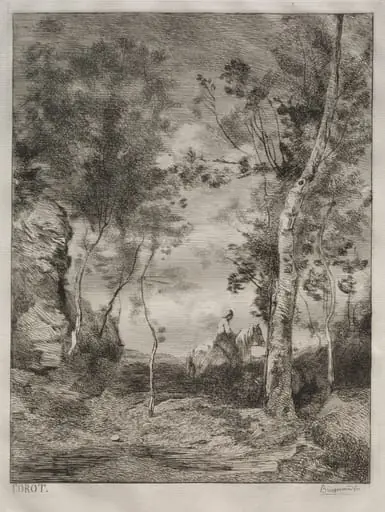
This image is a landscape painting featuring a tree with a thick trunk and branches that extend to the left. The tree is situated on a rocky bank, with a body of water visible in the background. The scene is depicted in a monochromatic color scheme, with varying shades of gray used to create depth and texture.
A closer look at the painting reveals intricate details in the tree's bark and the rocky terrain. The artist's use of shading and texture creates a sense of realism, drawing the viewer's attention to the natural beauty of the scene.
For more information on the artist behind this work, look up Henry Richard Warwick (British, 1779–1853).
Overview
Specimens of Polyautography: Along the Bank of a River is a print created by Henry Richard Warwick around 1826. It is a monochromatic landscape held at The Cleveland Museum of Art.
Subject & Meaning
The print depicts a tree with a thick trunk on a rocky riverbank, with water in the background. The scene's natural beauty is emphasized through the artist's attention to detail in the tree's bark and the terrain.
Technique & Style
The use of varying shades of gray creates depth and texture, contributing to a realistic representation of the scene. The artist's shading and texturing techniques draw attention to the intricate details of the natural environment.
Artist & collection

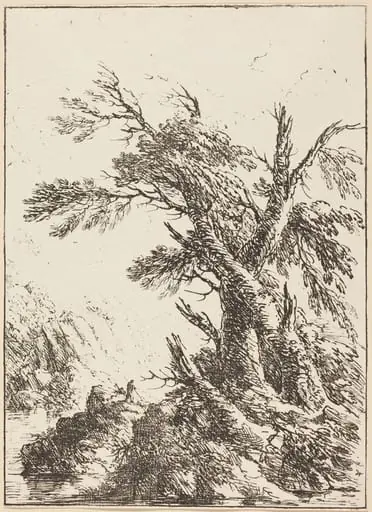 Landscape with Old Trees by Water
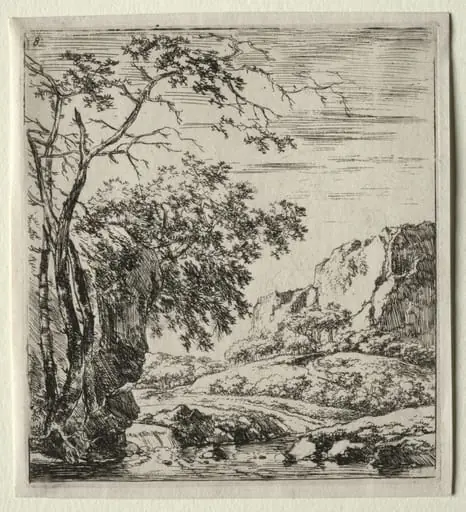 Les trois arbres près du rocher
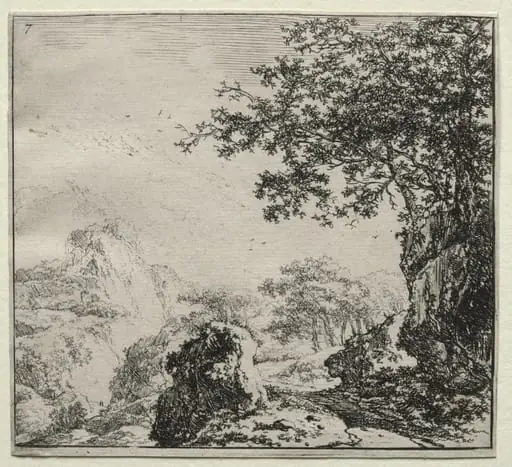 The Road near the Rocks
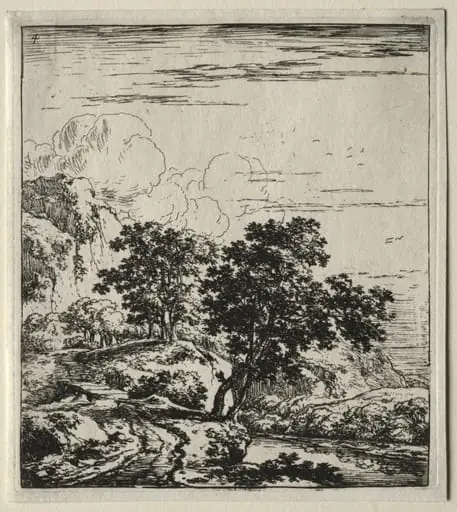 Le sentier au bord de la rivière et le petit pont du bois
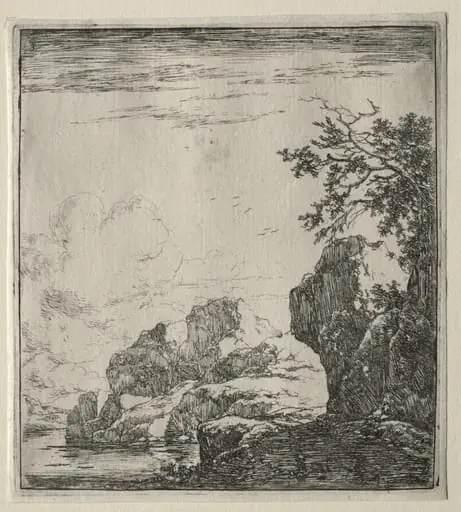 Le rocher couvert de buissons
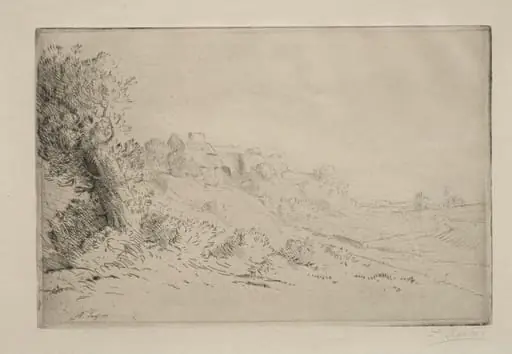 My Farm
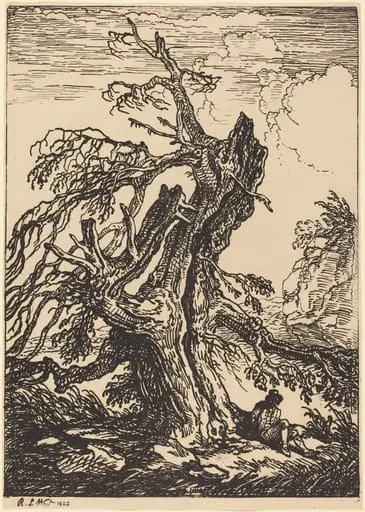 Study of a Tree
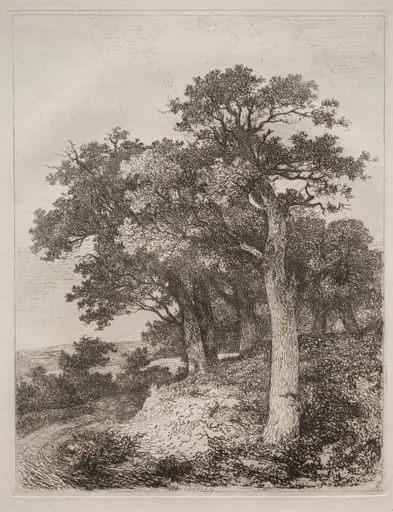 At Colney
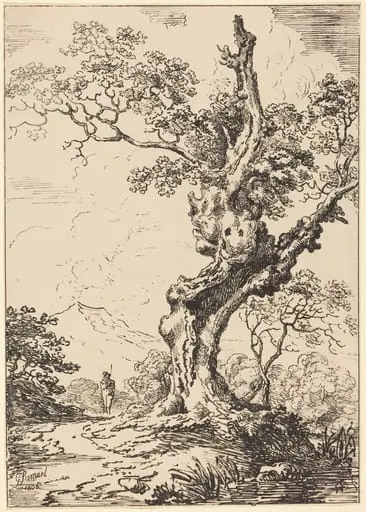 Study of an Old Oak Tree, Water on Right, a Man on Left
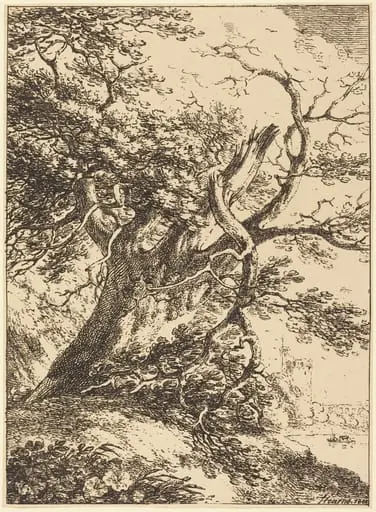 Old Tree
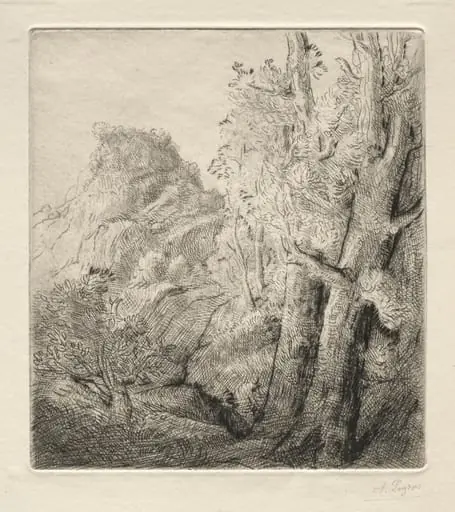 The Old City
 Landscape, or The White Horse, after Corot