Artwork
River Valley
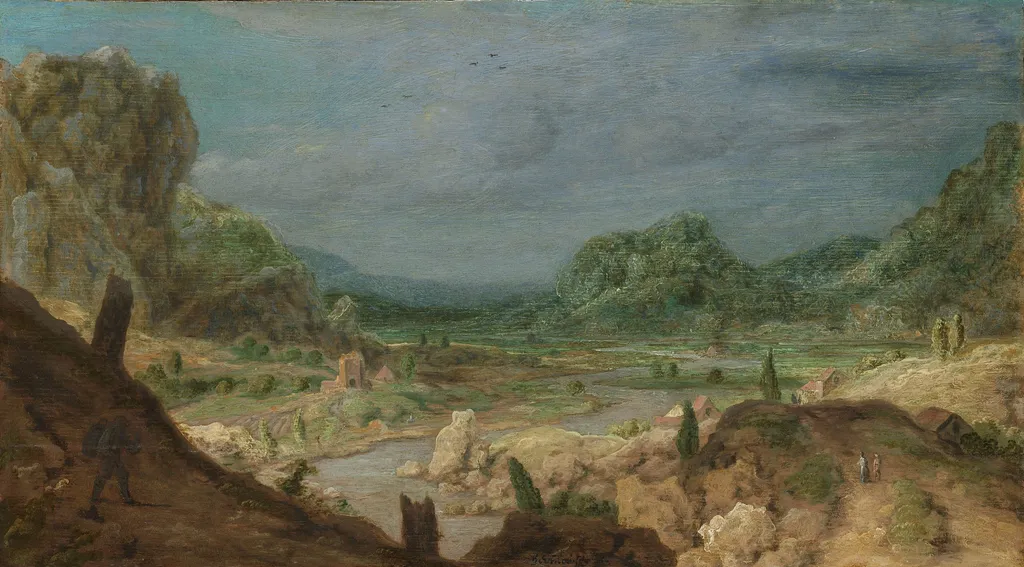
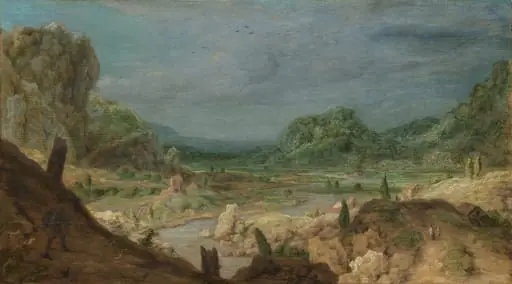
River Valley is an oil painting by the Dutch Golden Age artist Hercules Segers. It dates from 1628 and is held in the collection of the Rijksmuseum.
About this work
Overview
River Valley, executed in oil around 1626–1630, is attributed to the Dutch painter Hercules Seghers (c. 1589/90–1640). The work is part of the Rijksmuseum’s collection in Amsterdam, where it entered the holdings in May 1931. The composition presents a broad valley cut by a winding river, framed by distant mountains and a cloud‑filled sky.
Subject & Meaning
The scene depicts a tranquil countryside: a river threading through a lowland flanked by trees, modest dwellings, and diminutive figures engaged in everyday tasks. The placement of human activity within the expansive landscape suggests a harmonious relationship between people and nature, a common motif in early‑17th‑century Dutch art.
Technique & Style
Seghers employs a pronounced contrast of light and shadow, a chiaroscuro effect that emphasizes the depth of the valley and the texture of the terrain. The handling of oil paint yields a muted palette, with cloudy grays overhead and earthy tones in the foreground, reinforcing the atmospheric mood.
History & Provenance
After its creation in the early 1620s, the painting changed hands several times before being acquired by the Rijksmuseum in 1931. The museum’s purchase added a rare example of Seghers’ landscape work to its Dutch Golden Age holdings, allowing scholars to study his distinctive approach to topographical representation.
Own this work as a print
Artist & collection
Artist
Hercules Pieterszoon Seghers or Segers (c. 1589 – c. 1638) was a Dutch painter and printmaker of the Dutch Golden Age. He has been called "the most inspired, experimental and original landscapist" of his period and an…