Artwork
View of the Rhine near Rheineck Castle
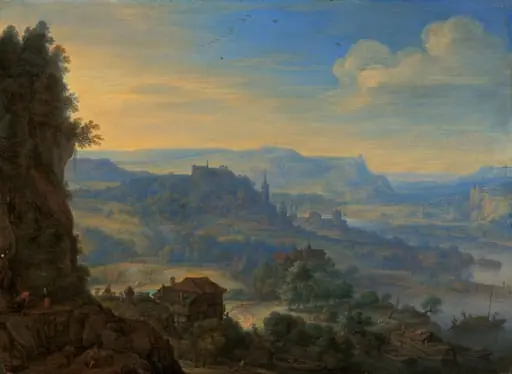
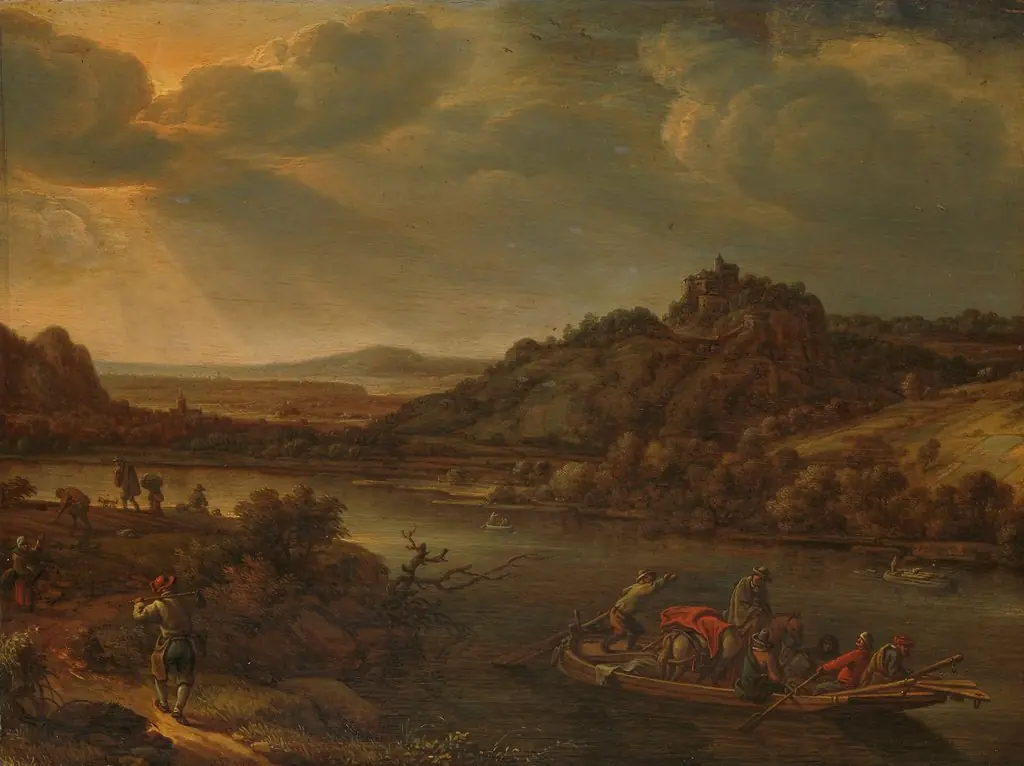
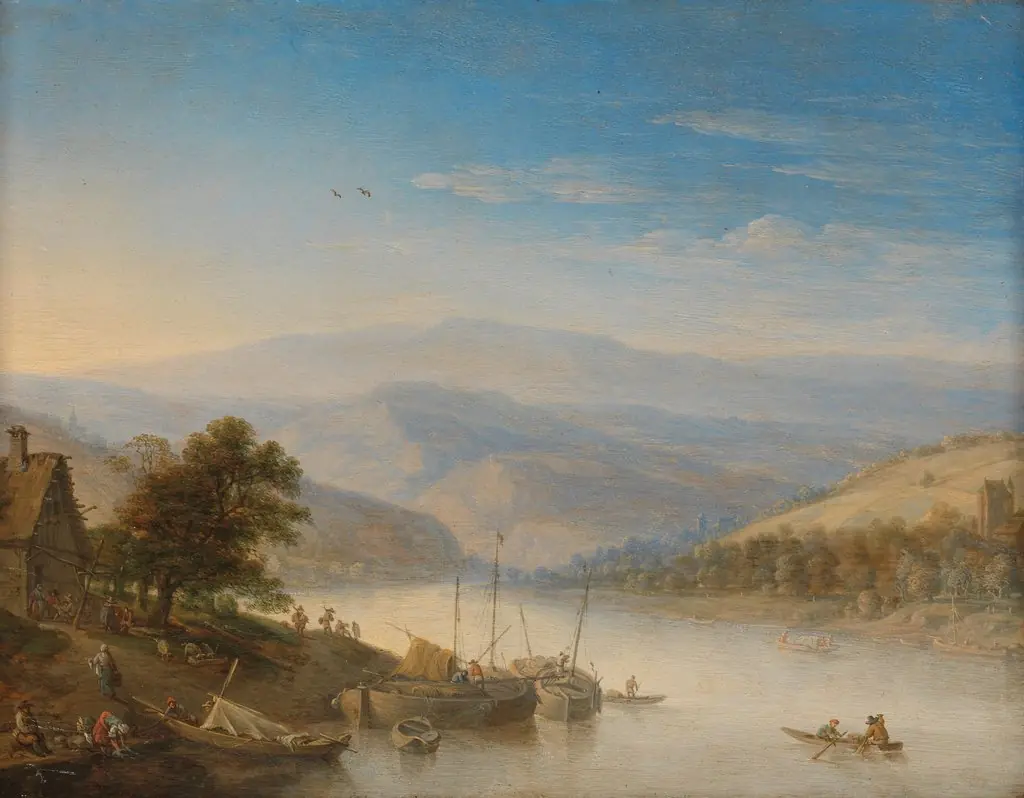
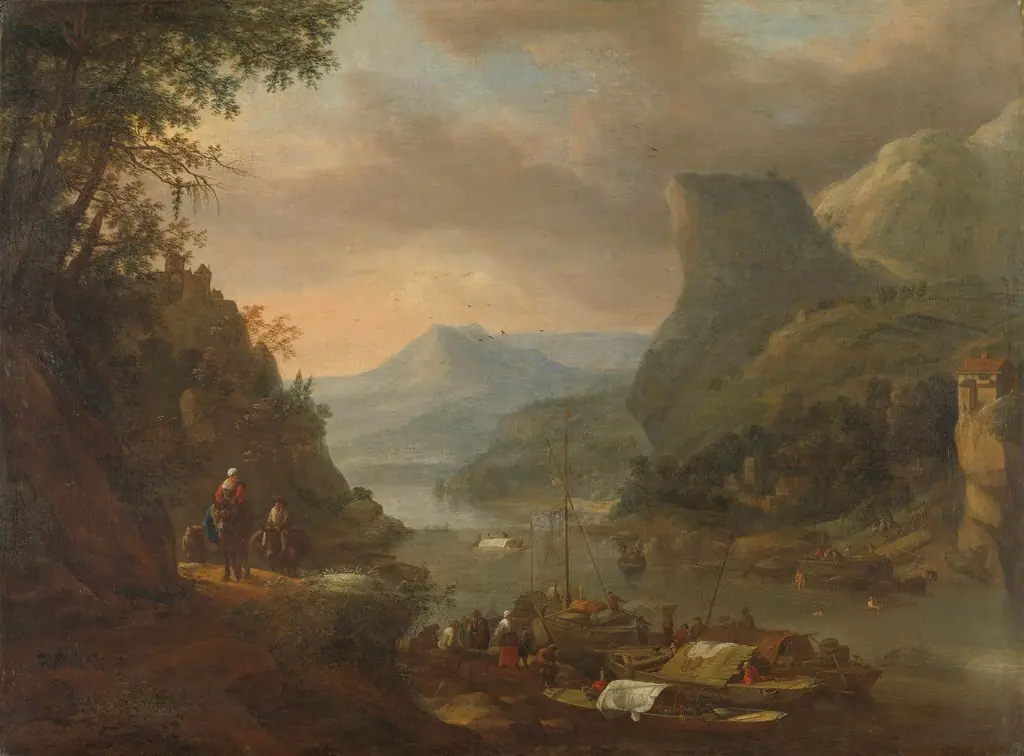
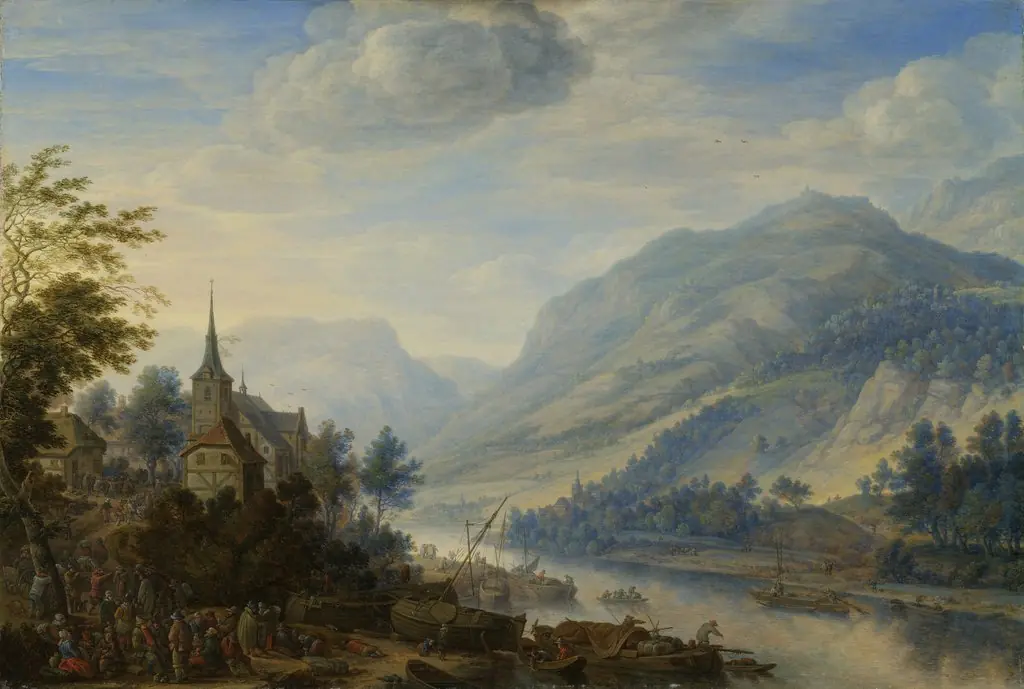
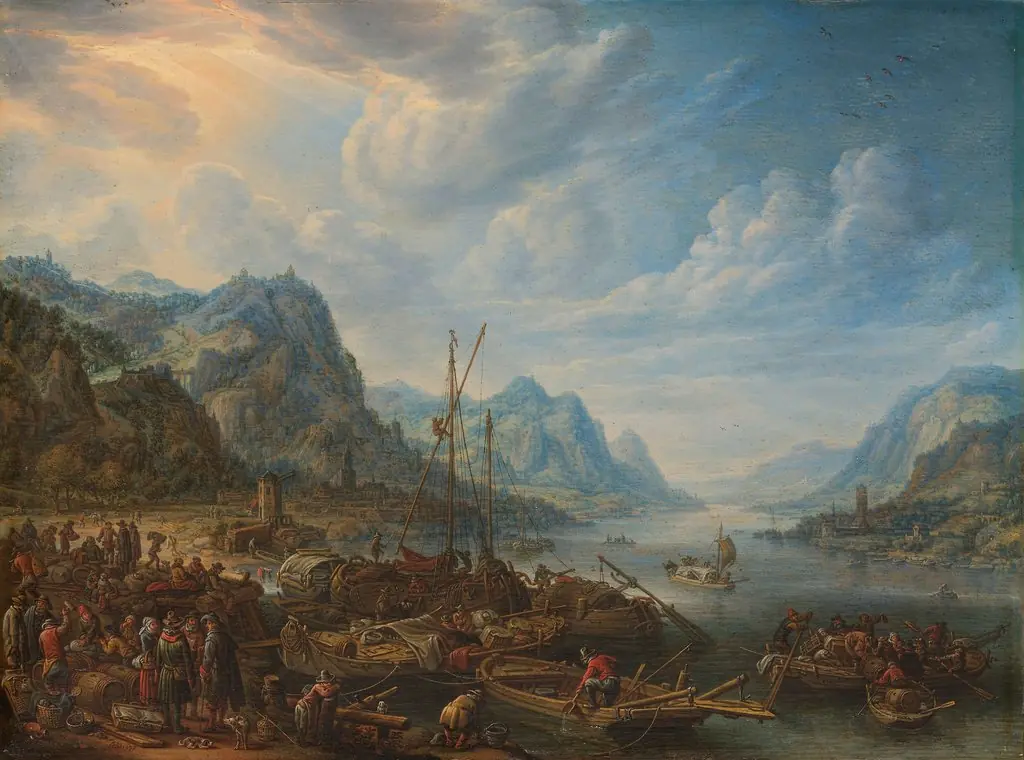
View of the Rhine near Rheineck Castle is an unspecified painting by the Dutch Golden Age artist Herman Saftleven. It dates from 1654 and is held in the collection of the Rijksmuseum. Painted in 1654, this work depicts a bustling stretch of the Rhine near Rheineck Castle.
About this work
The lively scene feels like a snapshot of daily life—no grand heroes, just farmers, sailors, and a fiddler playing for the crowd.
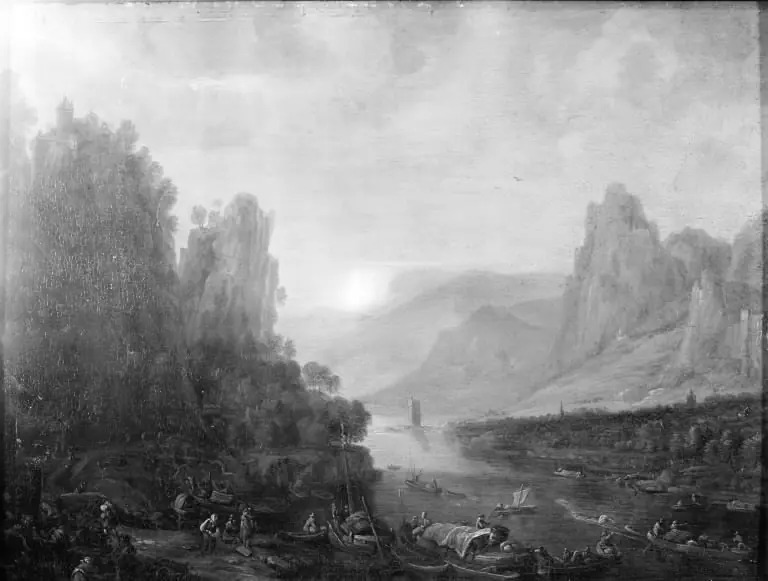
You see a wide river crowded with boats, people loading cargo, and a village on the left bank. A church spire rises behind dancers outside a tavern.
This painting was made in 1654, but no one knows who painted it. The lively scene feels like a snapshot of daily life—no grand heroes, just farmers, sailors, and a fiddler playing for the crowd.
To see more quiet, everyday scenes like this, visit the Rijksmuseum.
Overview
Painted in 1654, this work depicts a bustling stretch of the Rhine near Rheineck Castle. The composition captures the river’s commercial activity with numerous vessels along the shore, while the left bank shows the village of Rheineck nestled against the hillside. No artist has been definitively identified, and the painting survives as an unattributed example of Dutch genre landscape from the mid-seventeenth century.
Subject & Meaning
The scene presents ordinary life rather than myth or nobility. Laborers unload goods, sailors maneuver boats, and villagers gather near a tavern where a fiddler plays for dancers. The church spire anchors the village, suggesting spiritual continuity amid daily toil. There is no narrative climax—only the rhythm of work and leisure, offering a quiet testament to regional community life.
Technique & Style
The painting employs a broad, observational approach with loose brushwork and muted earth tones. Figures are rendered with minimal detail, emphasizing movement over individuality. The river reflects light subtly, and the village is rendered in soft perspective, creating depth without dramatic chiaroscuro. The style aligns with Dutch topographical painting of the period, prioritizing authenticity over idealization.
History & Provenance
The painting’s early ownership is undocumented. It entered public collections in the nineteenth century, likely through Dutch private holdings. Its attribution remains unresolved, as no signatures or archival records link it to a known artist. Despite this, its consistent depiction of regional life has allowed it to be studied as a representative work of its time and place.
Context
In mid-seventeenth-century the Netherlands, river scenes like this reflected growing interest in secular, everyday subjects. Trade along the Rhine was vital to regional economies, and artists increasingly turned from religious or aristocratic themes to depict ports, markets, and rural routines. This painting fits within a broader trend of civic realism that valued the dignity of common activity.
Legacy
Though unsigned and unheralded in its time, the painting endures as a quiet record of Dutch river life. It contributes to scholarly understanding of how ordinary people inhabited and shaped their environments. Its presence in the Rijksmuseum allows continued public engagement with unidealized depictions of the past, reinforcing the value of everyday history.
Own this work as a print
Artist & collection