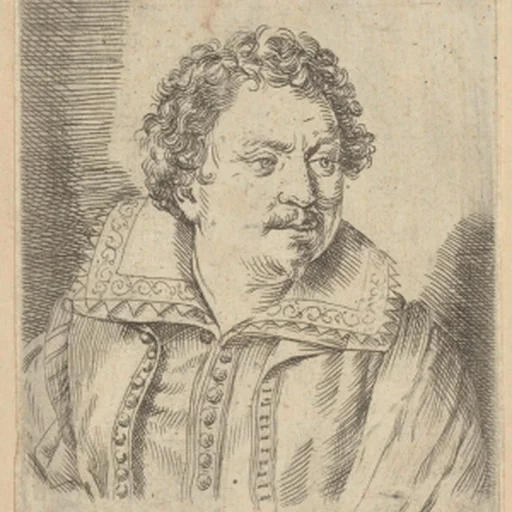
Artwork
Landscape with the baptism of the eunuch
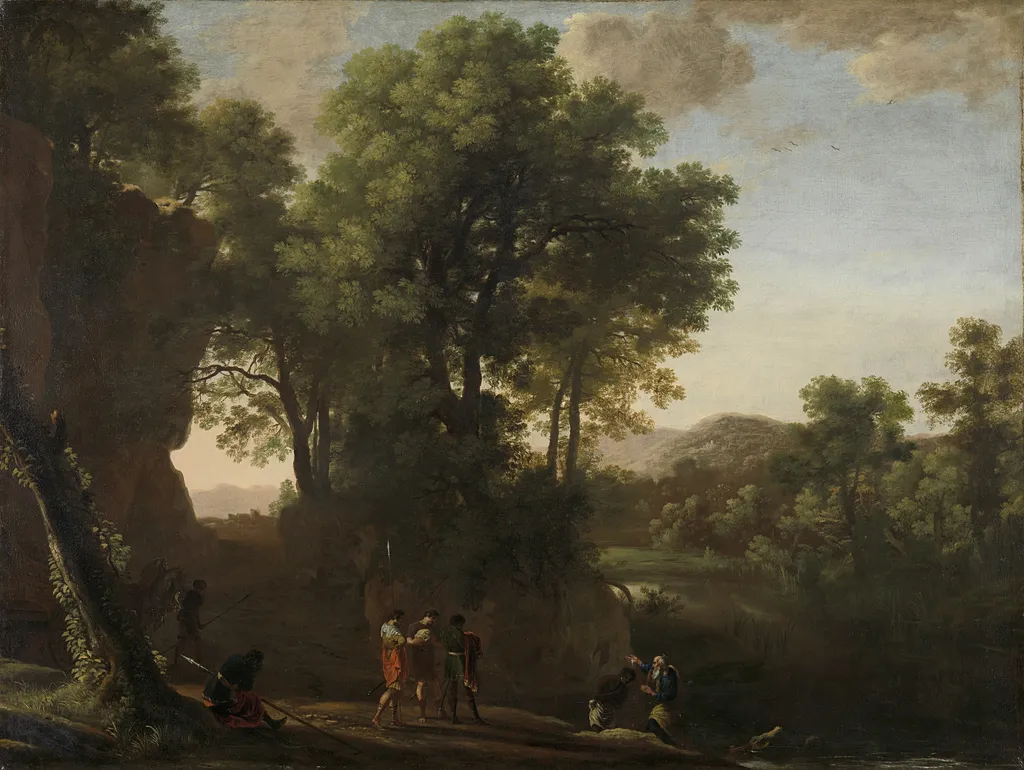
Landscape with the baptism of the eunuch is an oil painting by the Dutch Golden Age artist Herman van Swanevelt. It dates from 1630 and is held in the collection of the Rijksmuseum.
About this work
Overview
Herman van Swanevelt’s oil painting, executed in 1630, presents a nocturnal woodland scene where a small group traverses a forest path at twilight. Tall trunks dominate the composition, their foliage rendered in muted greens and deep shadows, while a distant horizon of gentle hills recedes beneath a soft sky. The work is part of the Rijksmuseum’s collection.
Subject & Meaning
Although the title references the biblical baptism of the Ethiopian eunuch, the visual focus rests on the surrounding landscape rather than the narrative itself. The solitary figure in an orange robe, likely representing the baptized eunuch, is set against a procession of darker‑clad companions, suggesting a moment of spiritual transition framed by nature’s quietude.
Technique & Style
Van Swanevelt employs a subtle chiaroscuro, allowing light to glide across tree trunks and faces, creating a sense of depth and movement. The palette is restrained, dominated by earthy greens, subdued blues, and a faint golden glow that hints at the waning daylight, reinforcing the tranquil atmosphere of the scene.
History & Provenance
Created in the early seventeenth century, the painting has remained in Dutch collections and is now housed in the Rijksmuseum. Its provenance reflects the artist’s reputation within the Dutch Golden Age, where landscape paintings often served both decorative and didactic purposes, linking biblical themes to everyday settings.
Own this work as a print
Artist & collection