Artwork
Portrait of a man
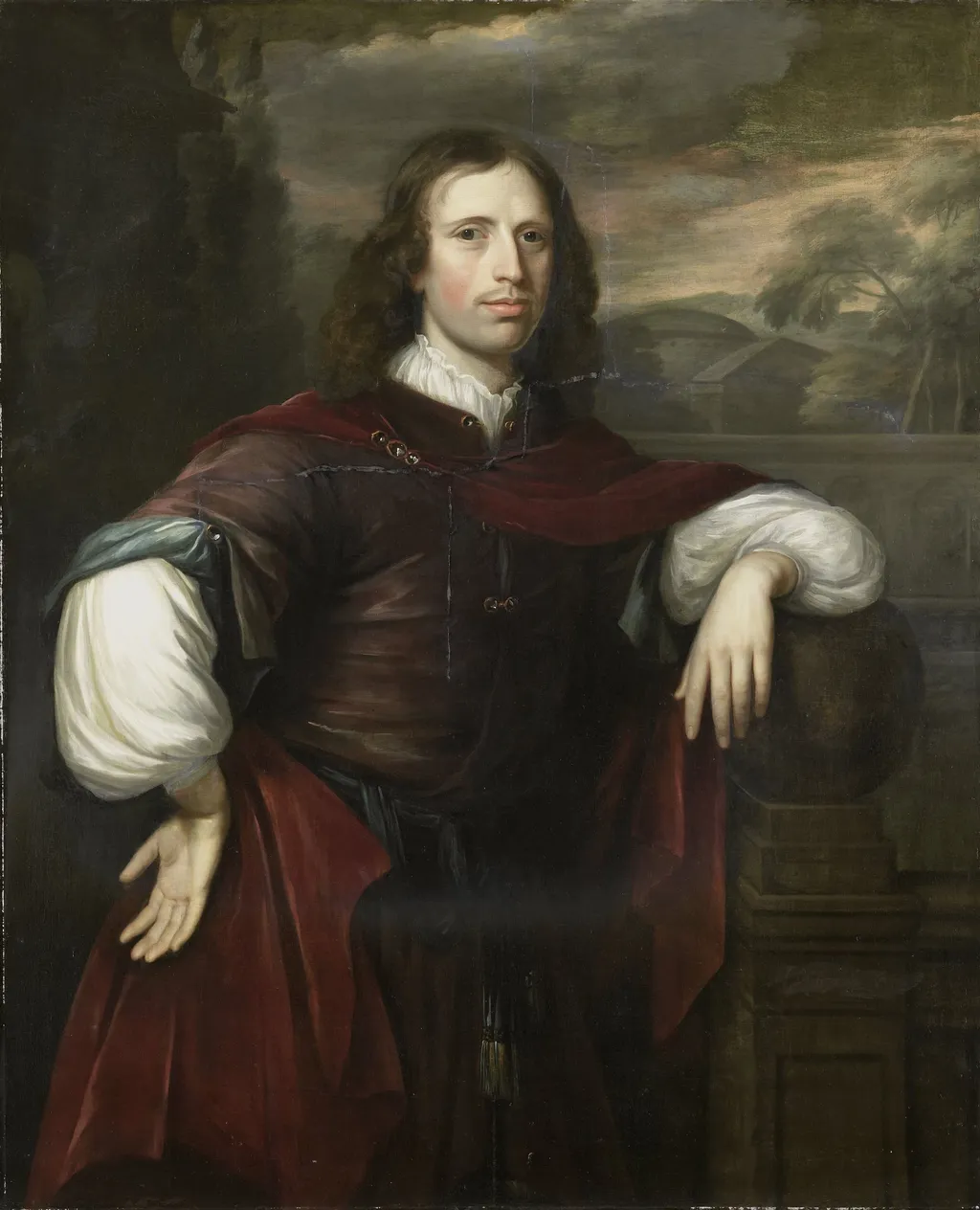
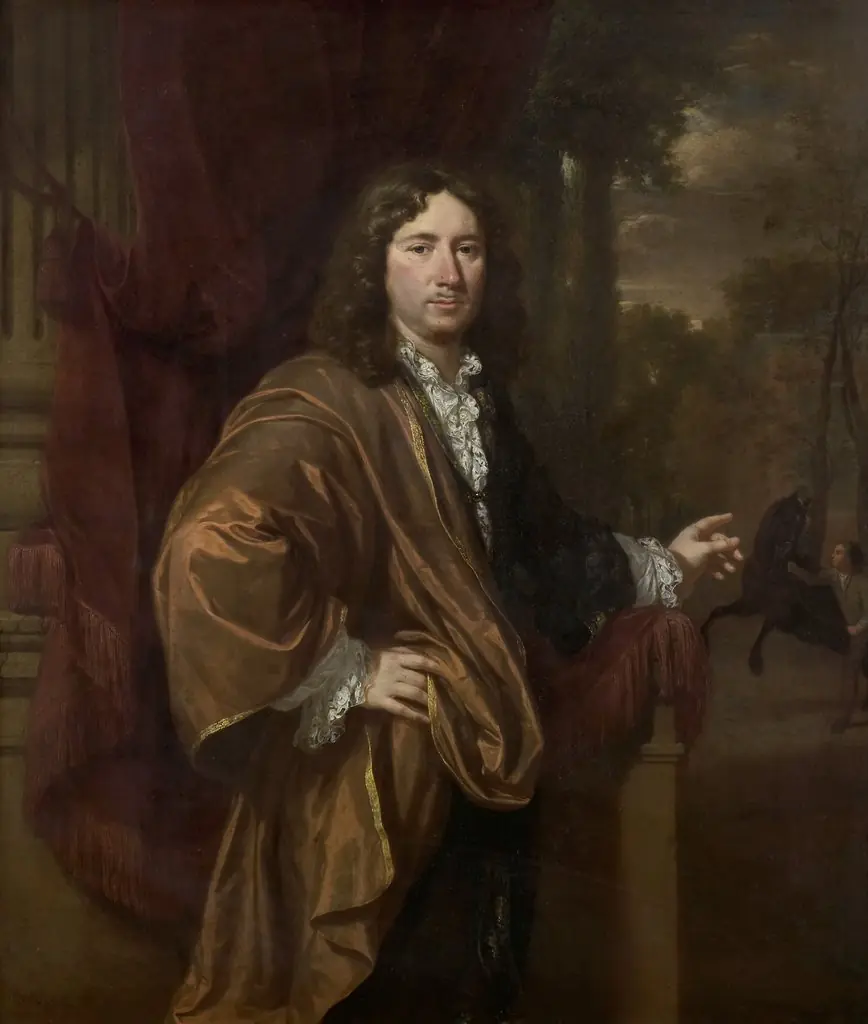
Portrait of a man is an oil painting by the Dutch Golden Age artist Herman Verelst. It dates from 1667 and is held in the collection of the Rijksmuseum.
About this work
Overview
Herman Verelst’s oil portrait, dated 1667, presents a solitary male figure against a distant landscape. The sitter stands with his right arm resting on a pedestal and his left hand placed on his hip, dressed in a dark coat, a red cape, and a white shirt with billowing sleeves. The composition is anchored by a cloudy sky, trees and a building visible in the background.
Subject & Meaning
The work portrays an unnamed gentleman, his hair arranged in loose waves and his gaze directed slightly to the right, offering a restrained, neutral expression. The attire and pose suggest a person of status, while the inclusion of a naturalistic landscape may allude to the sitter’s connection to land or travel, a common motif in 17th‑century portraiture.
Technique & Style
Executed in oil on canvas, Verelst employs a balanced palette of deep earth tones contrasted with the vivid red of the cape. The rendering of fabric folds and the soft modeling of the face reveal a careful attention to texture. The background is rendered with looser brushwork, allowing the figure to remain the focal point while still providing depth.
History & Provenance
Created in the late Dutch Golden Age, the portrait entered the collection of the Rijksmuseum, where it remains on display. Its provenance prior to acquisition by the museum is not extensively documented, but its attribution to Verelst aligns with his known output of portrait commissions during the 1660s.
Own this work as a print
Artist & collection