Artwork
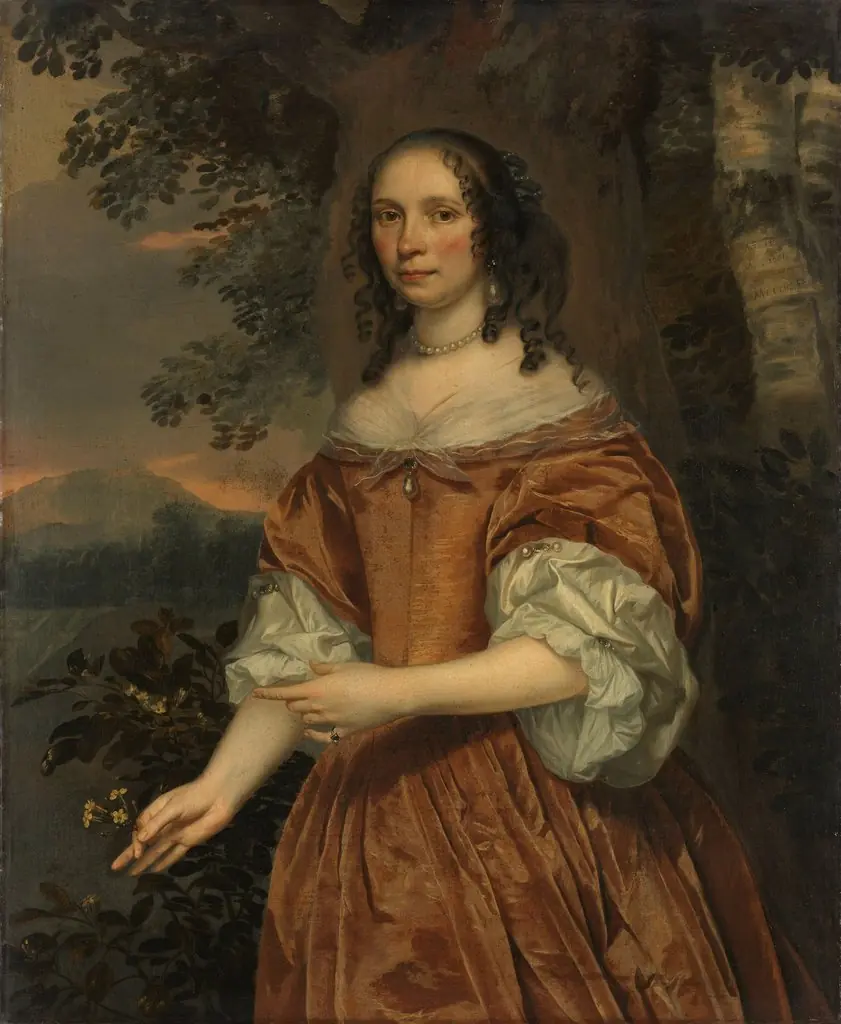
Portrait of a woman
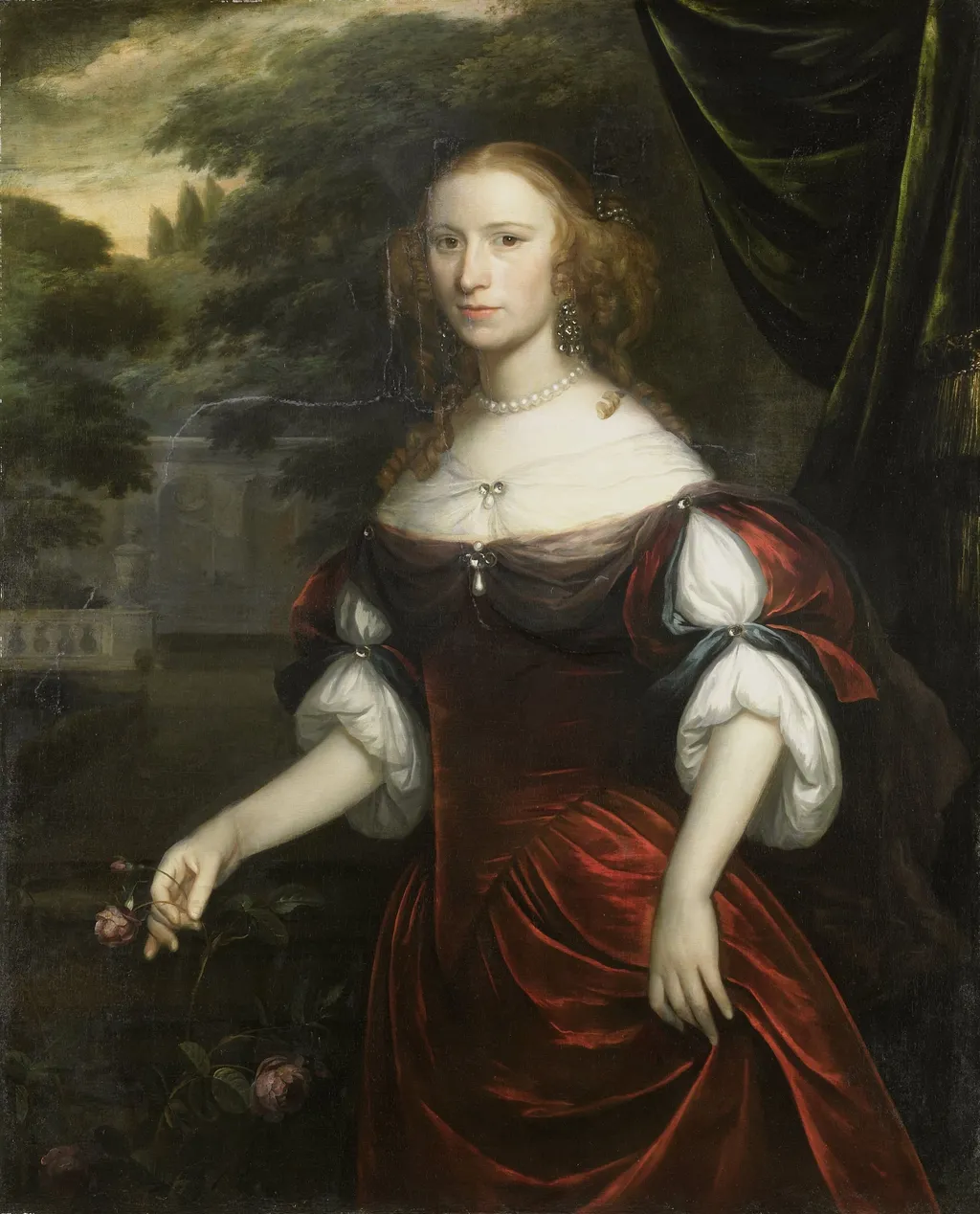
Portrait of a woman is an oil painting by the Dutch Golden Age artist Herman Verelst. It dates from 1667 and is held in the collection of the Rijksmuseum.
About this work
Overview
Created in 1667, this oil painting by Dutch artist Herman Verelst presents a solitary female sitter. The work is part of the Rijksmuseum’s collection and exemplifies the portrait conventions of the late‑seventeenth‑century Netherlands. Its composition centers the figure against a muted, indistinct landscape, allowing the subject to dominate the visual field.
Subject & Meaning
The woman is dressed in a sumptuous scarlet gown trimmed with white ruffles at the neckline and sleeves, her hair gathered back and accented by pearl jewelry. One hand rests lightly on her chest while the other holds a modest bouquet, gestures that suggest modesty and refined elegance typical of genteel portraiture of the period.
Technique & Style
Verelst employs a pronounced chiaroscuro, using stark contrasts of light and shadow to model the face and fabric. The illumination catches the sheen of the pearls and the folds of the dress, creating a sense of volume that belies the flatness of the canvas. The background recedes into a dark, blurred landscape, further emphasizing the three‑dimensional effect on the sitter.
History & Provenance
The painting entered the Rijksmuseum’s holdings through acquisition in the early twentieth century, though earlier ownership records are sparse. Its attribution to Verelst, a member of a prominent family of painters, has been confirmed by stylistic analysis and archival documentation linking the work to his late‑1660s output.
Context
During the 1660s, Dutch portraiture often highlighted the social status and personal virtues of its subjects through clothing, accessories, and compositional restraint. Verelst’s depiction aligns with this tradition, using luxurious attire and restrained background to convey the sitter’s rank without overt symbolism, reflecting the modest yet affluent bourgeois culture of the Dutch Golden Age.
Own this work as a print
Artist & collection