Artwork
Self-portrait
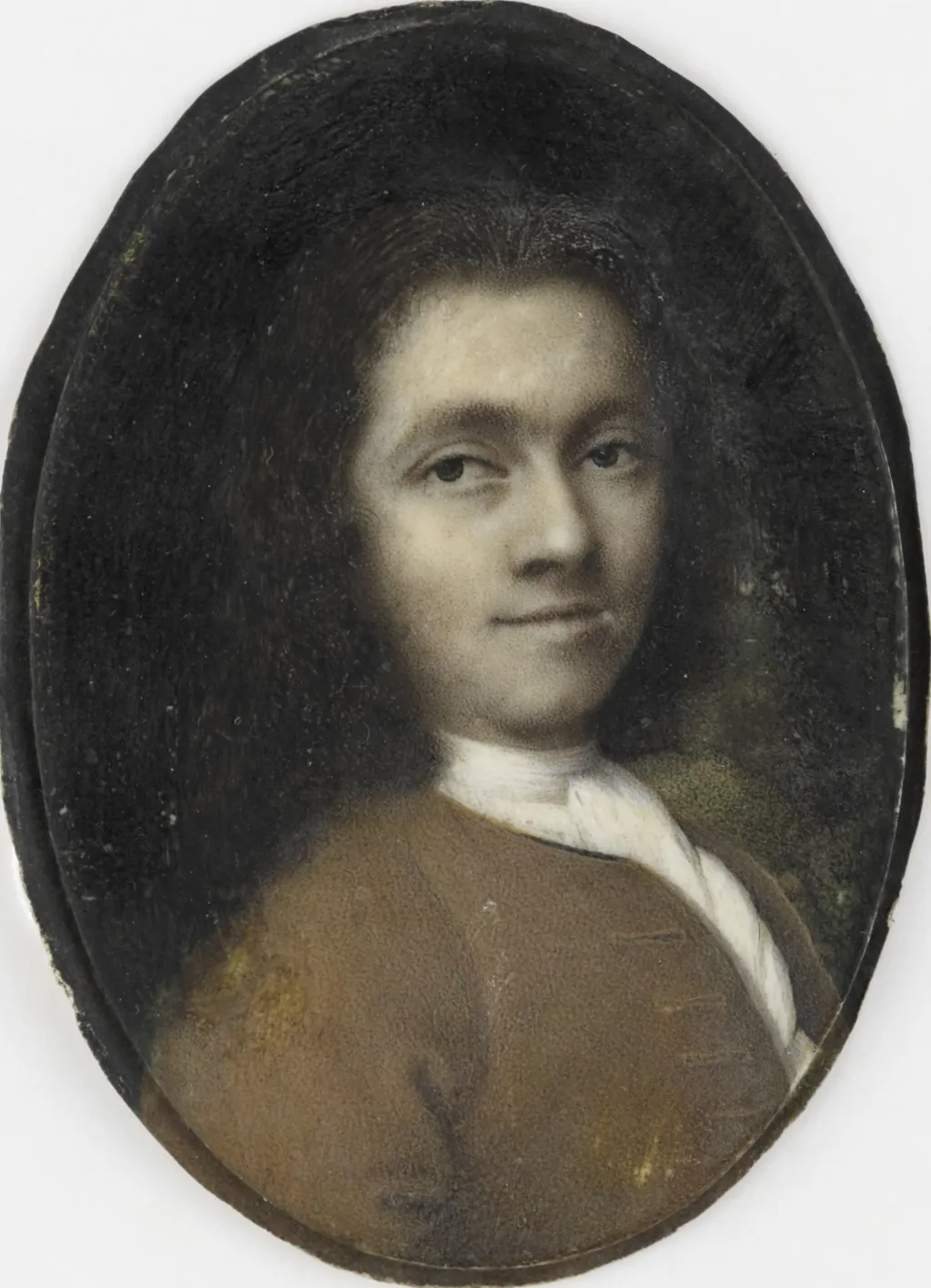
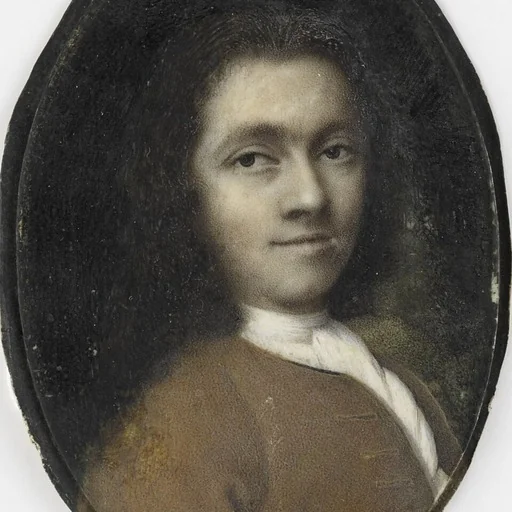
Self-portrait is an ivory painting by the Rococo painting artist Herman Wolters. It dates from 1717 and is held in the collection of the Rijksmuseum.
About this work
Overview
Herman Wolters’ self‑portrait, executed in 1717, is an oval miniature painted on ivory. The work is part of the Rijksmuseum’s collection and presents the artist in a formal pose, his dark eyes meeting the viewer’s gaze. The composition is dominated by a dark background that isolates the figure, emphasizing the delicate rendering of his face and attire.
Subject & Meaning
The portrait shows Wolters himself, dressed in a brown jacket over a white shirt, his hair neatly arranged. The direct eye contact and the restrained expression suggest a self‑presentation that balances personal identity with the conventions of early‑18th‑century portraiture, conveying both confidence and modesty.
Technique & Style
Rendered on ivory, the painting employs chiaroscuro to model the sitter’s features, using subtle gradations of light and shadow to create a three‑dimensional effect. The smooth brushwork and careful handling of the ivory surface give the skin a luminous quality, while the dark backdrop enhances the contrast and focus on the face.
History & Provenance
Created in 1717, the miniature remained in private hands before entering the Rijksmuseum’s holdings, where it is displayed as part of the museum’s Dutch portrait collection. Its provenance reflects the typical trajectory of personal miniatures that were later acquired by institutions for their historical value.
Context
Miniature portraiture on ivory was a popular medium for intimate, portable images in the Netherlands during the early 1700s. Wolters’ choice of an oval format aligns with contemporary tastes for refined, personal depictions, and the work exemplifies the technical skill required to render fine detail on a small, delicate surface.
Artist & collection