Artwork
Newquay Bay, Cornwall
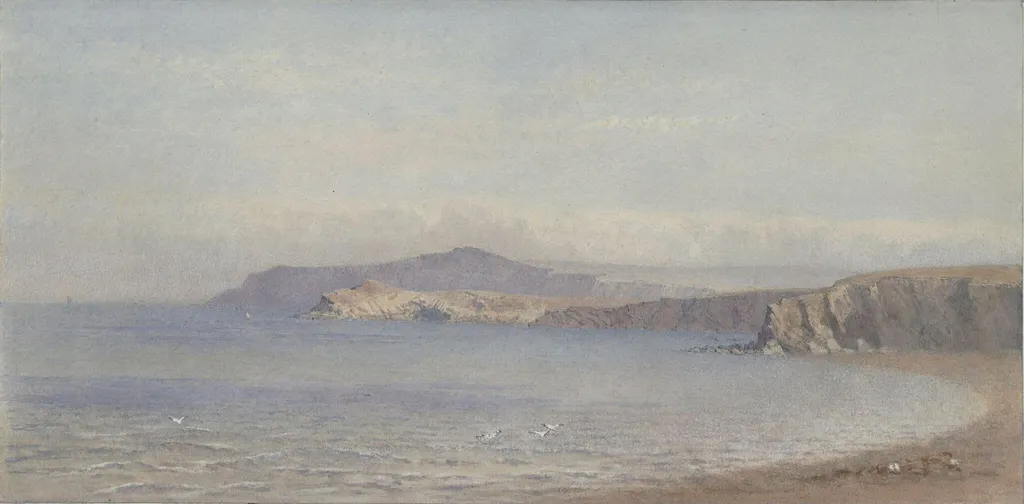
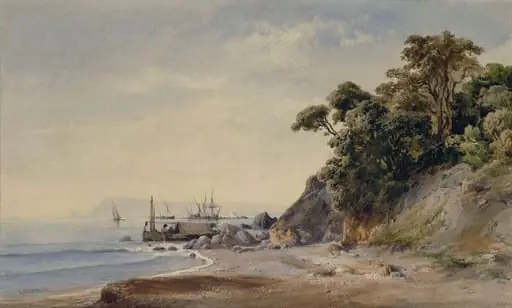
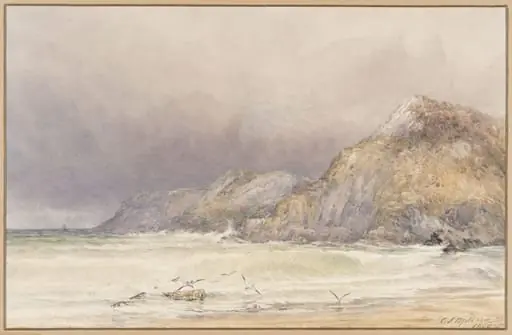
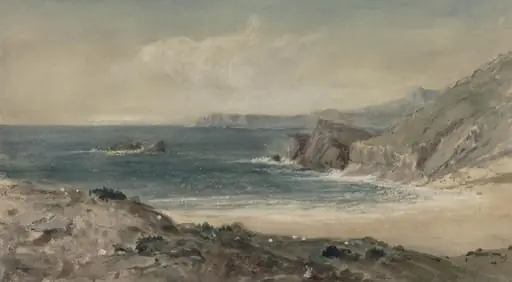
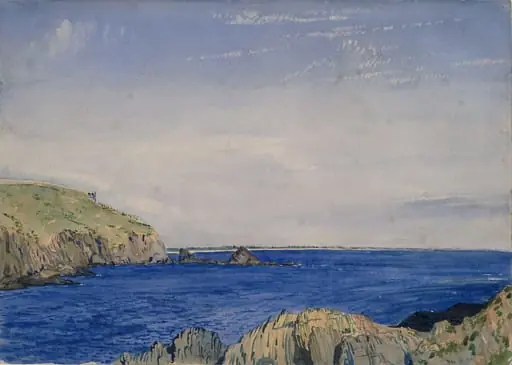
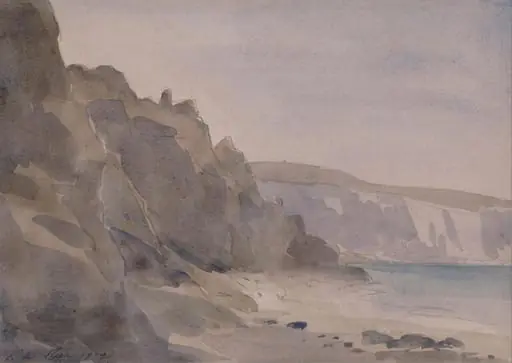
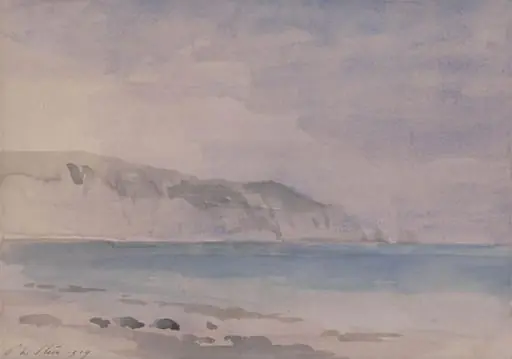
Newquay Bay, Cornwall is a watercolor work on paper by the British Romanticist artist Prescott Hewett. It dates from 1840 and is held in the collection of the Victoria and Albert Museum.
About this work
Overview
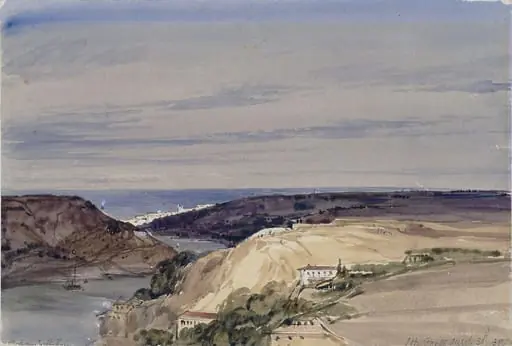
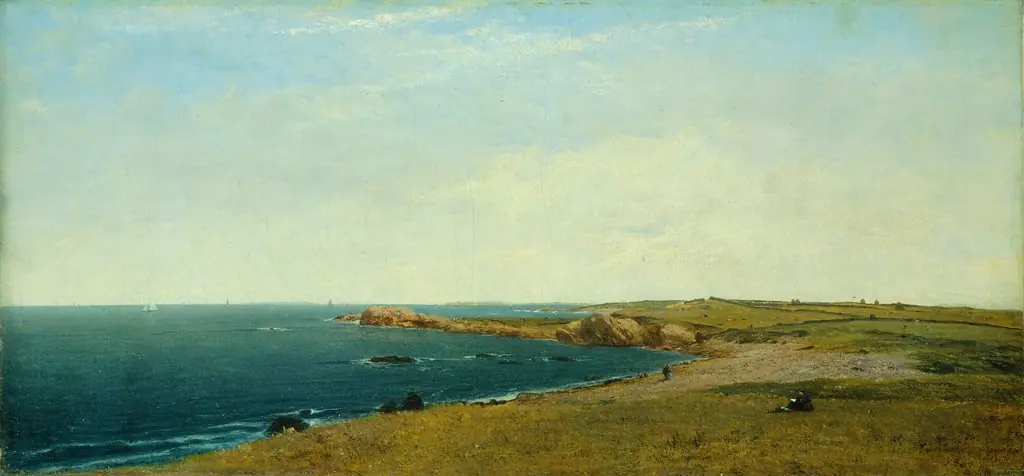
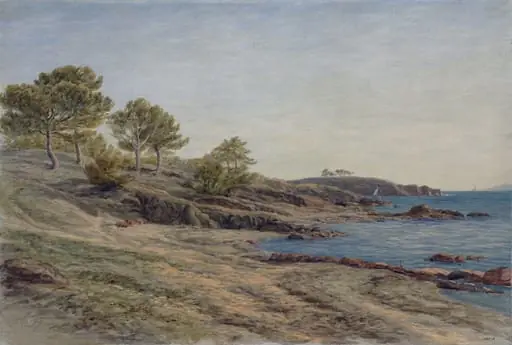
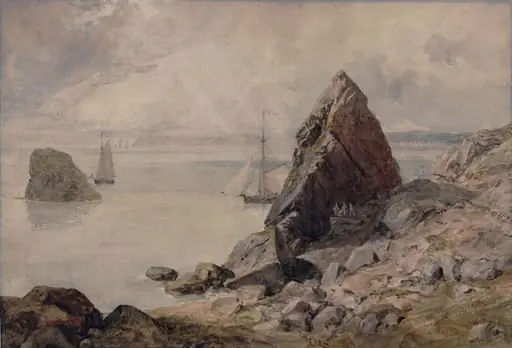
Painted in 1840 by Sir Prescott Hewett, this watercolour captures Newquay Bay in Cornwall with restrained tonality and delicate brushwork. The composition emphasizes stillness, avoiding dramatic elements in favor of a quiet, atmospheric rendering of the coastline. The medium’s transparency allows subtle gradations of color to suggest light and space without heavy definition.
Subject & Meaning
The scene presents a tranquil coastal landscape: calm water meets a rugged shoreline, with a distant island emerging from the sea. No human figures or vessels appear, reinforcing a sense of solitude and natural serenity. The absence of activity invites contemplation rather than narrative, aligning with 19th-century ideals of landscape as a refuge from industrial life.
Technique & Style
Hewett employed thin, layered washes to achieve a luminous, ethereal quality. The sky and sea merge seamlessly through soft transitions, while the rocks are suggested with minimal, dry-brush strokes. The water’s surface reflects faint highlights without sharp detail, enhancing the painting’s hushed, dreamlike mood.
History & Provenance
Created during Hewett’s active years as a watercolourist, the work reflects his engagement with the British landscape tradition. It entered the Victoria and Albert Museum’s collection in the late 19th century, where it remains as part of a broader archive of 19th-century British watercolours documenting regional scenery.
Context
In the 1840s, watercolour was widely used for topographical and leisurely landscape studies, particularly among amateur and professional artists alike. Newquay, then a modest fishing village, attracted artists drawn to its undeveloped coastlines. Hewett’s approach aligns with contemporaries who favored mood over topographical precision.
Legacy
The painting contributes to a body of work that helped define the aesthetic of British coastal watercolours in the Victorian era. Though not widely exhibited today, it exemplifies the quiet, observational mode that characterized much of the period’s landscape practice, valued for its restraint and sensitivity to natural light.
Artist & collection
Artist
Prescott Hewett made quiet, atmospheric watercolors of the English coast in the mid-1800s, focusing on shorelines and harbors where light met water.